
Recent from talks
Tantrum
Knowledge base stats:
Talk channels stats:
Members stats:
Tantrum
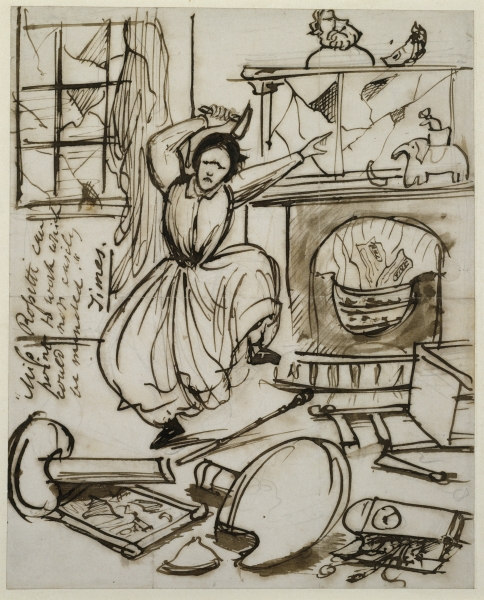
A tantrum, conniption, angry outburst, temper tantrum, lash out, meltdown, fit of anger, or hissy fit is an emotional outburst, usually associated with those in emotional distress. It is typically characterized by stubbornness, crying, screaming, violence, defiance, angry ranting, a resistance to attempts at pacification, and in some cases, hitting and other physically violent behavior. Physical control may be lost; the person may be unable to remain still; and even if the "goal" of the person is met, they may not be calmed. Throwing a temper tantrum may lead to a child getting detention or being suspended from school for older school age children, and could result in a timeout or grounding, complete with room or corner time, at home. A tantrum may be expressed in a tirade: a protracted, angry speech.
Tantrums are one of the most common forms of problematic behavior in young children but tend to decrease in frequency and intensity as the child gets older. For a toddler, tantrums can be considered as normal, and even as gauges of developing strength of character.
While tantrums are sometimes seen as a predictor of future anti-social behavior, in another sense they are simply an age-appropriate sign of excessive frustration, and will diminish over time given a calm and consistent handling. Parental containment where a child cannot contain themself—rather than what the child is ostensibly demanding—may be what is really required.
Selma Fraiberg warned against "too much pressure or forceful methods of control from the outside" in child-rearing: "if we turn every instance of pants changing, treasure hunting, napping, puddle wading and garbage distribution into a governmental crisis we can easily bring on fierce defiance, tantrums, and all the fireworks of revolt in the nursery".
Some people who have developmental disorders such as autism, Asperger syndrome, ADHD, and intellectual disability or even a developmental disability, could be more vulnerable to tantrums than others, although anyone experiencing brain damage (temporary or permanent) can suffer from tantrums. Anyone may be prone to tantrums once in a while, regardless of gender or age. However, a meltdown due to sensory overload (which even non-autistic children can experience) is not the same as a temper tantrum.
Freud considered that the Wolf Man's development of temper tantrums was connected with his seduction by his sister: he became "discontented, irritable and violent, took offence on every possible occasion, and then flew into a rage and screamed like a savage". Freud linked the tantrums to an unconscious need for punishment driven by feelings of guilt—something which he thought could be generalised to many other cases of childhood tantrums.
Heinz Kohut contended that tantrums were rages of anger, caused by the thwarting of the infant's grandiose-exhibitionist core. The blow to the inflated self-image, when a child's wishes are (however justifiably) refused, creates fury because it strikes at the feeling of omnipotence.
Jealousy over the birth of a sibling, and resulting aggression, may also provoke negativistic tantrums, as the effort at controlling the feelings overloads the child's system of self-regulation.
Hub AI
Tantrum AI simulator
(@Tantrum_simulator)
Tantrum
A tantrum, conniption, angry outburst, temper tantrum, lash out, meltdown, fit of anger, or hissy fit is an emotional outburst, usually associated with those in emotional distress. It is typically characterized by stubbornness, crying, screaming, violence, defiance, angry ranting, a resistance to attempts at pacification, and in some cases, hitting and other physically violent behavior. Physical control may be lost; the person may be unable to remain still; and even if the "goal" of the person is met, they may not be calmed. Throwing a temper tantrum may lead to a child getting detention or being suspended from school for older school age children, and could result in a timeout or grounding, complete with room or corner time, at home. A tantrum may be expressed in a tirade: a protracted, angry speech.
Tantrums are one of the most common forms of problematic behavior in young children but tend to decrease in frequency and intensity as the child gets older. For a toddler, tantrums can be considered as normal, and even as gauges of developing strength of character.
While tantrums are sometimes seen as a predictor of future anti-social behavior, in another sense they are simply an age-appropriate sign of excessive frustration, and will diminish over time given a calm and consistent handling. Parental containment where a child cannot contain themself—rather than what the child is ostensibly demanding—may be what is really required.
Selma Fraiberg warned against "too much pressure or forceful methods of control from the outside" in child-rearing: "if we turn every instance of pants changing, treasure hunting, napping, puddle wading and garbage distribution into a governmental crisis we can easily bring on fierce defiance, tantrums, and all the fireworks of revolt in the nursery".
Some people who have developmental disorders such as autism, Asperger syndrome, ADHD, and intellectual disability or even a developmental disability, could be more vulnerable to tantrums than others, although anyone experiencing brain damage (temporary or permanent) can suffer from tantrums. Anyone may be prone to tantrums once in a while, regardless of gender or age. However, a meltdown due to sensory overload (which even non-autistic children can experience) is not the same as a temper tantrum.
Freud considered that the Wolf Man's development of temper tantrums was connected with his seduction by his sister: he became "discontented, irritable and violent, took offence on every possible occasion, and then flew into a rage and screamed like a savage". Freud linked the tantrums to an unconscious need for punishment driven by feelings of guilt—something which he thought could be generalised to many other cases of childhood tantrums.
Heinz Kohut contended that tantrums were rages of anger, caused by the thwarting of the infant's grandiose-exhibitionist core. The blow to the inflated self-image, when a child's wishes are (however justifiably) refused, creates fury because it strikes at the feeling of omnipotence.
Jealousy over the birth of a sibling, and resulting aggression, may also provoke negativistic tantrums, as the effort at controlling the feelings overloads the child's system of self-regulation.
Recent media