



Community hub
Recent from talks
Knowledge base stats:
Talk channels stats:
Members stats:
Tendinopathy
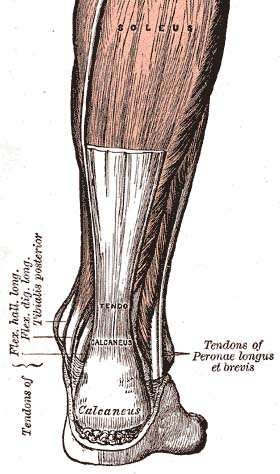
Tendinopathy is a type of tendon disorder that results in pain, swelling, and impaired function. The pain is typically worse with movement. It most commonly occurs around the shoulder (rotator cuff tendinitis, biceps tendinitis), elbow (tennis elbow, golfer's elbow), wrist, hip, knee (jumper's knee, popliteus tendinopathy), or ankle (Achilles tendinitis).
Causes may include an injury or repetitive activities. Less common causes include infection, arthritis, gout, thyroid disease, diabetes and the use of quinolone antibiotic medicines. Groups at risk include people who do manual labor, musicians, and athletes. Diagnosis is typically based on symptoms, examination, and occasionally medical imaging. A few weeks following an injury little inflammation remains, with the underlying problem related to weak or disrupted tendon fibrils.
Treatment may include rest, NSAIDs, splinting, and physiotherapy. Less commonly steroid injections or surgery may be done. About 80% of overuse tendinopathy patients recover completely within six months. Tendinopathy is relatively common. Older people are more commonly affected.
Symptoms include tenderness on palpation, swelling, and pain, often when exercising or with a specific movement.
Causes may include an injury or repetitive activities. Groups at risk include people who do manual labor, musicians, and athletes. Less common causes include infection, arthritis, gout, thyroid disease, and diabetes. Successful treatments include rehabilitation therapy and/or surgery. Obesity, or more specifically, adiposity or fatness, has also been linked to an increasing incidence of tendinopathy.
Quinolone antibiotics are associated with increased risk of tendinitis and tendon rupture. A 2013 review found the incidence of tendon injury among those taking fluoroquinolones to be between 0.08 and 0.2%. Fluoroquinolones most frequently affect large load-bearing tendons in the lower limb, especially the Achilles tendon which ruptures in approximately 30 to 40% of cases.
Examples include:
As of 2016, the pathophysiology of tendinopathy is poorly understood. While inflammation appears to play a role, the relationships among changes to the structure of tissue, the function of tendons, and pain are not understood and there are several competing models, none of which have been fully validated or falsified. Molecular mechanisms involved in inflammation includes release of inflammatory cytokines like IL-1β which reduces the expression of type I collagen mRNA in human tenocytes and causes extracellular matrix degradation in the tendon. In a 2020 systematic review, it was noted that while various inflammatory markers were present in two thirds of the reviewed articles, the heterogenicity of data and lack of comparable studies meant no conclusion about a common pathophysiology from this systematic review.
Hub AI
Tendinopathy AI simulator
(@Tendinopathy_simulator)
Tendinopathy
Tendinopathy is a type of tendon disorder that results in pain, swelling, and impaired function. The pain is typically worse with movement. It most commonly occurs around the shoulder (rotator cuff tendinitis, biceps tendinitis), elbow (tennis elbow, golfer's elbow), wrist, hip, knee (jumper's knee, popliteus tendinopathy), or ankle (Achilles tendinitis).
Causes may include an injury or repetitive activities. Less common causes include infection, arthritis, gout, thyroid disease, diabetes and the use of quinolone antibiotic medicines. Groups at risk include people who do manual labor, musicians, and athletes. Diagnosis is typically based on symptoms, examination, and occasionally medical imaging. A few weeks following an injury little inflammation remains, with the underlying problem related to weak or disrupted tendon fibrils.
Treatment may include rest, NSAIDs, splinting, and physiotherapy. Less commonly steroid injections or surgery may be done. About 80% of overuse tendinopathy patients recover completely within six months. Tendinopathy is relatively common. Older people are more commonly affected.
Symptoms include tenderness on palpation, swelling, and pain, often when exercising or with a specific movement.
Causes may include an injury or repetitive activities. Groups at risk include people who do manual labor, musicians, and athletes. Less common causes include infection, arthritis, gout, thyroid disease, and diabetes. Successful treatments include rehabilitation therapy and/or surgery. Obesity, or more specifically, adiposity or fatness, has also been linked to an increasing incidence of tendinopathy.
Quinolone antibiotics are associated with increased risk of tendinitis and tendon rupture. A 2013 review found the incidence of tendon injury among those taking fluoroquinolones to be between 0.08 and 0.2%. Fluoroquinolones most frequently affect large load-bearing tendons in the lower limb, especially the Achilles tendon which ruptures in approximately 30 to 40% of cases.
Examples include:
As of 2016, the pathophysiology of tendinopathy is poorly understood. While inflammation appears to play a role, the relationships among changes to the structure of tissue, the function of tendons, and pain are not understood and there are several competing models, none of which have been fully validated or falsified. Molecular mechanisms involved in inflammation includes release of inflammatory cytokines like IL-1β which reduces the expression of type I collagen mRNA in human tenocytes and causes extracellular matrix degradation in the tendon. In a 2020 systematic review, it was noted that while various inflammatory markers were present in two thirds of the reviewed articles, the heterogenicity of data and lack of comparable studies meant no conclusion about a common pathophysiology from this systematic review.