
Recent from talks
Tequesta
Knowledge base stats:
Talk channels stats:
Members stats:
Tequesta
The Tequesta, also Tekesta, Tegesta, Chequesta, Vizcaynos, were a Native American tribe on the Southeastern Atlantic coast of Florida. They had infrequent contact with Europeans and had largely migrated by the middle of the 18th century.
The Tequesta lived in the southeastern parts of present-day Florida. They lived in the region since the 3rd century BC in the late Archaic period of the continent, and remained for roughly 2,000 years, By the 1800s, most had died as a result of settlement battles, slavery, and disease. The Tequesta tribe had only a few survivors by the time that Spanish Florida was traded to the British, who then established the area as part of the province of East Florida.
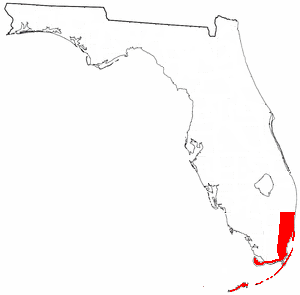
The Tequesta tribe lived on Biscayne Bay in what is now Miami-Dade County and further north in Broward County at least as far Pompano Beach. Their territory may have also included the northern half of Broward County and the southern half of Palm Beach County. They also occupied the Florida Keys at times, and may have had a village on Cape Sable, at the southern end of the Florida peninsula, in the 16th century. Their central town (called "Tequesta" by the Spaniards in honor of the chief) was on the north bank of the Miami River. A village had been at that site for at least 2,000 years. The Tequesta situated their towns and camps at the mouths of rivers and streams, on inlets from the Atlantic Ocean to inland waters, and on barrier islands and keys.
The Tequesta were more or less dominated by the more numerous Calusa of the southwest coast of Florida. The Tequesta were closely allied to their immediate neighbors to the north, the Jaega. Estimates of the number of Tequesta at the time of initial European contact range from 800 to 10,000, while estimates of the number of Calusa on the southwest coast of Florida range from 2,000 to 20,000. Occupation of the Florida Keys may have swung back and forth between the two tribes. Although Spanish records note a Tequesta village on Cape Sable, Calusa artifacts outnumber Tequesta artifacts by four to one at its archaeological sites.
On a map the Dutch cartographer Hessel Gerritsz published in 1630 in Joannes de Laet's History of the New World, the Florida peninsula is labeled "Tegesta" after the tribe. A map from the 18th century labeled the area around Biscayne Bay "Tekesta". A 1794 map by cartographer Bernard Romans labeled this area "Tegesta".
The archaeological record of the Glades culture, which included the area occupied by the Tequestas, indicates a continuous development of an indigenous ceramics tradition from about 700 BCE until after European contact. The Tequesta were once thought to be related to the Taino, the Arawakan people of the Antilles, but most anthropologists now doubt this, based on archaeological information and the length of their establishment in Florida. Carl O. Sauer called the Florida Straits "one of the most strongly marked cultural boundaries in the New World", noting that the Straits were also a boundary between agricultural systems, with Florida Native Americans growing seed crops that originated in Mexico, while the Lucayans of the Bahamas grew root crops that originated in South America.
The Tequesta language may have been closely related to the language of the Calusas of the southwest Florida coast and the Mayaimis who lived around Lake Okeechobee in the middle of the lower Florida peninsula. Only ten words from the languages of those tribes have recorded meanings, most of them from Calusa. The linguist Julian Granberry states that the Tequesta probably spoke the same language as the Calusa, which in his analysis relates to the Tunica language.
The Tequestas did not practice any form of agriculture. They fished, hunted, and gathered the fruit and roots of local plants. Most of their food came from the sea. Hernando de Escalante Fontaneda, who lived among the tribes of southern Florida for seventeen years in the 16th century, described their "common" diet as "fish, turtle and snails, and tunny and whale"; the "sea-wolf" (Caribbean monk seal) was reserved for the upper classes. According to Fontaneda, a lesser part of the diet consisted of trunkfish and lobster. The "fish" caught included manatees, sharks, sailfish, porpoises, stingrays, and small fish. Despite their local abundance, clams, oysters and conches were only a minor part of the Tequesta diet (their shells are much less common at Tequesta archeological sites than they are at Calusa or Jaega sites). Venison was also popular; deer bones are frequently found in archeological sites, as are terrapin shells and bones. Sea turtles and their eggs were consumed during the turtles' nesting season.
Hub AI
Tequesta AI simulator
(@Tequesta_simulator)
Tequesta
The Tequesta, also Tekesta, Tegesta, Chequesta, Vizcaynos, were a Native American tribe on the Southeastern Atlantic coast of Florida. They had infrequent contact with Europeans and had largely migrated by the middle of the 18th century.
The Tequesta lived in the southeastern parts of present-day Florida. They lived in the region since the 3rd century BC in the late Archaic period of the continent, and remained for roughly 2,000 years, By the 1800s, most had died as a result of settlement battles, slavery, and disease. The Tequesta tribe had only a few survivors by the time that Spanish Florida was traded to the British, who then established the area as part of the province of East Florida.
The Tequesta tribe lived on Biscayne Bay in what is now Miami-Dade County and further north in Broward County at least as far Pompano Beach. Their territory may have also included the northern half of Broward County and the southern half of Palm Beach County. They also occupied the Florida Keys at times, and may have had a village on Cape Sable, at the southern end of the Florida peninsula, in the 16th century. Their central town (called "Tequesta" by the Spaniards in honor of the chief) was on the north bank of the Miami River. A village had been at that site for at least 2,000 years. The Tequesta situated their towns and camps at the mouths of rivers and streams, on inlets from the Atlantic Ocean to inland waters, and on barrier islands and keys.
The Tequesta were more or less dominated by the more numerous Calusa of the southwest coast of Florida. The Tequesta were closely allied to their immediate neighbors to the north, the Jaega. Estimates of the number of Tequesta at the time of initial European contact range from 800 to 10,000, while estimates of the number of Calusa on the southwest coast of Florida range from 2,000 to 20,000. Occupation of the Florida Keys may have swung back and forth between the two tribes. Although Spanish records note a Tequesta village on Cape Sable, Calusa artifacts outnumber Tequesta artifacts by four to one at its archaeological sites.
On a map the Dutch cartographer Hessel Gerritsz published in 1630 in Joannes de Laet's History of the New World, the Florida peninsula is labeled "Tegesta" after the tribe. A map from the 18th century labeled the area around Biscayne Bay "Tekesta". A 1794 map by cartographer Bernard Romans labeled this area "Tegesta".
The archaeological record of the Glades culture, which included the area occupied by the Tequestas, indicates a continuous development of an indigenous ceramics tradition from about 700 BCE until after European contact. The Tequesta were once thought to be related to the Taino, the Arawakan people of the Antilles, but most anthropologists now doubt this, based on archaeological information and the length of their establishment in Florida. Carl O. Sauer called the Florida Straits "one of the most strongly marked cultural boundaries in the New World", noting that the Straits were also a boundary between agricultural systems, with Florida Native Americans growing seed crops that originated in Mexico, while the Lucayans of the Bahamas grew root crops that originated in South America.
The Tequesta language may have been closely related to the language of the Calusas of the southwest Florida coast and the Mayaimis who lived around Lake Okeechobee in the middle of the lower Florida peninsula. Only ten words from the languages of those tribes have recorded meanings, most of them from Calusa. The linguist Julian Granberry states that the Tequesta probably spoke the same language as the Calusa, which in his analysis relates to the Tunica language.
The Tequestas did not practice any form of agriculture. They fished, hunted, and gathered the fruit and roots of local plants. Most of their food came from the sea. Hernando de Escalante Fontaneda, who lived among the tribes of southern Florida for seventeen years in the 16th century, described their "common" diet as "fish, turtle and snails, and tunny and whale"; the "sea-wolf" (Caribbean monk seal) was reserved for the upper classes. According to Fontaneda, a lesser part of the diet consisted of trunkfish and lobster. The "fish" caught included manatees, sharks, sailfish, porpoises, stingrays, and small fish. Despite their local abundance, clams, oysters and conches were only a minor part of the Tequesta diet (their shells are much less common at Tequesta archeological sites than they are at Calusa or Jaega sites). Venison was also popular; deer bones are frequently found in archeological sites, as are terrapin shells and bones. Sea turtles and their eggs were consumed during the turtles' nesting season.
Recent media