



Community hub
Recent from talks
Knowledge base stats:
Talk channels stats:
Members stats:
Thames Ditton
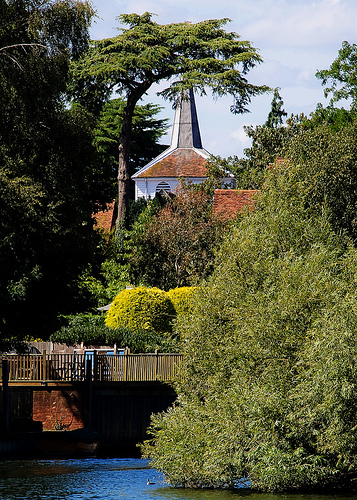
Thames Ditton is a large suburban village on the River Thames, in the Elmbridge borough of Surrey, England. Apart from a large inhabited island in the river, it lies on the southern bank, centred 12.2 miles (19.6 km) south-west of Charing Cross in central London. Thames Ditton is just outside Greater London but within the Greater London Urban Area, as defined by the Office for National Statistics. Its clustered village centre and shopping area on a winding High Street is surrounded by housing, schools and sports areas. Its riverside faces the Thames Path and Hampton Court Palace Gardens and golf course in the London Borough of Richmond upon Thames. Its most commercial area is spread throughout its conservation area and contains restaurants, cafés, shops and businesses.
Thames Ditton joins Long Ditton and Weston Green in occupying the land between Surbiton, Esher and East Molesey. Although reduced to less than one square mile (2.6 km2), it formerly covered more than four square miles (10 km2).
The first written record of Thames Ditton is in a charter dated 983 when King Æthelred the Unready granted to Æthelmær, his minister, nine hides (cassati) at Thames Ditton, Surrey. In The Cartulary of the Abbey of Eynsham Transaction, King Æthelred sent to Eynsham Abbey confirmation of the foundation (in 1005) by Æthelmær, the endowment including 20 hides at Esher, Surrey (granted by Beorhthelm, bishop, to Æthelweard, and bequeathed by Æthelweard to his son, Æthelmær); and land at Thames Ditton, Surrey, among several other items.
Two Dittons appear in the Domesday Book of 1086 as Ditone and Ditune. Under the Normans, the one now identified with Thames Ditton was held by Wadard from the Bishop of Bayeux. Its Domesday assets were: 2+1⁄2 hides; part of a mill worth 1s 3d, 1+1⁄2 ploughs, 4 acres (1.6 ha) of meadow, woodland worth 20 hogs. It rendered £4. There were four households. Other manors that came to form part of Thames Ditton were those of Weston, Imworth (or Imber), and for a while, Claigate (Claygate). From Domesday, the combined population of Thames Ditton (4), Long Ditton (11), Immeworth (2) and Weston (9) was some 26 households of villagers and smallholders.
Later, the manors of both Dittons were reunited when Anne Gould inherited the manor of Thames Ditton and married Thomas Evelyn, who had inherited the manor of (Long) Ditton. By that time the manor of Thames Ditton amounted to little by way of land and, to all effects, Thames Ditton comprised mainly the manors of Imworth and of Weston, with some lands from Claygate, Long Ditton and even Kingston extending into the present-day boundaries of Thames Ditton and Weston Green. Thus it remained still in 1848, comprising "about 3,000 acres (12 km2)".
Under Eynsham Abbey, Thames Ditton had been parcelled with Esher. It was in the Saxon's Elmbridge hundred, where its local aristocracy would convene for strategic and administrative purposes. Salter's introduction to the Cartulary notes that along with Esher, Eynsham appears to have lost Thames Ditton by the time of the Norman Conquest. The Domesday survey recorded that (before the Conquest) Ditton had been held by Earl Harald (subsequently King until 1066). In Domesday, Thames Ditton (as well as adjacent Long Ditton and 'Ember' or Immeworth, later Imber Court) is listed within Kingston Hundred; in Speed's map of Surrey (1611) it is said to be in Kingston Hundred. Subsequent records assert not only Thames Ditton was in Kingston Hundred but remained part of its parish as a chapelry.
Following the Normon Conquest, part of the land was granted to the monks of Merton Priory by Gilbert the Norman. A chapel – now the church – was built, the first recorded incumbent being in 1179. The chapelry of Thames Ditton was subordinate to Kingston Rectory until the late 1700s. By Act of Parliament in 1769, Thames Ditton, which had from the early 1600s assumed the civilian vestry responsibilities of a parish, became a separate curacy and an ecclesiastical parish in its own right, subsuming Hinchley Wood, Claygate and Weston Green. (Long Ditton remained a separate parish, not within the Kingston Rectory, despite attempts during Cromwell's time to fuse the two).
But, the advowson remained in the hands of the Hardinge family of Kingston until Nicholas Hardinge sold it, along with the advowson of Kingston and other subordinate chapelries, to King's College, Cambridge in 1781, subject to a long lease otherwise disposed of. The Hardinges retained the right of presentation for a period (then subsequently leased that too). Rev Henry Hardinge, Rector of Kingston, was also the incumbent at St Nicholas for a brief and ill-starred time.
Hub AI
Thames Ditton AI simulator
(@Thames Ditton_simulator)
Thames Ditton
Thames Ditton is a large suburban village on the River Thames, in the Elmbridge borough of Surrey, England. Apart from a large inhabited island in the river, it lies on the southern bank, centred 12.2 miles (19.6 km) south-west of Charing Cross in central London. Thames Ditton is just outside Greater London but within the Greater London Urban Area, as defined by the Office for National Statistics. Its clustered village centre and shopping area on a winding High Street is surrounded by housing, schools and sports areas. Its riverside faces the Thames Path and Hampton Court Palace Gardens and golf course in the London Borough of Richmond upon Thames. Its most commercial area is spread throughout its conservation area and contains restaurants, cafés, shops and businesses.
Thames Ditton joins Long Ditton and Weston Green in occupying the land between Surbiton, Esher and East Molesey. Although reduced to less than one square mile (2.6 km2), it formerly covered more than four square miles (10 km2).
The first written record of Thames Ditton is in a charter dated 983 when King Æthelred the Unready granted to Æthelmær, his minister, nine hides (cassati) at Thames Ditton, Surrey. In The Cartulary of the Abbey of Eynsham Transaction, King Æthelred sent to Eynsham Abbey confirmation of the foundation (in 1005) by Æthelmær, the endowment including 20 hides at Esher, Surrey (granted by Beorhthelm, bishop, to Æthelweard, and bequeathed by Æthelweard to his son, Æthelmær); and land at Thames Ditton, Surrey, among several other items.
Two Dittons appear in the Domesday Book of 1086 as Ditone and Ditune. Under the Normans, the one now identified with Thames Ditton was held by Wadard from the Bishop of Bayeux. Its Domesday assets were: 2+1⁄2 hides; part of a mill worth 1s 3d, 1+1⁄2 ploughs, 4 acres (1.6 ha) of meadow, woodland worth 20 hogs. It rendered £4. There were four households. Other manors that came to form part of Thames Ditton were those of Weston, Imworth (or Imber), and for a while, Claigate (Claygate). From Domesday, the combined population of Thames Ditton (4), Long Ditton (11), Immeworth (2) and Weston (9) was some 26 households of villagers and smallholders.
Later, the manors of both Dittons were reunited when Anne Gould inherited the manor of Thames Ditton and married Thomas Evelyn, who had inherited the manor of (Long) Ditton. By that time the manor of Thames Ditton amounted to little by way of land and, to all effects, Thames Ditton comprised mainly the manors of Imworth and of Weston, with some lands from Claygate, Long Ditton and even Kingston extending into the present-day boundaries of Thames Ditton and Weston Green. Thus it remained still in 1848, comprising "about 3,000 acres (12 km2)".
Under Eynsham Abbey, Thames Ditton had been parcelled with Esher. It was in the Saxon's Elmbridge hundred, where its local aristocracy would convene for strategic and administrative purposes. Salter's introduction to the Cartulary notes that along with Esher, Eynsham appears to have lost Thames Ditton by the time of the Norman Conquest. The Domesday survey recorded that (before the Conquest) Ditton had been held by Earl Harald (subsequently King until 1066). In Domesday, Thames Ditton (as well as adjacent Long Ditton and 'Ember' or Immeworth, later Imber Court) is listed within Kingston Hundred; in Speed's map of Surrey (1611) it is said to be in Kingston Hundred. Subsequent records assert not only Thames Ditton was in Kingston Hundred but remained part of its parish as a chapelry.
Following the Normon Conquest, part of the land was granted to the monks of Merton Priory by Gilbert the Norman. A chapel – now the church – was built, the first recorded incumbent being in 1179. The chapelry of Thames Ditton was subordinate to Kingston Rectory until the late 1700s. By Act of Parliament in 1769, Thames Ditton, which had from the early 1600s assumed the civilian vestry responsibilities of a parish, became a separate curacy and an ecclesiastical parish in its own right, subsuming Hinchley Wood, Claygate and Weston Green. (Long Ditton remained a separate parish, not within the Kingston Rectory, despite attempts during Cromwell's time to fuse the two).
But, the advowson remained in the hands of the Hardinge family of Kingston until Nicholas Hardinge sold it, along with the advowson of Kingston and other subordinate chapelries, to King's College, Cambridge in 1781, subject to a long lease otherwise disposed of. The Hardinges retained the right of presentation for a period (then subsequently leased that too). Rev Henry Hardinge, Rector of Kingston, was also the incumbent at St Nicholas for a brief and ill-starred time.