


.JPG)

Community hub
The Chordettes
View on Wikipedia
Key Information

.JPG)
The Chordettes were an American female vocal quartet, specializing in traditional pop music. They are best known for their 1950s hit singles "Mr. Sandman" and "Lollipop", both of which sold over a million copies.
Career
[edit]The group organized in Sheboygan, Wisconsin, in 1946. The original members of the group were Janet Ertel Bleyer (née Buschmann), Alice Mae Buschmann Spielvogel, Dorothy "Dottie" (Hummitzsch) Schwartz and Jinny Osborn (née Lockard). Originally they sang folk music in the style of The Weavers, but eventually changed to a harmonizing style of the type known as barbershop harmony or close harmony.
After performing locally in Sheboygan, they won on Arthur Godfrey's radio program Talent Scouts in 1949. They held feature status on Godfrey's daily program, and in 1950 recorded their first LP, a collection of standards titled Harmony Time for Columbia Records. Three more LPs followed.[1]
In 1953, Godfrey's music director and orchestra leader, Archie Bleyer, founded Cadence Records.[2] He signed a number of Godfrey regulars and former regulars, including the Chordettes, who had a number of hit records for Cadence.[2]
Beginning in January 1954, the group sang on the Robert Q. Lewis Show, a weekday afternoon program on CBS-TV.[3]
The Chordettes had released a couple of singles with Arthur Godfrey on Columbia in 1950–51 but did not cut a solo single until their breakout hit, "Mr. Sandman", released in late 1954 and which went on to become a number one 1955 hit for seven weeks.[2] It sold in excess of a million copies and was awarded gold disc status.[4] Archie Bleyer himself was on that record along with the group; Bleyer stripped down the sound to highlight the women's voices. They also reached number two with 1958's "Lollipop", another million album seller, and a number 2 on the charts,[5] also charted with a vocal version of the themes from Disney's Zorro (U.S. number 17) (1958) and the film Never on Sunday (U.S. number 13) (1961).
Other hits for the group included "Eddie My Love" (U.S. number 14) (a cover of a song by doo-wop group The Teen Queens), "Born to Be With You" (U.S. number 5), "Lay Down Your Arms" in 1956, and "Just Between You and Me" (U.S. number 8) in 1957.[2] Their cover of "The White Rose Of Athens" reached the Australian Top 15 in May, 1962. The US single "In The Deep Blue Sea" was a one-week Music Vendor entry four months later (number 128).
The Chordettes appeared on American Bandstand on August 5, 1957, the first episode of that show to be broadcast nationally on the ABC Television Network. The Chordettes also appeared on American Bandstand on February 22, 1958, and again on April 26, 1958.[citation needed]
In 1961, Jinny Osborn again left the group. Unable to find a satisfactory replacement, the group disbanded in the mid-1960s.[2]
Awards and recognition
[edit]The group was inducted into the Vocal Group Hall of Fame in 2001.[6]
Deaths
[edit]Alice Mae Buschmann Spielvogel died in 1981 at the age of 55.[7]
Janet Ertel Bleyer died on November 22, 1988, at the age of 75.[8]
Jinny Osborn (later known as Jinny Janis) died in 2003 at the age of 76.[9]
Nancy Overton died on April 5, 2009, at the age of 83 after a long battle with esophageal cancer.[10]
Dorothy "Dottie" (Hummitzsch) Schwartz died on April 4, 2016, at the age of 89.[11]
Lynn Evans Mand died on February 6, 2020, at the age of 95.[12]
Carol Buschmann died in Sheboygan, Wisconsin, on September 30, 2023, at the age of 96.[13][14]
Marjorie “Margie” Needham Latzko, the last surviving member of the Chordettes, died in Saratoga Springs, New York, on August 22, 2025, at the age of 96.[15]
Members
[edit]Original
[edit]- Janet Ertel (1946–1963; was later replaced by Nancy Overton for touring around 1959)
- Alice Mae Buschmann Spielvogel (1946–1947)
- Dorothy "Dottie" (Hummitzsch) Schwartz (1946–1952)
- Jinny Osborn/Lockard (1946–1953, 1957–1961)
Additional
[edit]- Carol Buschmann (1947–1963)
- Lynn Evans (née Hargate) (1953–1963)
- Margie Needham (1953–1957)
- Nancy Overton (1957–1963; replaced Janet Ertel for touring around 1959)
Timeline
[edit]
Discography
[edit]Albums
[edit]| Year | Album | US BB [16] |
Record Label |
|---|---|---|---|
| 1950 | Harmony Time | 3 | Columbia |
| 1951 | Harmony Time Volume II | — | |
| 1952 | Harmony Encores | — | |
| 1953 | The Chordettes Sing Your Requests | — | |
| 1955 | The Chordettes | — | |
| Listen | — | ||
| Close Harmony | — | Cadence | |
| 1957 | The Chordettes | — | |
| 1959 | Drifting and Dreaming | — | Harmony |
| 1962 | Never on Sunday | — | Cadence |
Singles
[edit]| Year | Single (A-side, B-side) Both sides from same album except where indicated |
Chart positions | Album | ||||
|---|---|---|---|---|---|---|---|
| US [17] |
US R&B [18] |
US A/C [18] |
CAN CHUM |
UK [19] | |||
| 1950 | "Down by the Old Mill Stream" (with Arthur Godfrey) | — | — | — | — | — | Non-album tracks |
| "If It Wasn't for Your Father" (with Arthur Godfrey) b/w "Gone Fishin'" (non-album track) |
— | — | — | — | — | ||
| "Time Out for Tears" (with Bill Lawrence) b/w "Can't Seem to Laugh Anymore" (non-album track) |
— | — | — | — | — | ||
| "Hawaii" (with Arthur Godfrey) b/w "Driftin' Down the Dreamy Ol' Ohio" (non-album track) |
— | — | — | — | — | ||
| 1951 | "Candy & Cake" (with Arthur Godfrey) |
— | — | — | — | — | |
| 1954 | "Mr. Sandman" b/w "I Don't Wanna See You Cryin'" (non-album track) |
1[20] | — | — | — | 11 | The Chordettes |
| 1955 | "Lonely Lips" b/w "The Dudelsack Song" (non-album track) |
— | — | — | — | — | All the Very Best of the Chordettes |
| "Humming Bird" b/w "I Told a Lie" (non-album track) |
— | — | — | — | — | The Chordettes | |
| 1956 | "The Wedding" b/w "I Don't Know, I Don't Care" (non-album track) |
91[21] | — | — | — | — | All the Very Best of the Chordettes |
| "Eddie My Love" b/w "Whistlin' Willie" (non-album track) |
14 | — | — | — | — | The Chordettes | |
| "Born to Be with You" b/w "Love Never Changes" |
5 | — | — | — | 8 | ||
| "Lay Down Your Arms" / | 16[22] | — | — | — | — | ||
| "Teen Age Goodnight" | 45 | — | — | — | — | ||
| 1957 | "Come Home to My Arms" b/w "(Fifi's) Walkin' the Poodle" (non-album track) |
— | — | — | — | — | |
| "Echo of Love" b/w "Like a Baby" (from The Chordettes) |
— | — | — | — | — | Non-album track | |
| "Just Between You and Me" / | 8 | — | — | 15 | — | The Chordettes | |
| "Soft Sands" | 73 | — | — | 16 [23] | — | ||
| "Baby of Mine" b/w "Photographs" |
— | — | — | — | — | Non-album tracks | |
| 1958 | "Lollipop" b/w "Baby, Come-a Back-a" (non-album track) |
2 | 3 | — | 1 | 6 | All the Very Best of the Chordettes |
| "Zorro" b/w "Love Is a Two-Way Street" (non-album track) |
17 | — | — | 17 | — | ||
| 1959 | "No Other Arms, No Other Lips" [Cadence 1361] b/w "We Should Be Together" (non-album track) |
27 | — | — | — | — | |
| "A Girl's Work Is Never Done" [Cadence 1366] b/w "No Wheels" (non-album track) |
89 | — | — | — | — | ||
| 1960 | "A Broken Vow" b/w "All My Sorrows" |
102 | — | — | — | — | Non-album tracks |
| 1961 | "Never on Sunday" / | 13 | — | 4 | 16 | — | Never on Sunday |
| "Faraway Star" | 90 | — | — | — | — | All the Very Best of the Chordettes | |
| "The Exodus Song" b/w "Theme from 'Goodbye Again'" |
— | — | — | — | — | Never on Sunday | |
| 1962 | "The White Rose of Athens" b/w "Adios" |
— | — | — | — | — | Non-album tracks |
| "In the Deep Blue Sea" b/w "All My Sorrows" |
— | — | — | — | — | ||
| 1963 | "True Love Goes On and On" b/w "All My Sorrows" |
— | — | — | — | — | |
| "—" denotes releases that did not chart or were not released in that territory. | |||||||
See also
[edit]References
[edit]- ^ "Chordettes". Oxford Music Online. 2006-07-04. Retrieved 2015-02-22.
- ^ a b c d e Colin Larkin, ed. (2002). The Virgin Encyclopedia of Fifties Music (Third ed.). Virgin Books. pp. 70/1. ISBN 1-85227-937-0.
- ^ "Monday (11)" (PDF). Ross Reports on Television. January 11, 1954. p. 1. Archived (PDF) from the original on September 3, 2020. Retrieved August 8, 2020.
- ^ Murrells, Joseph (1978). The Book of Golden Discs (2nd ed.). London: Barrie and Jenkins Ltd. p. 67. ISBN 0-214-20512-6.
- ^ Murrells, Joseph (1978). The Book of Golden Discs (2nd ed.). London: Barrie and Jenkins Ltd. p. 98. ISBN 0-214-20512-6.
- ^ "The Chordettes". The Vocal Group Hall of Fame. Retrieved 2022-11-09.
- ^ "The Chordettes". QUB musique. Retrieved November 9, 2022.
- ^ Nick Talevski (2010). Rock Obituaries: Knocking On Heaven's Door. Omnibus Press. p. 38. ISBN 9780857121172.
- ^ Talevski, Nick (2010). "Jinny Osborn". Rock Obituaries: Knocking On Heaven's Door. Omnibus Press. p. 478. ISBN 9780857121172. Archived from the original on January 21, 2021. Retrieved April 1, 2020.
- ^ Hevesi, Dennis (April 10, 2009). "Nancy Overton, Singer for the Chordettes, Is Dead at 83". New York Times. Archived from the original on April 15, 2009. Retrieved August 6, 2009.
- ^ Leah Ulatowski (April 6, 2016). "Dorothy Schwartz, member of Chordettes, passes away". Sheboygan Press. Retrieved November 9, 2022.
- ^ "Lynn Evans Mand". The Chronicle. February 11, 2020. Archived from the original on February 13, 2020. Retrieved May 8, 2020.
- ^ "Carol Hagedorn Buschmann". Legacy. Retrieved 11 October 2023.
- ^ "Carol Buschmann, Chordettes Member, Passes Away at 96". WHBL. 11 October 2023. Retrieved 11 October 2023.
- ^ "Marjorie (Needham) Latzko Obituary". Legacy.com. 22 August 2025.
- ^ Whitburn, Joel (1973). Top LPs, 1955–1972. Record Research. p. 31. Retrieved 2025-07-10.
- ^ "US Hot 100 Bubbling Under". Top40weekly.com. May 13, 2017. Retrieved August 3, 2025.
- ^ a b "The Chordettes - Awards". AllMusic. Archived from the original on July 5, 2013. Retrieved 11 November 2023.
- ^ Nugent, Stephen / Fowler, Anne / Fowler, Pete (1976): Chart Log of American/British Top 20 Hits, 1955-1974. In: Gillett, Charlie / Frith, Simon (ed.): Rock File 4. Frogmore, St. Albans: Panther Books, p. 113f
- ^ Whitburn, Joel (1973): Top Pop Records 1940-1955. Menomonee Falls, Wisconsin: Record Research, p. 13
- ^ Whitburn, Joel (1994): Top Pop Singles 1955-1993. Menomonee Falls, Wisconsin: Record Research Ltd., p. 112
- ^ Whitburn, Joel (2005): The Billboard Book of Top 40 Hits. 7. überarbeitete und erweiterte Auflage, New York City, New York: Billboard Books, p. 129
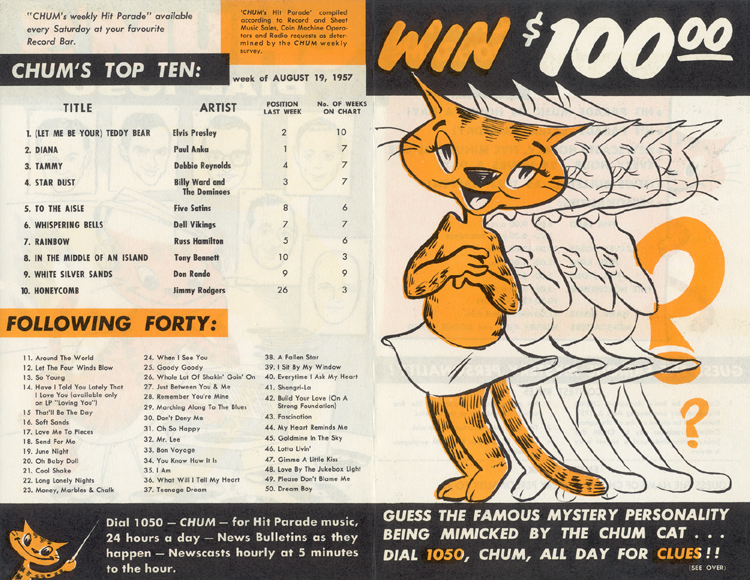
- ^ "CHUM Hit Parade - August 19, 1957".
External links
[edit] | This article's use of external links may not follow Wikipedia's policies or guidelines. (November 2022) |

- Picture and names of The Chordettes
- 'The Chordettes' Vocal Group Hall of Fame Page
- The Chordettes at AllMusic
- The Chordettes discography at Discogs
- The Chordettes at IMDb
- The Chordettes' page on the Primarily A Cappella site
- Chordette Lynn Evans harmonizes in classroom while a teacher[dead link]
- The Chordettes : Official Covers Discography
- Carol Buschmann Interview at NAMM Oral History Library (2010)
- Dorothy Schwartz Interview NAMM Oral History Library (2010)
- Chordettes collection of musical arrangements, 1938-1995 at the Library of Congress
| International | |
|---|---|
| National | |
| Artists | |
| Other | |


The Chordettes
View on GrokipediaHistory
Formation and early years
The Chordettes were formed in 1946 in Sheboygan, Wisconsin, as an all-female barbershop quartet by Jinny Osborn, a local high school student with a passion for vocal harmonies, alongside Janet Ertel (bass), Dorothy Schwartz (lead), and Alice Mae Buschmann Spielvogel (baritone).[4][5] Carol Buschmann replaced her sister-in-law Alice Mae Buschmann Spielvogel on baritone in 1947. The group initially practiced in Osborn's family basement, drawing from the barbershop traditions popular in the Midwest, where close four-part harmonies emphasized precision and blend without instrumental accompaniment.[2] In their early years, the Chordettes performed at local events, school functions, and amateur radio shows around Sheboygan, maintaining an all-volunteer status while balancing day jobs and family life.[4] Their repertoire started with barbershop standards but gradually shifted toward a pop-oriented style, influenced by listening to female ensembles like the Andrews Sisters and the Boswell Sisters, whose smooth, rhythmic harmonies and lighthearted arrangements appealed to the group's youthful energy.[2] This evolution highlighted their adaptability, blending barbershop's structured chords with pop's melodic accessibility, though they remained amateurs focused on community performances.[6] The group's first major professional opportunity came in 1949 when they won first place on Arthur Godfrey's Talent Scouts radio program, earning the "gold trophy" prize and immediate national exposure.[4] This victory led to regular appearances on Godfrey's CBS radio show, Arthur Godfrey Time, and its television counterpart from 1949 to 1953, where they became recurring performers, often backing Godfrey and showcasing their polished a cappella style to a growing audience.[4][7] The close family ties between Ertel and Buschmann, combined with the quartet's shared Midwestern roots and amateur beginnings, fostered a tight-knit dynamic that Godfrey praised for its genuine charm and vocal synergy.[5] In 1952, the Chordettes secured their initial recording contract with Columbia Records, releasing singles such as "Drifting and Dreaming" and appearing on tracks with Arthur Godfrey, though these efforts achieved limited commercial success and did not chart nationally.[8] Their Columbia output emphasized harmonious covers of standards, reflecting their barbershop foundation, but lacked the breakthrough needed to elevate them beyond Godfrey's platform.[5] This period solidified their professional footing while underscoring the group's reliance on live radio and TV exposure for visibility.[4]Rise to fame in the 1950s
In 1953, The Chordettes departed from Arthur Godfrey's television show amid tensions stemming from contract issues involving the program's music director, Archie Bleyer, who subsequently founded Cadence Records and signed the group to the label.[9] Bleyer, who later married group member Janet Ertel in 1954, provided the quartet with their first major recording opportunity outside of their earlier Columbia releases.[10] This transition marked a pivotal shift, allowing the group to pursue a more independent path in the burgeoning pop music scene. The Chordettes' breakthrough came with their debut Cadence single, "Mr. Sandman," released in 1954, which topped the Billboard Best Sellers chart for seven weeks and sold over two million copies, establishing them as national stars.[7][11] Their follow-up, "Born to Be With You," reached number five on the Billboard pop chart in 1956, further solidifying their commercial appeal.[12] These successes propelled a growing national profile, fueled by extensive radio airplay and popularity in jukeboxes across the country. During this period, the group evolved toward a pop-oriented sound incorporating doo-wop elements, characterized by tight vocal harmonies and rhythmic backing.[11] Their recording process at Cadence often involved multi-tracking techniques to layer and enhance the quartet's harmonies, contributing to the polished, ethereal quality of tracks like "Mr. Sandman." In 1954, they released their first Cadence album, The Chordettes Sing Your Requests, which showcased a mix of standards and contemporary tunes tailored to fan preferences.[8] Amid their rising fame, the Chordettes faced internal challenges in balancing intensive touring schedules with personal lives, as most members, including Janet Ertel who had a young daughter from a prior marriage, were married and managing family responsibilities.[10] This domestic strain highlighted the demands of sudden stardom on a group rooted in Midwestern family values.Major hits and media appearances
The Chordettes reached the height of their popularity in the late 1950s with a series of infectious pop singles that blended close harmonies and playful arrangements, capturing the era's optimistic spirit. Their biggest hit, "Lollipop," released in 1958, peaked at number 2 on the Billboard Hot 100. Written by songwriters Julius Dixson and Beverly Ross—who originally recorded it as Ronald & Ruby—the Chordettes' version featured their signature round-robin vocal style, turning the novelty tune into a million-seller that defined their commercial peak. The following year, in 1959, they charted with "Zorro," a lively adaptation of the theme from Walt Disney's hit television series starring Guy Williams, which climbed to number 17 on the Billboard Hot 100 and helped tie the group to popular family entertainment. Their final major hit of the decade, "Never on Sunday" in 1961—a cover of the Manos Hadjidakis composition from the Greek film of the same name—reached number 13 on the Billboard Hot 100, showcasing their ability to infuse international melodies with American pop flair. These successes were amplified by extensive media exposure that highlighted the group's synchronized choreography and visual charm, making them staples of 1950s television. They made multiple appearances on The Ed Sullivan Show, including performances of "Lollipop" in 1958 and "Just Between You and Me" in 1957, which drew millions of viewers and solidified their wholesome image alongside acts like Elvis Presley. On American Bandstand, hosted by Dick Clark, the Chordettes were featured as early national guests in 1957, performing hits that resonated with teen audiences and boosted their crossover appeal from barbershop roots to mainstream pop. The group also appeared on The Tonight Show during this era, further extending their reach through late-night variety formats. Beyond recordings, the Chordettes engaged in high-profile cross-promotions and live engagements that enhanced their visibility. The "Zorro" single directly linked them to Disney's adventure series, with promotional tie-ins including radio play and television spots that capitalized on the show's popularity among young viewers. On the concert circuit, they opened for major headliners during 1950s tours. This 1954–1960 period marked their most prolific output, with over 20 singles issued on Cadence Records, many produced by Archie Bleyer, establishing the Chordettes as enduring figures in mid-century American entertainment.Later career and disbandment
Following their peak in the late 1950s, The Chordettes experienced a decline in commercial success as musical tastes shifted toward rock and roll and the emerging British Invasion, which favored edgier sounds over their harmonious pop style. Their final Top 40 hit, "Never on Sunday," peaked at number 13 on the Billboard Hot 100 in 1961.[13] This track, a cover of the theme from the film Never on Sunday, marked the end of their consistent chart presence, with subsequent singles failing to replicate earlier achievements.[14] In 1961, founding soprano Jinny Osborn departed the group, creating challenges in maintaining their signature vocal blend. The remaining members attempted to continue with temporary replacements, such as Nancy Overton for touring, but the lineup instability contributed to diminished output. Sporadic recordings followed, primarily on Cadence Records, though none achieved significant airplay or sales.[15] The group also undertook limited tours and live performances during the early 1960s, focusing on nostalgia-driven audiences amid the evolving music landscape.[6] Label challenges further hampered their momentum; Cadence Records, their longtime home, faced financial strain from the British Invasion's disruption of traditional pop acts and ceased operations in 1964.[11][16] Unable to sustain relevance or secure a permanent replacement for Osborn, The Chordettes disbanded in the mid-1960s after nearly two decades together, quietly fading from the spotlight as demand for their style waned.[15]Musical style and influences
Vocal techniques and harmonies
The Chordettes' vocal style was deeply rooted in barbershop harmony traditions, which they adapted into a polished pop sound characterized by tight four-part close harmonies. Formed in 1946 in Sheboygan, Wisconsin, the group initially performed folk music before transitioning to a cappella arrangements in the barbershop style, assigning distinct roles to each member: the lead singer carried the melody, the tenor provided the high harmony, the baritone filled the inner voice, and the bass supplied the foundational low notes.[17] This structure, influenced by the Society for the Preservation and Encouragement of Barber Shop Quartet Singing in America, enabled their seamless voice blending, creating a rich, unaccompanied texture that defined their early recordings and live sets.[7] In their performances, the Chordettes employed barbershop techniques such as subtle "swipes"—quick chord alterations for dynamic effect—while avoiding the more elaborate "tags" or ending flourishes typical of competitive quartets. These elements added forward momentum and emotional nuance to their songs, as heard in their adaptation of pop standards, without relying on heavy instrumentation.[18] On stage and television appearances, they incorporated a cappella segments with synchronized movements, delivering polished, charming routines that enhanced their harmonious delivery and captivated audiences during the 1950s.[7] Over time, the group's style evolved by integrating doo-wop influences, particularly through the use of nonsense syllables like the "da-da-da-da" refrains in "Mr. Sandman" (1954), which bridged barbershop precision with rhythmic vocal play. This incorporation of light, repetitive syllables softened their barbershop foundations, contributing to the song's ethereal, dreamlike quality and helping propel it to mainstream success.[19][20]Genre influences and evolution
The Chordettes' musical style was profoundly shaped by the barbershop quartet traditions of the 1940s, drawing heavily from close-harmony ensembles that emphasized precise, a cappella vocal layering.[4] Influenced by pioneering female acts such as the Andrews Sisters and Boswell Sisters, the group initially adopted a sweet, wholesome sound rooted in folk-tinged barbershop harmonies, reflecting the era's post-war emphasis on harmonious, uplifting pop.[2] Their early work also echoed the folk-singing style of groups like the Weavers, blending narrative-driven songs with tight four-part arrangements that prioritized vocal interplay over instrumentation.[4] As the 1950s progressed, the Chordettes transitioned toward mainstream pop and light doo-wop under the production of Cadence Records, led by Archie Bleyer, who refined their sound with minimalist arrangements that spotlighted their seamless harmonies while incorporating subtle rhythmic elements.[21] This evolution marked a shift from their innocent, barbershop-derived innocence to a more playful, rock-tinged vibe in the late decade, as seen in tracks that introduced bolder rhythms and sharper vocal edges without fully embracing the era's heavier rock instrumentation.[2] By the early 1960s, however, the group resisted deeper adaptation to full rock and roll, maintaining a traditional close-harmony focus that limited their alignment with emerging trends, contributing to their disbandment in 1961.[4] The Chordettes served as key precursors to the 1960s girl group explosion, influencing later acts through their model of polished female harmonies and commercial pop appeal, which bridged barbershop precision with doo-wop's rhythmic vitality.[21] Their style's emphasis on vocal-centric production—often featuring sparse backing to highlight layered melodies—laid groundwork for later harmony-driven ensembles.[21]Members
Original lineup
The Chordettes were founded in 1946 in Sheboygan, Wisconsin, as a barbershop-style quartet by Jinny Osborn, with initial members Janet Ertel (bass), Dorothy "Dottie" Hummitzsch (lead), and Alice Mae Buschmann Spielvogel (baritone). Emphasizing tight harmonies and a clean, family-friendly image that resonated with post-World War II audiences, the group saw an early change in 1947 when Carol Buschmann replaced her sister-in-law Alice Mae Spielvogel on baritone. This lineup of Osborn, Ertel, Hummitzsch (later Schwartz), and Buschmann performed together until 1952.[22][4] Jinny Osborn, born Virginia Ann Cole on April 25, 1927, in Seattle, Washington, was the driving force behind the group's formation after moving to Sheboygan during her youth, where her father, O.H. "King" Cole, influenced her with barbershop singing traditions. Educated at Shimer College with a background in music, she recruited friends to create the quartet while in her late teens, initially performing at local events before gaining national attention. As the tenor, Osborn's clear, soaring voice was prominent on tracks like "Mr. Sandman," and she occasionally shared lead duties. She left the group temporarily in 1953 for maternity leave before returning, then departed permanently in 1961 to focus on family life, marrying and raising a son while transitioning to a career in real estate in Palm Springs, California, where she lived until her death from cancer on May 19, 2003, at age 76.[23][24][25] Carol Buschmann, born on May 13, 1927, in Sheboygan, Wisconsin, brought vocal versatility to the baritone position, capable of adapting to any part as needed during performances and recordings. A sister-in-law to fellow member Janet Ertel through family ties, she joined in 1947, strengthening the group's familial dynamic. Buschmann married Bob Buschmann, a Chicago restaurant owner, and the couple had children during the height of the group's fame in the 1950s. After the group disbanded in the early 1960s, she returned to the Sheboygan area in 1968, continuing to perform at local events and community functions while maintaining a low-key life centered on family and homemaking. She passed away on September 30, 2023, at age 96.[26][27][7] Dorothy "Dottie" Hummitzsch, born February 18, 1927, in Sheboygan, Wisconsin, was the lead vocalist from formation until 1952, delivering the melodic forefront on many early recordings and live shows with her warm, expressive tone. She adopted the stage name Dorothy Cole early in her career to simplify billing but later used her married name, Schwartz, after wedding William "Bill" W. Schwartz on December 31, 1949; the couple had children born amid the group's rising popularity, balancing touring demands with family responsibilities. She embodied the quartet's wholesome persona, often highlighted in media for her poise and Midwestern charm. Hummitzsch left the group in 1952 and retired from performing, focusing on her family in Sheboygan until her death on April 4, 2016, at age 89.[28][10][29] Janet Ertel, born September 21, 1913, in Sheboygan, Wisconsin—the eldest of the founding members by over a decade—provided the solid bass foundation that underpinned the group's rich harmonic blend. With prior experience in local singing groups, she joined through family connections and became the emotional anchor, her deep voice essential to their barbershop-inspired sound. Ertel had a daughter, Jackie, from a previous marriage before wedding Cadence Records founder Archie Bleyer in 1954, a union that integrated the group's professional and personal spheres; Jackie later married Phil Everly of the Everly Brothers, linking the Chordettes to another iconic act. Ertel contributed to recordings until around 1963, prioritizing family afterward, before succumbing to cancer on November 22, 1988, at age 75 in her hometown.[10][30][22] The members' chemistry was rooted in their shared Sheboygan origins (except Osborn, who relocated there as a youth) and emphasis on a squeaky-clean, all-American image, portraying themselves as devoted wives and mothers whose harmonious voices reflected domestic harmony rather than glamour or rebellion. Marriages and births during their active years—such as Ertel's wedding and the arrival of children for Buschmann, Hummitzsch, and Osborn—reinforced this relatable, wholesome appeal, allowing the group to connect deeply with 1950s listeners amid the era's cultural shift toward family values. Their Midwestern sensibility and mutual support enabled seamless collaboration, from local barbershop competitions to national television, without the internal conflicts that plagued some contemporaries.[4][2][31]Subsequent members and changes
Following the original formation, The Chordettes underwent several key lineup changes in the 1950s to sustain their career amid personal commitments. In 1952, Lynn Evans replaced Dorothy Schwartz as lead vocalist, bringing a fresh dynamic to the group's performances during their rise on Arthur Godfrey's radio and television shows. Evans, born Lynn Evans Mand in 1930, remained with the group through its major hits and later tours until the early 1960s, afterward pursuing education and music therapy.[1][32] The following year, in 1953, Margie Needham (later Margie Latzko) temporarily took over the tenor role from Jinny Osborn, who stepped away to have a child; Osborn returned shortly thereafter, maintaining the core harmonies that defined their early sound. Needham, a Sheboygan native, contributed to sessions including "Mr. Sandman" before leaving.[1] Around 1958-1959, Janet Ertel reduced touring to focus on family, leading to Nancy Overton joining for live appearances as bass; Ertel continued studio recordings until ~1963. Overton (1926-2009), a veteran singer from groups like The Heathertones, added maturity to performances on hits like "Lollipop," though she did not record with the group, and remained until the early 1960s.[33] These shifts were largely driven by members' family priorities, reflecting the era's challenges for female performers balancing professional and personal lives. However, in 1961, Jinny Osborn departed permanently for similar family reasons, and the remaining members could not secure a compatible replacement, leading to the group's disbandment by 1963 after a period of declining activity focused on touring.[15]Membership timeline
The Chordettes' lineup remained relatively stable during their formative and peak popularity years, with changes primarily driven by personal commitments such as maternity leave and family priorities. The group maintained a core of performers for recordings while using substitutes for touring in later years. Below is a chronological timeline of key membership configurations, highlighting durations and associated activities like live tours and studio work.[1]| Period | Lineup | Notes on Activities and Transitions |
|---|---|---|
| 1946–1947 | Janet Ertel (bass), Alice Mae Spielvogel (baritone), Dorothy Schwartz (lead), Jinny Osborn (tenor) | Original formation in Sheboygan, Wisconsin; focused on barbershop quartet performances and local radio appearances; Spielvogel departed in 1947.[1][34] |
| 1947–1952 | Janet Ertel (bass), Carol Buschmann (baritone), Dorothy Schwartz (lead), Jinny Osborn (tenor) | Buschmann joined as baritone replacement; early national exposure via Arthur Godfrey's Talent Scouts (1949 win); Schwartz departed in 1952.[1][34] |
| 1952–1961 | Janet Ertel (bass), Carol Buschmann (baritone), Lynn Evans (lead), Jinny Osborn (tenor) | Evans joined as lead replacement; Osborn took brief maternity leave in 1953, with Margie Needham as temporary tenor before Osborn's return; this configuration recorded major hits like "Mr. Sandman" (1954) and "Lollipop" (1958) for Cadence Records, alongside national TV and tour appearances; Osborn departed permanently in 1961 to focus on family.[1][34] |
| 1961–1963 | Lynn Evans (lead), Carol Buschmann (baritone), Janet Ertel (bass), with Nancy Overton (bass for touring from ~1959) | Post-Osborn, group used temporary tenors for limited recordings like "Never on Sunday" (1961) and focused on nostalgia tours; Ertel contributed to recordings until ~1963 but limited touring; Overton handled live bass duties; unable to stabilize lineup, group disbanded by 1963.[1][33] |
Discography
Studio albums
The Chordettes' studio album output spanned the early 1950s to the early 1960s, beginning with releases on Columbia Records that showcased their barbershop roots through a cappella and lightly accompanied covers of standards. After signing with Cadence Records in 1953, founded by their longtime musical director Archie Bleyer, the group shifted to fuller productions emphasizing tight vocal harmonies on pop hits and originals, recorded primarily in New York studios during intensive sessions that captured their signature sound. These albums, totaling eight principal full-length LPs (including 10-inch formats common at the time), focused on interpretive covers rather than original material, reflecting the era's demand for harmonious renditions of familiar tunes, though none achieved top-10 chart status on the Billboard 200. Bleyer's production style highlighted the group's blend of innocence and precision, often featuring minimal orchestration to let the vocals shine.[35] Their early Columbia releases included Harmony Time (1950, Columbia CL-6101), a 10-inch LP of barbershop standards like "When You Were Sweet Sixteen" and "Shine On Harvest Moon," performed a cappella. Followed by Harmony Encores (1952, Columbia CL-6193), another 10-inch collection expanding on harmony favorites. The debut request-focused album, The Chordettes Sing Your Requests (1954, Columbia CL-6285), was a 10-inch LP comprising 10 tracks of requested standards like "They Say It's Wonderful" and "A Girl's Best Friend Is Her Mother," performed in pure a cappella style without instrumentation, underscoring their barbershop origins from Sheboygan, Wisconsin. Released amid their rising visibility on Arthur Godfrey's radio and TV shows, it served as an early showcase of their request-driven repertoire but did not chart significantly.[36] Transitioning to Cadence, Close Harmony (1955, Cadence CLP-1002) marked their first LP with the label, a 10-inch collection of 10 pop standards including "Oh Baby Mine (I Get So Lonely)" and "We Three (My Echo, My Shadow and Me)," produced by Archie Bleyer with subtle orchestral backing to enhance their layered harmonies. Recorded in New York shortly after their Cadence signing, it emphasized close-miked vocal arrangements typical of mid-1950s sessions, blending nostalgia with emerging pop sensibilities, though it failed to reach the charts.[37] Listen (1957, Columbia CL-936), a later Columbia 12-inch LP, featured traditional songs like "Shine On Harvest Moon" and "Basin Street Blues" in harmony arrangements. The self-titled The Chordettes (1957, Cadence CLP-3001), their first 12-inch LP on Cadence, featured 12 tracks such as the hit "Mr. Sandman," "Lollipop," and "Born to Be with You," all produced by Bleyer in New York studios to capitalize on their singles success. This album represented a pivot toward teen-oriented pop with fuller arrangements, including doo-wop influences on originals and covers, yet it did not enter the top 10 despite strong sales from included singles. Drifting and Dreaming (1959, Cadence CLP-3019) included dreamy ballads and standards like "Drifting and Dreaming" and "Among My Souvenirs," maintaining their vocal focus amid lineup changes. Their final principal studio album, Never on Sunday (1962, Cadence CLP-3056), contained 12 film-inspired covers like the title track, "Tammy," and "Que Sera, Sera," produced by Bleyer during late-career New York sessions that aimed to refresh their sound with international and cinematic themes. Focusing on harmonious interpretations of movie standards, it highlighted evolving vocal techniques but, like predecessors, avoided major chart impact.[38]| Album Title | Release Year | Label | Key Tracks | Producer | Notes |
|---|---|---|---|---|---|
| Harmony Time | 1950 | Columbia (CL-6101) | When You Were Sweet Sixteen, Shine On Harvest Moon | N/A (a cappella focus) | 10-inch LP; early barbershop standards; no chart entry. |
| Harmony Encores | 1952 | Columbia (CL-6193) | Various harmony encores | N/A | 10-inch LP; sequel to Harmony Time; no chart entry. |
| The Chordettes Sing Your Requests | 1954 | Columbia (CL-6285) | They Say It's Wonderful, A Girl's Best Friend Is Her Mother | N/A (a cappella focus) | 10-inch LP; early barbershop-style requests; no chart entry. |
| Close Harmony | 1955 | Cadence (CLP-1002) | Oh Baby Mine (I Get So Lonely), We Three | Archie Bleyer | 10-inch LP; New York sessions; harmony standards; no chart entry. |
| Listen | 1957 | Columbia (CL-936) | Shine On Harvest Moon, Basin Street Blues | N/A | 12-inch LP; traditional songs; no chart entry. |
| The Chordettes | 1957 | Cadence (CLP-3001) | Mr. Sandman, Lollipop, Born to Be with You | Archie Bleyer | First 12-inch on Cadence; pop hits and covers; no top-10 chart. |
| Drifting and Dreaming | 1959 | Cadence (CLP-3019) | Drifting and Dreaming, Among My Souvenirs | Archie Bleyer | Ballads and standards; no chart entry. |
| Never on Sunday | 1962 | Cadence (CLP-3056) | Never on Sunday, Tammy, Que Sera, Sera | Archie Bleyer | Film song covers; late-period New York recording; no chart entry. |
Singles and EPs
The Chordettes' singles output, primarily on Cadence Records from 1954 to 1961 with earlier releases on Columbia, served as the primary vehicle for their chart success in the 1950s pop landscape. Over 20 7-inch singles were issued across these labels, many featuring the group's signature close harmonies backed by light orchestration from Archie Bleyer and his ensemble. Key releases included B-sides that occasionally charted independently or complemented the A-side's theme, contributing to the group's reputation for polished, accessible vocal pop. While not all tracks achieved national prominence, several became regional hits, and non-charting singles like "No Wheels" showcased their versatility in novelty and ballad styles.[11] Their major Cadence singles dominated the Billboard Hot 100, with "Mr. Sandman" topping the chart for seven weeks in late 1954 and selling two million copies worldwide. "Lollipop" followed as their second million-seller, peaking at #2 in 1958 and earning gold disc status for exceeding one million units. These hits, along with others, highlighted the group's ability to blend barbershop roots with emerging rock influences, often produced with simple arrangements emphasizing vocal layers over instrumental complexity. Certifications from the era reflected the RIAA's early standards for million-sellers, underscoring the commercial impact of their releases.[7][39]| Year | A-Side / B-Side | Label (Catalog) | Peak Billboard Hot 100 |
|---|---|---|---|
| 1954 | Mr. Sandman / I Don't Want to See You Crying | Cadence (1247) | 1 |
| 1955 | Lonely Lips / The Dudelsack Song | Cadence (1259) | — |
| 1956 | Born to Be with You / Love Never Changes | Cadence (1291) | 5 |
| 1956 | Lay Down Your Arms / Teenage Goodnight | Cadence (1299) | 16 (A), 45 (B) |
| 1957 | Just Between You and Me / Soft Sands | Cadence (1330) | 8 (A), 73 (B) |
| 1958 | Lollipop / Baby Come-A Back | Cadence (1345) | 2 |
| 1958 | Zorro / Love Is a Two Way Street | Cadence (1349) | 17 |
| 1959 | No Other Arms, No Other Lips / We Should Be Together | Cadence (1361) | 27 |
| 1959 | A Girl's Work Is Never Done / No Wheels | Cadence (1366) | 89 |
| 1960 | A Broken Vow / All My Sorrows | Cadence (1382) | — |
| 1961 | Never on Sunday / Faraway Star | Cadence (1402) | 13 (A), 90 (B) |