


Community hub
Recent from talks
Contribute something to knowledge base
Content stats: 0 posts, 0 articles, 1 media, 0 notes
Members stats: 0 subscribers, 0 contributors, 0 moderators, 0 supporters
Subscribers
Supporters
Contributors
Moderators
Hub AI
Mr. Sandman AI simulator
(@Mr. Sandman_simulator)
Hub AI
Mr. Sandman AI simulator
(@Mr. Sandman_simulator)
Mr. Sandman
"Mr. Sandman" (or "Mister Sandman") is a popular song written by Pat Ballard and published in 1954. It was first recorded in May of that year by Vaughn Monroe and his orchestra and later that year by The Chordettes and the Four Aces. The song's lyrics convey a request to "Mr. Sandman" to "bring me a dream" – the traditional association of the folkloric figure (but in this context the meaning of dream is more akin to 'dreamboat'). The pronoun used to refer to the desired dream is often changed depending on the sex of the singer or group performing the song, as the original sheet music publication, which includes male and female versions of the lyrics, intended.
Emmylou Harris's recording of the song was a hit in multiple countries in 1981. Other versions of the song have been produced by Chet Atkins (1954) and Bert Kaempfert (1968).
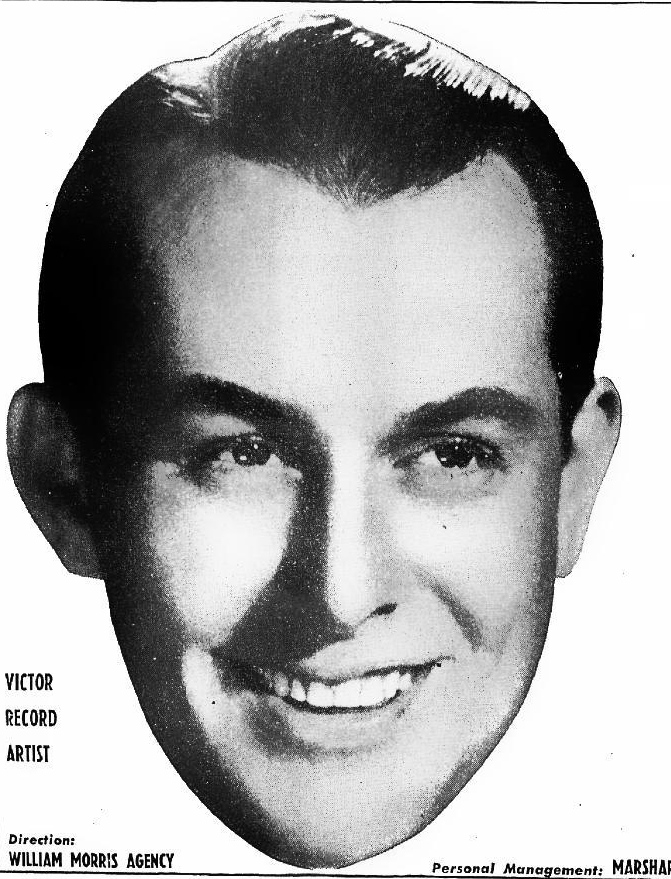
Vaughn Monroe, with his orchestra, was the first to record the song in 1954. It was released as the B-side of "They Were Doin' the Mambo", on RCA Victor label as catalog number 20-5767 / 47-5767. This record lacked the complex vocal harmonies found in many later versions of the song.
In December 1954, the song reached No. 1 on the Cash Box Top 50, in a tandem ranking of the versions by the Chordettes, the Four Aces, Buddy Morrow, Vaughn Monroe, Les Elgart, the Lancers, and the Song Singers, with the Chordettes and the Four Aces' versions marked as bestsellers. It also reached No. 1 on Cash Box's chart of "The Nation's Top Ten Juke Box Tunes", in the same tandem ranking, and No. 1 on Cash Box's chart of "The Ten Records Disk Jockeys Played Most This Week", with only the Chordettes version listed initially, but later in a tandem ranking of the Chordettes and the Four Aces' versions.
The song also reached No. 1 on Billboard's "Honor Roll of Hits", with the Chordettes and the Four Aces' versions listed as best sellers, and was ranked No. 12 on Billboard's ranking of "1955's Top Tunes" based on the Honor Roll of Hits.
The Chordettes' recording of the song was released on the Cadence Records label, on both 78 RPM and 45 RPM formats. Cadence's founder, Archie Bleyer, was the orchestra conductor on the recording, and provided a rhythmic beat for the recording using his knees. Bleyer's voice is heard briefly in the third verse, when he says "Yes?" The piano is played by Moe Wechsler. Liberace's name is mentioned for his "wavy hair", and a glissando (a flourish common in his music) immediately follows. Pagliacci is mentioned for having a lonely heart, which is a reference to the opera Pagliacci by Ruggero Leoncavallo. One of the most important milestones in this version is the opening song (bom, bom, bom, bom [...]). This interpolation immortalized the track, and over time, this section was heavily sampled by several subsequent genres, such as hip-hop.
In the United States, the Chordettes' single reached No. 1 on all three of Billboard's popular music charts, and was ranked No. 9 in Cash Box's ranking of "1955's Top Pop Records as Voted in the Cash Box Poll".
In 2002, the 1954 recording of the song by The Chordettes on Cadence Records was inducted into the Grammy Hall of Fame.
Mr. Sandman
"Mr. Sandman" (or "Mister Sandman") is a popular song written by Pat Ballard and published in 1954. It was first recorded in May of that year by Vaughn Monroe and his orchestra and later that year by The Chordettes and the Four Aces. The song's lyrics convey a request to "Mr. Sandman" to "bring me a dream" – the traditional association of the folkloric figure (but in this context the meaning of dream is more akin to 'dreamboat'). The pronoun used to refer to the desired dream is often changed depending on the sex of the singer or group performing the song, as the original sheet music publication, which includes male and female versions of the lyrics, intended.
Emmylou Harris's recording of the song was a hit in multiple countries in 1981. Other versions of the song have been produced by Chet Atkins (1954) and Bert Kaempfert (1968).
Vaughn Monroe, with his orchestra, was the first to record the song in 1954. It was released as the B-side of "They Were Doin' the Mambo", on RCA Victor label as catalog number 20-5767 / 47-5767. This record lacked the complex vocal harmonies found in many later versions of the song.
In December 1954, the song reached No. 1 on the Cash Box Top 50, in a tandem ranking of the versions by the Chordettes, the Four Aces, Buddy Morrow, Vaughn Monroe, Les Elgart, the Lancers, and the Song Singers, with the Chordettes and the Four Aces' versions marked as bestsellers. It also reached No. 1 on Cash Box's chart of "The Nation's Top Ten Juke Box Tunes", in the same tandem ranking, and No. 1 on Cash Box's chart of "The Ten Records Disk Jockeys Played Most This Week", with only the Chordettes version listed initially, but later in a tandem ranking of the Chordettes and the Four Aces' versions.
The song also reached No. 1 on Billboard's "Honor Roll of Hits", with the Chordettes and the Four Aces' versions listed as best sellers, and was ranked No. 12 on Billboard's ranking of "1955's Top Tunes" based on the Honor Roll of Hits.
The Chordettes' recording of the song was released on the Cadence Records label, on both 78 RPM and 45 RPM formats. Cadence's founder, Archie Bleyer, was the orchestra conductor on the recording, and provided a rhythmic beat for the recording using his knees. Bleyer's voice is heard briefly in the third verse, when he says "Yes?" The piano is played by Moe Wechsler. Liberace's name is mentioned for his "wavy hair", and a glissando (a flourish common in his music) immediately follows. Pagliacci is mentioned for having a lonely heart, which is a reference to the opera Pagliacci by Ruggero Leoncavallo. One of the most important milestones in this version is the opening song (bom, bom, bom, bom [...]). This interpolation immortalized the track, and over time, this section was heavily sampled by several subsequent genres, such as hip-hop.
In the United States, the Chordettes' single reached No. 1 on all three of Billboard's popular music charts, and was ranked No. 9 in Cash Box's ranking of "1955's Top Pop Records as Voted in the Cash Box Poll".
In 2002, the 1954 recording of the song by The Chordettes on Cadence Records was inducted into the Grammy Hall of Fame.
Recent media
Recent media