



Community hub
Recent from talks
Knowledge base stats:
Talk channels stats:
Members stats:
The Fall (band)
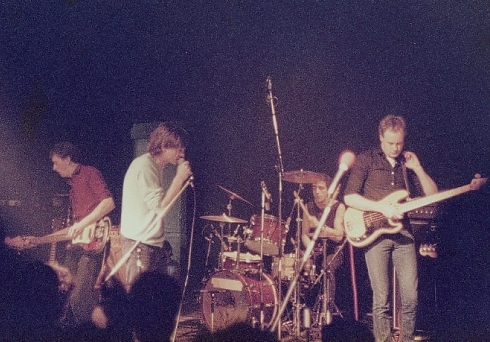
The Fall were an English post-punk band, formed in 1976 in Prestwich, Greater Manchester. They had many line-up changes, with vocalist and founder Mark E. Smith being the only constant member. The Fall's long-term musicians included drummers Paul Hanley, Simon Wolstencroft and Karl Burns; guitarists Craig Scanlon, Marc Riley, and Brix Smith; and bassist Steve Hanley, whose melodic, circular bass lines are widely credited with shaping the band's sound from early 1980s albums such as Hex Enduction Hour to the late 1990s.
Originally emerging out of the late 1970s punk movement, the Fall's music underwent numerous stylistic changes often concurrently with changes in the group's lineup. Their music was generally characterised by an abrasive, repetitive guitar-driven sound, tense bass and drum rhythms, and Smith's caustic lyrics. Although never achieving widespread mainstream success beyond minor hit singles in the late 1980s and early 1990s, they maintained a strong cult following throughout the years.
The Fall have been called "the most prolific band of the British post-punk movement". From 1979 to 2017, they released 31 studio albums, plus dozens of live albums and compilations released against Smith's wishes. The band have also been referred to as "the Mighty Fall," a name originally given by British DJ John Peel, who regarded the band as his personal favorite and invited them numerous times on the BBC's Peel Sessions, stating: "They are always different; they are always the same." The group disbanded after Smith's death in 2018.
The Fall were formed in Prestwich, England in 1976 by Mark E. Smith, Martin Bramah, Una Baines, and Tony Friel. The four friends met to read their writings to each other and take drugs. Their musical influences included Can (which the band would later pay tribute to on the track "I Am Damo Suzuki"), the Velvet Underground, Captain Beefheart and garage rock bands like the Monks and the Stooges. The members were devoted readers, with Smith citing H. P. Lovecraft, Raymond Chandler and Malcolm Lowry among his favourite writers. After seeing the Sex Pistols play their second gig at Manchester's Lesser Free Trade Hall in July 1976, they decided to start a group. Smith wanted to name the group "the Outsiders", but Friel came up with the name "the Fall" after a 1956 novel by Albert Camus. Smith became the singer, Bramah the guitarist, Friel played bass guitar and Baines bashed biscuit tins instead of drums; unable to afford to buy a drum kit, she then switched to keyboards. Their music was intentionally raw and repetitive. The song "Repetition", declaring that "We dig repetition in the music And we're never going to lose it", served as a manifesto for the Fall's musical philosophy.
The group played their first concert on 23 May 1977, at the North West Arts basement. Their first drummer was remembered only as "Dave" or "Steve" for 34 years, until music writer Dave Simpson discovered that he had almost certainly been a man named Steve Ormrod. Ormrod lasted just one show, at least in part due to political differences with the other members of the group. He was replaced by Karl Burns, whom Friel played with in a band called Nuclear Angel. The Fall soon caught the attention of Buzzcocks manager Richard Boon, who funded their first recording session, and in November 1977 they recorded material for their debut EP, Bingo-Master's Break-Out! Boon planned to release the EP on his New Hormones label, but after discovering that he could not afford to do so he gave the tapes back to the group. Thus, the Fall's debut on vinyl came in June 1978 when "Stepping Out" and "Last Orders" were released by Virgin Records on Short Circuit: Live at the Electric Circus, a compilation of live recordings made at the Manchester venue The Electric Circus in October 1977 just before it was closed.
The Fall's line-up had its first drastic changes in 1977–78. Kay Carroll, Una Baines's friend and colleague at the psychiatric hospital, became the group's manager and occasional backing vocalist, as well as Smith's girlfriend. Friel, unhappy with Carroll's management, left in December 1977 (he went on to form the Passage with Dick Witts). He was briefly replaced by Jonnie Brown, and later by Eric McGann (also known as Eric the Ferrett). The Fall were filmed on 13 February 1978 for the Granada TV show What's On, hosted by Tony Wilson, performing "Psycho Mafia", "Industrial Estate" and "Dresden Dolls", featuring the brief line-up of Smith, Bramah, Burns, Baines and McGann. Baines left in March 1978 after a drug overdose and subsequent nervous breakdown, and was replaced by Yvonne Pawlett; McGann quit that May, in disgust at the group's van driver Steve Davies wearing a Hawaiian shirt as he ferried them to the recording of their first-ever session for influential radio DJ John Peel. (The Fall would record a total of 24 sessions for Peel, who became a devoted fan of the group.) Martin Bramah blamed the dissolution of the original line-up on Smith's style of leadership, together with Carroll's favouring of her partner: "The break-up wasn't so much about the music, though; it was more how we were being treated as people on a daily basis." Marc Riley, the group's roadie was 16; eventually he was recruited to be in the group and play bass guitar.
Bingo-Master's Break-Out! finally was released in August 1978 on Step Forward Records. The single "It's the New Thing" followed in November 1978, and in December the Fall recorded (in a single day) their debut album Live at the Witch Trials, which was released in March 1979. Burns quit the group shortly after the album was recorded, and was replaced by Mike Leigh from Rockin' Ricky, a cabaret band. In April 1979, Burns was followed by Martin Bramah, co-writer of most of the songs on Live at the Witch Trials and, according to writer Daryl Eslea, "possibly the last true equal to Smith in the group"; he went on to form Blue Orchids with Una Baines. Marc Riley switched from bass guitar to guitar, and Craig Scanlon (guitar) and Steve Hanley (bass guitar), former bandmates of Riley and members of Fall support act Staff 9, joined the group. Hanley's melodic basslines became a vital part of the Fall's music for almost two decades. Smith praised his playing in Melody Maker: "The most original aspect of the Fall is Steve ... I've never heard a bass player like him ... I don't have to tell him what to play, he just knows. He is the Fall sound." Yvonne Pawlett left in July 1979 to look after her dog. She later appeared in a band called Shy Tots.
On 30 July 1979, "Rowche Rumble", the Fall's third single, was released featuring the line up of Smith, Scanlon, Riley, Hanley, Pawlett and Leigh. Pawlett left the group shortly afterwards. Dragnet, the Fall's second album, was recorded in August 1979 at Cargo Studios, Rochdale, and was released on 26 October 1979. Dragnet signalled a sparser, more jagged feel in the Fall's music compared to Live at the Witch Trials. The studio allegedly complained about the sound quality and protested against putting its name on the album sleeve, fearing it would put other artists off using the facilities.
Hub AI
The Fall (band) AI simulator
(@The Fall (band)_simulator)
The Fall (band)
The Fall were an English post-punk band, formed in 1976 in Prestwich, Greater Manchester. They had many line-up changes, with vocalist and founder Mark E. Smith being the only constant member. The Fall's long-term musicians included drummers Paul Hanley, Simon Wolstencroft and Karl Burns; guitarists Craig Scanlon, Marc Riley, and Brix Smith; and bassist Steve Hanley, whose melodic, circular bass lines are widely credited with shaping the band's sound from early 1980s albums such as Hex Enduction Hour to the late 1990s.
Originally emerging out of the late 1970s punk movement, the Fall's music underwent numerous stylistic changes often concurrently with changes in the group's lineup. Their music was generally characterised by an abrasive, repetitive guitar-driven sound, tense bass and drum rhythms, and Smith's caustic lyrics. Although never achieving widespread mainstream success beyond minor hit singles in the late 1980s and early 1990s, they maintained a strong cult following throughout the years.
The Fall have been called "the most prolific band of the British post-punk movement". From 1979 to 2017, they released 31 studio albums, plus dozens of live albums and compilations released against Smith's wishes. The band have also been referred to as "the Mighty Fall," a name originally given by British DJ John Peel, who regarded the band as his personal favorite and invited them numerous times on the BBC's Peel Sessions, stating: "They are always different; they are always the same." The group disbanded after Smith's death in 2018.
The Fall were formed in Prestwich, England in 1976 by Mark E. Smith, Martin Bramah, Una Baines, and Tony Friel. The four friends met to read their writings to each other and take drugs. Their musical influences included Can (which the band would later pay tribute to on the track "I Am Damo Suzuki"), the Velvet Underground, Captain Beefheart and garage rock bands like the Monks and the Stooges. The members were devoted readers, with Smith citing H. P. Lovecraft, Raymond Chandler and Malcolm Lowry among his favourite writers. After seeing the Sex Pistols play their second gig at Manchester's Lesser Free Trade Hall in July 1976, they decided to start a group. Smith wanted to name the group "the Outsiders", but Friel came up with the name "the Fall" after a 1956 novel by Albert Camus. Smith became the singer, Bramah the guitarist, Friel played bass guitar and Baines bashed biscuit tins instead of drums; unable to afford to buy a drum kit, she then switched to keyboards. Their music was intentionally raw and repetitive. The song "Repetition", declaring that "We dig repetition in the music And we're never going to lose it", served as a manifesto for the Fall's musical philosophy.
The group played their first concert on 23 May 1977, at the North West Arts basement. Their first drummer was remembered only as "Dave" or "Steve" for 34 years, until music writer Dave Simpson discovered that he had almost certainly been a man named Steve Ormrod. Ormrod lasted just one show, at least in part due to political differences with the other members of the group. He was replaced by Karl Burns, whom Friel played with in a band called Nuclear Angel. The Fall soon caught the attention of Buzzcocks manager Richard Boon, who funded their first recording session, and in November 1977 they recorded material for their debut EP, Bingo-Master's Break-Out! Boon planned to release the EP on his New Hormones label, but after discovering that he could not afford to do so he gave the tapes back to the group. Thus, the Fall's debut on vinyl came in June 1978 when "Stepping Out" and "Last Orders" were released by Virgin Records on Short Circuit: Live at the Electric Circus, a compilation of live recordings made at the Manchester venue The Electric Circus in October 1977 just before it was closed.
The Fall's line-up had its first drastic changes in 1977–78. Kay Carroll, Una Baines's friend and colleague at the psychiatric hospital, became the group's manager and occasional backing vocalist, as well as Smith's girlfriend. Friel, unhappy with Carroll's management, left in December 1977 (he went on to form the Passage with Dick Witts). He was briefly replaced by Jonnie Brown, and later by Eric McGann (also known as Eric the Ferrett). The Fall were filmed on 13 February 1978 for the Granada TV show What's On, hosted by Tony Wilson, performing "Psycho Mafia", "Industrial Estate" and "Dresden Dolls", featuring the brief line-up of Smith, Bramah, Burns, Baines and McGann. Baines left in March 1978 after a drug overdose and subsequent nervous breakdown, and was replaced by Yvonne Pawlett; McGann quit that May, in disgust at the group's van driver Steve Davies wearing a Hawaiian shirt as he ferried them to the recording of their first-ever session for influential radio DJ John Peel. (The Fall would record a total of 24 sessions for Peel, who became a devoted fan of the group.) Martin Bramah blamed the dissolution of the original line-up on Smith's style of leadership, together with Carroll's favouring of her partner: "The break-up wasn't so much about the music, though; it was more how we were being treated as people on a daily basis." Marc Riley, the group's roadie was 16; eventually he was recruited to be in the group and play bass guitar.
Bingo-Master's Break-Out! finally was released in August 1978 on Step Forward Records. The single "It's the New Thing" followed in November 1978, and in December the Fall recorded (in a single day) their debut album Live at the Witch Trials, which was released in March 1979. Burns quit the group shortly after the album was recorded, and was replaced by Mike Leigh from Rockin' Ricky, a cabaret band. In April 1979, Burns was followed by Martin Bramah, co-writer of most of the songs on Live at the Witch Trials and, according to writer Daryl Eslea, "possibly the last true equal to Smith in the group"; he went on to form Blue Orchids with Una Baines. Marc Riley switched from bass guitar to guitar, and Craig Scanlon (guitar) and Steve Hanley (bass guitar), former bandmates of Riley and members of Fall support act Staff 9, joined the group. Hanley's melodic basslines became a vital part of the Fall's music for almost two decades. Smith praised his playing in Melody Maker: "The most original aspect of the Fall is Steve ... I've never heard a bass player like him ... I don't have to tell him what to play, he just knows. He is the Fall sound." Yvonne Pawlett left in July 1979 to look after her dog. She later appeared in a band called Shy Tots.
On 30 July 1979, "Rowche Rumble", the Fall's third single, was released featuring the line up of Smith, Scanlon, Riley, Hanley, Pawlett and Leigh. Pawlett left the group shortly afterwards. Dragnet, the Fall's second album, was recorded in August 1979 at Cargo Studios, Rochdale, and was released on 26 October 1979. Dragnet signalled a sparser, more jagged feel in the Fall's music compared to Live at the Witch Trials. The studio allegedly complained about the sound quality and protested against putting its name on the album sleeve, fearing it would put other artists off using the facilities.