



Community hub
Recent from talks
Knowledge base stats:
Talk channels stats:
Members stats:
The Lucy Show
The Lucy Show is an American sitcom that aired on CBS from 1962 to 1968. It was Lucille Ball's follow-up to I Love Lucy. A significant change in cast and premise for the fourth season (1965–1966) divides the program into two distinct eras; aside from Ball, only Gale Gordon, who joined the program for its second season, remained. For the first three seasons, Vivian Vance was the co-star.
The earliest scripts were titled The Lucille Ball Show; but, when that title was rejected by CBS, producers thought of calling the show This Is Lucy or The New Adventures of Lucy, before deciding on the title The Lucy Show. Ball won consecutive Emmy Awards as Outstanding Lead Actress in a Comedy Series for the series' final two seasons, 1966–67 and 1967–68.
In 1960, Lucille Ball and Desi Arnaz divorced, and the final episode of The Lucy–Desi Comedy Hour aired (using the I Love Lucy format). Later that year, Ball moved to New York to try the Broadway stage in an unsuccessful musical, Wildcat. During the show's run, Ball was plagued by illness and fatigue and in early 1961, the show closed when she collapsed on stage from total exhaustion. Later that year, she married for the second time, to comedian Gary Morton.
Ball returned to television in the spring of 1962, when she teamed with Henry Fonda in The Good Years, a TV special on CBS. She adamantly refused to return to weekly television, as she was convinced she could never top the success of I Love Lucy.
At that time, Desilu Productions was struggling. In the spring of 1961, four of the studio's situation comedies were cancelled: The Ann Sothern Show; Angel, a sitcom starring Marshall Thompson and French actress Annie Farge; Harrigan and Son, starring Pat O'Brien and Roger Perry; and Guestward, Ho!, starring Joanne Dru and Mark Miller. In the spring of 1962, after a two-year run, the comedy series Pete and Gladys (a spin-off of the popular Desilu sitcom December Bride) was canceled. It starred Harry Morgan and Cara Williams in the title roles. At that time, the red-headed Williams, who had been promoted as the next Lucille Ball, had just received an Emmy nomination as Best Actress in a Comedy Series for her role on the show. That left Desilu with only one hit series, The Untouchables.
Arnaz, as president of Desilu, offered Ball an opportunity to return to television in a weekly sitcom. At that time, CBS executives were somewhat dubious as to whether Ball could carry a show without Arnaz, and whether she could follow such a landmark series as I Love Lucy. It was "never intended for this program to go beyond a single season." This arrangement was "meant to be a stop-gap measure for the beleaguered studio" and that through the sale of this series, Desilu was able to "force the CBS network to invest in and air other upcoming Desilu products." It was a strategy that Ball would use in the future to take control of The Lucy Show's renewal from CBS. With Arnaz's encouragement and persuasion, Ball agreed to do the show, provided that it would be shown on Monday nights (the night on which I Love Lucy had aired), and that she would be reunited with Vivian Vance and her writers from I Love Lucy. CBS agreed to a full season of episodes without a pilot, and The Lucy Show premiered on Monday, October 1, 1962, at 8:30 p.m.
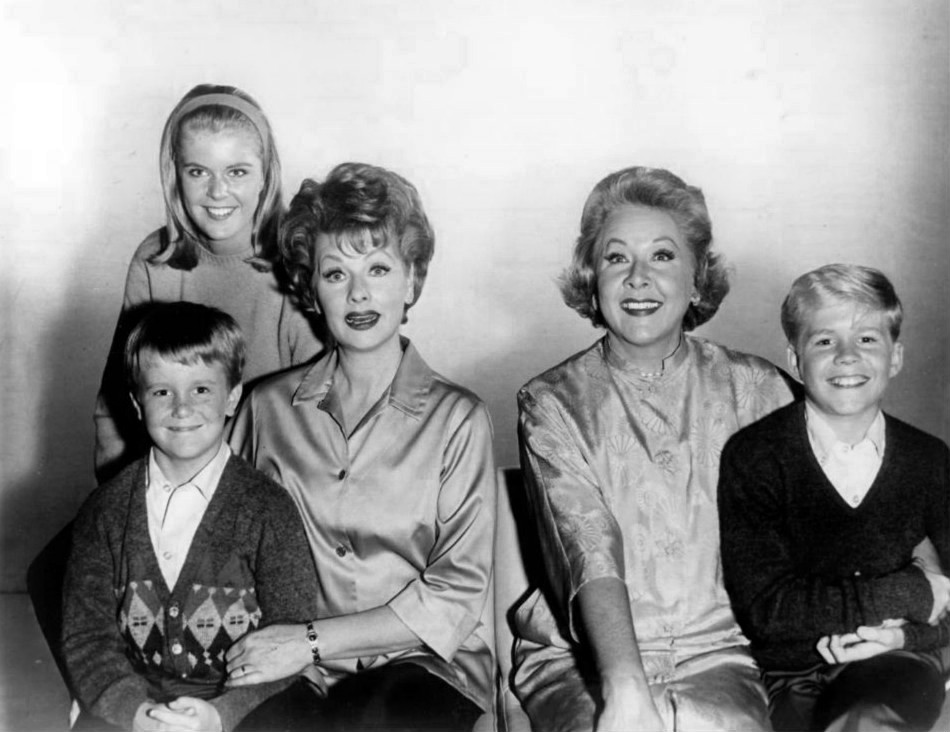
The original premise of the series was that widow Lucy Carmichael lives in the fictional town of Danfield, New York with her teenage daughter Chris and younger son Jerry, with her divorced friend Vivian "Viv" Bagley and Bagley's young son Sherman as tenants. Early episodes included their next-door neighbor, Harry Connors. Lucy's late husband left her a substantial trust fund, managed by a local banker (originally recurring character Mr. Barnsdahl, and later regular character Mr. Mooney); Lucy would frequently try to persuade the bank to let her raid the fund for various purchases or harebrained projects. Lucy also took on various jobs to boost her finances. Lucy, Viv, and Chris all dated regularly, yielding additional fodder for plots; in early episodes, Viv had a regular boyfriend, Eddie Collins.
In 1965, the show was extensively retooled for its fourth season. Lucy moves to Los Angeles to be closer to Chris, who was attending college in California (but no longer appeared on the show), and enrolls Jerry in a military boarding school there (facilitating his also being written out). Viv, now remarried as Vivian Bunson, remains in Danfield with Sherman, but visits Lucy a few times; Lucy's new best friend is Mary Jane Lewis. Lucy finds that Mr. Mooney has been transferred to the Los Angeles branch of the bank, and she eventually becomes his employee there. The new setting provided ample opportunity for celebrities to appear as themselves, often becoming entangled in Lucy's zany schemes. References to Lucy's children and her trust fund were eventually dropped, and this remained the show's premise through the sixth and final season.
Hub AI
The Lucy Show AI simulator
(@The Lucy Show_simulator)
The Lucy Show
The Lucy Show is an American sitcom that aired on CBS from 1962 to 1968. It was Lucille Ball's follow-up to I Love Lucy. A significant change in cast and premise for the fourth season (1965–1966) divides the program into two distinct eras; aside from Ball, only Gale Gordon, who joined the program for its second season, remained. For the first three seasons, Vivian Vance was the co-star.
The earliest scripts were titled The Lucille Ball Show; but, when that title was rejected by CBS, producers thought of calling the show This Is Lucy or The New Adventures of Lucy, before deciding on the title The Lucy Show. Ball won consecutive Emmy Awards as Outstanding Lead Actress in a Comedy Series for the series' final two seasons, 1966–67 and 1967–68.
In 1960, Lucille Ball and Desi Arnaz divorced, and the final episode of The Lucy–Desi Comedy Hour aired (using the I Love Lucy format). Later that year, Ball moved to New York to try the Broadway stage in an unsuccessful musical, Wildcat. During the show's run, Ball was plagued by illness and fatigue and in early 1961, the show closed when she collapsed on stage from total exhaustion. Later that year, she married for the second time, to comedian Gary Morton.
Ball returned to television in the spring of 1962, when she teamed with Henry Fonda in The Good Years, a TV special on CBS. She adamantly refused to return to weekly television, as she was convinced she could never top the success of I Love Lucy.
At that time, Desilu Productions was struggling. In the spring of 1961, four of the studio's situation comedies were cancelled: The Ann Sothern Show; Angel, a sitcom starring Marshall Thompson and French actress Annie Farge; Harrigan and Son, starring Pat O'Brien and Roger Perry; and Guestward, Ho!, starring Joanne Dru and Mark Miller. In the spring of 1962, after a two-year run, the comedy series Pete and Gladys (a spin-off of the popular Desilu sitcom December Bride) was canceled. It starred Harry Morgan and Cara Williams in the title roles. At that time, the red-headed Williams, who had been promoted as the next Lucille Ball, had just received an Emmy nomination as Best Actress in a Comedy Series for her role on the show. That left Desilu with only one hit series, The Untouchables.
Arnaz, as president of Desilu, offered Ball an opportunity to return to television in a weekly sitcom. At that time, CBS executives were somewhat dubious as to whether Ball could carry a show without Arnaz, and whether she could follow such a landmark series as I Love Lucy. It was "never intended for this program to go beyond a single season." This arrangement was "meant to be a stop-gap measure for the beleaguered studio" and that through the sale of this series, Desilu was able to "force the CBS network to invest in and air other upcoming Desilu products." It was a strategy that Ball would use in the future to take control of The Lucy Show's renewal from CBS. With Arnaz's encouragement and persuasion, Ball agreed to do the show, provided that it would be shown on Monday nights (the night on which I Love Lucy had aired), and that she would be reunited with Vivian Vance and her writers from I Love Lucy. CBS agreed to a full season of episodes without a pilot, and The Lucy Show premiered on Monday, October 1, 1962, at 8:30 p.m.
The original premise of the series was that widow Lucy Carmichael lives in the fictional town of Danfield, New York with her teenage daughter Chris and younger son Jerry, with her divorced friend Vivian "Viv" Bagley and Bagley's young son Sherman as tenants. Early episodes included their next-door neighbor, Harry Connors. Lucy's late husband left her a substantial trust fund, managed by a local banker (originally recurring character Mr. Barnsdahl, and later regular character Mr. Mooney); Lucy would frequently try to persuade the bank to let her raid the fund for various purchases or harebrained projects. Lucy also took on various jobs to boost her finances. Lucy, Viv, and Chris all dated regularly, yielding additional fodder for plots; in early episodes, Viv had a regular boyfriend, Eddie Collins.
In 1965, the show was extensively retooled for its fourth season. Lucy moves to Los Angeles to be closer to Chris, who was attending college in California (but no longer appeared on the show), and enrolls Jerry in a military boarding school there (facilitating his also being written out). Viv, now remarried as Vivian Bunson, remains in Danfield with Sherman, but visits Lucy a few times; Lucy's new best friend is Mary Jane Lewis. Lucy finds that Mr. Mooney has been transferred to the Los Angeles branch of the bank, and she eventually becomes his employee there. The new setting provided ample opportunity for celebrities to appear as themselves, often becoming entangled in Lucy's zany schemes. References to Lucy's children and her trust fund were eventually dropped, and this remained the show's premise through the sixth and final season.