



Community hub
Recent from talks
Knowledge base stats:
Talk channels stats:
Members stats:
The Music Machine
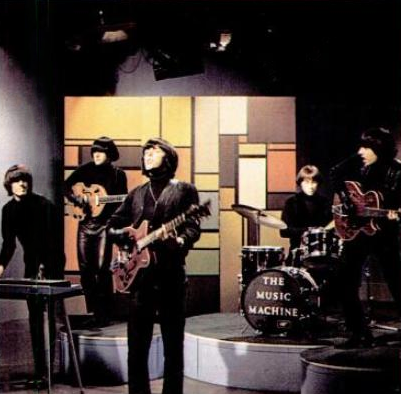
The Music Machine was an American rock band formed in Los Angeles, California in 1966. Fronted by chief songwriter and lead vocalist Sean Bonniwell, the band cultivated a dark and rebellious image reflected in their musical approach. Sometimes the band made use of distorted guitar lines and hallucinogenic organ parts, punctuated by Bonniwell's distinctively throaty vocals.
Although they managed to attain national chart success only briefly with two singles, the Music Machine is today considered by many critics to be one of the groundbreaking acts of the 1960s. Their style is now recognized as a pioneering force in proto-punk; yet within a relatively short period of time, they began to employ more complex lyrical and instrumental arrangements that went beyond the typical garage band format.
In 1965, the band came together as a folk rock trio known as the Raggamuffins, before expanding to the quintet that was later rechristened the Music Machine. The group was known for their style of dress, clothing themselves in all-black attire. In 1966, the Music Machine was signed to Original Sound, and released its first single "Talk Talk" in the latter half of the year, with it reaching the Top 20 of the Billboard Hot 100. Their debut album (Turn On) The Music Machine and the moderate hit "The People in Me" followed. The band's original lineup fragmented in late 1967 after managerial and financial disputes. Bonniwell reassembled the group under the name The Bonniwell Music Machine. In 1968, a second album, The Bonniwell Music Machine appeared, but the group disbanded in early 1969.
The nucleus of the band was formed when Sean Bonniwell (lead vocals, rhythm guitar) took part in a jam session with Keith Olsen (bass guitar) and Ron Edgar (drums; born Ronald Edgar on June 25, in Minneapolis, Minnesota) – both of whom he met in the folk music circuit. Bonniwell, already a practiced "folky", possessed prior experience as a vocalist with the Wayfarers. The traditional folk combo had already enjoyed some regional success: releasing three albums, and building on the experience of Bonniwell who insisted on the importance of rehearsal. As Bonniwell traveled and recorded with the group, he began penning some material that would later surface with the Music Machine. However, still influenced by acts now considered passé, the Wayfarers' musical traditionalism became stifling to Bonniwell who wanted to explore the type of harder, cutting-edge stylistic possibilities that he eventually would find in rock. Olsen had previously performed in Gale Garnett's backing band, and Edgar was a member of a bohemian folk quintet called the GoldeBriars, which featured later Sunshine Pop progenitor Curt Boettcher (whose career would intertwine with various members of the Music Machine in the late 1960s). With the GoldeBriars, Edgar contributed to their third album, which was slated for release on Epic Records, but the group disbanded before the album was issued.
In 1965, the three formed their own folk rock group, the Raggamuffins, and began performing in Los Angeles with a repertoire that saw the band embrace a more unorthodox style, and depart from their traditional roots. The group also recorded four songs that went unreleased until the 2000 album, Ignition, which represented the transitional phase before the band developed into the Music Machine. Bonniwell and Olsen were enthusiastically experimenting with musical textures while the band arranged strict rehearsal regimens in Bonniwell's garage. The Raggamuffins purchased hardware for a homemade fuzz-tone switch. From the onset Bonniwell ensured the group resonated like no other by instructing his bandmates to lower their instruments from the standard E note to D-flat. As a result of the adjustment, the Raggamuffins were given a bottom-heavy and ominous sound. In addition, the group began dressing noire, while sporting dyed-black hair, and the trademark single leather glove that presented an eye-catching and unified band image, which would later become influential with certain 1970s punk acts.
Auditions were held in early 1966 to expand the group, resulting in the recruitment of Mark Landon (lead guitar) and Doug Rhodes (organ), the latter previously a session musician for the Association (whose first album was produced by Boettcher). To reflect on the revamped line-up, Bonniwell changed the band's name to the Music Machine. Another purpose for coining the name, Bonniwell explained, was "I seguewayed [sic] all the original material with musical segueways [sic]. So we would be on stage for like an hour and ten minutes, wall-to-wall music just nonstop, which is why I called us the Music Machine". The band established a solid reputation with its performances in Los Angeles clubs. With Bonniwell as the de facto leader and creative force of the band, the Music Machine began to develop a blend of gritty 60s punk and psychedelia, and a repertoire encompassing Bonniwell's self-penned material along with some cover songs. The band's sound was highlighted by the authoritative and versatile vocals provided by Bonniwell, with an energized technique and unusually good intonation in long-sustained passages, and the ability to breakdown phrases into a series of slow pulsations. The Music Machine's artistic stance was also highlighted by Landon's wiry guitar playing, Olsen's reverberant bass, and Edgar's cymbal-punctuated drumming, which gave the band a harder-edged sound than many of their contemporaries.
Record producer Brian Ross just happened upon the Music Machine at Hollywood Legion Lanes, a bowling alley that was an early stomping ground for the group, and signed them to a recording contract with Original Sound. On July 30, 1966, the band entered RCA Studios in Los Angeles to record the Bonniwell originals "Talk Talk" and "Come on In", which was initially going to be the A-side for the group's debut single. Bonniwell had composed "Talk Talk" a year prior to forming the band, and the studio time was marked by the Music Machine's collective input aimed toward tightening the structure of its arrangements, including the two-note fuzz guitar riffs and Edgar's precise drumming technique. By virtue of the group's dedication to rehearsal, recording sessions concluded with the Music Machine requiring only three takes to complete the two songs. Though the band was satisfied with the acetate to "Come on In", the members were convinced "Talk Talk" would propel them into the national charts.
"Talk Talk" was released on September 10, 1966, on Original Sound, and rose to number 15 on the Billboard Hot 100. It also peaked at number 21 on Cashbox and number 18 on Record World. The song's relatively short time-length—a mere one minute and 56 seconds—made "Talk Talk" a favorable staple on Top 40 radio and its competing underground FM stations. The Music Machine's hit was arguably the most radical single to appear on mainstream broadcasting in 1966, the phenomenon described by music historian Richie Unterberger as a "rally cry to social alienation with a mixture of sarcasm, rebellion, self-pity, and paranoia". Indeed, Bonniwell's progressive lyrics and arrangements have been credited with influencing the Doors and Iron Butterfly, as well as future punk bands. After the single's release, the Music Machine embarked on a grueling three-month tour across the U.S., packaged with the Beach Boys, Question Mark and the Mysterians, and Clyde McPhatter. It concluded with the group receiving a poor response in the American south, where the band were criticized for their black outfits. Nonetheless, for the most part, their unified image served well for the Music Machine's national recognition, especially as the group made numerous appearances on the television programs Where the Action Is, American Bandstand, and Shindig!.
Hub AI
The Music Machine AI simulator
(@The Music Machine_simulator)
The Music Machine
The Music Machine was an American rock band formed in Los Angeles, California in 1966. Fronted by chief songwriter and lead vocalist Sean Bonniwell, the band cultivated a dark and rebellious image reflected in their musical approach. Sometimes the band made use of distorted guitar lines and hallucinogenic organ parts, punctuated by Bonniwell's distinctively throaty vocals.
Although they managed to attain national chart success only briefly with two singles, the Music Machine is today considered by many critics to be one of the groundbreaking acts of the 1960s. Their style is now recognized as a pioneering force in proto-punk; yet within a relatively short period of time, they began to employ more complex lyrical and instrumental arrangements that went beyond the typical garage band format.
In 1965, the band came together as a folk rock trio known as the Raggamuffins, before expanding to the quintet that was later rechristened the Music Machine. The group was known for their style of dress, clothing themselves in all-black attire. In 1966, the Music Machine was signed to Original Sound, and released its first single "Talk Talk" in the latter half of the year, with it reaching the Top 20 of the Billboard Hot 100. Their debut album (Turn On) The Music Machine and the moderate hit "The People in Me" followed. The band's original lineup fragmented in late 1967 after managerial and financial disputes. Bonniwell reassembled the group under the name The Bonniwell Music Machine. In 1968, a second album, The Bonniwell Music Machine appeared, but the group disbanded in early 1969.
The nucleus of the band was formed when Sean Bonniwell (lead vocals, rhythm guitar) took part in a jam session with Keith Olsen (bass guitar) and Ron Edgar (drums; born Ronald Edgar on June 25, in Minneapolis, Minnesota) – both of whom he met in the folk music circuit. Bonniwell, already a practiced "folky", possessed prior experience as a vocalist with the Wayfarers. The traditional folk combo had already enjoyed some regional success: releasing three albums, and building on the experience of Bonniwell who insisted on the importance of rehearsal. As Bonniwell traveled and recorded with the group, he began penning some material that would later surface with the Music Machine. However, still influenced by acts now considered passé, the Wayfarers' musical traditionalism became stifling to Bonniwell who wanted to explore the type of harder, cutting-edge stylistic possibilities that he eventually would find in rock. Olsen had previously performed in Gale Garnett's backing band, and Edgar was a member of a bohemian folk quintet called the GoldeBriars, which featured later Sunshine Pop progenitor Curt Boettcher (whose career would intertwine with various members of the Music Machine in the late 1960s). With the GoldeBriars, Edgar contributed to their third album, which was slated for release on Epic Records, but the group disbanded before the album was issued.
In 1965, the three formed their own folk rock group, the Raggamuffins, and began performing in Los Angeles with a repertoire that saw the band embrace a more unorthodox style, and depart from their traditional roots. The group also recorded four songs that went unreleased until the 2000 album, Ignition, which represented the transitional phase before the band developed into the Music Machine. Bonniwell and Olsen were enthusiastically experimenting with musical textures while the band arranged strict rehearsal regimens in Bonniwell's garage. The Raggamuffins purchased hardware for a homemade fuzz-tone switch. From the onset Bonniwell ensured the group resonated like no other by instructing his bandmates to lower their instruments from the standard E note to D-flat. As a result of the adjustment, the Raggamuffins were given a bottom-heavy and ominous sound. In addition, the group began dressing noire, while sporting dyed-black hair, and the trademark single leather glove that presented an eye-catching and unified band image, which would later become influential with certain 1970s punk acts.
Auditions were held in early 1966 to expand the group, resulting in the recruitment of Mark Landon (lead guitar) and Doug Rhodes (organ), the latter previously a session musician for the Association (whose first album was produced by Boettcher). To reflect on the revamped line-up, Bonniwell changed the band's name to the Music Machine. Another purpose for coining the name, Bonniwell explained, was "I seguewayed [sic] all the original material with musical segueways [sic]. So we would be on stage for like an hour and ten minutes, wall-to-wall music just nonstop, which is why I called us the Music Machine". The band established a solid reputation with its performances in Los Angeles clubs. With Bonniwell as the de facto leader and creative force of the band, the Music Machine began to develop a blend of gritty 60s punk and psychedelia, and a repertoire encompassing Bonniwell's self-penned material along with some cover songs. The band's sound was highlighted by the authoritative and versatile vocals provided by Bonniwell, with an energized technique and unusually good intonation in long-sustained passages, and the ability to breakdown phrases into a series of slow pulsations. The Music Machine's artistic stance was also highlighted by Landon's wiry guitar playing, Olsen's reverberant bass, and Edgar's cymbal-punctuated drumming, which gave the band a harder-edged sound than many of their contemporaries.
Record producer Brian Ross just happened upon the Music Machine at Hollywood Legion Lanes, a bowling alley that was an early stomping ground for the group, and signed them to a recording contract with Original Sound. On July 30, 1966, the band entered RCA Studios in Los Angeles to record the Bonniwell originals "Talk Talk" and "Come on In", which was initially going to be the A-side for the group's debut single. Bonniwell had composed "Talk Talk" a year prior to forming the band, and the studio time was marked by the Music Machine's collective input aimed toward tightening the structure of its arrangements, including the two-note fuzz guitar riffs and Edgar's precise drumming technique. By virtue of the group's dedication to rehearsal, recording sessions concluded with the Music Machine requiring only three takes to complete the two songs. Though the band was satisfied with the acetate to "Come on In", the members were convinced "Talk Talk" would propel them into the national charts.
"Talk Talk" was released on September 10, 1966, on Original Sound, and rose to number 15 on the Billboard Hot 100. It also peaked at number 21 on Cashbox and number 18 on Record World. The song's relatively short time-length—a mere one minute and 56 seconds—made "Talk Talk" a favorable staple on Top 40 radio and its competing underground FM stations. The Music Machine's hit was arguably the most radical single to appear on mainstream broadcasting in 1966, the phenomenon described by music historian Richie Unterberger as a "rally cry to social alienation with a mixture of sarcasm, rebellion, self-pity, and paranoia". Indeed, Bonniwell's progressive lyrics and arrangements have been credited with influencing the Doors and Iron Butterfly, as well as future punk bands. After the single's release, the Music Machine embarked on a grueling three-month tour across the U.S., packaged with the Beach Boys, Question Mark and the Mysterians, and Clyde McPhatter. It concluded with the group receiving a poor response in the American south, where the band were criticized for their black outfits. Nonetheless, for the most part, their unified image served well for the Music Machine's national recognition, especially as the group made numerous appearances on the television programs Where the Action Is, American Bandstand, and Shindig!.