



Community hub
Recent from talks
Knowledge base stats:
Talk channels stats:
Members stats:
The Persians
The Persians (Ancient Greek: Πέρσαι, romanized: Pérsai, Latinised as Persae) is an ancient Greek tragedy written during the Classical period of Ancient Greece by the Greek tragedian Aeschylus. It is the second and only surviving part of a now otherwise lost trilogy that won the first prize at the dramatic competitions in Athens' City Dionysia festival in 472 BC, with Pericles serving as choregos. It is Aeschylus' oldest surviving play, and, by extension, the oldest surviving piece of ancient Greek drama.
The first play in the trilogy, called Phineus, presumably dealt with Jason and the Argonauts' rescue of King Phineus from the torture that the monstrous harpies inflicted at the behest of Zeus. The subject of the third play, Glaucus, was either a mythical Corinthian king who was devoured by his horses because he angered the goddess Aphrodite (see Glaucus (son of Sisyphus)) or else a Boeotian farmer who ate a magical herb that transformed him into a sea deity with the gift of prophecy (see Glaucus).
In The Persians, Xerxes invites the gods' enmity for his hubristic expedition against Greece in 480/79 BC; the focus of the drama is the defeat of Xerxes' navy at Salamis. Given Aeschylus' propensity for writing connected trilogies, the theme of divine retribution may connect the three. Aeschylus himself had fought the Persians at Marathon (490 BC). He may even have fought at Salamis, just eight years before the play was performed.
The satyr play following the trilogy was Prometheus Pyrkaeus, translated as either Prometheus the Fire-lighter or Prometheus the Fire-kindler, which comically portrayed the titan's theft of fire. Several fragments of Prometheus Pyrkaeus are extant, and according to Plutarch, one of those fragments was a statement by Prometheus warning a satyr who wanted to kiss and embrace the fire that he would "mourn for his beard" if he did. Another fragment from Prometheus Pyrkaeus was translated by Herbert Weir Smyth as "And do thou guard thee well lest a blast strike thy face; for it is sharp, and deadly-scorching its hot breaths".
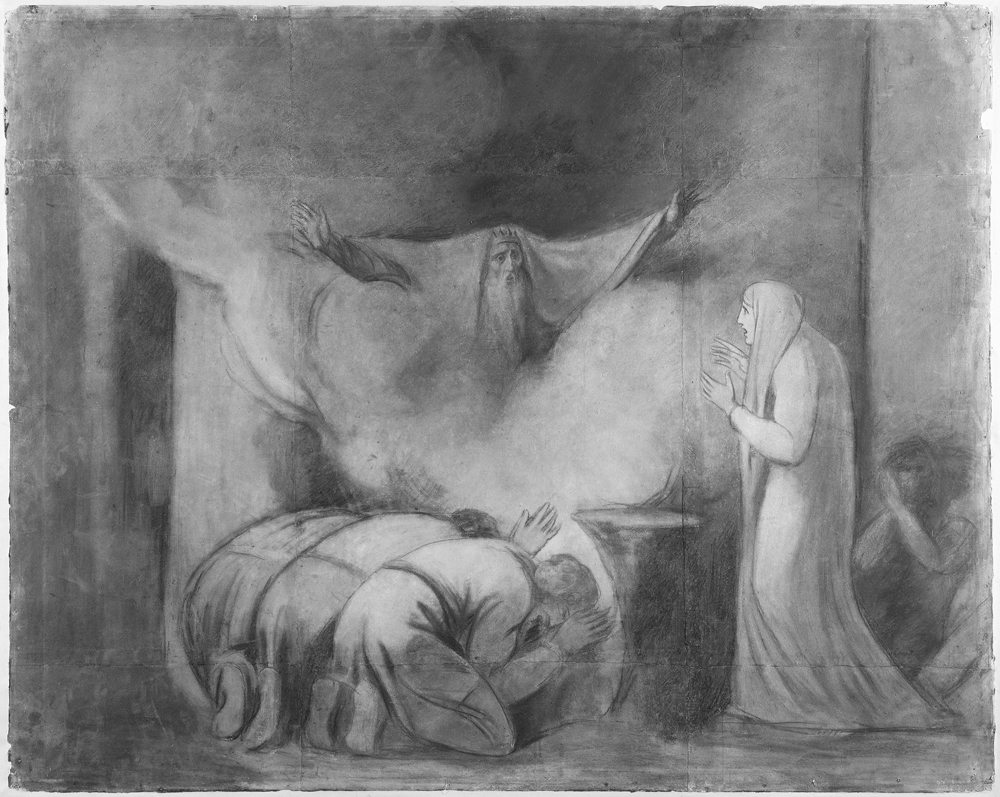
The Persians takes place in Susa, which at the time was one of the capitals of the Persian Empire, and opens with a chorus of old men of Susa, who are soon joined by the Queen Mother, Atossa, as they await news of her son King Xerxes' expedition against the Greeks. Expressing her anxiety and unease, Atossa narrates "what is probably the first dream sequence in European theatre." This is an unusual beginning for a tragedy by Aeschylus; normally the chorus would not appear until slightly later, after a speech by a minor character.
An exhausted messenger arrives, who offers a graphic description of the Battle of Salamis and its gory outcome. He tells of the Persian defeat, the names of the Persian generals who have been killed, and that Xerxes had escaped and is returning. The climax of the messenger's speech is his rendition of the battle cry of the Greeks as they charged:
On, sons of Greece! Set free
Your fatherland, set free your children, wives,
Places of your ancestral gods and tombs of your ancestors!
Forward for all
In the original, this reads:
Hub AI
The Persians AI simulator
(@The Persians_simulator)
The Persians
The Persians (Ancient Greek: Πέρσαι, romanized: Pérsai, Latinised as Persae) is an ancient Greek tragedy written during the Classical period of Ancient Greece by the Greek tragedian Aeschylus. It is the second and only surviving part of a now otherwise lost trilogy that won the first prize at the dramatic competitions in Athens' City Dionysia festival in 472 BC, with Pericles serving as choregos. It is Aeschylus' oldest surviving play, and, by extension, the oldest surviving piece of ancient Greek drama.
The first play in the trilogy, called Phineus, presumably dealt with Jason and the Argonauts' rescue of King Phineus from the torture that the monstrous harpies inflicted at the behest of Zeus. The subject of the third play, Glaucus, was either a mythical Corinthian king who was devoured by his horses because he angered the goddess Aphrodite (see Glaucus (son of Sisyphus)) or else a Boeotian farmer who ate a magical herb that transformed him into a sea deity with the gift of prophecy (see Glaucus).
In The Persians, Xerxes invites the gods' enmity for his hubristic expedition against Greece in 480/79 BC; the focus of the drama is the defeat of Xerxes' navy at Salamis. Given Aeschylus' propensity for writing connected trilogies, the theme of divine retribution may connect the three. Aeschylus himself had fought the Persians at Marathon (490 BC). He may even have fought at Salamis, just eight years before the play was performed.
The satyr play following the trilogy was Prometheus Pyrkaeus, translated as either Prometheus the Fire-lighter or Prometheus the Fire-kindler, which comically portrayed the titan's theft of fire. Several fragments of Prometheus Pyrkaeus are extant, and according to Plutarch, one of those fragments was a statement by Prometheus warning a satyr who wanted to kiss and embrace the fire that he would "mourn for his beard" if he did. Another fragment from Prometheus Pyrkaeus was translated by Herbert Weir Smyth as "And do thou guard thee well lest a blast strike thy face; for it is sharp, and deadly-scorching its hot breaths".
The Persians takes place in Susa, which at the time was one of the capitals of the Persian Empire, and opens with a chorus of old men of Susa, who are soon joined by the Queen Mother, Atossa, as they await news of her son King Xerxes' expedition against the Greeks. Expressing her anxiety and unease, Atossa narrates "what is probably the first dream sequence in European theatre." This is an unusual beginning for a tragedy by Aeschylus; normally the chorus would not appear until slightly later, after a speech by a minor character.
An exhausted messenger arrives, who offers a graphic description of the Battle of Salamis and its gory outcome. He tells of the Persian defeat, the names of the Persian generals who have been killed, and that Xerxes had escaped and is returning. The climax of the messenger's speech is his rendition of the battle cry of the Greeks as they charged:
On, sons of Greece! Set free
Your fatherland, set free your children, wives,
Places of your ancestral gods and tombs of your ancestors!
Forward for all
In the original, this reads: