
Recent from talks
The Quadroons
Knowledge base stats:
Talk channels stats:
Members stats:
The Quadroons
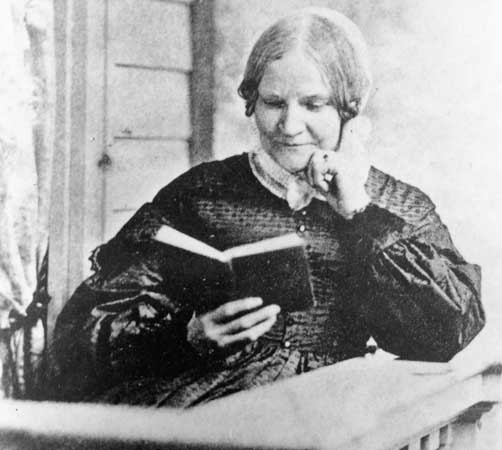
"The Quadroons" is a short story written by American writer Lydia Maria Child (1802–1880) and published in The Liberty Bell in 1842. The influential short story depicts the life and death of a mixed-race woman and her daughter in early nineteenth century America, a slave-owning society.
Child originated the trope of the "tragic mulatta", which became well-known in the anti-slavery literature of the time, was taken up also by many other writers. Years later, Harriet Jacobs's autobiography Incidents in the Life of a Slave Girl (edited by Lydia Maria Child) featured the same theme, but with important changes, effectively giving her an agency Child's main characters never had.
Lydia Maria Child (1802–1880) was an influential writer who advocated for Native Americans, women, and enslaved people. Already an abolitionist, she and her husband joined a group of antislavery reformers under the influence of William Lloyd Garrison in the 1830s.
Scholars credit Child with the invention of the "tragic mulatta", a mixed-race woman in a slave-owning society whose life ends tragically, and being the first to introduce the trope in American Literature. Many legal codes in the United States dealt with miscegenation; mixed-race marriages were forbidden, and the legal doctrine of Partus sequitur ventrem meant that children had to accept the status of the mother, meaning that an enslaved mother's children would automatically "belong" to the person enslaving the mother. The "tragic mulatta", then, is a mixed-race woman who almost passes for white and falls in love with a white man, but is legally (and sometimes psychologically) incapable of living independently from that man. The narrative almost always ends in tragedy, and often suicide.
The setting of the story is a cottage in Augusta, GA, before the Civil War. The two main characters, Rosalie, a "quadroon", and her husband Edward, a "Georgian," are living together in "a marriage sanctioned by Heaven, though unrecognized on earth" Rosalie, as a partly African-American woman, cannot legally marry a White man, but they live together as if they are man and wife, and she makes no legal claim on her common-law husband. They have a daughter named Xarifa, who grows up sheltered.
Edward develops political ambition, and for leverage he marries a wealthy white woman, the daughter of an important politician, essentially destroying the marriage between him and Rosalie. He asks her to be his mistress but she declines, finding it morally repulsive. Rosalie and Xarifa live alone in the cottage until Rosalie died of heart break from losing Edward. Xarifa had been taken care of by teachers including George Elliot, a young man hired by her father, but Edward becomes an alcoholic due to the guilt he feels after Rosalie's death. His drinking becomes his downfall: he falls off his horse when drunk, and dies--without a will, but his wife makes no change and continues to provide for his daughter.
Xarifa and her harp teacher fall in love and plan to move to France together, but Xarifa was sold before this could occur: "Rosalie, though she knew it not, had been the daughter of a slave; whose wealthy master, though he remained attached to her to the end of her days, had carelessly omitted to have papers of manumission recorded". Because Rosalie's mother had never been manumitted, her daughter and her granddaughter are still legally the property of the owner's family. Xarifa was auctioned off to the highest bidder, who is a man who tries to "win her favor, by flattery and presents", but she refuses to become his lover. Xarifa and George plan an escape but are betrayed by another enslaved person who is a double agent, and George is shot and killed in the attempt. Afterward, Xarifa's owner, having lost his patience, rapes her and she takes her own life--for the tragic mulatta, sexual violence and death are the only options.
The detailed description of the landscape in "The Quadroons" was seen as a metaphor for Rosalie and Edward's relationship. The passion flower, which is described as being exotic, represents Rosalie's mixed race, and the magnolia represents Edward as being a southern man. Their love, of course, could not legalized as marriage: "The couple have a genuine love for one another, and because of this love, Rosalie wants to sanctify their marriage to the heavens, even if it cannot be sanctified under law".
Hub AI
The Quadroons AI simulator
(@The Quadroons_simulator)
The Quadroons
"The Quadroons" is a short story written by American writer Lydia Maria Child (1802–1880) and published in The Liberty Bell in 1842. The influential short story depicts the life and death of a mixed-race woman and her daughter in early nineteenth century America, a slave-owning society.
Child originated the trope of the "tragic mulatta", which became well-known in the anti-slavery literature of the time, was taken up also by many other writers. Years later, Harriet Jacobs's autobiography Incidents in the Life of a Slave Girl (edited by Lydia Maria Child) featured the same theme, but with important changes, effectively giving her an agency Child's main characters never had.
Lydia Maria Child (1802–1880) was an influential writer who advocated for Native Americans, women, and enslaved people. Already an abolitionist, she and her husband joined a group of antislavery reformers under the influence of William Lloyd Garrison in the 1830s.
Scholars credit Child with the invention of the "tragic mulatta", a mixed-race woman in a slave-owning society whose life ends tragically, and being the first to introduce the trope in American Literature. Many legal codes in the United States dealt with miscegenation; mixed-race marriages were forbidden, and the legal doctrine of Partus sequitur ventrem meant that children had to accept the status of the mother, meaning that an enslaved mother's children would automatically "belong" to the person enslaving the mother. The "tragic mulatta", then, is a mixed-race woman who almost passes for white and falls in love with a white man, but is legally (and sometimes psychologically) incapable of living independently from that man. The narrative almost always ends in tragedy, and often suicide.
The setting of the story is a cottage in Augusta, GA, before the Civil War. The two main characters, Rosalie, a "quadroon", and her husband Edward, a "Georgian," are living together in "a marriage sanctioned by Heaven, though unrecognized on earth" Rosalie, as a partly African-American woman, cannot legally marry a White man, but they live together as if they are man and wife, and she makes no legal claim on her common-law husband. They have a daughter named Xarifa, who grows up sheltered.
Edward develops political ambition, and for leverage he marries a wealthy white woman, the daughter of an important politician, essentially destroying the marriage between him and Rosalie. He asks her to be his mistress but she declines, finding it morally repulsive. Rosalie and Xarifa live alone in the cottage until Rosalie died of heart break from losing Edward. Xarifa had been taken care of by teachers including George Elliot, a young man hired by her father, but Edward becomes an alcoholic due to the guilt he feels after Rosalie's death. His drinking becomes his downfall: he falls off his horse when drunk, and dies--without a will, but his wife makes no change and continues to provide for his daughter.
Xarifa and her harp teacher fall in love and plan to move to France together, but Xarifa was sold before this could occur: "Rosalie, though she knew it not, had been the daughter of a slave; whose wealthy master, though he remained attached to her to the end of her days, had carelessly omitted to have papers of manumission recorded". Because Rosalie's mother had never been manumitted, her daughter and her granddaughter are still legally the property of the owner's family. Xarifa was auctioned off to the highest bidder, who is a man who tries to "win her favor, by flattery and presents", but she refuses to become his lover. Xarifa and George plan an escape but are betrayed by another enslaved person who is a double agent, and George is shot and killed in the attempt. Afterward, Xarifa's owner, having lost his patience, rapes her and she takes her own life--for the tragic mulatta, sexual violence and death are the only options.
The detailed description of the landscape in "The Quadroons" was seen as a metaphor for Rosalie and Edward's relationship. The passion flower, which is described as being exotic, represents Rosalie's mixed race, and the magnolia represents Edward as being a southern man. Their love, of course, could not legalized as marriage: "The couple have a genuine love for one another, and because of this love, Rosalie wants to sanctify their marriage to the heavens, even if it cannot be sanctified under law".
Recent media