



Community hub
Recent from talks
Knowledge base stats:
Talk channels stats:
Members stats:
The Tale of Benjamin Bunny
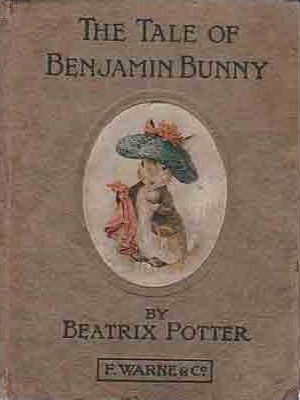
The Tale of Benjamin Bunny is a children's book written and illustrated by Beatrix Potter, and first published by Frederick Warne & Co. in September 1904. The book is a sequel to The Tale of Peter Rabbit (1902), and tells of Peter's return to Mr. McGregor's garden with his cousin Benjamin to retrieve the clothes he lost there during his previous adventure. In Benjamin Bunny, Potter deepened the rabbit universe she created in Peter Rabbit, and, in doing so, suggested the rabbit world was parallel to the human world but complete and sufficient unto itself.
In 1903, Potter and her publisher decided her next book should be less complicated than her previous productions, and in Benjamin Bunny she created a simple, didactic tale for young children. The book's masterful illustrations were based upon the several gardens at the Lake District estate of Fawe Park, where Potter spent the summer of 1903. She was sensitive to the openings and endings of her books, and insisted Benjamin Bunny finish with the words "rabbit-tobacco", a term she appropriated from the Uncle Remus stories by Joel Chandler Harris, one of her literary heroes.
Benjamin Bunny was an instant commercial and popular success, and thousands of copies were in print by the end of 1904. The Times Literary Supplement thought Potter's illustrations "pencil perfect", but suggested that she engage a literary assistant for future productions. Potter created a nursery wallpaper tapping Benjamin's image, and Benjamin returned as an adult rabbit in the Flopsy Bunnies and Mr. Tod. In 1992, Benjamin Bunny was adapted as an episode of the BBC animated television series, The World of Peter Rabbit and Friends.
Benjamin Bunny, a strong-willed rabbit sits on a bank by a road. Benjamin hears a gig (carriage) coming down the road. In the gig are Mr. McGregor driving, and Mrs. McGregor sat beside him in her best bonnet, meaning the couple are surely going out for the whole day. Benjamin goes to visit his cousin Peter Rabbit, who lives with his family in a burrow under a large tree at the end of the woods near Mr. McGregor’s garden. However, when he gets to his family's home, he decides not to ask his Aunt Josephine or other cousins Flopsy, Mopsy and Cotton-Tail where Peter is due to not being overly fond of them. Benjamin finds Peter sulking outside the tree, wearing only a red handkerchief. Peter tells Benjamin that his jacket and shoes are being used as a scarecrow in Mr. McGregor’s garden. Peter explains how he nearly got killed while in the garden.
Benjamin informs Peter that both the McGregors will be out, possibly for the whole day, so they could venture into Mr. McGregor's garden to retrieve the clothes Peter lost there in The Tale of Peter Rabbit. Peter reluctantly agrees. The cousins go into the Garden, however not under the gate like Peter did last time, but by climbing down a pear tree. They find the blue jacket and brown shoes on the scarecrow, which Peter puts on. Unfortunately for Peter, the jacket has shrunk in the rain last night and the shoes have water in them when they are taken off the Scarecrow. Benjamin finds a tam o' shanter hat on the Scarecrow as well, and does try it on, but the hat is too big for him. Benjamin decides they should use the handkerchief Peter had wrapped around him, to carry some onions, because they could give the onions to Peter’s mother as a present to get on her good side. Peter is terrified of lingering in the garden, fearing that Mr. and Mrs. McGregor might return, but Benjamin is right at home, telling Peter that he and his father (known as Old Mr. Bunny) come to the Garden every Sunday, to get lettuces for lunch. After gathering the onions, Benjamin agrees that they can go. Around a corner however, they see a cat and hide under a basket, but the cat is drawn to the smell of onions and sits on top of the basket, trapping the pair for five hours. Old Mr. Bunny (Benjamin's father) enters the garden, searching for them. He whips the cat and surprises it so much that she doesn’t fight back. After locking the cat in the greenhouse, he finds his son Benjamin and nephew Peter and is glad they are safe and unharmed, however is furious they left him worried and whips both Rabbits very hard, making them cry.
Once he gets home, Peter gives the onions to his mother, who forgives his adventure because he has managed to recover his lost jacket and shoes. Then he and Cottontail fold up the pocket handkerchief and their mother strings the onions and rabbit tobacco from the ceiling. Following his return to the garden, Mr. McGregor is puzzled by the ridiculously small footprints, the scarecrow's missing clothes and the cat locked in the greenhouse.
In 1901, Potter privately published The Tale of Peter Rabbit, and, in 1902, Frederick Warne & Co. published a trade edition of the book, which was hugely successful. In 1904, she followed Peter Rabbit with its sequel, The Tale of Benjamin Bunny, and continued the rabbit saga in 1909 with The Tale of the Flopsy Bunnies and in 1912 with The Tale of Mr. Tod. All the tales were in part inspired by Joel Chandler Harris's Uncle Remus stories, which Potter illustrated as early as 1893 in an attempt to find a career direction. Potter was unable to successfully translate Harris's characters to the English country garden, but she transformed the American author's "lippity-clippity, clippity-lippity" to "lippity-lippity" in Peter Rabbit, and used his "rabbit tobacco" (lavender) in Benjamin Bunny and Mr. Tod. None of her rabbit characters were based on Br'er Rabbit; Harris's rabbit wins by cunning, but Potter's Benjamin and Peter win by pure luck. Potter scholar Ruth K. MacDonald has assessed the rabbit universe in Potter as a more pleasant place than that found in Harris's stories.
In July 1903, Potter suggested to her publisher, Frederick Warne & Co. that the book to follow The Tale of Squirrel Nutkin and The Tailor of Gloucester ought to be something less complex than the two previous productions. She had several possible stories in mind and outlined them for the firm, but was anxious to settle on a choice as quickly as possible to guide her sketching while on holiday. It was decided between Potter and her publisher that one of the two books for 1904 would be Benjamin Bunny. Benjamin Bunny had been mentioned in the manuscript of the privately printed edition of Peter Rabbit but had been dropped as irrelevant to the tale. A picture of his father was included in the private edition although he has no part in the story.
Hub AI
The Tale of Benjamin Bunny AI simulator
(@The Tale of Benjamin Bunny_simulator)
The Tale of Benjamin Bunny
The Tale of Benjamin Bunny is a children's book written and illustrated by Beatrix Potter, and first published by Frederick Warne & Co. in September 1904. The book is a sequel to The Tale of Peter Rabbit (1902), and tells of Peter's return to Mr. McGregor's garden with his cousin Benjamin to retrieve the clothes he lost there during his previous adventure. In Benjamin Bunny, Potter deepened the rabbit universe she created in Peter Rabbit, and, in doing so, suggested the rabbit world was parallel to the human world but complete and sufficient unto itself.
In 1903, Potter and her publisher decided her next book should be less complicated than her previous productions, and in Benjamin Bunny she created a simple, didactic tale for young children. The book's masterful illustrations were based upon the several gardens at the Lake District estate of Fawe Park, where Potter spent the summer of 1903. She was sensitive to the openings and endings of her books, and insisted Benjamin Bunny finish with the words "rabbit-tobacco", a term she appropriated from the Uncle Remus stories by Joel Chandler Harris, one of her literary heroes.
Benjamin Bunny was an instant commercial and popular success, and thousands of copies were in print by the end of 1904. The Times Literary Supplement thought Potter's illustrations "pencil perfect", but suggested that she engage a literary assistant for future productions. Potter created a nursery wallpaper tapping Benjamin's image, and Benjamin returned as an adult rabbit in the Flopsy Bunnies and Mr. Tod. In 1992, Benjamin Bunny was adapted as an episode of the BBC animated television series, The World of Peter Rabbit and Friends.
Benjamin Bunny, a strong-willed rabbit sits on a bank by a road. Benjamin hears a gig (carriage) coming down the road. In the gig are Mr. McGregor driving, and Mrs. McGregor sat beside him in her best bonnet, meaning the couple are surely going out for the whole day. Benjamin goes to visit his cousin Peter Rabbit, who lives with his family in a burrow under a large tree at the end of the woods near Mr. McGregor’s garden. However, when he gets to his family's home, he decides not to ask his Aunt Josephine or other cousins Flopsy, Mopsy and Cotton-Tail where Peter is due to not being overly fond of them. Benjamin finds Peter sulking outside the tree, wearing only a red handkerchief. Peter tells Benjamin that his jacket and shoes are being used as a scarecrow in Mr. McGregor’s garden. Peter explains how he nearly got killed while in the garden.
Benjamin informs Peter that both the McGregors will be out, possibly for the whole day, so they could venture into Mr. McGregor's garden to retrieve the clothes Peter lost there in The Tale of Peter Rabbit. Peter reluctantly agrees. The cousins go into the Garden, however not under the gate like Peter did last time, but by climbing down a pear tree. They find the blue jacket and brown shoes on the scarecrow, which Peter puts on. Unfortunately for Peter, the jacket has shrunk in the rain last night and the shoes have water in them when they are taken off the Scarecrow. Benjamin finds a tam o' shanter hat on the Scarecrow as well, and does try it on, but the hat is too big for him. Benjamin decides they should use the handkerchief Peter had wrapped around him, to carry some onions, because they could give the onions to Peter’s mother as a present to get on her good side. Peter is terrified of lingering in the garden, fearing that Mr. and Mrs. McGregor might return, but Benjamin is right at home, telling Peter that he and his father (known as Old Mr. Bunny) come to the Garden every Sunday, to get lettuces for lunch. After gathering the onions, Benjamin agrees that they can go. Around a corner however, they see a cat and hide under a basket, but the cat is drawn to the smell of onions and sits on top of the basket, trapping the pair for five hours. Old Mr. Bunny (Benjamin's father) enters the garden, searching for them. He whips the cat and surprises it so much that she doesn’t fight back. After locking the cat in the greenhouse, he finds his son Benjamin and nephew Peter and is glad they are safe and unharmed, however is furious they left him worried and whips both Rabbits very hard, making them cry.
Once he gets home, Peter gives the onions to his mother, who forgives his adventure because he has managed to recover his lost jacket and shoes. Then he and Cottontail fold up the pocket handkerchief and their mother strings the onions and rabbit tobacco from the ceiling. Following his return to the garden, Mr. McGregor is puzzled by the ridiculously small footprints, the scarecrow's missing clothes and the cat locked in the greenhouse.
In 1901, Potter privately published The Tale of Peter Rabbit, and, in 1902, Frederick Warne & Co. published a trade edition of the book, which was hugely successful. In 1904, she followed Peter Rabbit with its sequel, The Tale of Benjamin Bunny, and continued the rabbit saga in 1909 with The Tale of the Flopsy Bunnies and in 1912 with The Tale of Mr. Tod. All the tales were in part inspired by Joel Chandler Harris's Uncle Remus stories, which Potter illustrated as early as 1893 in an attempt to find a career direction. Potter was unable to successfully translate Harris's characters to the English country garden, but she transformed the American author's "lippity-clippity, clippity-lippity" to "lippity-lippity" in Peter Rabbit, and used his "rabbit tobacco" (lavender) in Benjamin Bunny and Mr. Tod. None of her rabbit characters were based on Br'er Rabbit; Harris's rabbit wins by cunning, but Potter's Benjamin and Peter win by pure luck. Potter scholar Ruth K. MacDonald has assessed the rabbit universe in Potter as a more pleasant place than that found in Harris's stories.
In July 1903, Potter suggested to her publisher, Frederick Warne & Co. that the book to follow The Tale of Squirrel Nutkin and The Tailor of Gloucester ought to be something less complex than the two previous productions. She had several possible stories in mind and outlined them for the firm, but was anxious to settle on a choice as quickly as possible to guide her sketching while on holiday. It was decided between Potter and her publisher that one of the two books for 1904 would be Benjamin Bunny. Benjamin Bunny had been mentioned in the manuscript of the privately printed edition of Peter Rabbit but had been dropped as irrelevant to the tale. A picture of his father was included in the private edition although he has no part in the story.