
Recent from talks
The Three Stooges
Knowledge base stats:
Talk channels stats:
Members stats:
The Three Stooges
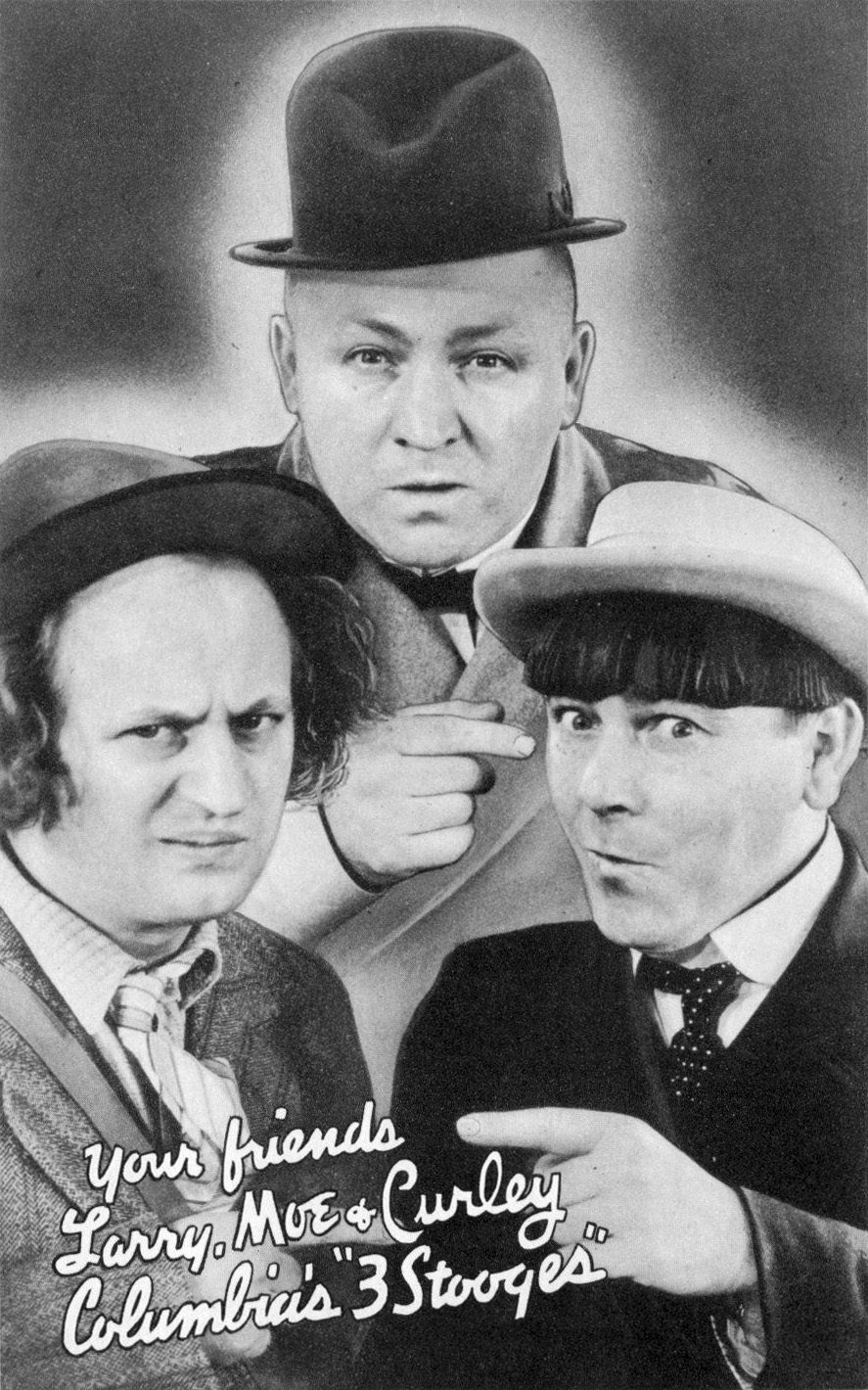
The Three Stooges were an American vaudeville and comedy troupe active from 1922 until 1970, best remembered for their 190 short-subject films by Columbia Pictures. Their hallmark styles were physical, farce, and slapstick comedy. Six Stooges appeared over the act's run (with only three working at any given time). The two constants were:
The "third stooge" was played in turn by:
The act began in 1922 as part of a vaudeville comedy act consisting originally of Ted Healy and Moe Howard. Over time, they were joined by Moe's brother, Shemp Howard, and then Larry Fine. The troupe became known as "Ted Healy and His Stooges" ("stooges" being a show-business term for on-stage assistants). The foursome appeared in one feature film, Soup to Nuts, before Shemp left to pursue a solo career. He was replaced by Moe's younger brother, Jerome "Curly" Howard, in 1932. Two years later, after appearing in several movies, the trio left Healy and signed on to appear in their own short-subject comedies for Columbia Pictures, now billed as "The Three Stooges". From 1934 to 1946, Moe, Larry, and Curly starred in more than 90 short comedies for Columbia.
Curly suffered a debilitating stroke in May 1946. Shemp returned, reconstituting the original lineup, until his death of a heart attack on November 22, 1955, three years and ten months after Curly's death of a cerebral hemorrhage. Film actor Joe Palma stood in (shot from behind to obscure his face) to complete four Shemp-era shorts under contract. The procedure of disguising one actor as another outside of stunt shots became known as the "fake Shemp". Columbia contract player Joe Besser joined as the third Stooge for two years (1956–1957), departing in 1958 to nurse his ill wife after Columbia terminated its shorts division. The studio then released all the shorts via Screen Gems, Columbia's television studio and distribution unit. Screen Gems then syndicated the shorts to television, whereupon the Stooges became one of the most popular comedy acts of the early 1960s.
Comic actor Joe DeRita became "Curly Joe" in 1958, replacing Besser for a new series of full-length theatrical films. With intense television exposure in the United States, the act regained momentum throughout the 1960s as popular kids' fare, until Larry's paralyzing stroke in the midst of filming a pilot for a Three Stooges TV series in January 1970. He died in January 1975 after a further series of strokes. Unsuccessful attempts were made in 1970 and 1975 to revive the act with longtime supporting actor Emil Sitka in Fine's role, but they were each cut short—the first by a movie deal falling through and Moe's wife persuading him to retire, the second by Moe's death.
The Three Stooges began in 1922 as part of a raucous vaudeville act called "Ted Healy and His Stooges". The act was also known as "Ted Healy and His Southern Gentlemen" and "Ted Healy and His Racketeers". Moe Howard joined Healy's act in 1922, and his brother Shemp Howard came aboard a few months later. After several shifts and changes in the Stooges membership, violinist-comedian Larry Fine also joined the group sometime between 1925 and 1928. In the act, lead comedian Healy would attempt to sing or tell jokes while his noisy assistants would keep interrupting him, causing Healy to retaliate with verbal and physical abuse.
In 1930, Ted Healy and His Stooges (plus comedian Fred Sanborn) appeared in Soup to Nuts, their first Hollywood feature film, released by Fox Film Corporation. The film was not a critical success, but the Stooges' performances were singled out as memorable, leading Fox to offer the trio a contract, minus Healy. This enraged Healy, who told studio executives the Stooges were his employees, whereupon the offer was withdrawn. Howard, Fine, and Howard learned of the offer and subsequent withdrawal, and left Healy to form their own act (billed as "Howard, Fine & Howard" or "Three Lost Souls"). The act quickly took off with a tour of the theater circuit. Healy attempted to stop the new act with legal action, claiming that they were using his copyrighted material. Accounts exist of Healy threatening to bomb theaters if Howard, Fine, and Howard ever performed there, which worried Shemp so much that he almost left the act; reportedly, only a pay raise kept him on board.
Healy tried to save his act by hiring replacement stooges, but they were inexperienced and not as well-received as their predecessors. Healy reached a new agreement with his former Stooges in 1932, with Moe now acting as business manager, and they were booked in a production of Jacob J. Shubert's The Passing Show of 1932. During rehearsals, Healy received a more lucrative offer and found a loophole in his contract allowing him to leave the production. Shemp, fed up with Healy's abrasiveness, bad temper, and heavy drinking, decided to quit the act and toured in his own comedy revue for several months.
Hub AI
The Three Stooges AI simulator
(@The Three Stooges_simulator)
The Three Stooges
The Three Stooges were an American vaudeville and comedy troupe active from 1922 until 1970, best remembered for their 190 short-subject films by Columbia Pictures. Their hallmark styles were physical, farce, and slapstick comedy. Six Stooges appeared over the act's run (with only three working at any given time). The two constants were:
The "third stooge" was played in turn by:
The act began in 1922 as part of a vaudeville comedy act consisting originally of Ted Healy and Moe Howard. Over time, they were joined by Moe's brother, Shemp Howard, and then Larry Fine. The troupe became known as "Ted Healy and His Stooges" ("stooges" being a show-business term for on-stage assistants). The foursome appeared in one feature film, Soup to Nuts, before Shemp left to pursue a solo career. He was replaced by Moe's younger brother, Jerome "Curly" Howard, in 1932. Two years later, after appearing in several movies, the trio left Healy and signed on to appear in their own short-subject comedies for Columbia Pictures, now billed as "The Three Stooges". From 1934 to 1946, Moe, Larry, and Curly starred in more than 90 short comedies for Columbia.
Curly suffered a debilitating stroke in May 1946. Shemp returned, reconstituting the original lineup, until his death of a heart attack on November 22, 1955, three years and ten months after Curly's death of a cerebral hemorrhage. Film actor Joe Palma stood in (shot from behind to obscure his face) to complete four Shemp-era shorts under contract. The procedure of disguising one actor as another outside of stunt shots became known as the "fake Shemp". Columbia contract player Joe Besser joined as the third Stooge for two years (1956–1957), departing in 1958 to nurse his ill wife after Columbia terminated its shorts division. The studio then released all the shorts via Screen Gems, Columbia's television studio and distribution unit. Screen Gems then syndicated the shorts to television, whereupon the Stooges became one of the most popular comedy acts of the early 1960s.
Comic actor Joe DeRita became "Curly Joe" in 1958, replacing Besser for a new series of full-length theatrical films. With intense television exposure in the United States, the act regained momentum throughout the 1960s as popular kids' fare, until Larry's paralyzing stroke in the midst of filming a pilot for a Three Stooges TV series in January 1970. He died in January 1975 after a further series of strokes. Unsuccessful attempts were made in 1970 and 1975 to revive the act with longtime supporting actor Emil Sitka in Fine's role, but they were each cut short—the first by a movie deal falling through and Moe's wife persuading him to retire, the second by Moe's death.
The Three Stooges began in 1922 as part of a raucous vaudeville act called "Ted Healy and His Stooges". The act was also known as "Ted Healy and His Southern Gentlemen" and "Ted Healy and His Racketeers". Moe Howard joined Healy's act in 1922, and his brother Shemp Howard came aboard a few months later. After several shifts and changes in the Stooges membership, violinist-comedian Larry Fine also joined the group sometime between 1925 and 1928. In the act, lead comedian Healy would attempt to sing or tell jokes while his noisy assistants would keep interrupting him, causing Healy to retaliate with verbal and physical abuse.
In 1930, Ted Healy and His Stooges (plus comedian Fred Sanborn) appeared in Soup to Nuts, their first Hollywood feature film, released by Fox Film Corporation. The film was not a critical success, but the Stooges' performances were singled out as memorable, leading Fox to offer the trio a contract, minus Healy. This enraged Healy, who told studio executives the Stooges were his employees, whereupon the offer was withdrawn. Howard, Fine, and Howard learned of the offer and subsequent withdrawal, and left Healy to form their own act (billed as "Howard, Fine & Howard" or "Three Lost Souls"). The act quickly took off with a tour of the theater circuit. Healy attempted to stop the new act with legal action, claiming that they were using his copyrighted material. Accounts exist of Healy threatening to bomb theaters if Howard, Fine, and Howard ever performed there, which worried Shemp so much that he almost left the act; reportedly, only a pay raise kept him on board.
Healy tried to save his act by hiring replacement stooges, but they were inexperienced and not as well-received as their predecessors. Healy reached a new agreement with his former Stooges in 1932, with Moe now acting as business manager, and they were booked in a production of Jacob J. Shubert's The Passing Show of 1932. During rehearsals, Healy received a more lucrative offer and found a loophole in his contract allowing him to leave the production. Shemp, fed up with Healy's abrasiveness, bad temper, and heavy drinking, decided to quit the act and toured in his own comedy revue for several months.
Recent media