
Recent from talks
Martha and the Vandellas
Knowledge base stats:
Talk channels stats:
Members stats:
Martha and the Vandellas
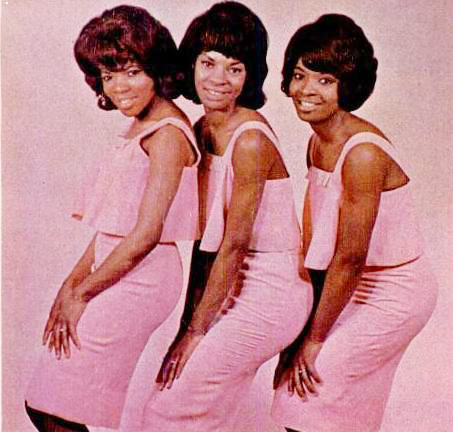
Martha and the Vandellas (known from 1967 to 1973 as Martha Reeves & the Vandellas) were an American girl group formed in Detroit, Michigan, in 1957. The group achieved fame in the 1960s as a major act for Motown Records. Formed by friends Annette Beard, Rosalind Ashford and Gloria Williams, Martha Reeves eventually joined the group, and she became its lead vocalist after Williams's departure in 1962. The group signed with Gordy Records, a subsidiary of Motown.
The group's hits included "Heat Wave" (1963), "Quicksand" (1963), "Dancing in the Street" (1964), "Nowhere to Run" (1965), "I'm Ready for Love" (1966), "Jimmy Mack" (1967) and "Honey Chile" (1967). Six of the group's songs reached the top ten on the US Billboard Hot 100 chart and thirteen of their songs reached the top twenty on the US Billboard R&B singles chart, including two number ones. Selected members of the group were inducted into the Rock and Roll Hall of Fame in 1995 and the National Rhythm & Blues Hall of Fame in 2013.
Teenagers Rosalind Ashford and Annette Beard first became acquainted after a local music manager hired them to be members of a girl group he named the Del-Phis. Ashford, Beard, and lead vocalist Gloria Williams, performed at local clubs, private events, church benefits, YMCA events and school functions. They were also being coached by Maxine Powell at Detroit's Ferris Center. One of the group's first professional engagements was singing background for singer Mike Hanks.
The group originally had up to six members, subsequently reduced to four. When one of the four left the group, she was replaced by Alabama-born vocalist Martha Reeves, a former member of two groups, the Fascinations and the Sabre-Ettes. In 1960, the group signed their first recording contract with Checker Records, releasing the Reeves-led "I'll Let You Know". The Del-Phis then went to Checkmate Records, a subsidiary of Chess Records, recording the song "There He Is (At My Door)" featuring Williams on lead vocals.[citation needed] The songs failed to make much of an impact.
Reeves reverted to a solo artist under the name Martha LaVaille. After Motown Records staffer Mickey Stevenson saw Reeves singing at a Detroit club, he offered her an audition. Reeves showed up at Motown's Hitsville USA studios on a Tuesday rather than a Thursday, Motown's usual audition day. Stevenson assigned her as his secretary eventually responsible for handling Motown's auditions. By 1961, the group, now known as The Vels, were recording background vocals for Motown acts. Prior to her success as lead singer of the Elgins, Saundra Edwards (then going by her surname Mallett) recorded the song "Camel Walk", in 1962, which featured the Vels in background vocals. That year, the quartet began applying background vocals for emerging Motown star Marvin Gaye, singing on Gaye's first hit single, "Stubborn Kind of Fellow" After Mary Wells failed to make a scheduled recording session due to a short illness, the Vels recorded what was initially a demo recording of "I'll Have to Let Him Go". Motown was so impressed by the group's abilities, and Martha's lead vocals, that the label CEO Berry Gordy offered the group a recording contract. Figuring that being in show business was too rigorous, Williams left the group. With Williams out, the remaining trio of Ashford, Beard and Reeves were told by Gordy that they would need a new name. After failing to come up with a name on their own, Gordy gave the group the name The Vandellas. As stated in an interview with The History Makers, Ashford emphatically states that contrary to popular belief, the Vandellas were not named after Della Reese and Van Dyke Avenue.
During this period, the Vandellas were hired to sing background for Marvin Gaye after the label's premier backing vocalists, the Andantes, were unable to make the session. The Vandellas contributed background on Gaye's first hit records, "Stubborn Kind of Fellow", "Hitch Hike" and "Pride and Joy" and would on many occasions back Gaye onstage for a couple of years. In 1963, their second single under the name Martha and the Vandellas, "Come and Get These Memories", the first song composed and produced by the team of Holland-Dozier-Holland, became the group's first hit rising to number six on the Hot Rhythm & Blues Sellers chart and crossing over to number 29 on the Billboard Hot 100. Their follow-up, "Heat Wave" (originally titled "(Love Is Like A) Heat Wave"), became their first top ten pop hit, peaking at number four, and staying at number one on the R&B chart for five weeks, resulting in their only Grammy Award nomination for Best R&B Performance. Their next hit, "Quicksand", also reached the top ten, peaking at number eight on the Billboard Hot 100 just over a week after the assassination of President John F. Kennedy. Two successive follow-ups, "Live Wire" and "In My Lonely Room", however, failed to reach the Billboard top 40 and the group began experiencing problems, with Gordy and Motown focusing their efforts on the group's rivals, the Supremes, whose single "When the Lovelight Starts Shining Through His Eyes", became their first top 40 hit. Just as this was happening, Annette Beard left the group in 1964. Reeves would later claim in her memoirs that Beard left on her own accord due to being pregnant, though Beard would claim Reeves forced her out of the group. Beard was quickly replaced by Betty Kelly, formerly of the Velvelettes.
In the summer of 1964, the group released "Dancing in the Street", co-written by Gaye, Mickey Stevenson and Ivy Jo Hunter. The dance song became their signature single, peaking at number 2 on the Billboard Hot 100, where they were unable to unseat Manfred Mann's "Doo Wah Diddy" off the top spot. The song became their first hit in the UK, initially peaking at number 21 on the UK Singles Chart. Five years later, a re-issue of the song helped to send it to number four. The song became a million-selling hit and has since become one of the most played singles in music history. Their follow up, "Wild One", only managed to peak at number 34, however the next single afterwards, HDH's "Nowhere to Run" gave the group their fourth top ten single on the Billboard Hot 100, reaching number eight on the chart and number 26 in the UK and becoming as well known for the group as "Heat Wave" and "Dancing in the Street". Due to Reeves' soulful vocals and the Vandellas' brassy harmonies, they were often considered the "soulful" alternative to the more pop-oriented Supremes. After successive singles such as the group's first ballad single, "Love (Makes Me Do Foolish Things)" and "You've Been in Love Too Long" only performed modestly on the charts, they reached the US top 30 with another ballad, "My Baby Loves Me" in 1966. The group returned to the US top ten that same year with the song "I'm Ready for Love", which reached number nine on the Billboard Hot 100, becoming their fifth top ten US hit, while peaking at number 2 on the R&B chart and number 29 in the UK. By this period, the Andantes began to sing on these tracks with Reeves, with Ashford and Kelly sometimes not being featured on the songs. In early 1967, more than two years after it was recorded, the HDH pop ballad, "Jimmy Mack", was released and reached number ten on the Billboard Hot 100 and reached number one on the R&B chart, their first number one single there in four years. "Jimmy Mack" served as the last top ten single on the pop chart for the group.
Appearances on television shows such as The Ed Sullivan Show, The Mike Douglas Show, American Bandstand and Shindig! helped to keep the group high-profile during this period as other Motown groups such as the Supremes, the Temptations and the Four Tops were enjoying bigger crossover success. On June 28, 1965, the Reeves/Ashford/Kelly lineup of the Vandellas performed "Nowhere to Run" on the CBS special Murray The K - It's What's Happening, Baby while skipping through a Ford Motor Company auto plant in Detroit and sat on a Ford Mustang as it was being assembled.
Hub AI
Martha and the Vandellas AI simulator
(@Martha and the Vandellas_simulator)
Martha and the Vandellas
Martha and the Vandellas (known from 1967 to 1973 as Martha Reeves & the Vandellas) were an American girl group formed in Detroit, Michigan, in 1957. The group achieved fame in the 1960s as a major act for Motown Records. Formed by friends Annette Beard, Rosalind Ashford and Gloria Williams, Martha Reeves eventually joined the group, and she became its lead vocalist after Williams's departure in 1962. The group signed with Gordy Records, a subsidiary of Motown.
The group's hits included "Heat Wave" (1963), "Quicksand" (1963), "Dancing in the Street" (1964), "Nowhere to Run" (1965), "I'm Ready for Love" (1966), "Jimmy Mack" (1967) and "Honey Chile" (1967). Six of the group's songs reached the top ten on the US Billboard Hot 100 chart and thirteen of their songs reached the top twenty on the US Billboard R&B singles chart, including two number ones. Selected members of the group were inducted into the Rock and Roll Hall of Fame in 1995 and the National Rhythm & Blues Hall of Fame in 2013.
Teenagers Rosalind Ashford and Annette Beard first became acquainted after a local music manager hired them to be members of a girl group he named the Del-Phis. Ashford, Beard, and lead vocalist Gloria Williams, performed at local clubs, private events, church benefits, YMCA events and school functions. They were also being coached by Maxine Powell at Detroit's Ferris Center. One of the group's first professional engagements was singing background for singer Mike Hanks.
The group originally had up to six members, subsequently reduced to four. When one of the four left the group, she was replaced by Alabama-born vocalist Martha Reeves, a former member of two groups, the Fascinations and the Sabre-Ettes. In 1960, the group signed their first recording contract with Checker Records, releasing the Reeves-led "I'll Let You Know". The Del-Phis then went to Checkmate Records, a subsidiary of Chess Records, recording the song "There He Is (At My Door)" featuring Williams on lead vocals.[citation needed] The songs failed to make much of an impact.
Reeves reverted to a solo artist under the name Martha LaVaille. After Motown Records staffer Mickey Stevenson saw Reeves singing at a Detroit club, he offered her an audition. Reeves showed up at Motown's Hitsville USA studios on a Tuesday rather than a Thursday, Motown's usual audition day. Stevenson assigned her as his secretary eventually responsible for handling Motown's auditions. By 1961, the group, now known as The Vels, were recording background vocals for Motown acts. Prior to her success as lead singer of the Elgins, Saundra Edwards (then going by her surname Mallett) recorded the song "Camel Walk", in 1962, which featured the Vels in background vocals. That year, the quartet began applying background vocals for emerging Motown star Marvin Gaye, singing on Gaye's first hit single, "Stubborn Kind of Fellow" After Mary Wells failed to make a scheduled recording session due to a short illness, the Vels recorded what was initially a demo recording of "I'll Have to Let Him Go". Motown was so impressed by the group's abilities, and Martha's lead vocals, that the label CEO Berry Gordy offered the group a recording contract. Figuring that being in show business was too rigorous, Williams left the group. With Williams out, the remaining trio of Ashford, Beard and Reeves were told by Gordy that they would need a new name. After failing to come up with a name on their own, Gordy gave the group the name The Vandellas. As stated in an interview with The History Makers, Ashford emphatically states that contrary to popular belief, the Vandellas were not named after Della Reese and Van Dyke Avenue.
During this period, the Vandellas were hired to sing background for Marvin Gaye after the label's premier backing vocalists, the Andantes, were unable to make the session. The Vandellas contributed background on Gaye's first hit records, "Stubborn Kind of Fellow", "Hitch Hike" and "Pride and Joy" and would on many occasions back Gaye onstage for a couple of years. In 1963, their second single under the name Martha and the Vandellas, "Come and Get These Memories", the first song composed and produced by the team of Holland-Dozier-Holland, became the group's first hit rising to number six on the Hot Rhythm & Blues Sellers chart and crossing over to number 29 on the Billboard Hot 100. Their follow-up, "Heat Wave" (originally titled "(Love Is Like A) Heat Wave"), became their first top ten pop hit, peaking at number four, and staying at number one on the R&B chart for five weeks, resulting in their only Grammy Award nomination for Best R&B Performance. Their next hit, "Quicksand", also reached the top ten, peaking at number eight on the Billboard Hot 100 just over a week after the assassination of President John F. Kennedy. Two successive follow-ups, "Live Wire" and "In My Lonely Room", however, failed to reach the Billboard top 40 and the group began experiencing problems, with Gordy and Motown focusing their efforts on the group's rivals, the Supremes, whose single "When the Lovelight Starts Shining Through His Eyes", became their first top 40 hit. Just as this was happening, Annette Beard left the group in 1964. Reeves would later claim in her memoirs that Beard left on her own accord due to being pregnant, though Beard would claim Reeves forced her out of the group. Beard was quickly replaced by Betty Kelly, formerly of the Velvelettes.
In the summer of 1964, the group released "Dancing in the Street", co-written by Gaye, Mickey Stevenson and Ivy Jo Hunter. The dance song became their signature single, peaking at number 2 on the Billboard Hot 100, where they were unable to unseat Manfred Mann's "Doo Wah Diddy" off the top spot. The song became their first hit in the UK, initially peaking at number 21 on the UK Singles Chart. Five years later, a re-issue of the song helped to send it to number four. The song became a million-selling hit and has since become one of the most played singles in music history. Their follow up, "Wild One", only managed to peak at number 34, however the next single afterwards, HDH's "Nowhere to Run" gave the group their fourth top ten single on the Billboard Hot 100, reaching number eight on the chart and number 26 in the UK and becoming as well known for the group as "Heat Wave" and "Dancing in the Street". Due to Reeves' soulful vocals and the Vandellas' brassy harmonies, they were often considered the "soulful" alternative to the more pop-oriented Supremes. After successive singles such as the group's first ballad single, "Love (Makes Me Do Foolish Things)" and "You've Been in Love Too Long" only performed modestly on the charts, they reached the US top 30 with another ballad, "My Baby Loves Me" in 1966. The group returned to the US top ten that same year with the song "I'm Ready for Love", which reached number nine on the Billboard Hot 100, becoming their fifth top ten US hit, while peaking at number 2 on the R&B chart and number 29 in the UK. By this period, the Andantes began to sing on these tracks with Reeves, with Ashford and Kelly sometimes not being featured on the songs. In early 1967, more than two years after it was recorded, the HDH pop ballad, "Jimmy Mack", was released and reached number ten on the Billboard Hot 100 and reached number one on the R&B chart, their first number one single there in four years. "Jimmy Mack" served as the last top ten single on the pop chart for the group.
Appearances on television shows such as The Ed Sullivan Show, The Mike Douglas Show, American Bandstand and Shindig! helped to keep the group high-profile during this period as other Motown groups such as the Supremes, the Temptations and the Four Tops were enjoying bigger crossover success. On June 28, 1965, the Reeves/Ashford/Kelly lineup of the Vandellas performed "Nowhere to Run" on the CBS special Murray The K - It's What's Happening, Baby while skipping through a Ford Motor Company auto plant in Detroit and sat on a Ford Mustang as it was being assembled.
Recent media