
Recent from talks
Thearne
Knowledge base stats:
Talk channels stats:
Members stats:
Thearne
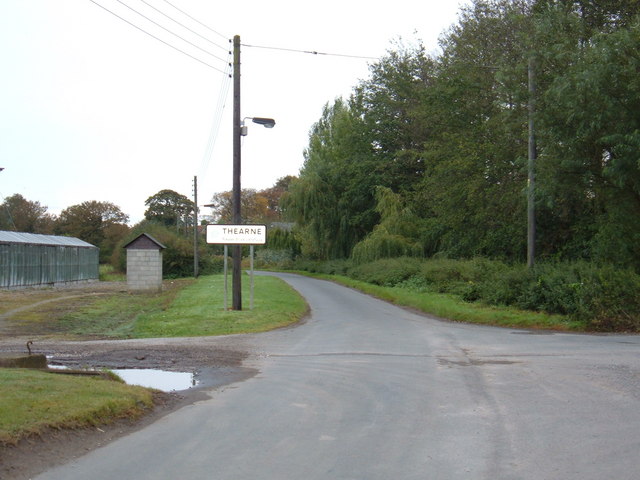
Thearne is a hamlet and former civil parish, now in the parish of Woodmansey, in the East Riding of Yorkshire, England. In 1931 the parish had a population of 183.
It is situated approximately 3.5 miles (5.6 km) south-east of Beverley to the east of the A1174 road from Hull to Beverley. It also lies just to the west of the River Hull.
Thearne lies between the A1174 Beverley to Hull road, and the River Hull, around 3.5 miles (5.6 km) south-east of Beverley. The original village is located at the meeting of three minor roads: Thearne Road (now Ferry Lane) and Thearne Lane (formerly Old Wire Carr Road) to the west, and Ferry Lane to the east. The modern place includes additional housing along the A1174.
The area around Thearne is primarily agricultural, low lying (less than 16 feet (5 m) above sea level), with extensive drainage. There are several developments of glasshouse based agriculture in the area.
The hamlet is in the Beverley and Holderness parliamentary constituency.
Thearne was formerly a township in the parish of Beverley St. John, in 1866 Thearne became a civil parish, on 1 April 1935 the parish was abolished to form Woodmansey.
The name 'Thearne' is a reference to the Thorn tree and was recorded as early as the late 13th century. A ferry east of Thearne across the River Hull dates to at least the 12th century. In the 15th century a chapel dedicated to the Blessed Virgin was established. The chapel was confiscated during Henry VIII's suppression, and is no longer in existence.
Flooding of the Beverley-Hull road led to orders for an improvement of the area's drainage in the 17th century. The land around Thearne was enclosed by the Beverley, &c. Inclosure Act 1785 (25 Geo. 3. c. 48 Pr.). The Beverley and Barmston Drain was constructed through the area in around 1800, but does not actively drain Thearne. A windmill for corn, Thearne Windmill, south-west of the village on the Beverley-Hull road was constructed sometime around 1800. An earlier mill existed in the 17th century, the new mill had steam power installed in 1856.
Hub AI
Thearne AI simulator
(@Thearne_simulator)
Thearne
Thearne is a hamlet and former civil parish, now in the parish of Woodmansey, in the East Riding of Yorkshire, England. In 1931 the parish had a population of 183.
It is situated approximately 3.5 miles (5.6 km) south-east of Beverley to the east of the A1174 road from Hull to Beverley. It also lies just to the west of the River Hull.
Thearne lies between the A1174 Beverley to Hull road, and the River Hull, around 3.5 miles (5.6 km) south-east of Beverley. The original village is located at the meeting of three minor roads: Thearne Road (now Ferry Lane) and Thearne Lane (formerly Old Wire Carr Road) to the west, and Ferry Lane to the east. The modern place includes additional housing along the A1174.
The area around Thearne is primarily agricultural, low lying (less than 16 feet (5 m) above sea level), with extensive drainage. There are several developments of glasshouse based agriculture in the area.
The hamlet is in the Beverley and Holderness parliamentary constituency.
Thearne was formerly a township in the parish of Beverley St. John, in 1866 Thearne became a civil parish, on 1 April 1935 the parish was abolished to form Woodmansey.
The name 'Thearne' is a reference to the Thorn tree and was recorded as early as the late 13th century. A ferry east of Thearne across the River Hull dates to at least the 12th century. In the 15th century a chapel dedicated to the Blessed Virgin was established. The chapel was confiscated during Henry VIII's suppression, and is no longer in existence.
Flooding of the Beverley-Hull road led to orders for an improvement of the area's drainage in the 17th century. The land around Thearne was enclosed by the Beverley, &c. Inclosure Act 1785 (25 Geo. 3. c. 48 Pr.). The Beverley and Barmston Drain was constructed through the area in around 1800, but does not actively drain Thearne. A windmill for corn, Thearne Windmill, south-west of the village on the Beverley-Hull road was constructed sometime around 1800. An earlier mill existed in the 17th century, the new mill had steam power installed in 1856.
Recent media