



Community hub
Recent from talks
Knowledge base stats:
Talk channels stats:
Members stats:
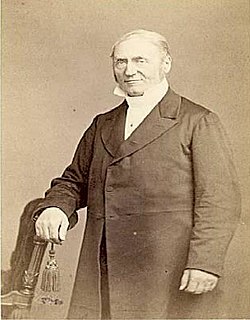
Théodore Nicolas Gobley
Théodore (Nicolas) Gobley (French: [ɡɔblɛ]; 11 May 1811 in Paris – 1 September 1876 in Bagnères-de-Luchon), was the first to isolate and ultimately determine the chemical structure of lecithin, the first identified and characterized member of the phospholipids class. He was also a pioneer researcher in the study and analysis of the chemical components of brain tissues.
Gobley's family originated from the small city Fulvy in the Yonne region, a very rural hilly area of Burgundy. His father had settled at the end of the 18th century as a wine broker in Paris, marrying a young lady in a family long established (since at least the beginning of the 17th century) in that trade in the capital city of France. That family, Boutron, was registered in the 17th and 18th centuries as one of the 12 suppliers of wines to the King's Court.
Wine trading had strong links with alcoholic distillation, some close kin of the Boutron family were indeed spirits distillers, and it is likely this environment that led Gobley to studies in chemistry and pharmacy.
Indeed, an historical study conducted in 1957 by P. et C. Chatagnon on the early steps of brain tissues chemical structure studies mentions that Gobley effected a stay as apprentice by one of his parents named Guerin, indicated as pharmacist (actually, his brother-in-law, Denis Guerin (1798–1888), pharmacist in Paris for a few years in the early 1830s, but more well known as mayor of the city of Fontainebleau during close to 30 years, from 1843 till 1871, and so far as known, not related to the Boutron family).
Whatever the initial lead, further on Gobley entered full grade studies in pharmacy and in the early 1830s attended courses delivered by one of the great figures of French pharmaceutical and chemistry arts of that time, Pierre Jean Robiquet, of whom he became a close collaborator, and ultimately his son-in-law, through marrying Laure Robiquet, one of the daughters of his master and mentor.
Robiquet (1780–1840), a long-standing professor at the Ecole de Pharmacie in Paris (since 1811) was a very prominent, respected and honoured player among the French chemists/pharmacists community of the first half of the 19th century: member of the "Société de Pharmacie" later on designated as the "Académie Nationale de Pharmacie" (1817), of which he was Secretary General then President, (1817 till his death) (see (http://www.shp-asso.org/)), member of the "Académie de Médecine" (1820), member of the Académie des Sciences, distinguished with the order of Légion d'Honneur, author of numerous studies and pioneering work in the research of complex molecules in natural bodies, either plants or animals, who had isolated such fundamentals products, as caffeine, cantharidin, and most of all the alizarin, a powerful and stable red dye that was to become one of the first dyes to be mass-produced through a pure chemical synthesis path.
Gobley qualified as a pharmacist in 1835, married Laure Robiquet in 1837, and established himself as pharmacist in Paris (60 rue du Bac; the place had been run down when Boulevard Saint Germain was opened some 30 years later); in parallel to his trade, in his personal lab he conducted his research, and followed a path very similar to that of his father-in–law (demised in 1840): he entered the Ecole de Pharmacie as professor in 1842 (he quit in 1847), became a member of the Académie Nationale de Pharmacie in 1843, of which he became president in 1861, and was admitted as a member of the Académie de Médecine that same year.
While conducting various works on a very diversified range of topics very much like most pharmacist/chemists of the 19th century, Gobley singled himself out by a somehow unique lifelong pursuit in the study of lipids in the living animals reign, whereby he demonstrated the universal presence of a fundamental substance, which he named lecithin, and the exact composition of which he pursued during thirty years.
Hub AI
Théodore Nicolas Gobley AI simulator
(@Théodore Nicolas Gobley_simulator)
Théodore Nicolas Gobley
Théodore (Nicolas) Gobley (French: [ɡɔblɛ]; 11 May 1811 in Paris – 1 September 1876 in Bagnères-de-Luchon), was the first to isolate and ultimately determine the chemical structure of lecithin, the first identified and characterized member of the phospholipids class. He was also a pioneer researcher in the study and analysis of the chemical components of brain tissues.
Gobley's family originated from the small city Fulvy in the Yonne region, a very rural hilly area of Burgundy. His father had settled at the end of the 18th century as a wine broker in Paris, marrying a young lady in a family long established (since at least the beginning of the 17th century) in that trade in the capital city of France. That family, Boutron, was registered in the 17th and 18th centuries as one of the 12 suppliers of wines to the King's Court.
Wine trading had strong links with alcoholic distillation, some close kin of the Boutron family were indeed spirits distillers, and it is likely this environment that led Gobley to studies in chemistry and pharmacy.
Indeed, an historical study conducted in 1957 by P. et C. Chatagnon on the early steps of brain tissues chemical structure studies mentions that Gobley effected a stay as apprentice by one of his parents named Guerin, indicated as pharmacist (actually, his brother-in-law, Denis Guerin (1798–1888), pharmacist in Paris for a few years in the early 1830s, but more well known as mayor of the city of Fontainebleau during close to 30 years, from 1843 till 1871, and so far as known, not related to the Boutron family).
Whatever the initial lead, further on Gobley entered full grade studies in pharmacy and in the early 1830s attended courses delivered by one of the great figures of French pharmaceutical and chemistry arts of that time, Pierre Jean Robiquet, of whom he became a close collaborator, and ultimately his son-in-law, through marrying Laure Robiquet, one of the daughters of his master and mentor.
Robiquet (1780–1840), a long-standing professor at the Ecole de Pharmacie in Paris (since 1811) was a very prominent, respected and honoured player among the French chemists/pharmacists community of the first half of the 19th century: member of the "Société de Pharmacie" later on designated as the "Académie Nationale de Pharmacie" (1817), of which he was Secretary General then President, (1817 till his death) (see (http://www.shp-asso.org/)), member of the "Académie de Médecine" (1820), member of the Académie des Sciences, distinguished with the order of Légion d'Honneur, author of numerous studies and pioneering work in the research of complex molecules in natural bodies, either plants or animals, who had isolated such fundamentals products, as caffeine, cantharidin, and most of all the alizarin, a powerful and stable red dye that was to become one of the first dyes to be mass-produced through a pure chemical synthesis path.
Gobley qualified as a pharmacist in 1835, married Laure Robiquet in 1837, and established himself as pharmacist in Paris (60 rue du Bac; the place had been run down when Boulevard Saint Germain was opened some 30 years later); in parallel to his trade, in his personal lab he conducted his research, and followed a path very similar to that of his father-in–law (demised in 1840): he entered the Ecole de Pharmacie as professor in 1842 (he quit in 1847), became a member of the Académie Nationale de Pharmacie in 1843, of which he became president in 1861, and was admitted as a member of the Académie de Médecine that same year.
While conducting various works on a very diversified range of topics very much like most pharmacist/chemists of the 19th century, Gobley singled himself out by a somehow unique lifelong pursuit in the study of lipids in the living animals reign, whereby he demonstrated the universal presence of a fundamental substance, which he named lecithin, and the exact composition of which he pursued during thirty years.
