



Community hub
Recent from talks
Knowledge base stats:
Talk channels stats:
Members stats:
Therapy dog
A therapy dog is a dog that is trained to provide affection, comfort and support to people, often in settings such as hospitals, retirement homes, nursing homes, schools, libraries, hospices, or disaster areas. In contrast to assistance dogs, which are trained to assist specific patients with their day-to-day physical needs, therapy dogs are trained to interact with all kinds of people, not just their handlers.
Dogs have been utilized as a therapeutic resource by many medical professionals over the last few centuries. In the late 1800s, Florence Nightingale observed that small pets helped reduce anxiety and improve recovery in children and adults living in psychiatric institutions. Sigmund Freud began using his own pet dog to improve communication with his psychiatric patients in the 1930s. More recently, Elaine Smith established the first therapy dog organization in 1976 after observing positive effects of dogs on hospital patients during her work as a registered nurse. Assistance Dogs International followed in 1986, with the merger of several organizations.
Brian Hare, director of Duke University Canine Cognition Center, says the human-canine bond goes back thousands of years. Hare states, "Dogs have been drawn to people since humans began to exist in settlements [...] part of what makes dogs special is that they are one of the only species that does not generally exhibit xenophobia, meaning fear of strangers. We've done research on this, and what we've found is that not only are most dogs totally not xenophobic, they're actually xenophilic - they love strangers!". Although a dog does not think according to language, people often intuit that dogs are compassionate and communicative. This builds a feeling of intimacy, leading the person to feel safe and understood. This can benefit the grieving human, who may be apprehensive about talking with another person for the fear of being hurt or lied to. Pets are an addition to therapy because they allow people to feel safe and accepted.
In order for a dog to be a good candidate to become a therapy dog and receive certification, they should be calm and social with strangers. They should also be able to adjust to loud noises and fast movements. There are certain steps that are needed for a dog to become certified by a national organization such as The Alliance of Therapy Dogs. ATD requires that dogs be at least one year old, that handlers have had the dog for at least six months, and that handlers pass a background check. Health requirements include up-to-date vaccinations and a negative fecal exam within the past year. The ATD certification process for begins with a handling assessment, during which an evaluator observes the dog’s temperament, obedience, and the handler’s ability to maintain control. If the team passes, they must complete three supervised visits in facilities such as hospitals or nursing homes before submitting paperwork for final approval. To remain active, ATD members are expected to continue visits regularly, and retesting may be required if a team lapses in visits for several months. Exact testing/certification requirements differ based on different organization's requirements. Some organizations offer classes such as "distraction-proofing", which strengthens the dog's ability to focus and therapy training to help prepare the dog and the dog's owner for therapy visits.
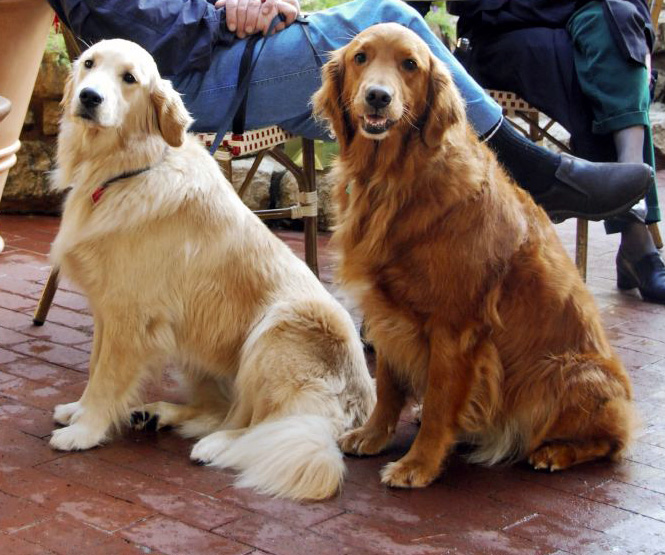
Although therapy dogs are not limited to a certain size or breed, common breeds used in therapy dog application and research include the Golden Retriever and the Labrador Retriever. Cavalier King Charles Spaniels and Coton de Tulear are considered natural therapy dogs since they were bred to be companion dogs. Thus, they love meeting new people including children, are very gentle, and are eager to sit on someone's lap for long periods of time and are small enough to do so.
Therapy dogs offer many benefits to people and patients. For example, therapy dogs help patients participate in physical activities. They also help encourage them to have cognitive, social, and communication goals.
Franklin K. Lane, Secretary of the Interior at the time, proposed utilizing dogs with psychiatric patients at St Elizabeth's Hospital in Washington, DC in the year 1919. Florence Nightingale also contributed ideas to the future field of Animal Assisted Therapy (AAT). She discovered that patients of different ages living in a psychiatric institution were relieved from anxiety when they were able to spend time with small animals. Freud believed that dogs could sense certain levels of tension being felt by his patients. Freud also used his dog to improve communication with his patients. He felt as if his patients were more comfortable talking to his dog at first and this opened up doors for them to later feel more comfortable talking to him. Boris Levinson, an American child psychiatrist, was one of the first to write about animal therapy, specifically with dogs as a tool to facilitate work with a child client. Dr. Levinson found the dog's presence helped his pediatric clients with positive focus, communication, and allowing the initiation of therapy, and shared this information with the medical world in 1961. About 10 years later, psychiatrists Sam and Elizabeth Corson at Ohio State University Psychiatric Hospital used Levinson's findings to expand this form of therapy to adults. The use of therapy can also be attributed to Elaine Smith, a registered nurse. While a chaplain and his dog visited, Smith noticed the comfort that this visit seemed to bring the patients. In 1976, Smith started a program for training dogs to visit institutions, and the demand for therapy dogs continued to grow.
Therapy dogs are usually not assistance or service dogs, but can be one or both with some organizations.
Hub AI
Therapy dog AI simulator
(@Therapy dog_simulator)
Therapy dog
A therapy dog is a dog that is trained to provide affection, comfort and support to people, often in settings such as hospitals, retirement homes, nursing homes, schools, libraries, hospices, or disaster areas. In contrast to assistance dogs, which are trained to assist specific patients with their day-to-day physical needs, therapy dogs are trained to interact with all kinds of people, not just their handlers.
Dogs have been utilized as a therapeutic resource by many medical professionals over the last few centuries. In the late 1800s, Florence Nightingale observed that small pets helped reduce anxiety and improve recovery in children and adults living in psychiatric institutions. Sigmund Freud began using his own pet dog to improve communication with his psychiatric patients in the 1930s. More recently, Elaine Smith established the first therapy dog organization in 1976 after observing positive effects of dogs on hospital patients during her work as a registered nurse. Assistance Dogs International followed in 1986, with the merger of several organizations.
Brian Hare, director of Duke University Canine Cognition Center, says the human-canine bond goes back thousands of years. Hare states, "Dogs have been drawn to people since humans began to exist in settlements [...] part of what makes dogs special is that they are one of the only species that does not generally exhibit xenophobia, meaning fear of strangers. We've done research on this, and what we've found is that not only are most dogs totally not xenophobic, they're actually xenophilic - they love strangers!". Although a dog does not think according to language, people often intuit that dogs are compassionate and communicative. This builds a feeling of intimacy, leading the person to feel safe and understood. This can benefit the grieving human, who may be apprehensive about talking with another person for the fear of being hurt or lied to. Pets are an addition to therapy because they allow people to feel safe and accepted.
In order for a dog to be a good candidate to become a therapy dog and receive certification, they should be calm and social with strangers. They should also be able to adjust to loud noises and fast movements. There are certain steps that are needed for a dog to become certified by a national organization such as The Alliance of Therapy Dogs. ATD requires that dogs be at least one year old, that handlers have had the dog for at least six months, and that handlers pass a background check. Health requirements include up-to-date vaccinations and a negative fecal exam within the past year. The ATD certification process for begins with a handling assessment, during which an evaluator observes the dog’s temperament, obedience, and the handler’s ability to maintain control. If the team passes, they must complete three supervised visits in facilities such as hospitals or nursing homes before submitting paperwork for final approval. To remain active, ATD members are expected to continue visits regularly, and retesting may be required if a team lapses in visits for several months. Exact testing/certification requirements differ based on different organization's requirements. Some organizations offer classes such as "distraction-proofing", which strengthens the dog's ability to focus and therapy training to help prepare the dog and the dog's owner for therapy visits.
Although therapy dogs are not limited to a certain size or breed, common breeds used in therapy dog application and research include the Golden Retriever and the Labrador Retriever. Cavalier King Charles Spaniels and Coton de Tulear are considered natural therapy dogs since they were bred to be companion dogs. Thus, they love meeting new people including children, are very gentle, and are eager to sit on someone's lap for long periods of time and are small enough to do so.
Therapy dogs offer many benefits to people and patients. For example, therapy dogs help patients participate in physical activities. They also help encourage them to have cognitive, social, and communication goals.
Franklin K. Lane, Secretary of the Interior at the time, proposed utilizing dogs with psychiatric patients at St Elizabeth's Hospital in Washington, DC in the year 1919. Florence Nightingale also contributed ideas to the future field of Animal Assisted Therapy (AAT). She discovered that patients of different ages living in a psychiatric institution were relieved from anxiety when they were able to spend time with small animals. Freud believed that dogs could sense certain levels of tension being felt by his patients. Freud also used his dog to improve communication with his patients. He felt as if his patients were more comfortable talking to his dog at first and this opened up doors for them to later feel more comfortable talking to him. Boris Levinson, an American child psychiatrist, was one of the first to write about animal therapy, specifically with dogs as a tool to facilitate work with a child client. Dr. Levinson found the dog's presence helped his pediatric clients with positive focus, communication, and allowing the initiation of therapy, and shared this information with the medical world in 1961. About 10 years later, psychiatrists Sam and Elizabeth Corson at Ohio State University Psychiatric Hospital used Levinson's findings to expand this form of therapy to adults. The use of therapy can also be attributed to Elaine Smith, a registered nurse. While a chaplain and his dog visited, Smith noticed the comfort that this visit seemed to bring the patients. In 1976, Smith started a program for training dogs to visit institutions, and the demand for therapy dogs continued to grow.
Therapy dogs are usually not assistance or service dogs, but can be one or both with some organizations.