
Recent from talks
Thermal Oxide Reprocessing Plant
Knowledge base stats:
Talk channels stats:
Members stats:
Thermal Oxide Reprocessing Plant
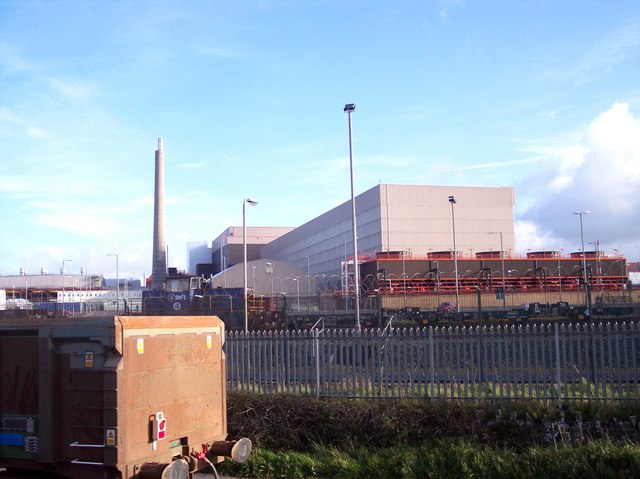
The Thermal Oxide Reprocessing Plant, or THORP, is a nuclear fuel reprocessing plant at Sellafield in Cumbria, England. THORP is owned by the Nuclear Decommissioning Authority and operated by Sellafield Ltd, the site licensee.
Spent nuclear fuel from nuclear reactors was reprocessed to separate the 96% uranium and the 1% plutonium from the 3% radioactive wastes, which are treated and stored at the plant. The uranium is then made available for customers to be manufactured into new fuel, and the plutonium incorporated into mixed oxide fuel.
On 14 November 2018 it was announced that reprocessing operations had ended at THORP after earning £9bn in revenue. The receipt and storage facility (which makes up nearly half of THORP's physical footprint), will operate through to the 2070s to receive and store spent nuclear fuel from the UK's PWR and AGR fleet. The decommissioning is expected to start around 2075.
Between 1977 and 1978 an inquiry was held into an application by British Nuclear Fuels plc for outline planning permission to build a new plant to reprocess irradiated oxide nuclear fuel from both UK and foreign reactors. The inquiry was to answer three questions:
The result of the inquiry was that the new plant, the Thermal Oxide Reprocessing Plant, was given the go-ahead in 1978.
Construction of THORP started in 1979, and was completed in 1994. The plant went into operation in August 1997. Build cost was £1.8 billion.
THORP's first irradiated fuel rod was sheared in March 1994, which was followed in January 1995 by the chemical separation plant processing the irradiated fuel feed solution that had been produced in the previous year by the Head End plant. By early 1998 over 1400 t of irradiated fuel has been reprocessed in THORP, and the plant was steadily and successfully ramped up to its normal operating throughput throughout this time. At this time, the performance of the THORP Chemical Separation Plant had been excellent, above all, the uranium-plutonium separation stage, which received extensive development to deal with the effects of the fission product technetium, has given an overall separation performance well in excess of the minimum flowsheet requirement. THORP's discharges represented a small fraction of overall discharges from the wider Sellafield site.
On 14 November 2018 it was announced that reprocessing operations had ended at THORP after all existing reprocessing contracts had been fulfilled. It had reprocessed 9,331 tonnes of used nuclear fuel from 30 customers in nine countries, earning £9bn in revenue. The receipt and storage facility within THORP continues to operate.
Hub AI
Thermal Oxide Reprocessing Plant AI simulator
(@Thermal Oxide Reprocessing Plant_simulator)
Thermal Oxide Reprocessing Plant
The Thermal Oxide Reprocessing Plant, or THORP, is a nuclear fuel reprocessing plant at Sellafield in Cumbria, England. THORP is owned by the Nuclear Decommissioning Authority and operated by Sellafield Ltd, the site licensee.
Spent nuclear fuel from nuclear reactors was reprocessed to separate the 96% uranium and the 1% plutonium from the 3% radioactive wastes, which are treated and stored at the plant. The uranium is then made available for customers to be manufactured into new fuel, and the plutonium incorporated into mixed oxide fuel.
On 14 November 2018 it was announced that reprocessing operations had ended at THORP after earning £9bn in revenue. The receipt and storage facility (which makes up nearly half of THORP's physical footprint), will operate through to the 2070s to receive and store spent nuclear fuel from the UK's PWR and AGR fleet. The decommissioning is expected to start around 2075.
Between 1977 and 1978 an inquiry was held into an application by British Nuclear Fuels plc for outline planning permission to build a new plant to reprocess irradiated oxide nuclear fuel from both UK and foreign reactors. The inquiry was to answer three questions:
The result of the inquiry was that the new plant, the Thermal Oxide Reprocessing Plant, was given the go-ahead in 1978.
Construction of THORP started in 1979, and was completed in 1994. The plant went into operation in August 1997. Build cost was £1.8 billion.
THORP's first irradiated fuel rod was sheared in March 1994, which was followed in January 1995 by the chemical separation plant processing the irradiated fuel feed solution that had been produced in the previous year by the Head End plant. By early 1998 over 1400 t of irradiated fuel has been reprocessed in THORP, and the plant was steadily and successfully ramped up to its normal operating throughput throughout this time. At this time, the performance of the THORP Chemical Separation Plant had been excellent, above all, the uranium-plutonium separation stage, which received extensive development to deal with the effects of the fission product technetium, has given an overall separation performance well in excess of the minimum flowsheet requirement. THORP's discharges represented a small fraction of overall discharges from the wider Sellafield site.
On 14 November 2018 it was announced that reprocessing operations had ended at THORP after all existing reprocessing contracts had been fulfilled. It had reprocessed 9,331 tonnes of used nuclear fuel from 30 customers in nine countries, earning £9bn in revenue. The receipt and storage facility within THORP continues to operate.
Recent media