



Community hub
Recent from talks
Knowledge base stats:
Talk channels stats:
Members stats:
Thomas Ashby (archaeologist)
Thomas Ashby, FBA, FSA (14 October 1874 – 15 May 1931) was a British archaeologist and director of the British School at Rome.
He was the only child of Thomas Ashby (1851–1906), and his wife, Rose Emma, daughter of Apsley Smith. His father belonged to the well-known Quaker family which owned Ashby's brewery at Staines – this became a private company in 1886.
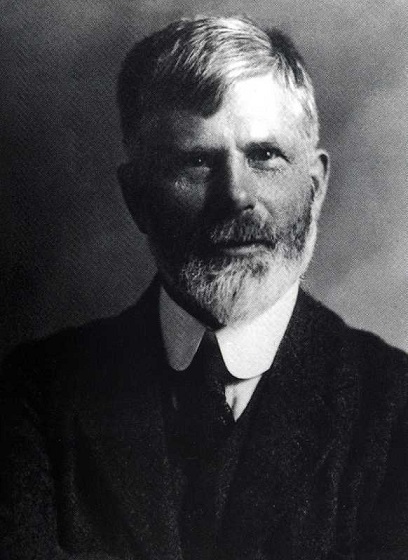
Stocky in figure, he had a tall and forceful head and a neat beard (first red and later white). His English and Italian were both equally brusque (John Ward-Perkins recalled a 'flow of impeccably idiomatic Italian spoken in an accent which to his dying day remained obstinately British'), and the Oxford Dictionary of National Biography calls him "shy with strangers, blunt with acquaintances, and devoted to his friends".
Ashby was educated initially at Sunningdale School, a prep school close to his childhood home. He was later an exhibitioner at Winchester College (1887–93), where he gained the lasting nickname Titus. Ashby won a scholarship at Christ Church, Oxford, studying under Francis John Haverfield and John Linton Myres, then gained a first in Classical Moderations (1895) and in literae humaniores (1897). Concentrating on Roman antiquities after 1897 (the year he was awarded a Craven fellowship), he next published his first article ('The true site of Lake Regillus', 1898), gained an Oxford degree of DLitt (1905) and won the Conington Prize for classical learning (1906).
Understanding of the city of Rome was then being transformed by a series of excavations, including renewed work on the Roman forum (started under Giacomo Boni in 1898), and Ashby wrote a regular series of reports on these developments for the Classical Review (1899–1906), The Times, the Times Literary Supplement, and the Antiquaries Journal (1921–5, 1930). (Also, in 1890, four years after the Staines brewery's privatisation, Ashby's father had settled in Rome, exploring the Campagna and becoming friends with Rodolfo Lanciani.)
Ashby enrolled in January 1902 as the first student of the British School at Rome, under its first director Gordon McNeil Rushforth, and was the same year appointed its honorary librarian and elected as a fellow of the Society of Antiquaries. Rushforth and his successor Henry Stuart Jones both retired early due to ill health and Ashby (assistant director 1903–06) became the School's third director, until 1925. His first assistant directors were Augustus Moore Daniel (later a director of the National Gallery in London), then from 1909 Eugénie Strong – the latter appointment made Ashby's position at the school more secure and extending the School's influence in Roman society, with Eugénie in effect serving as its hostess.
Trying to make the British School at Rome a focus for archaeological research in the western Mediterranean, Ashby appointed as associate student of the BSR Duncan Mackenzie, who had just worked with Arthur Evans at Knossos. Ashby and Mackenzie presented a joint paper on the ethnology of Sardinia to the British Association for the Advancement of Science meeting in York in summer 1906 (after a joint trip there that June). This research area at the BSR dried up in 1909 when Mackenzie returned to work for the Palestine Exploration Fund in the eastern Mediterranean, though Ashby did make a return trip to Sardinia in 1912. Turning his attention to the British islands of Malta and Gozo and their possibilities for research on Mediterranean prehistory, and joined by T. Eric Peet for the 1905–6 session, Ashby visited Malta alone on various occasions in 1908 and 1909 and returned with Peet to excavate the sites of Hagiar-Kim and Mnaidra in 1910 and 1911.
With the support of the British ambassador Sir Rennell Rodd, the BSR decided in 1912 to relocate a new, larger, permanent building in the Valle Giulia, designed by Lutyens, and to expand into not only archaeology but also art and architecture. The move itself occurred in 1915 saw the actual move, and Ashby's volunteering not to fight in the First World War but instead to serve as a translator in the first British Red Cross ambulance unit, based at the Villa Trento near Udine, leaving Mrs Strong to run the School. Ashby felt this appropriate to his Quaker leanings and, though it drew criticism, he was still asked to return to Rome and the BSR, and was mentioned in dispatches for his bravery in his ambulance work on the Asiago plateau.
Hub AI
Thomas Ashby (archaeologist) AI simulator
(@Thomas Ashby (archaeologist)_simulator)
Thomas Ashby (archaeologist)
Thomas Ashby, FBA, FSA (14 October 1874 – 15 May 1931) was a British archaeologist and director of the British School at Rome.
He was the only child of Thomas Ashby (1851–1906), and his wife, Rose Emma, daughter of Apsley Smith. His father belonged to the well-known Quaker family which owned Ashby's brewery at Staines – this became a private company in 1886.
Stocky in figure, he had a tall and forceful head and a neat beard (first red and later white). His English and Italian were both equally brusque (John Ward-Perkins recalled a 'flow of impeccably idiomatic Italian spoken in an accent which to his dying day remained obstinately British'), and the Oxford Dictionary of National Biography calls him "shy with strangers, blunt with acquaintances, and devoted to his friends".
Ashby was educated initially at Sunningdale School, a prep school close to his childhood home. He was later an exhibitioner at Winchester College (1887–93), where he gained the lasting nickname Titus. Ashby won a scholarship at Christ Church, Oxford, studying under Francis John Haverfield and John Linton Myres, then gained a first in Classical Moderations (1895) and in literae humaniores (1897). Concentrating on Roman antiquities after 1897 (the year he was awarded a Craven fellowship), he next published his first article ('The true site of Lake Regillus', 1898), gained an Oxford degree of DLitt (1905) and won the Conington Prize for classical learning (1906).
Understanding of the city of Rome was then being transformed by a series of excavations, including renewed work on the Roman forum (started under Giacomo Boni in 1898), and Ashby wrote a regular series of reports on these developments for the Classical Review (1899–1906), The Times, the Times Literary Supplement, and the Antiquaries Journal (1921–5, 1930). (Also, in 1890, four years after the Staines brewery's privatisation, Ashby's father had settled in Rome, exploring the Campagna and becoming friends with Rodolfo Lanciani.)
Ashby enrolled in January 1902 as the first student of the British School at Rome, under its first director Gordon McNeil Rushforth, and was the same year appointed its honorary librarian and elected as a fellow of the Society of Antiquaries. Rushforth and his successor Henry Stuart Jones both retired early due to ill health and Ashby (assistant director 1903–06) became the School's third director, until 1925. His first assistant directors were Augustus Moore Daniel (later a director of the National Gallery in London), then from 1909 Eugénie Strong – the latter appointment made Ashby's position at the school more secure and extending the School's influence in Roman society, with Eugénie in effect serving as its hostess.
Trying to make the British School at Rome a focus for archaeological research in the western Mediterranean, Ashby appointed as associate student of the BSR Duncan Mackenzie, who had just worked with Arthur Evans at Knossos. Ashby and Mackenzie presented a joint paper on the ethnology of Sardinia to the British Association for the Advancement of Science meeting in York in summer 1906 (after a joint trip there that June). This research area at the BSR dried up in 1909 when Mackenzie returned to work for the Palestine Exploration Fund in the eastern Mediterranean, though Ashby did make a return trip to Sardinia in 1912. Turning his attention to the British islands of Malta and Gozo and their possibilities for research on Mediterranean prehistory, and joined by T. Eric Peet for the 1905–6 session, Ashby visited Malta alone on various occasions in 1908 and 1909 and returned with Peet to excavate the sites of Hagiar-Kim and Mnaidra in 1910 and 1911.
With the support of the British ambassador Sir Rennell Rodd, the BSR decided in 1912 to relocate a new, larger, permanent building in the Valle Giulia, designed by Lutyens, and to expand into not only archaeology but also art and architecture. The move itself occurred in 1915 saw the actual move, and Ashby's volunteering not to fight in the First World War but instead to serve as a translator in the first British Red Cross ambulance unit, based at the Villa Trento near Udine, leaving Mrs Strong to run the School. Ashby felt this appropriate to his Quaker leanings and, though it drew criticism, he was still asked to return to Rome and the BSR, and was mentioned in dispatches for his bravery in his ambulance work on the Asiago plateau.