



Community hub
Recent from talks
Knowledge base stats:
Talk channels stats:
Members stats:
Thomas Crisp
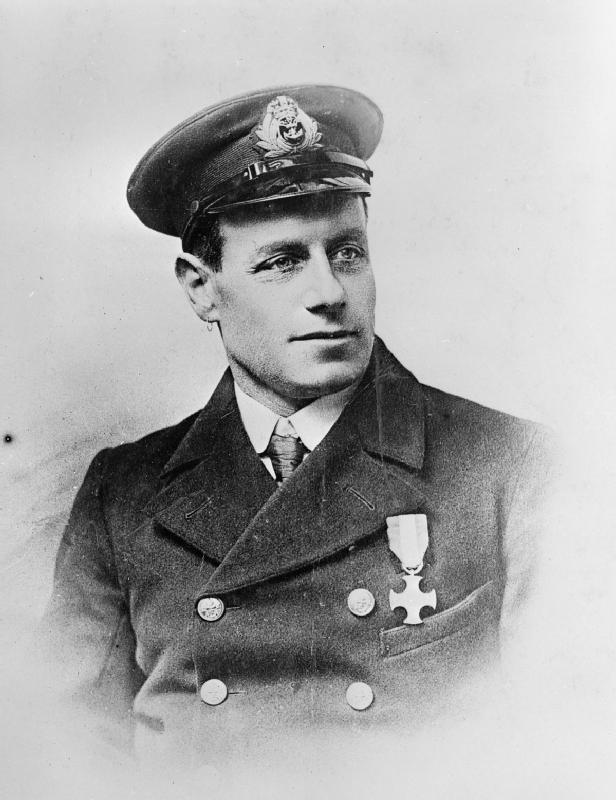
Thomas Crisp VC, DSC, RNR (28 April 1876 – 15 August 1917) was an English sailor and posthumous recipient of the Victoria Cross. Crisp, in civilian life a commercial fisherman operating from Lowestoft in Suffolk, earned his award after being killed during the defence of his vessel, the armed naval smack Nelson, in the North Sea against an attack from a German submarine in 1917.
Crisp's self-sacrifice in the face of this "unequal struggle" was used by the government to bolster morale during some of the toughest days of the First World War for Britain, in late 1917, during which Britain was suffering heavy losses at the Battle of Passchendaele. His exploit was read aloud by David Lloyd George in the Houses of Parliament and made headline news for nearly a week.
Thomas Crisp was born into a family of shipwrights and fishermen in Lowestoft, one of ten children to William and Mary Anne Crisp. Although his father was the owner of a successful boatbuilding firm and thus could afford an education for his children, Thomas did not enjoy school, instead showing a "marked preference for quayside adventure to school routine".
Leaving school, Thomas took to the sea, spending several years as a herring fisherman before joining a fishing trawler out of Lowestoft. He was a natural to the work, being a remarkably good sailor, but tired of it quickly and joined the Atlantic steamship SS Mobile, becoming her quartermaster and making several trans-Atlantic voyages.
In 1895, aged 19, he met and married Harriet Elizabeth Alp and settled with her at 48 Staithe Road in Burgh St. Peter near Lowestoft, where they had two sons and a daughter, including Thomas Crisp Jr, who would be with his father on the day he won the Victoria Cross. Establishing himself as a fisherman, Thomas Sr achieved his mate and then skipper qualifications, entitling him to captain a fishing vessel sailing from the port. In 1902 he was taken on by Chambers, one of the largest boat owning families in Lowestoft, to crew and then captain their ketch George Borrow, in which he remained for thirteen years. In 1907 the family moved to Lowestoft while Crisp continued his work at sea, proving one of the most popular fishing captains in Lowestoft and joined on his ketch by his son in 1913.
When the First World War began in July 1914, Crisp was at sea. Unaware of the outbreak of war, he remained in the North Sea for several days, and was surprised on his return to learn that enemy submarines were expected off the port at any moment. When this threat failed to materialise, Thomas Crisp returned to fishing, considered too old for military service and in an occupation vital to Britain's food supplies. In late September, George Borrow passed HMS Aboukir, HMS Hogue and HMS Cressy shortly before they were all sunk, with over a thousand lives lost, by German U-boat U-9. Tom Crisp Jr. later wrote of finding bodies in their fishing nets for weeks afterwards.
In early 1915, Tom Crisp Jr left the vessel to join the Royal Navy. A few weeks later the U-boat threat expected so many months before arrived, as submarines surfaced among the undefended fishing fleets and used dynamite to destroy dozens of them after releasing the crews in small boats. This offensive was part of a wider German strategy to denude Britain of food supplies and took a heavy toll on the fishing fleets of the North Sea. George Borrow was among the victims, sunk in August, although it is not known if Tom Crisp (father) was aboard at the time. While temporarily working in a net factory following the loss of his vessel, he was scouted by a Navy officer recruiting experienced local fishing captains to command a flotilla of tiny fishing vessels, which were to be secretly armed. The boats were intended to be working fishing vessels fitted with a small artillery piece with which to sink enemy submarines as they surfaced alongside. In this manner it was hoped they would protect the fishing fleets without the diversion of major resources from the regular fleet, in the same manner as Q-ships deployed in the commercial sea lanes.
Agreeing to this proposal, Crisp became first a Seaman and by mid-1916 a Skipper in the Royal Naval Reserve, arranging for his son to join the crew of his boat, the HM Armed Smack I'll Try, armed with a 3-pounder gun. On 1 February 1917 in the North Sea, I'll Try had its first confrontation with the enemy when two submarines surfaced close to the smack and her companion the larger Boy Alfred. Despite near misses from enemy torpedoes, both smacks scored hits on their larger opponents and reported them as probable sinkings, although post-war German records show that no submarines were lost on that date. Both skippers were awarded the Distinguished Service Cross and a present of £200 for this action, and Crisp was offered a promotion and transfer to an ocean-going Q-ship. He was forced to turn down this offer due to his wife's sudden and terminal illness. She died in June 1917.
Hub AI
Thomas Crisp AI simulator
(@Thomas Crisp_simulator)
Thomas Crisp
Thomas Crisp VC, DSC, RNR (28 April 1876 – 15 August 1917) was an English sailor and posthumous recipient of the Victoria Cross. Crisp, in civilian life a commercial fisherman operating from Lowestoft in Suffolk, earned his award after being killed during the defence of his vessel, the armed naval smack Nelson, in the North Sea against an attack from a German submarine in 1917.
Crisp's self-sacrifice in the face of this "unequal struggle" was used by the government to bolster morale during some of the toughest days of the First World War for Britain, in late 1917, during which Britain was suffering heavy losses at the Battle of Passchendaele. His exploit was read aloud by David Lloyd George in the Houses of Parliament and made headline news for nearly a week.
Thomas Crisp was born into a family of shipwrights and fishermen in Lowestoft, one of ten children to William and Mary Anne Crisp. Although his father was the owner of a successful boatbuilding firm and thus could afford an education for his children, Thomas did not enjoy school, instead showing a "marked preference for quayside adventure to school routine".
Leaving school, Thomas took to the sea, spending several years as a herring fisherman before joining a fishing trawler out of Lowestoft. He was a natural to the work, being a remarkably good sailor, but tired of it quickly and joined the Atlantic steamship SS Mobile, becoming her quartermaster and making several trans-Atlantic voyages.
In 1895, aged 19, he met and married Harriet Elizabeth Alp and settled with her at 48 Staithe Road in Burgh St. Peter near Lowestoft, where they had two sons and a daughter, including Thomas Crisp Jr, who would be with his father on the day he won the Victoria Cross. Establishing himself as a fisherman, Thomas Sr achieved his mate and then skipper qualifications, entitling him to captain a fishing vessel sailing from the port. In 1902 he was taken on by Chambers, one of the largest boat owning families in Lowestoft, to crew and then captain their ketch George Borrow, in which he remained for thirteen years. In 1907 the family moved to Lowestoft while Crisp continued his work at sea, proving one of the most popular fishing captains in Lowestoft and joined on his ketch by his son in 1913.
When the First World War began in July 1914, Crisp was at sea. Unaware of the outbreak of war, he remained in the North Sea for several days, and was surprised on his return to learn that enemy submarines were expected off the port at any moment. When this threat failed to materialise, Thomas Crisp returned to fishing, considered too old for military service and in an occupation vital to Britain's food supplies. In late September, George Borrow passed HMS Aboukir, HMS Hogue and HMS Cressy shortly before they were all sunk, with over a thousand lives lost, by German U-boat U-9. Tom Crisp Jr. later wrote of finding bodies in their fishing nets for weeks afterwards.
In early 1915, Tom Crisp Jr left the vessel to join the Royal Navy. A few weeks later the U-boat threat expected so many months before arrived, as submarines surfaced among the undefended fishing fleets and used dynamite to destroy dozens of them after releasing the crews in small boats. This offensive was part of a wider German strategy to denude Britain of food supplies and took a heavy toll on the fishing fleets of the North Sea. George Borrow was among the victims, sunk in August, although it is not known if Tom Crisp (father) was aboard at the time. While temporarily working in a net factory following the loss of his vessel, he was scouted by a Navy officer recruiting experienced local fishing captains to command a flotilla of tiny fishing vessels, which were to be secretly armed. The boats were intended to be working fishing vessels fitted with a small artillery piece with which to sink enemy submarines as they surfaced alongside. In this manner it was hoped they would protect the fishing fleets without the diversion of major resources from the regular fleet, in the same manner as Q-ships deployed in the commercial sea lanes.
Agreeing to this proposal, Crisp became first a Seaman and by mid-1916 a Skipper in the Royal Naval Reserve, arranging for his son to join the crew of his boat, the HM Armed Smack I'll Try, armed with a 3-pounder gun. On 1 February 1917 in the North Sea, I'll Try had its first confrontation with the enemy when two submarines surfaced close to the smack and her companion the larger Boy Alfred. Despite near misses from enemy torpedoes, both smacks scored hits on their larger opponents and reported them as probable sinkings, although post-war German records show that no submarines were lost on that date. Both skippers were awarded the Distinguished Service Cross and a present of £200 for this action, and Crisp was offered a promotion and transfer to an ocean-going Q-ship. He was forced to turn down this offer due to his wife's sudden and terminal illness. She died in June 1917.