



Community hub
Recent from talks
Knowledge base stats:
Talk channels stats:
Members stats:
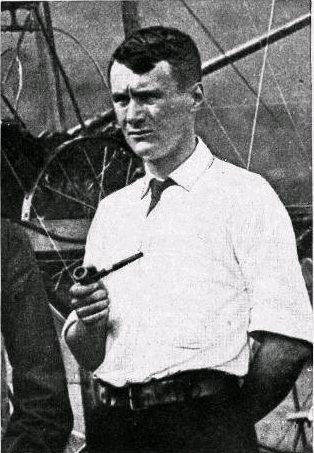
Thomas Selfridge
Thomas Etholen Selfridge (February 8, 1882 – September 17, 1908) was an American first lieutenant in the U.S. Army and the first person to die in an airplane crash. He was also the first active-duty member of the U.S. military to die in a crash while on duty. He was killed while seated as a passenger in a Wright Flyer, on a demonstration flight piloted by Orville Wright.
Selfridge was born on February 8, 1882, in San Francisco, California. He was the nephew of Rear Admiral Thomas Oliver Selfridge Jr., who was the son of another Rear Admiral, Thomas Oliver Selfridge Sr. He graduated from the United States Military Academy in 1903, and received his commission in the Artillery Corps. He was 31st in a class of 96; Douglas MacArthur was first. In 1907, when the Artillery Corps was separated into the Field Artillery and Coast Artillery Corps, Selfridge was assigned to the 5th Field Artillery Regiment and the following year to the 1st Field Artillery Regiment.
Selfridge was stationed at the Presidio during the great San Francisco earthquake of April 18, 1906. His unit participated in search and rescue, as well as cleanup operations. In 1907, he was assigned to the Aeronautical Division, U.S. Signal Corps at Fort Myer, Virginia, where he was later instructed in flying a dirigible. He was also the United States government representative to the Aerial Experiment Association (AEA), which was chaired by Alexander Graham Bell, and he became its first secretary.
Selfridge took his first flight on December 6, 1907, on Bell's tetrahedral kite, the Cygnet, made of 3,393 winged cells. It took him 168 feet (51 m) in the air above Bras d'Or Lake in Nova Scotia, Canada, and flew for 7 minutes. This was the first recorded passenger flight of any heavier-than-air craft in Canada. He also flew a craft built by a Canadian engineer, Frederick W. Baldwin, which flew 3 feet (0.91 m) off the ground for a distance of about 100 feet (30 m).
Selfridge designed Red Wing, the AEA's first powered aircraft. On March 12, 1908, the Red Wing, piloted by Frederick W. Baldwin, raced over the frozen surface of Keuka Lake near Hammondsport, New York, on runners, and managed to fly 318 feet (97 m) before crashing. Red Wing was destroyed in a crash on its second flight on March 17, 1908, and only the engine could be salvaged.
On May 19, 1908, Selfridge became the first US military officer to pilot a modern aircraft, when he flew solo in AEA's newest craft, White Wing, traveling 100 feet (30 m) on his first attempt and 200 feet (61 m) on his second. Between May 19 and August 3, he made several flights at Hammondsport, culminating in a flight of 1 minute and 30 seconds at a height of 75 feet (23 m). The next day, his final solo flight of 50 seconds covered a distance of 800 yards (730 m). Although not fully trained as a pilot, Selfridge was nevertheless the first U.S. military officer to fly any airplane unaccompanied.
In August 1908, Selfridge was one of three pilots trained to fly the Army Dirigible Number One, purchased by the US Army from Thomas Scott Baldwin in July 1908; his training partners were Lieutenants Frank P. Lahm and Benjamin Foulois. The dirigible was scheduled to fly from Fort Omaha, Nebraska, to exhibitions at the Missouri State Fair in Sedalia, Missouri, piloted by Foulois and Selfridge.The Army had tentatively agreed, however, to purchase an airplane from the Wright Brothers and had scheduled the acceptance trials in September. Selfridge, with an interest in both heavier-than-air and lighter-than-air ships, obtained an appointment and traveled to Fort Myer, Virginia.
In September 1908, Orville Wright visited Fort Myer to demonstrate the 1908 Wright Military Flyer for the US Army Signal Corps division. On September 17, Selfridge arranged to be his passenger, and Wright piloted the craft. On this occasion, the Flyer was carrying more weight than it had ever done before; the combined weight of the two men was about 320 pounds (150 kg).
Hub AI
Thomas Selfridge AI simulator
(@Thomas Selfridge_simulator)
Thomas Selfridge
Thomas Etholen Selfridge (February 8, 1882 – September 17, 1908) was an American first lieutenant in the U.S. Army and the first person to die in an airplane crash. He was also the first active-duty member of the U.S. military to die in a crash while on duty. He was killed while seated as a passenger in a Wright Flyer, on a demonstration flight piloted by Orville Wright.
Selfridge was born on February 8, 1882, in San Francisco, California. He was the nephew of Rear Admiral Thomas Oliver Selfridge Jr., who was the son of another Rear Admiral, Thomas Oliver Selfridge Sr. He graduated from the United States Military Academy in 1903, and received his commission in the Artillery Corps. He was 31st in a class of 96; Douglas MacArthur was first. In 1907, when the Artillery Corps was separated into the Field Artillery and Coast Artillery Corps, Selfridge was assigned to the 5th Field Artillery Regiment and the following year to the 1st Field Artillery Regiment.
Selfridge was stationed at the Presidio during the great San Francisco earthquake of April 18, 1906. His unit participated in search and rescue, as well as cleanup operations. In 1907, he was assigned to the Aeronautical Division, U.S. Signal Corps at Fort Myer, Virginia, where he was later instructed in flying a dirigible. He was also the United States government representative to the Aerial Experiment Association (AEA), which was chaired by Alexander Graham Bell, and he became its first secretary.
Selfridge took his first flight on December 6, 1907, on Bell's tetrahedral kite, the Cygnet, made of 3,393 winged cells. It took him 168 feet (51 m) in the air above Bras d'Or Lake in Nova Scotia, Canada, and flew for 7 minutes. This was the first recorded passenger flight of any heavier-than-air craft in Canada. He also flew a craft built by a Canadian engineer, Frederick W. Baldwin, which flew 3 feet (0.91 m) off the ground for a distance of about 100 feet (30 m).
Selfridge designed Red Wing, the AEA's first powered aircraft. On March 12, 1908, the Red Wing, piloted by Frederick W. Baldwin, raced over the frozen surface of Keuka Lake near Hammondsport, New York, on runners, and managed to fly 318 feet (97 m) before crashing. Red Wing was destroyed in a crash on its second flight on March 17, 1908, and only the engine could be salvaged.
On May 19, 1908, Selfridge became the first US military officer to pilot a modern aircraft, when he flew solo in AEA's newest craft, White Wing, traveling 100 feet (30 m) on his first attempt and 200 feet (61 m) on his second. Between May 19 and August 3, he made several flights at Hammondsport, culminating in a flight of 1 minute and 30 seconds at a height of 75 feet (23 m). The next day, his final solo flight of 50 seconds covered a distance of 800 yards (730 m). Although not fully trained as a pilot, Selfridge was nevertheless the first U.S. military officer to fly any airplane unaccompanied.
In August 1908, Selfridge was one of three pilots trained to fly the Army Dirigible Number One, purchased by the US Army from Thomas Scott Baldwin in July 1908; his training partners were Lieutenants Frank P. Lahm and Benjamin Foulois. The dirigible was scheduled to fly from Fort Omaha, Nebraska, to exhibitions at the Missouri State Fair in Sedalia, Missouri, piloted by Foulois and Selfridge.The Army had tentatively agreed, however, to purchase an airplane from the Wright Brothers and had scheduled the acceptance trials in September. Selfridge, with an interest in both heavier-than-air and lighter-than-air ships, obtained an appointment and traveled to Fort Myer, Virginia.
In September 1908, Orville Wright visited Fort Myer to demonstrate the 1908 Wright Military Flyer for the US Army Signal Corps division. On September 17, Selfridge arranged to be his passenger, and Wright piloted the craft. On this occasion, the Flyer was carrying more weight than it had ever done before; the combined weight of the two men was about 320 pounds (150 kg).