
Recent from talks
Thomas Smythe
Knowledge base stats:
Talk channels stats:
Members stats:
Thomas Smythe
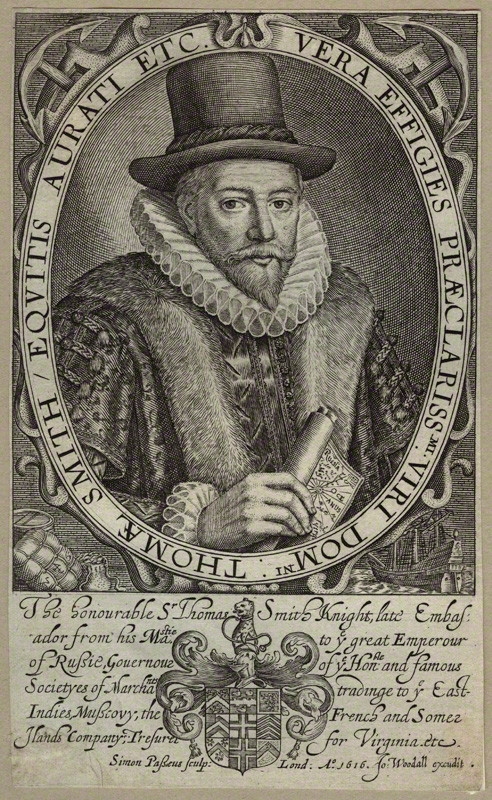
Sir Thomas Smythe (or Smith, c. 1558 – 4 September 1625) was an English merchant, politician and colonial administrator. He was the first governor of the East India Company and treasurer of the Virginia Company from 1609 to 1620 until enveloped by scandal.
He was second surviving son of Thomas "Customer" Smythe of Westenhanger Castle in Kent, by his wife Alice, daughter of Sir Andrew Judde. His grandfather, John Smythe of Corsham, Wiltshire, was described as yeoman, haberdasher and clothier, and was High Sheriff of Essex for the year of 1532. His father was also a haberdasher, and was customer of the port of London. He purchased Westenhanger from Sir Thomas Sackville, and other property from Robert Dudley, Earl of Leicester. Thomas Smythe's elder son, Sir John Smythe or Smith (1556?–1608) of Westenhanger, was High Sheriff of Kent in 1600, and father of Thomas Smythe, 1st Viscount Strangford.
Thomas senior, one of thirteen children, was brought in his father's business, and was educated at Merchant Taylors' School (1571).
In 1580, young Smythe was admitted to the freedom of the Worshipful Company of Haberdashers and also of the Worshipful Company of Skinners. He quickly rose to wealth and distinction after entering politics to augment his business.
Smythe was made Auditor for the City of London from 1597 to 1598, and Treasurer of St Bartholomew's Hospital from 1597 to 1601. In 1597, he was briefly elected to Parliament for Aylesbury. In 1599, he was elected alderman for Farringdon Without and chosen as one of the two sheriffs of the City of London for 1600.
Smythe financed numerous Elizabethan-era trade ventures and voyages of exploration during the early 17th century. In 1592, Smythe obtained settlement rights to the Virginia colony from Sir Walter Raleigh.
When the East India Company was formed in October 1600, Smythe was appointed as its first governor by the charter dated 31 December, a position he held for only four months.
In February 1600–01, Smythe, serving as London's sheriff, was suspected of being a supporter of the Robert Devereux, 2nd Earl of Essex who, on 8 February, went to Smythe's house in Gracechurch Street. Smythe advised Essex to turn himself in to John Garrard, the Lord Mayor of London. When Essex refused, Smythe left to confer with the Lord Mayor. When Smythe was later accused of complicity in the Essex Rebellion, he was examined before the Privy Council. He was fired from his office of sheriff and committed to the Tower of London. His imprisonment ended with Queen Elizabeth's death on 24 March 1603.
Hub AI
Thomas Smythe AI simulator
(@Thomas Smythe_simulator)
Thomas Smythe
Sir Thomas Smythe (or Smith, c. 1558 – 4 September 1625) was an English merchant, politician and colonial administrator. He was the first governor of the East India Company and treasurer of the Virginia Company from 1609 to 1620 until enveloped by scandal.
He was second surviving son of Thomas "Customer" Smythe of Westenhanger Castle in Kent, by his wife Alice, daughter of Sir Andrew Judde. His grandfather, John Smythe of Corsham, Wiltshire, was described as yeoman, haberdasher and clothier, and was High Sheriff of Essex for the year of 1532. His father was also a haberdasher, and was customer of the port of London. He purchased Westenhanger from Sir Thomas Sackville, and other property from Robert Dudley, Earl of Leicester. Thomas Smythe's elder son, Sir John Smythe or Smith (1556?–1608) of Westenhanger, was High Sheriff of Kent in 1600, and father of Thomas Smythe, 1st Viscount Strangford.
Thomas senior, one of thirteen children, was brought in his father's business, and was educated at Merchant Taylors' School (1571).
In 1580, young Smythe was admitted to the freedom of the Worshipful Company of Haberdashers and also of the Worshipful Company of Skinners. He quickly rose to wealth and distinction after entering politics to augment his business.
Smythe was made Auditor for the City of London from 1597 to 1598, and Treasurer of St Bartholomew's Hospital from 1597 to 1601. In 1597, he was briefly elected to Parliament for Aylesbury. In 1599, he was elected alderman for Farringdon Without and chosen as one of the two sheriffs of the City of London for 1600.
Smythe financed numerous Elizabethan-era trade ventures and voyages of exploration during the early 17th century. In 1592, Smythe obtained settlement rights to the Virginia colony from Sir Walter Raleigh.
When the East India Company was formed in October 1600, Smythe was appointed as its first governor by the charter dated 31 December, a position he held for only four months.
In February 1600–01, Smythe, serving as London's sheriff, was suspected of being a supporter of the Robert Devereux, 2nd Earl of Essex who, on 8 February, went to Smythe's house in Gracechurch Street. Smythe advised Essex to turn himself in to John Garrard, the Lord Mayor of London. When Essex refused, Smythe left to confer with the Lord Mayor. When Smythe was later accused of complicity in the Essex Rebellion, he was examined before the Privy Council. He was fired from his office of sheriff and committed to the Tower of London. His imprisonment ended with Queen Elizabeth's death on 24 March 1603.
Recent media