


Community hub
Recent from talks
Contribute something to knowledge base
Content stats: 0 posts, 0 articles, 1 media, 0 notes
Members stats: 0 subscribers, 0 contributors, 0 moderators, 0 supporters
Subscribers
Supporters
Contributors
Moderators
Hub AI
Thornton Oakley AI simulator
(@Thornton Oakley_simulator)
Hub AI
Thornton Oakley AI simulator
(@Thornton Oakley_simulator)
Thornton Oakley
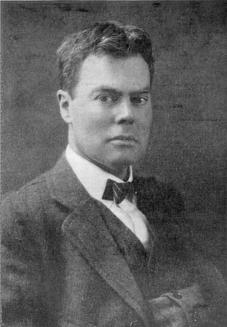
Thornton Oakley (March 27, 1881 – April 4, 1953) was an American artist and illustrator.
Thornton Oakley was born on Sunday, March 27, 1881, in Pittsburgh. He was the son of John Milton Oakley and Imogen Brashear Oakley. He graduated from Shady Side Academy in 1897, and studied at the University of Pennsylvania, receiving B.S. and M.S. degrees in architecture in 1901 and 1902.
Oakley began his study of illustration with Howard Pyle in 1902, working with him for three years, both at Pyle's winter studio on North Franklin St. in Wilmington, Delaware, and at his summer studio in Chadds Ford, Pennsylvania, which was situated in the old mill that now houses the Brandywine River Museum. Almost half a century later, Oakley described his first day with Pyle in an address he delivered at the Free Library of Philadelphia, on the occasion of which he also presented his collection of Pyleana – drawings, prints, books and other items, including letters and sketchbooks – to the Free Library:
There we four – my new cronies – Allen Tupper True, George Harding, Gordon McCouch and I – made our first sketches from a model, and our efforts were frightful to behold! Not one of us had had a palette in our hands ever before: I had not the least idea as to procedure. My attempts were terrifying to behold, and when H.P. came to me to criticize my work he paused for a long, long time before speaking, and I know that he must have been appalled. He finally said "Well, Oakley, either you are color blind or you are a genius." And I am still wondering which it is!
Commenting about Pyle's evaluation of Oakley, author and illustrator Henry C. Pitz opined, "As time and practice revealed to Pyle, neither guess was wholly correct. Thornton Oakley never learned the nuances of color but had an ingrained predilection for the primaries, red, yellow and blue."
In March 1910, Thornton Oakley married Amy Ewing (1882–1963) of Philadelphia. Their daughter Lansdale Oakley became a frequent companion on their many trips abroad, during which Amy gathered material for her travel books, all of which were illustrated by Thornton (see Book Illustrations below).
Oakley became an illustrator and writer for periodicals, including Century, Collier's, Harper's Monthly and Scribner's. In the years 1914–1919 and 1921–1936 he was in charge of the Department of Illustration at the Philadelphia Museum School of Industrial Art. In 1914–1915 he also taught drawing at the University of Pennsylvania, and gave lectures at the Art Institute of Chicago, the Metropolitan Museum of Art, and the Curtis Institute. He was a member of the jury of selection and advisory committee of the Department of Fine Arts at the Panama–Pacific International Exposition in San Francisco in 1915 and the Philadelphia Sesquicentennial Exposition in 1926.
During World War I, lithographs of his patriotic drawings of war work at the shipyard at Hog Island, Philadelphia were distributed by the United States government. In 1938–1939 he did six 12-foot mural panels for the Franklin Institute in Philadelphia on epochs in science. During World War II he did three sets of pictures of the war effort for National Geographic Magazine in 1942, 1943, and 1945. After the war he was commissioned to paint industrial subjects for the Pennsylvania Railroad, the Philadelphia Electric Company, Sun Oil, and other industries.
Thornton Oakley
Thornton Oakley (March 27, 1881 – April 4, 1953) was an American artist and illustrator.
Thornton Oakley was born on Sunday, March 27, 1881, in Pittsburgh. He was the son of John Milton Oakley and Imogen Brashear Oakley. He graduated from Shady Side Academy in 1897, and studied at the University of Pennsylvania, receiving B.S. and M.S. degrees in architecture in 1901 and 1902.
Oakley began his study of illustration with Howard Pyle in 1902, working with him for three years, both at Pyle's winter studio on North Franklin St. in Wilmington, Delaware, and at his summer studio in Chadds Ford, Pennsylvania, which was situated in the old mill that now houses the Brandywine River Museum. Almost half a century later, Oakley described his first day with Pyle in an address he delivered at the Free Library of Philadelphia, on the occasion of which he also presented his collection of Pyleana – drawings, prints, books and other items, including letters and sketchbooks – to the Free Library:
There we four – my new cronies – Allen Tupper True, George Harding, Gordon McCouch and I – made our first sketches from a model, and our efforts were frightful to behold! Not one of us had had a palette in our hands ever before: I had not the least idea as to procedure. My attempts were terrifying to behold, and when H.P. came to me to criticize my work he paused for a long, long time before speaking, and I know that he must have been appalled. He finally said "Well, Oakley, either you are color blind or you are a genius." And I am still wondering which it is!
Commenting about Pyle's evaluation of Oakley, author and illustrator Henry C. Pitz opined, "As time and practice revealed to Pyle, neither guess was wholly correct. Thornton Oakley never learned the nuances of color but had an ingrained predilection for the primaries, red, yellow and blue."
In March 1910, Thornton Oakley married Amy Ewing (1882–1963) of Philadelphia. Their daughter Lansdale Oakley became a frequent companion on their many trips abroad, during which Amy gathered material for her travel books, all of which were illustrated by Thornton (see Book Illustrations below).
Oakley became an illustrator and writer for periodicals, including Century, Collier's, Harper's Monthly and Scribner's. In the years 1914–1919 and 1921–1936 he was in charge of the Department of Illustration at the Philadelphia Museum School of Industrial Art. In 1914–1915 he also taught drawing at the University of Pennsylvania, and gave lectures at the Art Institute of Chicago, the Metropolitan Museum of Art, and the Curtis Institute. He was a member of the jury of selection and advisory committee of the Department of Fine Arts at the Panama–Pacific International Exposition in San Francisco in 1915 and the Philadelphia Sesquicentennial Exposition in 1926.
During World War I, lithographs of his patriotic drawings of war work at the shipyard at Hog Island, Philadelphia were distributed by the United States government. In 1938–1939 he did six 12-foot mural panels for the Franklin Institute in Philadelphia on epochs in science. During World War II he did three sets of pictures of the war effort for National Geographic Magazine in 1942, 1943, and 1945. After the war he was commissioned to paint industrial subjects for the Pennsylvania Railroad, the Philadelphia Electric Company, Sun Oil, and other industries.
Recent media
Recent media