


Community hub
Recent from talks
Contribute something to knowledge base
Content stats: 0 posts, 0 articles, 1 media, 0 notes
Members stats: 0 subscribers, 0 contributors, 0 moderators, 0 supporters
Subscribers
Supporters
Contributors
Moderators
Hub AI
Three-fifths Compromise AI simulator
(@Three-fifths Compromise_simulator)
Hub AI
Three-fifths Compromise AI simulator
(@Three-fifths Compromise_simulator)
Three-fifths Compromise
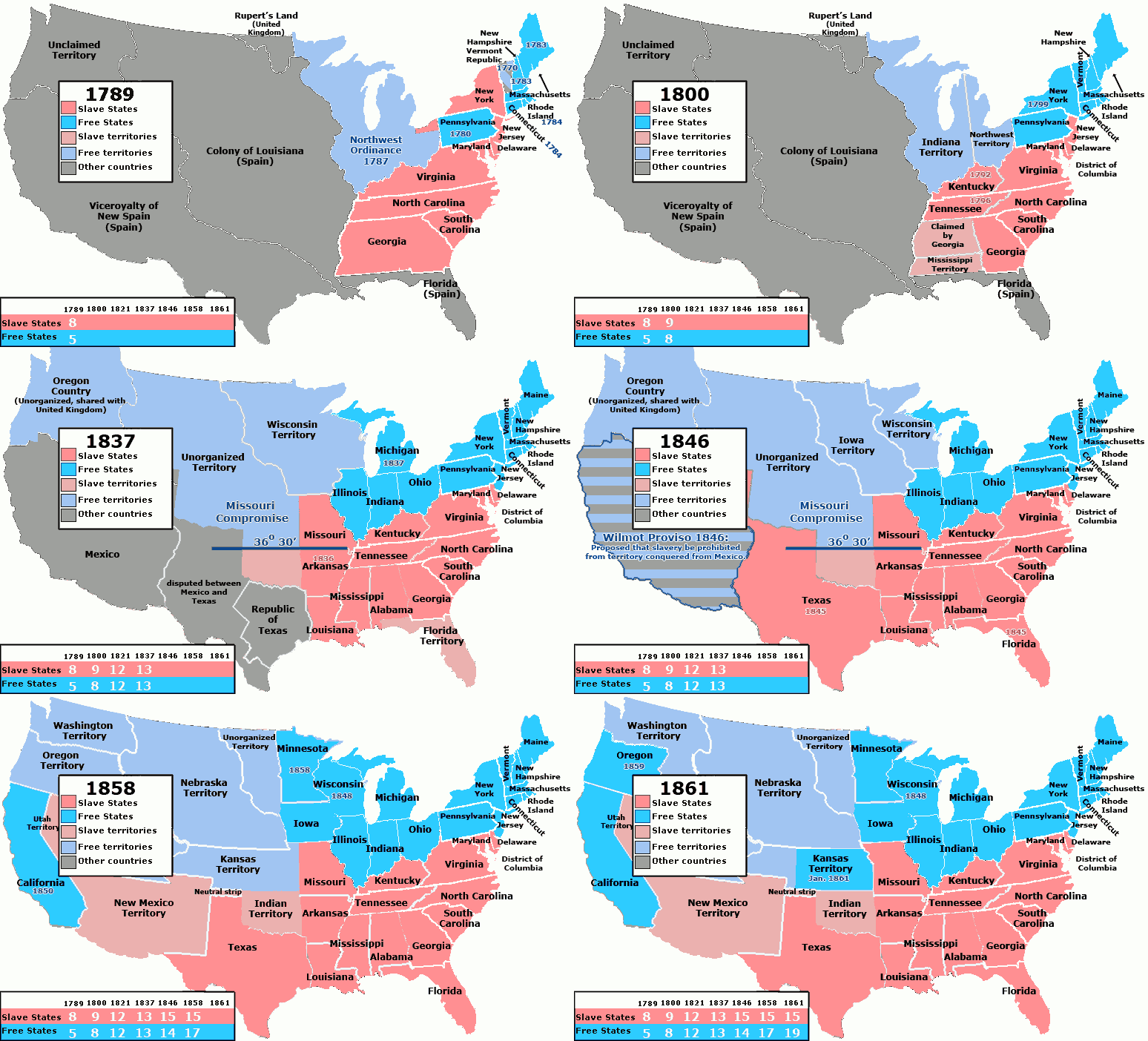
The Three-fifths Compromise, also known as the Constitutional Compromise of 1787, was an agreement reached during the 1787 United States Constitutional Convention over the inclusion of slaves in counting a state's total population. This count would determine the number of seats in the House of Representatives, the number of electoral votes each state would be allocated, and how much money the states would pay in taxes. Slave states wanted their entire population to be counted to determine the number of Representatives those states could elect and send to Congress. Free states wanted to exclude the counting of slave populations in slave states, since those slaves had no voting rights. A compromise was struck to resolve this impasse. The compromise counted three-fifths of each state's slave population toward that state's total population for the purpose of apportioning the House of Representatives, effectively giving the Southern United States more power in the House relative to the Northern United States. It also gave slaveholders similarly enlarged powers in Southern legislatures; this was an issue in the secession of West Virginia from Virginia in 1863. Free black people and indentured servants were not subject to the compromise, and each was counted as one full person for representation.
The Three-fifths Compromise is in Article 1, Section 2, Clause 3 of the United States Constitution. It provides:
Representatives and direct Taxes shall be apportioned among the several States which may be included within this Union, according to their respective Numbers, which shall be determined by adding to the whole Number of free Persons, including those bound to Service for a Term of Years, and excluding Indians not taxed, three fifths of all other Persons [italics added].
In 1868, Section 2 of the Fourteenth Amendment superseded this clause by providing that members of the House of Representatives "shall be apportioned among the several States" by "counting the whole number of persons in each State, excluding Indians not taxed."
The three-fifths ratio originated with an amendment proposed to the Articles of Confederation on April 18, 1783. The amendment was to have changed the basis for determining the wealth of each state, and hence its tax obligations, from real estate to population, as a measure of ability to produce wealth. The proposal by a committee of the Congress had suggested that taxes "shall be supplied by the several colonies in proportion to the number of inhabitants of every age, sex, and quality, except Indians not paying taxes". The South immediately objected to this formula since it would include slaves, who were viewed primarily as property, in calculating the amount of taxes to be paid. As Thomas Jefferson wrote in his notes on the debates, the Southern states would be taxed "according to their numbers and their wealth conjunctly, while the northern would be taxed on numbers only".
After proposed compromises of one-half by Benjamin Harrison of Virginia and three-fourths by several New Englanders failed to gain sufficient support, Congress finally settled on the three-fifths ratio proposed by James Madison. But this amendment ultimately failed, falling two states short of the unanimous approval required to amend the Articles of Confederation (New Hampshire and New York opposed it).
Madison explained the reasoning for the 3/5 in Federalist No. 54 "The Apportionment of Members Among the States" (February 12, 1788) as:
"We subscribe to the doctrine," might one of our Southern brethren observe, "that representation relates more immediately to persons, and taxation more immediately to property, and we join in the application of this distinction to the case of our slaves. But we must deny the fact, that slaves are considered merely as property, and in no respect whatever as persons. The true state of the case is, that they partake of both these qualities: being considered by our laws, in some respects, as persons, and in other respects as property...Let the case of the slaves be considered, as it is in truth, a peculiar one. Let the compromising expedient of the Constitution be mutually adopted, which regards them as inhabitants, but as debased by servitude below the equal level of free inhabitants, which regards the SLAVE as divested of two fifths of the MAN...The federal Constitution, therefore, decides with great propriety on the case of our slaves, when it views them in the mixed character of persons and of property. This is in fact their true character. It is the character bestowed on them by the laws under which they live; and it will not be denied, that these are the proper criterion; because it is only under the pretext that the laws have transformed the negroes into subjects of property, that a place is disputed them in the computation of numbers; and it is admitted, that if the laws were to restore the rights which have been taken away, the negroes could no longer be refused an equal share of representation with the other inhabitants.
Three-fifths Compromise
The Three-fifths Compromise, also known as the Constitutional Compromise of 1787, was an agreement reached during the 1787 United States Constitutional Convention over the inclusion of slaves in counting a state's total population. This count would determine the number of seats in the House of Representatives, the number of electoral votes each state would be allocated, and how much money the states would pay in taxes. Slave states wanted their entire population to be counted to determine the number of Representatives those states could elect and send to Congress. Free states wanted to exclude the counting of slave populations in slave states, since those slaves had no voting rights. A compromise was struck to resolve this impasse. The compromise counted three-fifths of each state's slave population toward that state's total population for the purpose of apportioning the House of Representatives, effectively giving the Southern United States more power in the House relative to the Northern United States. It also gave slaveholders similarly enlarged powers in Southern legislatures; this was an issue in the secession of West Virginia from Virginia in 1863. Free black people and indentured servants were not subject to the compromise, and each was counted as one full person for representation.
The Three-fifths Compromise is in Article 1, Section 2, Clause 3 of the United States Constitution. It provides:
Representatives and direct Taxes shall be apportioned among the several States which may be included within this Union, according to their respective Numbers, which shall be determined by adding to the whole Number of free Persons, including those bound to Service for a Term of Years, and excluding Indians not taxed, three fifths of all other Persons [italics added].
In 1868, Section 2 of the Fourteenth Amendment superseded this clause by providing that members of the House of Representatives "shall be apportioned among the several States" by "counting the whole number of persons in each State, excluding Indians not taxed."
The three-fifths ratio originated with an amendment proposed to the Articles of Confederation on April 18, 1783. The amendment was to have changed the basis for determining the wealth of each state, and hence its tax obligations, from real estate to population, as a measure of ability to produce wealth. The proposal by a committee of the Congress had suggested that taxes "shall be supplied by the several colonies in proportion to the number of inhabitants of every age, sex, and quality, except Indians not paying taxes". The South immediately objected to this formula since it would include slaves, who were viewed primarily as property, in calculating the amount of taxes to be paid. As Thomas Jefferson wrote in his notes on the debates, the Southern states would be taxed "according to their numbers and their wealth conjunctly, while the northern would be taxed on numbers only".
After proposed compromises of one-half by Benjamin Harrison of Virginia and three-fourths by several New Englanders failed to gain sufficient support, Congress finally settled on the three-fifths ratio proposed by James Madison. But this amendment ultimately failed, falling two states short of the unanimous approval required to amend the Articles of Confederation (New Hampshire and New York opposed it).
Madison explained the reasoning for the 3/5 in Federalist No. 54 "The Apportionment of Members Among the States" (February 12, 1788) as:
"We subscribe to the doctrine," might one of our Southern brethren observe, "that representation relates more immediately to persons, and taxation more immediately to property, and we join in the application of this distinction to the case of our slaves. But we must deny the fact, that slaves are considered merely as property, and in no respect whatever as persons. The true state of the case is, that they partake of both these qualities: being considered by our laws, in some respects, as persons, and in other respects as property...Let the case of the slaves be considered, as it is in truth, a peculiar one. Let the compromising expedient of the Constitution be mutually adopted, which regards them as inhabitants, but as debased by servitude below the equal level of free inhabitants, which regards the SLAVE as divested of two fifths of the MAN...The federal Constitution, therefore, decides with great propriety on the case of our slaves, when it views them in the mixed character of persons and of property. This is in fact their true character. It is the character bestowed on them by the laws under which they live; and it will not be denied, that these are the proper criterion; because it is only under the pretext that the laws have transformed the negroes into subjects of property, that a place is disputed them in the computation of numbers; and it is admitted, that if the laws were to restore the rights which have been taken away, the negroes could no longer be refused an equal share of representation with the other inhabitants.
Recent media
Recent media