



Community hub
Recent from talks
Knowledge base stats:
Talk channels stats:
Members stats:
Three-point hitch
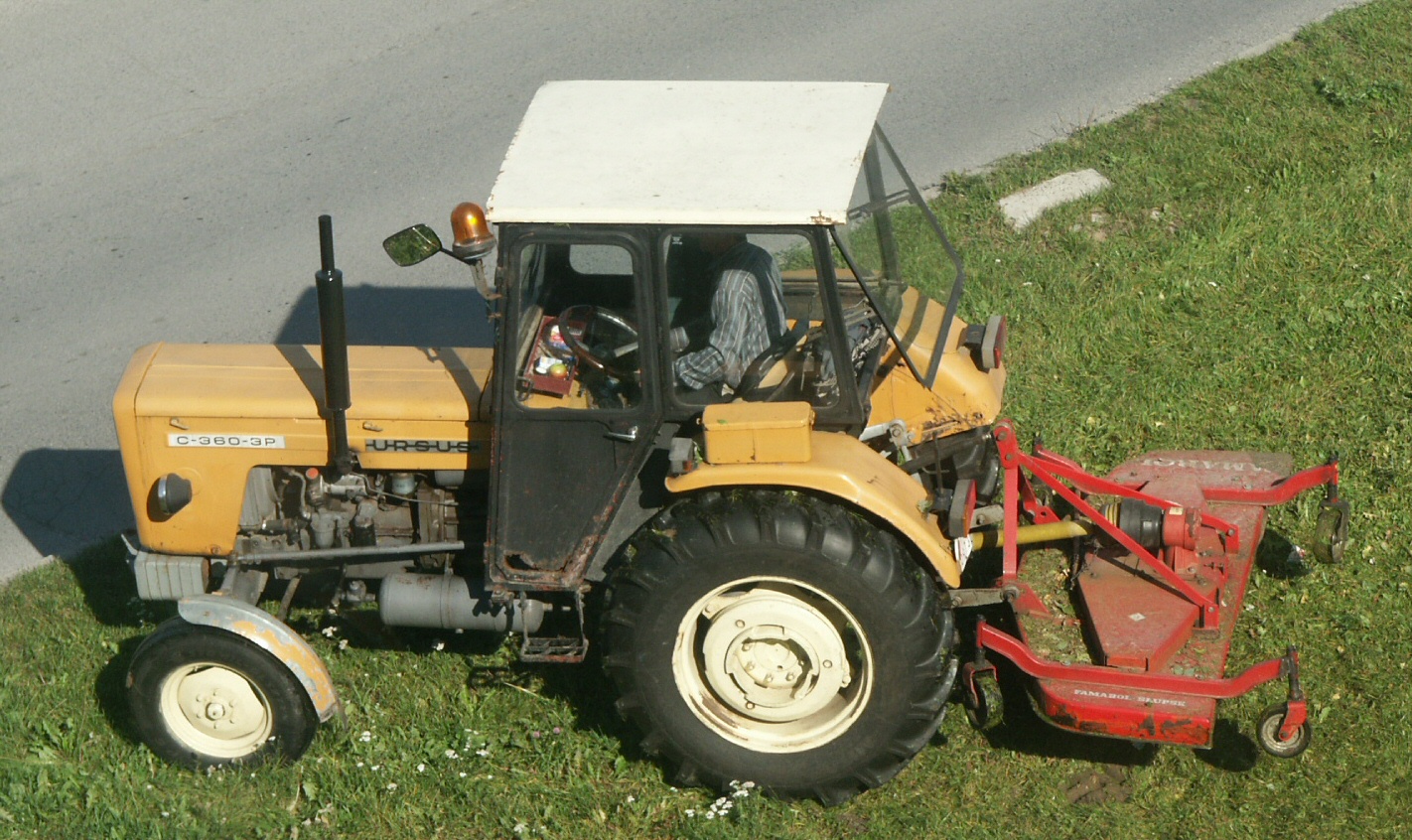
The three-point hitch (British English: three-point linkage) is a widely used type of hitch for attaching plows and other implements to an agricultural or industrial tractor. The three points resemble either a triangle, or the letter A. In engineering terms, three-point attachment is the simplest and the only statically determinate way of rigidly joining two bodies.
A three-point hitch attaches the implement to the tractor so that the orientation of the implement is fixed with respect to the tractor and the arm position of the hitch. The tractor carries some or all of the weight of the implement. The other main mechanism for attaching a load is through a drawbar, a single-point, pivoting attachment where the implement or trailer varies in position with respect to the tractor.
The primary benefit of the three-point hitch system is to transfer the weight and resistance of an implement to the drive wheels of the tractor. This gives the tractor more usable traction than it would otherwise have, given the same power, weight, and fuel consumption. For example, when the Ford 9N introduced Harry Ferguson's three-point hitch design to American production-model tractors in 1939, it was a light and affordable row-crop tractor competing principally with tractors such as Farmalls that did not yet have three-point hitches. At 2,500 pounds (1.1 t), the 9N could plow more than 12 acres (4.9 hectares) in a normal day pulling two 14-inch (360 mm) plows, outperforming the tractive performance of the heavier and more expensive Farmall F-30 model. The hitch's utility and simplicity have since made it an industry standard.
The three-point hitch is a system of components which include the tractor's hydraulics, attaching points, the lifting arms, and stabilizers.
Three-point hitches are composed of three movable arms. The two lower arms—the hitch lifting arms—are controlled by the hydraulic system, and provide lifting, lowering, and even tilting to the arms. The upper center arm—called the top link—is movable, but is usually not powered by the tractor's hydraulic system. Each arm has an attachment device to connect implements to the hitch.
Each hitch has attachment holes for attaching implements, and the implement has posts that fit through the holes. The implement is secured by placing a pin on the ends of the posts.
The hydraulic system is controlled by the operator, and usually a variety of settings are available. A draft control mechanism is often present in modern three-point hitch systems. In advanced systems the draft of the implement, the amount of force it is taking to pull it, is sensed on the top link and the hydraulic system automatically raises the arms slightly when the draft increases and lowers the arms when the draft decreases.
There are five different hitch sizes, called categories. The higher category hitches have sturdier lift arms and larger connector pins.
Hub AI
Three-point hitch AI simulator
(@Three-point hitch_simulator)
Three-point hitch
The three-point hitch (British English: three-point linkage) is a widely used type of hitch for attaching plows and other implements to an agricultural or industrial tractor. The three points resemble either a triangle, or the letter A. In engineering terms, three-point attachment is the simplest and the only statically determinate way of rigidly joining two bodies.
A three-point hitch attaches the implement to the tractor so that the orientation of the implement is fixed with respect to the tractor and the arm position of the hitch. The tractor carries some or all of the weight of the implement. The other main mechanism for attaching a load is through a drawbar, a single-point, pivoting attachment where the implement or trailer varies in position with respect to the tractor.
The primary benefit of the three-point hitch system is to transfer the weight and resistance of an implement to the drive wheels of the tractor. This gives the tractor more usable traction than it would otherwise have, given the same power, weight, and fuel consumption. For example, when the Ford 9N introduced Harry Ferguson's three-point hitch design to American production-model tractors in 1939, it was a light and affordable row-crop tractor competing principally with tractors such as Farmalls that did not yet have three-point hitches. At 2,500 pounds (1.1 t), the 9N could plow more than 12 acres (4.9 hectares) in a normal day pulling two 14-inch (360 mm) plows, outperforming the tractive performance of the heavier and more expensive Farmall F-30 model. The hitch's utility and simplicity have since made it an industry standard.
The three-point hitch is a system of components which include the tractor's hydraulics, attaching points, the lifting arms, and stabilizers.
Three-point hitches are composed of three movable arms. The two lower arms—the hitch lifting arms—are controlled by the hydraulic system, and provide lifting, lowering, and even tilting to the arms. The upper center arm—called the top link—is movable, but is usually not powered by the tractor's hydraulic system. Each arm has an attachment device to connect implements to the hitch.
Each hitch has attachment holes for attaching implements, and the implement has posts that fit through the holes. The implement is secured by placing a pin on the ends of the posts.
The hydraulic system is controlled by the operator, and usually a variety of settings are available. A draft control mechanism is often present in modern three-point hitch systems. In advanced systems the draft of the implement, the amount of force it is taking to pull it, is sensed on the top link and the hydraulic system automatically raises the arms slightly when the draft increases and lowers the arms when the draft decreases.
There are five different hitch sizes, called categories. The higher category hitches have sturdier lift arms and larger connector pins.