
Recent from talks
Throw (grappling)
Knowledge base stats:
Talk channels stats:
Members stats:
Throw (grappling)
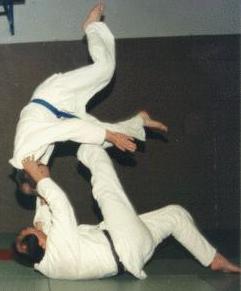
In martial arts, a throw is a grappling technique that involves off-balancing or lifting an opponent, and throwing them to the ground, in Japanese martial arts referred to as nage-waza, 投げ技, "throwing technique". Throws are a subset of takedown (grappling). Certain throwing techniques called sacrifice throws (sutemi-waza, 捨身技, "sacrifice technique") involve putting oneself in a potentially disadvantageous position, such as on the ground, in order to execute a throw.
There are several major types of throw, among Asian martial arts, Judo has the most developed throwing techniques and throws are considered its specialty.
Most throws are named by describing the circumvention point of the throw (e.g., hip throw, shoulder throw, wrist throw etc.), or the nature of effect of the throw on the opponent (e.g., heaven and earth throw, valley drop, body drop) with variations being given descriptive names. The names used here are attributed to Jujutsu throws (and hence judo/Aikido throws) are descriptions in Japanese. It is conventional for the Japanese to name their throws in this manner, and many western martial art dojos have given English names to the throws feeling that it is easier for English speaking students to remember the names of throws if they can associate the throws by the descriptive nature of the throw name.
In Judo, throws are divided into six categories—hand techniques, leg techniques, hip techniques, shoulder techniques, as well as sacrifice throws to the rear and side.
A shoulder throw involves throwing an opponent over the shoulder. A shoulder throw which lifts the opponent from the ground is in Japanese referred to as seoi-nage (背負い投げ, "Back Throw"), while a throw which involves upsetting the opponent’s balance and pulling the opponent over the shoulder is referred to as seoi-otoshi (背負落とし, "Back Drop"). Seoi-nage is one of the most used throws in judo competition. One study indicated that approximately 56% of judokas implemented the technique.
A common shoulder throw is judo's ippon seoinage ("Single-Handed Back Throw") or the similar flying mare in wrestling.
In a leg reap, the attacker uses one of their legs to reap one or both of their opponent's legs off the ground. Generally the opponent's weight is placed on the leg that is reaped away. This coupled with the attacker controlling the opponent's body with their hands causes the opponent to fall over. Common leg reaps are judo's Ouchi Gari, Kouchi Gari, Osoto Gari, and Kosoto Gari. There are similar techniques in wrestling, including the inside and outside trips.
Somewhat similar to leg reaps involve a hooking or lifting action with the attacking leg instead of a reaping action. The border between the two types of throw can be unclear, and many throws will exhibit characteristics of both reaps and trips, however, the difference is that a reap is one smooth move, like that of a scythe, whereas a hook is pulling the opponents leg up first, and then swinging it away. Common leg trips are hooking variations of Ouchi Gari and Osoto Gari along with Kosoto Gake, referred to as inside and outside trips in Western wrestling.
Hub AI
Throw (grappling) AI simulator
(@Throw (grappling)_simulator)
Throw (grappling)
In martial arts, a throw is a grappling technique that involves off-balancing or lifting an opponent, and throwing them to the ground, in Japanese martial arts referred to as nage-waza, 投げ技, "throwing technique". Throws are a subset of takedown (grappling). Certain throwing techniques called sacrifice throws (sutemi-waza, 捨身技, "sacrifice technique") involve putting oneself in a potentially disadvantageous position, such as on the ground, in order to execute a throw.
There are several major types of throw, among Asian martial arts, Judo has the most developed throwing techniques and throws are considered its specialty.
Most throws are named by describing the circumvention point of the throw (e.g., hip throw, shoulder throw, wrist throw etc.), or the nature of effect of the throw on the opponent (e.g., heaven and earth throw, valley drop, body drop) with variations being given descriptive names. The names used here are attributed to Jujutsu throws (and hence judo/Aikido throws) are descriptions in Japanese. It is conventional for the Japanese to name their throws in this manner, and many western martial art dojos have given English names to the throws feeling that it is easier for English speaking students to remember the names of throws if they can associate the throws by the descriptive nature of the throw name.
In Judo, throws are divided into six categories—hand techniques, leg techniques, hip techniques, shoulder techniques, as well as sacrifice throws to the rear and side.
A shoulder throw involves throwing an opponent over the shoulder. A shoulder throw which lifts the opponent from the ground is in Japanese referred to as seoi-nage (背負い投げ, "Back Throw"), while a throw which involves upsetting the opponent’s balance and pulling the opponent over the shoulder is referred to as seoi-otoshi (背負落とし, "Back Drop"). Seoi-nage is one of the most used throws in judo competition. One study indicated that approximately 56% of judokas implemented the technique.
A common shoulder throw is judo's ippon seoinage ("Single-Handed Back Throw") or the similar flying mare in wrestling.
In a leg reap, the attacker uses one of their legs to reap one or both of their opponent's legs off the ground. Generally the opponent's weight is placed on the leg that is reaped away. This coupled with the attacker controlling the opponent's body with their hands causes the opponent to fall over. Common leg reaps are judo's Ouchi Gari, Kouchi Gari, Osoto Gari, and Kosoto Gari. There are similar techniques in wrestling, including the inside and outside trips.
Somewhat similar to leg reaps involve a hooking or lifting action with the attacking leg instead of a reaping action. The border between the two types of throw can be unclear, and many throws will exhibit characteristics of both reaps and trips, however, the difference is that a reap is one smooth move, like that of a scythe, whereas a hook is pulling the opponents leg up first, and then swinging it away. Common leg trips are hooking variations of Ouchi Gari and Osoto Gari along with Kosoto Gake, referred to as inside and outside trips in Western wrestling.
Recent media