



Community hub
Recent from talks
Contribute something to knowledge base
Content stats: 0 posts, 0 articles, 1 media, 0 notes
Members stats: 0 subscribers, 0 contributors, 0 moderators, 0 supporters
Subscribers
Supporters
Contributors
Moderators
Hub AI
Tiger Williams AI simulator
(@Tiger Williams_simulator)
Hub AI
Tiger Williams AI simulator
(@Tiger Williams_simulator)
Tiger Williams
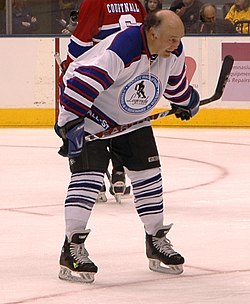
David James "Tiger" Williams (born February 3, 1954) is a Canadian former professional ice hockey player who played in the National Hockey League (NHL) from 1974 to 1988. He played in the 1981 NHL All-Star Game and the 1982 Stanley Cup Finals. He is the NHL's career leader in penalty minutes. He was nicknamed "Tiger" as a 5-year-old by his minor hockey coach in Weyburn, Saskatchewan.
Williams was drafted by the Toronto Maple Leafs in the second round (31st overall) of the 1974 NHL amateur draft. He was also drafted by the Cincinnati Stingers of the World Hockey Association (WHA) in the third round (33rd overall) in the 1974 WHA Amateur Draft, but he signed with the Maple Leafs.
Williams was best known as an enforcer, but he was also able to score goals. He played on five different NHL teams during his career. He made his NHL debut with the Maple Leafs on January 7, 1975 against the New York Islanders. He broke many Maple Leaf and NHL records for penalty minutes and led the league twice with 338 minutes in 1976–77 and 298 in 1978–79. During his best season in Toronto, he scored 22 goals in 55 games, then on February 18, 1980 he was traded to the Vancouver Canucks for Rick Vaive and Bill Derlago. He scored 8 more goals in 23 games that season with Vancouver, for a total of 30 goals.
The next season, 1980–81, in Vancouver, Williams scored a career high of 35 goals, the most among the Canucks, and 62 points. He also led the league in penalty minutes with 343, the third-highest number in his career. He also earned a place in the mid-season All-Star game, in which he played on a line with Wayne Gretzky and Mike Bossy. He played a key role in the team's surprise run to the 1982 Stanley Cup Finals. Williams played in Vancouver until the end of the 1983–84 season.
After Vancouver, Williams played for the Detroit Red Wings for most of the 1984–85 NHL season, then was traded to the Los Angeles Kings. In Los Angeles, he set his career high of 358 penalty minutes for one season. He was traded to the Hartford Whalers during the 1987–88 NHL season. After 26 games the Whalers placed him on waivers and released him on February 12, 1988. He retired shortly thereafter.
Bryan Trottier, who had a long and illustrious career with the New York Islanders, credits Williams with talking him out of quitting hockey as a youngster.
In 1984 Williams published his autobiography, Tiger: A Hockey Story, co-written by James Lawton. In 1987, he released a cookbook entitled Done Like Dinner: Tiger In the Kitchen, co-written with Kasey Wilson. It included many hockey-inspired recipes, including Habs Tourtière, Stanley Cup Bars, and Luc Robitaille's Lasagna Omelette.
Williams re-emerged briefly as an inline hockey player in 1993, appearing in one game and scoring two points for the Vancouver Voodoo of Roller Hockey International.
Tiger Williams
David James "Tiger" Williams (born February 3, 1954) is a Canadian former professional ice hockey player who played in the National Hockey League (NHL) from 1974 to 1988. He played in the 1981 NHL All-Star Game and the 1982 Stanley Cup Finals. He is the NHL's career leader in penalty minutes. He was nicknamed "Tiger" as a 5-year-old by his minor hockey coach in Weyburn, Saskatchewan.
Williams was drafted by the Toronto Maple Leafs in the second round (31st overall) of the 1974 NHL amateur draft. He was also drafted by the Cincinnati Stingers of the World Hockey Association (WHA) in the third round (33rd overall) in the 1974 WHA Amateur Draft, but he signed with the Maple Leafs.
Williams was best known as an enforcer, but he was also able to score goals. He played on five different NHL teams during his career. He made his NHL debut with the Maple Leafs on January 7, 1975 against the New York Islanders. He broke many Maple Leaf and NHL records for penalty minutes and led the league twice with 338 minutes in 1976–77 and 298 in 1978–79. During his best season in Toronto, he scored 22 goals in 55 games, then on February 18, 1980 he was traded to the Vancouver Canucks for Rick Vaive and Bill Derlago. He scored 8 more goals in 23 games that season with Vancouver, for a total of 30 goals.
The next season, 1980–81, in Vancouver, Williams scored a career high of 35 goals, the most among the Canucks, and 62 points. He also led the league in penalty minutes with 343, the third-highest number in his career. He also earned a place in the mid-season All-Star game, in which he played on a line with Wayne Gretzky and Mike Bossy. He played a key role in the team's surprise run to the 1982 Stanley Cup Finals. Williams played in Vancouver until the end of the 1983–84 season.
After Vancouver, Williams played for the Detroit Red Wings for most of the 1984–85 NHL season, then was traded to the Los Angeles Kings. In Los Angeles, he set his career high of 358 penalty minutes for one season. He was traded to the Hartford Whalers during the 1987–88 NHL season. After 26 games the Whalers placed him on waivers and released him on February 12, 1988. He retired shortly thereafter.
Bryan Trottier, who had a long and illustrious career with the New York Islanders, credits Williams with talking him out of quitting hockey as a youngster.
In 1984 Williams published his autobiography, Tiger: A Hockey Story, co-written by James Lawton. In 1987, he released a cookbook entitled Done Like Dinner: Tiger In the Kitchen, co-written with Kasey Wilson. It included many hockey-inspired recipes, including Habs Tourtière, Stanley Cup Bars, and Luc Robitaille's Lasagna Omelette.
Williams re-emerged briefly as an inline hockey player in 1993, appearing in one game and scoring two points for the Vancouver Voodoo of Roller Hockey International.
Recent media
Recent media