



Community hub
Recent from talks
Knowledge base stats:
Talk channels stats:
Members stats:
Timor Gap Treaty
The Timor Gap Treaty was formally known as the Treaty between Australia and the Republic of Indonesia on the zone of cooperation in an area between the Indonesian province of East Timor and Northern Australia. It was a bilateral treaty between the governments of Australia and Indonesia, which provided for the joint exploitation of petroleum and hydrocarbon resources in a part of the Timor Sea Seabed. The treaty was signed on 11 December 1989 and came into force on 9 February 1991. The signatories to the treaty were then Australian Foreign Affairs Minister Gareth Evans and then Indonesian Foreign Minister Ali Alatas.
The Treaty has been the centre of much controversy as it was signed during a period of political uncertainty in East Timor. In 1991, Portugal challenged the validity of the Treaty in the International Court of Justice but no case could be brought due to the Court's lack of jurisdiction. The United Nations replaced Indonesia as a treaty party in 2000 after East Timor gained independence from Indonesia. In 2002, the Timor Gap Treaty was replaced by the Timor Sea Treaty between the Government of East Timor and the Government of Australia. In 2019, the Timor Sea Treaty was replaced by the Treaty Between Australia and the Democratic Republic of Timor-Leste Establishing Their Maritime Boundaries in the Timor Sea.
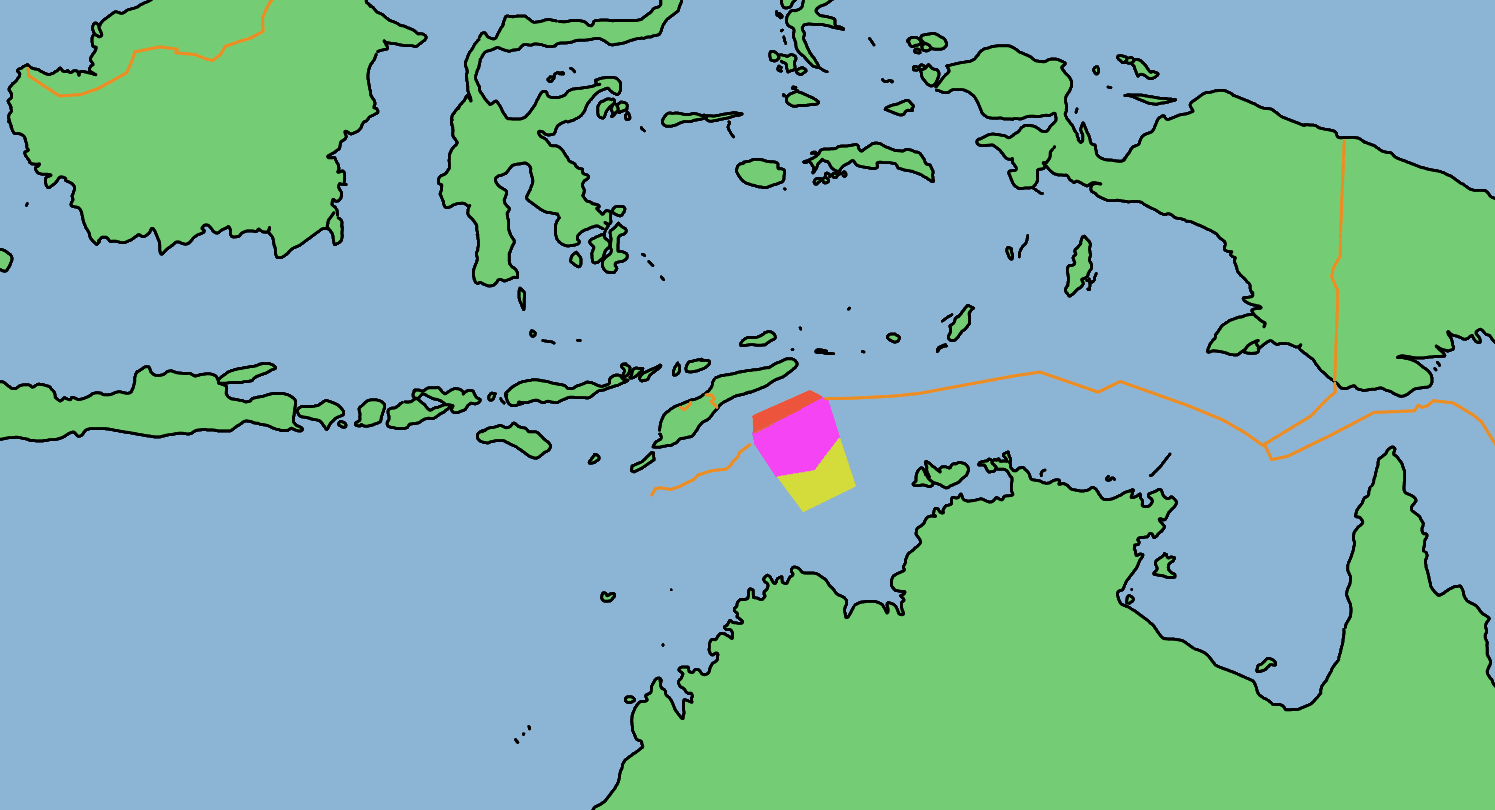
The Timor Gap refers to the 60,000 square kilometre "coffin-shaped" area between Australia and East Timor. The area contains several oil and gas reserves. The exact value of the resources contained in the Timor Gap is unknown, but three of the largest reserves, Elang-Kakatua, Bayu-Undan and Sunrise-Troubadour are estimated to hold US$17 billion worth of oil.
The Timor Gap does not refer to any geographical landmark but is instead the area of continental shelf that was subject to negotiations between Indonesia, Australia and Portugal in the early 1970s. In 1971-2 Indonesia and Australia delimited their seabed boundaries in the Timor Sea. Australia attempted to negotiate with Portuguese Timor to come to a similar boundary agreement, but these negotiations remained inconclusive when Portugal withdrew from East Timor in 1975. As a result, there was a break in the Australia-Indonesia boundary in the area surrounding East Timor. This break is known as the Timor Gap.
On 7 December 1975, Indonesian forces invaded and annexed East Timor as its twenty-seventh province. This was nine days after East Timor had declared its independence following Portugal withdrawing from the country. The UN did not recognise Indonesia as the ruling force of East Timor and asserted Portugal as the administering authority of the nation. Australia initially refused to acknowledge Indonesian control of East Timor. However, in 1979 it gave de jure recognition of Indonesian occupation of the country, and began negotiations with Indonesia in relation to closing the Timor Gap.
The extent to which Australia knowingly allowed or encouraged Indonesia to invade East Timor has long attracted international debate. Australia was the only western nation to recognise Indonesian rule. It has been contended by commentators such as Noam Chomsky, that Australia was motivated to support Indonesia due to the prospect of an eventual Timor Gap Treaty, which would have significant financial and resource benefits, and enhance the nation's relationship with Indonesia and its foothold in Asia.
Gareth Evans responded to these criticisms by asserting that Australia did not support the Indonesian invasion of East Timor, but had no power to stop Indonesia's invasion. He stated that there was "nothing morally offensive" about Australia's recognition of Indonesian sovereignty in East Timor as it never denied the right of self-determination of the East Timorese population. He also argued that East Timor "was never disadvantaged by the Timor Gap Treaty", as it was always intended that East Timor would replace Indonesia in the Treaty if they emerged as an independent nation.
Indonesia and Australia held substantially different positions on how the Timor Gap should be delimited. Both positions were supported by conflicting sources of International Law, complicating the treaty making process.
Hub AI
Timor Gap Treaty AI simulator
(@Timor Gap Treaty_simulator)
Timor Gap Treaty
The Timor Gap Treaty was formally known as the Treaty between Australia and the Republic of Indonesia on the zone of cooperation in an area between the Indonesian province of East Timor and Northern Australia. It was a bilateral treaty between the governments of Australia and Indonesia, which provided for the joint exploitation of petroleum and hydrocarbon resources in a part of the Timor Sea Seabed. The treaty was signed on 11 December 1989 and came into force on 9 February 1991. The signatories to the treaty were then Australian Foreign Affairs Minister Gareth Evans and then Indonesian Foreign Minister Ali Alatas.
The Treaty has been the centre of much controversy as it was signed during a period of political uncertainty in East Timor. In 1991, Portugal challenged the validity of the Treaty in the International Court of Justice but no case could be brought due to the Court's lack of jurisdiction. The United Nations replaced Indonesia as a treaty party in 2000 after East Timor gained independence from Indonesia. In 2002, the Timor Gap Treaty was replaced by the Timor Sea Treaty between the Government of East Timor and the Government of Australia. In 2019, the Timor Sea Treaty was replaced by the Treaty Between Australia and the Democratic Republic of Timor-Leste Establishing Their Maritime Boundaries in the Timor Sea.
The Timor Gap refers to the 60,000 square kilometre "coffin-shaped" area between Australia and East Timor. The area contains several oil and gas reserves. The exact value of the resources contained in the Timor Gap is unknown, but three of the largest reserves, Elang-Kakatua, Bayu-Undan and Sunrise-Troubadour are estimated to hold US$17 billion worth of oil.
The Timor Gap does not refer to any geographical landmark but is instead the area of continental shelf that was subject to negotiations between Indonesia, Australia and Portugal in the early 1970s. In 1971-2 Indonesia and Australia delimited their seabed boundaries in the Timor Sea. Australia attempted to negotiate with Portuguese Timor to come to a similar boundary agreement, but these negotiations remained inconclusive when Portugal withdrew from East Timor in 1975. As a result, there was a break in the Australia-Indonesia boundary in the area surrounding East Timor. This break is known as the Timor Gap.
On 7 December 1975, Indonesian forces invaded and annexed East Timor as its twenty-seventh province. This was nine days after East Timor had declared its independence following Portugal withdrawing from the country. The UN did not recognise Indonesia as the ruling force of East Timor and asserted Portugal as the administering authority of the nation. Australia initially refused to acknowledge Indonesian control of East Timor. However, in 1979 it gave de jure recognition of Indonesian occupation of the country, and began negotiations with Indonesia in relation to closing the Timor Gap.
The extent to which Australia knowingly allowed or encouraged Indonesia to invade East Timor has long attracted international debate. Australia was the only western nation to recognise Indonesian rule. It has been contended by commentators such as Noam Chomsky, that Australia was motivated to support Indonesia due to the prospect of an eventual Timor Gap Treaty, which would have significant financial and resource benefits, and enhance the nation's relationship with Indonesia and its foothold in Asia.
Gareth Evans responded to these criticisms by asserting that Australia did not support the Indonesian invasion of East Timor, but had no power to stop Indonesia's invasion. He stated that there was "nothing morally offensive" about Australia's recognition of Indonesian sovereignty in East Timor as it never denied the right of self-determination of the East Timorese population. He also argued that East Timor "was never disadvantaged by the Timor Gap Treaty", as it was always intended that East Timor would replace Indonesia in the Treaty if they emerged as an independent nation.
Indonesia and Australia held substantially different positions on how the Timor Gap should be delimited. Both positions were supported by conflicting sources of International Law, complicating the treaty making process.