
Recent from talks
Tindersticks
Knowledge base stats:
Talk channels stats:
Members stats:
Tindersticks
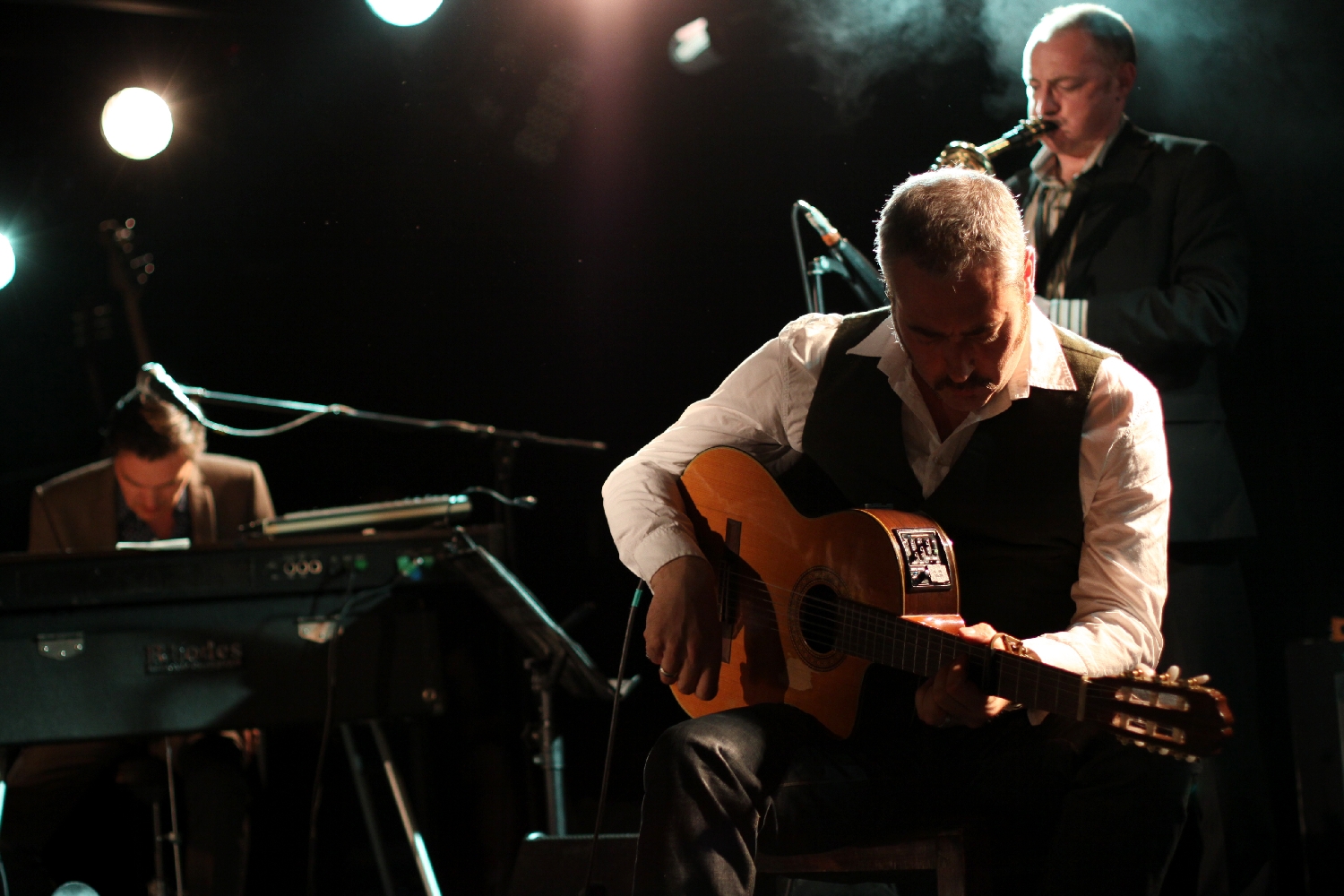
Tindersticks are an English alternative rock band formed in Nottingham in 1992. They released six albums before singer Stuart A. Staples embarked on a solo career. The band reunited briefly in 2006 and more permanently the following year. The band recorded several film soundtracks, and have a long-standing collaboration with French director Claire Denis.
After the closure of Marc Riley's In-Tape Records, the band Asphalt Ribbons were left without a record label. They reformed as Tindersticks in Nottingham in 1992. They were named so after singer Stuart Staples discovered a box of German matches on a Greek beach. The lineup consisted of Stuart Staples (vocals), Dave Boulter (keyboards), Neil Fraser (guitar), Dickon Hinchliffe (violin), Al Macauley (drums), and Mark Colwill (bass). That same year, the band moved from Nottingham to London. They formed their own label Tippy Toe Records to release their first single, "Patchwork", in November 1992. Their first gig in London was at the Islington Powerhaus in December 1992.
Their self-titled first and second albums established their signature sound and received widespread critical acclaim. Their live performances, often augmented by large string sections and even, on occasion, a full orchestra, were well received. The live album The Bloomsbury Theatre 12.3.95 is a recording of one such concert. By the time of the third album, Curtains, however, it was clear that a change of direction was called for.
The fourth album, Simple Pleasure, lived up to its title with a series of snappy, direct songs influenced by soul music. The female backing vocals on several tracks, and the respectful cover of Odyssey's "If You're Looking for a Way Out", signalled the band's wish to move towards lighter, more soulful material. However, the inner sleeve's documentation of the number of takes each track went through was evidence that the band continued to adopt a painstaking approach to recording.
The fifth album, Can Our Love..., continued the band's soulful direction, in particular evidence on the tender "Sweet Release" and in the nod to The Chi-Lites in the title of "Chilitetime".
The sixth album, Waiting for the Moon, was more stripped down and introspective in nature, particularly on the harrowing "4.48 Psychosis" (based on the play of the same name by the British playwright Sarah Kane) and "Sometimes It Hurts". Only the bouncy "Just a Dog" lightened the otherwise melancholy mood of the album.
In 2005, Staples embarked on a solo career and there was resultant speculation that the band had split. During this period, Staples produced two solo albums, Lucky Dog Recordings 03-04 and Leaving Songs. The title of the second album, and Staples' notes on it, indicated that change was in the air: "These are songs written on the verge of leaving the things I loved and stepping into a new unknown life, both musically and personally. I was always aware that these songs were the end of something, a kind of closing a circle of a way of writing that I started so long ago and I knew I had to move on from."
In September 2006, the band played a one-off concert at London's Barbican Centre, performing their second album in full with a nine-member string section and two brass players, including former collaborator Terry Edwards on trumpet.
Hub AI
Tindersticks AI simulator
(@Tindersticks_simulator)
Tindersticks
Tindersticks are an English alternative rock band formed in Nottingham in 1992. They released six albums before singer Stuart A. Staples embarked on a solo career. The band reunited briefly in 2006 and more permanently the following year. The band recorded several film soundtracks, and have a long-standing collaboration with French director Claire Denis.
After the closure of Marc Riley's In-Tape Records, the band Asphalt Ribbons were left without a record label. They reformed as Tindersticks in Nottingham in 1992. They were named so after singer Stuart Staples discovered a box of German matches on a Greek beach. The lineup consisted of Stuart Staples (vocals), Dave Boulter (keyboards), Neil Fraser (guitar), Dickon Hinchliffe (violin), Al Macauley (drums), and Mark Colwill (bass). That same year, the band moved from Nottingham to London. They formed their own label Tippy Toe Records to release their first single, "Patchwork", in November 1992. Their first gig in London was at the Islington Powerhaus in December 1992.
Their self-titled first and second albums established their signature sound and received widespread critical acclaim. Their live performances, often augmented by large string sections and even, on occasion, a full orchestra, were well received. The live album The Bloomsbury Theatre 12.3.95 is a recording of one such concert. By the time of the third album, Curtains, however, it was clear that a change of direction was called for.
The fourth album, Simple Pleasure, lived up to its title with a series of snappy, direct songs influenced by soul music. The female backing vocals on several tracks, and the respectful cover of Odyssey's "If You're Looking for a Way Out", signalled the band's wish to move towards lighter, more soulful material. However, the inner sleeve's documentation of the number of takes each track went through was evidence that the band continued to adopt a painstaking approach to recording.
The fifth album, Can Our Love..., continued the band's soulful direction, in particular evidence on the tender "Sweet Release" and in the nod to The Chi-Lites in the title of "Chilitetime".
The sixth album, Waiting for the Moon, was more stripped down and introspective in nature, particularly on the harrowing "4.48 Psychosis" (based on the play of the same name by the British playwright Sarah Kane) and "Sometimes It Hurts". Only the bouncy "Just a Dog" lightened the otherwise melancholy mood of the album.
In 2005, Staples embarked on a solo career and there was resultant speculation that the band had split. During this period, Staples produced two solo albums, Lucky Dog Recordings 03-04 and Leaving Songs. The title of the second album, and Staples' notes on it, indicated that change was in the air: "These are songs written on the verge of leaving the things I loved and stepping into a new unknown life, both musically and personally. I was always aware that these songs were the end of something, a kind of closing a circle of a way of writing that I started so long ago and I knew I had to move on from."
In September 2006, the band played a one-off concert at London's Barbican Centre, performing their second album in full with a nine-member string section and two brass players, including former collaborator Terry Edwards on trumpet.
Recent media