



Community hub
Recent from talks
Knowledge base stats:
Talk channels stats:
Members stats:
Tiptoe
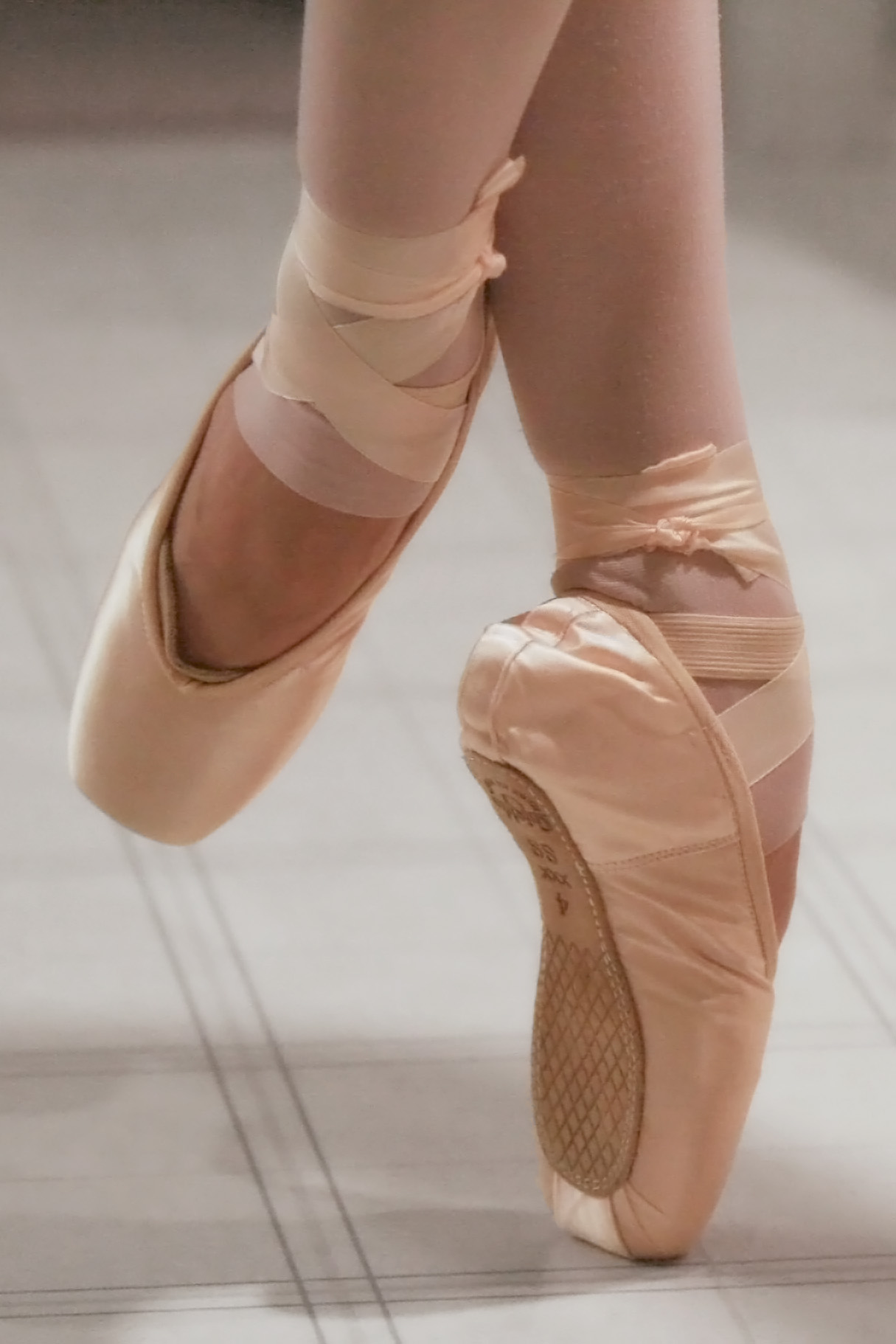
Tiptoe (tiptoes or tippy toes) describes the human body posture and locomotion of removing the heel(s) of one or both feet from the ground. The term is mostly used colloquially when the weight is placed on the balls of the feet rather than literally on the tips of the toes; literal tip-toeing is difficult but possible, as in the pointe technique of ballet. In running, landing on the ball of the foot is known as forefoot strike.
To go into tiptoe, the ankle must be flexed to raise the heel off the ground. This requires the engagement of the calf muscle, along with various other muscles in the foot and shin to stabilize the joint. Even with this, the form is often less stable, requiring the engaging of muscles within the torso and a better sense of weight for the person to stay balanced. There is generally some movement, even subtle, in the ankle, as holding it statically would make balance difficult, so it is the first to give.
Raising up on the toes will increase someone's height and reach. It is used often to make someone appear taller, whether in an engagement, or when measuring one's height. It is also used to reach objects that are higher up than one can reach when on one's heels.
Walking only on the balls of the foot greatly reduces the surface area of the foot on the ground, allowing what does touch the ground to be more carefully placed, which is useful for avoiding twigs, and also for a more quiet walking. The disadvantage is that it will also focus the weight, which leaves greater indentations and exerts more pressure. This will commonly happen in walking, but can be slowly controlled, so it is more a factor for when wearing shoes in the dark (or when one has one's eyes or attention averted elsewhere), when obstructions cannot be felt with bare feet, or seen.
Prowling about on tiptoe is the stereotypical candor of a thief or spy, often accompanied by light tones sounding upon each of their steps.
When rotating on either one leg or two, the body requires reducing friction. Raising to one leg is often one source of doing this, although since it doubles the weight on the other leg, it is not effective, so is mainly done when the other leg is used to torque to increase a spin, or very quickly so that the mass is more in the air, and has not settled on the other foot.
While it is often stated that decreasing the surface area of a foot decreases friction, this is untrue, as friction is independent of surface area. However, reducing the area does decrease the torque that the friction produces, thus making rotation easier. This is done by either going on the heel of the foot, ball of the foot, or sometimes, the toe/toes of the feet (often only possible by very light people, such as Rose in Titanic, or those with ballet shoes for En pointe known as Pointe shoe).
Another effect is that the weight of the body is centered above the point of contact, so that the center of gravity occurs on the axis of rotation. This allows a faster spin with far less force placed upon the stabilizers. Bringing in the limbs (much like on a spinning swing) also accelerates this.
Hub AI
Tiptoe AI simulator
(@Tiptoe_simulator)
Tiptoe
Tiptoe (tiptoes or tippy toes) describes the human body posture and locomotion of removing the heel(s) of one or both feet from the ground. The term is mostly used colloquially when the weight is placed on the balls of the feet rather than literally on the tips of the toes; literal tip-toeing is difficult but possible, as in the pointe technique of ballet. In running, landing on the ball of the foot is known as forefoot strike.
To go into tiptoe, the ankle must be flexed to raise the heel off the ground. This requires the engagement of the calf muscle, along with various other muscles in the foot and shin to stabilize the joint. Even with this, the form is often less stable, requiring the engaging of muscles within the torso and a better sense of weight for the person to stay balanced. There is generally some movement, even subtle, in the ankle, as holding it statically would make balance difficult, so it is the first to give.
Raising up on the toes will increase someone's height and reach. It is used often to make someone appear taller, whether in an engagement, or when measuring one's height. It is also used to reach objects that are higher up than one can reach when on one's heels.
Walking only on the balls of the foot greatly reduces the surface area of the foot on the ground, allowing what does touch the ground to be more carefully placed, which is useful for avoiding twigs, and also for a more quiet walking. The disadvantage is that it will also focus the weight, which leaves greater indentations and exerts more pressure. This will commonly happen in walking, but can be slowly controlled, so it is more a factor for when wearing shoes in the dark (or when one has one's eyes or attention averted elsewhere), when obstructions cannot be felt with bare feet, or seen.
Prowling about on tiptoe is the stereotypical candor of a thief or spy, often accompanied by light tones sounding upon each of their steps.
When rotating on either one leg or two, the body requires reducing friction. Raising to one leg is often one source of doing this, although since it doubles the weight on the other leg, it is not effective, so is mainly done when the other leg is used to torque to increase a spin, or very quickly so that the mass is more in the air, and has not settled on the other foot.
While it is often stated that decreasing the surface area of a foot decreases friction, this is untrue, as friction is independent of surface area. However, reducing the area does decrease the torque that the friction produces, thus making rotation easier. This is done by either going on the heel of the foot, ball of the foot, or sometimes, the toe/toes of the feet (often only possible by very light people, such as Rose in Titanic, or those with ballet shoes for En pointe known as Pointe shoe).
Another effect is that the weight of the body is centered above the point of contact, so that the center of gravity occurs on the axis of rotation. This allows a faster spin with far less force placed upon the stabilizers. Bringing in the limbs (much like on a spinning swing) also accelerates this.