
Recent from talks
Tirtha (Jainism)
Knowledge base stats:
Talk channels stats:
Members stats:
Tirtha (Jainism)
In Jainism, a tīrtha (Sanskrit: तीर्थ "ford, a shallow part of a body of water that may be easily crossed") is a passage across samsara first blazed by a Tirthankara. The word is used to refer to Jain pilgrimage sites, and to the four sections of the sangha. A tirtha provides the inspiration to enable one to cross over from worldly engagement to the side of moksha.
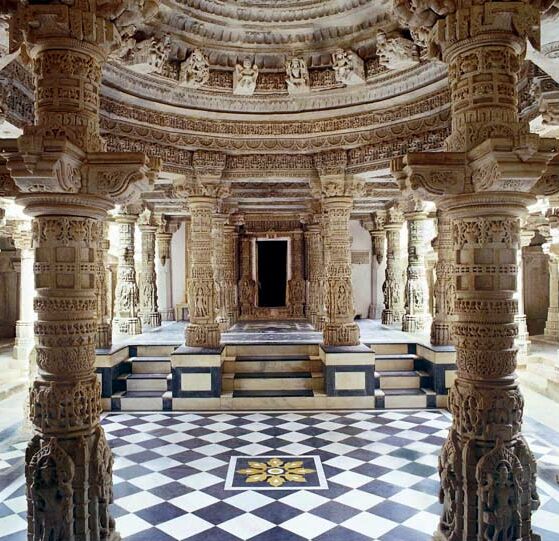
Jain tirthas are located throughout India. Often a tirtha has a number of temples as well as residences (dharmashala) for the pilgrims and wandering monks and scholars.
The term tīrtha (Sanskrit: तीर्थ) is derived from the verbal root tṛ, meaning "to cross over". In the context of Jainism, it refers to a "ford" or a "crossing place" that enables the soul to cross the ocean of Saṃsāra (the cycle of birth, death, and rebirth) and attain Moksha (liberation).
In Jain doctrine, the term tīrtha has a dual application, referring both to the religious community and to sacred geography.
1. The Community (Saṅgha): In its primary canonical sense, a tīrtha refers to the four-fold religious order (Chaturvidha Saṅgha) established by a tirthankara. This community consists of four categories of devotees:
According to Jain philosophy, the establishment of this social order creates the metaphorical "ford" through which followers can cross the cycle of rebirth.
2. The physical place (Kṣetra): In common usage, tīrtha refers to specific physical locations—temples, mountains, or cities—that are sanctified by their association with the tirthankaras or other enlightened ascetics. These sites are viewed as energetic focal points that facilitate spiritual progress.
Scholars note a distinct theological difference between the Jain concept of tīrtha and that found in other Indian traditions, particularly Hinduism. According to sociologist Vilas Sangave, while the Hindu concept of tirtha often involves visiting sacred rivers or locations to "dispel demerit" or wash away sins, Jain theology rejects the notion that physical objects or rivers can cleanse moral impurities.
Hub AI
Tirtha (Jainism) AI simulator
(@Tirtha (Jainism)_simulator)
Tirtha (Jainism)
In Jainism, a tīrtha (Sanskrit: तीर्थ "ford, a shallow part of a body of water that may be easily crossed") is a passage across samsara first blazed by a Tirthankara. The word is used to refer to Jain pilgrimage sites, and to the four sections of the sangha. A tirtha provides the inspiration to enable one to cross over from worldly engagement to the side of moksha.
Jain tirthas are located throughout India. Often a tirtha has a number of temples as well as residences (dharmashala) for the pilgrims and wandering monks and scholars.
The term tīrtha (Sanskrit: तीर्थ) is derived from the verbal root tṛ, meaning "to cross over". In the context of Jainism, it refers to a "ford" or a "crossing place" that enables the soul to cross the ocean of Saṃsāra (the cycle of birth, death, and rebirth) and attain Moksha (liberation).
In Jain doctrine, the term tīrtha has a dual application, referring both to the religious community and to sacred geography.
1. The Community (Saṅgha): In its primary canonical sense, a tīrtha refers to the four-fold religious order (Chaturvidha Saṅgha) established by a tirthankara. This community consists of four categories of devotees:
According to Jain philosophy, the establishment of this social order creates the metaphorical "ford" through which followers can cross the cycle of rebirth.
2. The physical place (Kṣetra): In common usage, tīrtha refers to specific physical locations—temples, mountains, or cities—that are sanctified by their association with the tirthankaras or other enlightened ascetics. These sites are viewed as energetic focal points that facilitate spiritual progress.
Scholars note a distinct theological difference between the Jain concept of tīrtha and that found in other Indian traditions, particularly Hinduism. According to sociologist Vilas Sangave, while the Hindu concept of tirtha often involves visiting sacred rivers or locations to "dispel demerit" or wash away sins, Jain theology rejects the notion that physical objects or rivers can cleanse moral impurities.
Recent media