
Recent from talks
Tokyo Sexwale
Knowledge base stats:
Talk channels stats:
Members stats:
Tokyo Sexwale
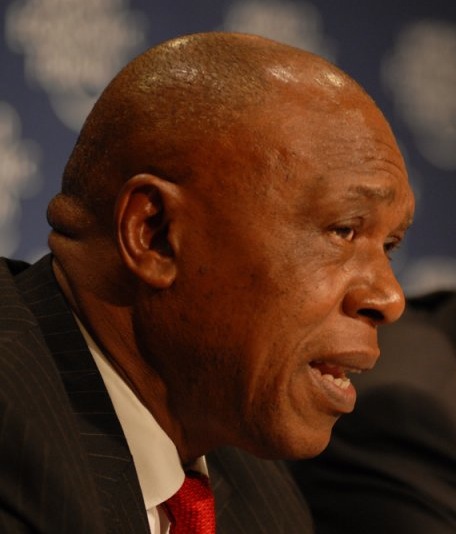
Mosima Gabriel "Tokyo" Sexwale (pronounced /sɛˈxwɑːleɪ/ seh-KHWAH-lay, Venda: [sexwále]; born 5 March 1953) is a South African businessman, politician, anti-apartheid activist, and former political prisoner. For many years, Sexwale was imprisoned on Robben Island for his anti-apartheid activities, alongside figures such as Nelson Mandela. After the 1994 general election—the first fully democratic election in South Africa—Sexwale became the Premier of Gauteng Province.
Sexwale was born in the township of Orlando West, in Soweto. His father was a clerk at Johannesburg General Hospital and had fought against the Germans in World War II. Sexwale grew up during the black township's upheaval. In 1973, he graduated from Orlando West High School.
In the late 1960s, Sexwale became a member of the Steve Biko's Black Consciousness Movement and became a local leader of the radical South African Students' Movement. In the early 1970s, he joined the African National Congress's armed wing, Umkhonto we Sizwe ("spear of the nation"). While in Swaziland, he completed a Certificate in Business Studies at the University of Botswana, Lesotho and Swaziland. In 1975, Sexwale went into exile, undergoing military officers' training in the Soviet Union, where he specialized in military engineering.
Upon his return to South Africa in 1976, Sexwale, along with 11 others, had been captured after a skirmish with the South African security forces. After an almost two-year trial in the Supreme Court of South Africa in Pretoria,[citation needed] he was charged and later convicted of terrorism and conspiracy to overthrow the government. In 1977, Sexwale was sent to the Robben Island maximum-security prison to serve an 18-year sentence. While imprisoned on Robben Island, he studied for a BCom degree at the University of South Africa. Sexwale was released in June 1990 under the terms of the Groote Schuur Agreement between the National Party government and the African National Congress. He had spent 13 years in prison.
During this time, he was represented in part by a paralegal named Judy van Vuuren. They began a personal relationship while he remained in prison, and married soon after his release in 1990.
After his release, Sexwale returned to Johannesburg, where he served as head of the public liaison department of the African National Congress Headquarters. He was subsequently appointed the head of special projects, where he reported to the ANC's military headquarters. In September of 1990, he was elected as a member of the executive committee of the ANC in the Pretoria-Witwatersrand-Vereeniging (PWV) region.
After the South African elections in April 1994, Sexwale was elected as the first premier of the new PWV Province (renamed Gauteng Province in December 1994). In this role, he was credited with bringing peace to several politically volatile townships. Sexwale left politics for the corporate sector in 1998. The reasons for this were never made completely clear, but was reportedly due to feeling stifled by central government restrictions as well as becoming exhausted by internal African National Congress intrigues.[citation needed] Further speculation is that Sexwale left politics due to strong disagreements with the then Vice-President of South Africa, Thabo Mbeki.[citation needed] Other speculation is that his marriage opened business opportunities in the white-dominated financial sectors that allowed him opportunities not open to other black leaders.[citation needed] Sexwale, Cyril Ramaphosa and Mbeki were possible candidates jostling for the presidency after Mandela stepped down. Once Thabo Mbeki appeared as the favourite candidate, both Sexwale and Ramaphosa left politics to follow successful careers as businessmen.[citation needed]
On 7 January 2007, The Sunday Times reported that Sexwale was campaigning for a leadership position within the ANC, which would have put him in position to replace Thabo Mbeki as President of South Africa in 2009. Sexwale admitted on BBC's Hard Talk that if asked to stand for the elections as party president by structures of the ANC, he would seriously consider it. He was elected to the ANC's 80-member National Executive Committee in December 2007 in 10th place, with 2,198 votes.
Hub AI
Tokyo Sexwale AI simulator
(@Tokyo Sexwale_simulator)
Tokyo Sexwale
Mosima Gabriel "Tokyo" Sexwale (pronounced /sɛˈxwɑːleɪ/ seh-KHWAH-lay, Venda: [sexwále]; born 5 March 1953) is a South African businessman, politician, anti-apartheid activist, and former political prisoner. For many years, Sexwale was imprisoned on Robben Island for his anti-apartheid activities, alongside figures such as Nelson Mandela. After the 1994 general election—the first fully democratic election in South Africa—Sexwale became the Premier of Gauteng Province.
Sexwale was born in the township of Orlando West, in Soweto. His father was a clerk at Johannesburg General Hospital and had fought against the Germans in World War II. Sexwale grew up during the black township's upheaval. In 1973, he graduated from Orlando West High School.
In the late 1960s, Sexwale became a member of the Steve Biko's Black Consciousness Movement and became a local leader of the radical South African Students' Movement. In the early 1970s, he joined the African National Congress's armed wing, Umkhonto we Sizwe ("spear of the nation"). While in Swaziland, he completed a Certificate in Business Studies at the University of Botswana, Lesotho and Swaziland. In 1975, Sexwale went into exile, undergoing military officers' training in the Soviet Union, where he specialized in military engineering.
Upon his return to South Africa in 1976, Sexwale, along with 11 others, had been captured after a skirmish with the South African security forces. After an almost two-year trial in the Supreme Court of South Africa in Pretoria,[citation needed] he was charged and later convicted of terrorism and conspiracy to overthrow the government. In 1977, Sexwale was sent to the Robben Island maximum-security prison to serve an 18-year sentence. While imprisoned on Robben Island, he studied for a BCom degree at the University of South Africa. Sexwale was released in June 1990 under the terms of the Groote Schuur Agreement between the National Party government and the African National Congress. He had spent 13 years in prison.
During this time, he was represented in part by a paralegal named Judy van Vuuren. They began a personal relationship while he remained in prison, and married soon after his release in 1990.
After his release, Sexwale returned to Johannesburg, where he served as head of the public liaison department of the African National Congress Headquarters. He was subsequently appointed the head of special projects, where he reported to the ANC's military headquarters. In September of 1990, he was elected as a member of the executive committee of the ANC in the Pretoria-Witwatersrand-Vereeniging (PWV) region.
After the South African elections in April 1994, Sexwale was elected as the first premier of the new PWV Province (renamed Gauteng Province in December 1994). In this role, he was credited with bringing peace to several politically volatile townships. Sexwale left politics for the corporate sector in 1998. The reasons for this were never made completely clear, but was reportedly due to feeling stifled by central government restrictions as well as becoming exhausted by internal African National Congress intrigues.[citation needed] Further speculation is that Sexwale left politics due to strong disagreements with the then Vice-President of South Africa, Thabo Mbeki.[citation needed] Other speculation is that his marriage opened business opportunities in the white-dominated financial sectors that allowed him opportunities not open to other black leaders.[citation needed] Sexwale, Cyril Ramaphosa and Mbeki were possible candidates jostling for the presidency after Mandela stepped down. Once Thabo Mbeki appeared as the favourite candidate, both Sexwale and Ramaphosa left politics to follow successful careers as businessmen.[citation needed]
On 7 January 2007, The Sunday Times reported that Sexwale was campaigning for a leadership position within the ANC, which would have put him in position to replace Thabo Mbeki as President of South Africa in 2009. Sexwale admitted on BBC's Hard Talk that if asked to stand for the elections as party president by structures of the ANC, he would seriously consider it. He was elected to the ANC's 80-member National Executive Committee in December 2007 in 10th place, with 2,198 votes.
Recent media