
Recent from talks
Tokyo Story
Knowledge base stats:
Talk channels stats:
Members stats:
Tokyo Story
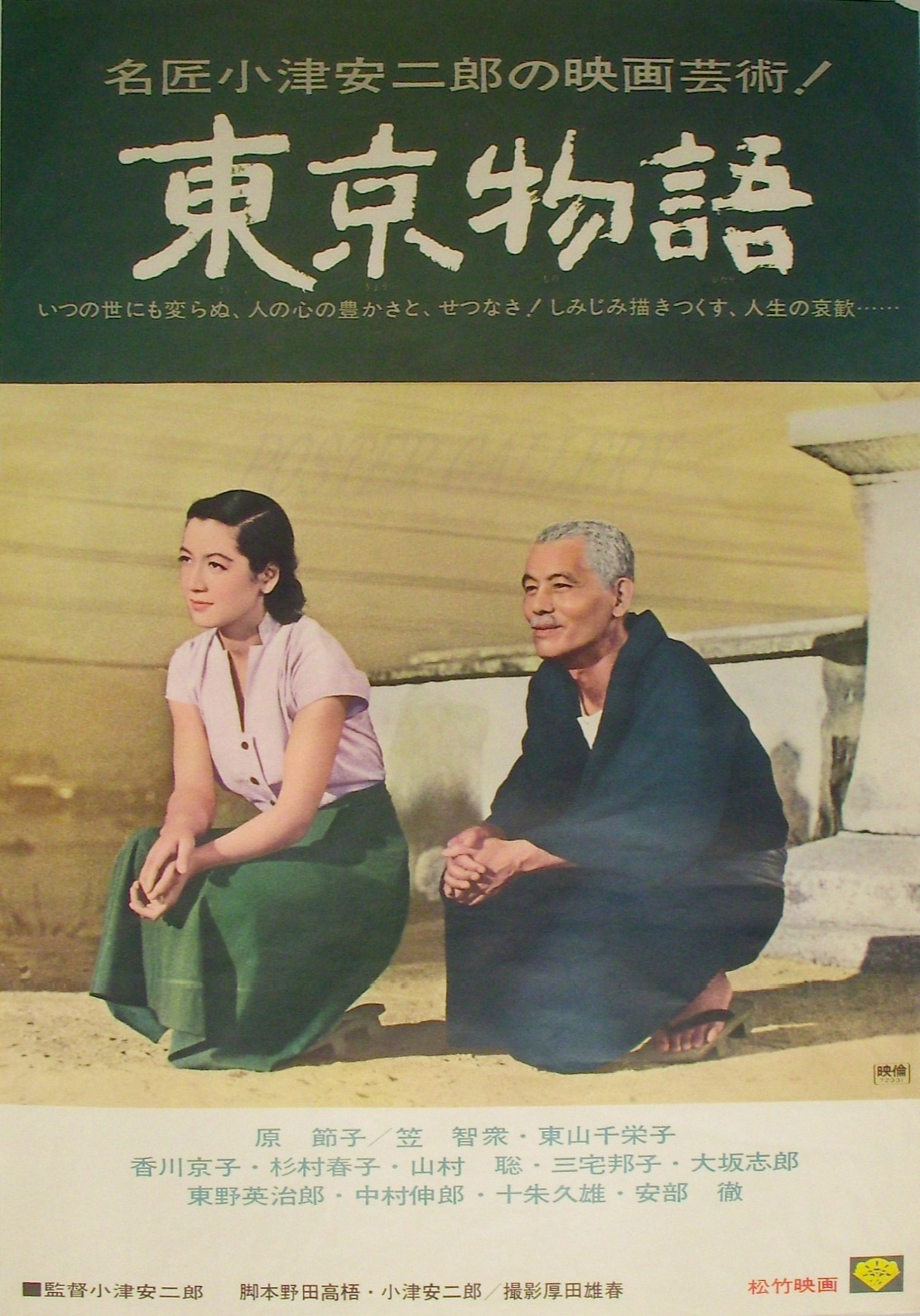
Tokyo Story (Japanese: 東京物語, Hepburn: Tōkyō Monogatari) is a 1953 Japanese drama film directed by Yasujirō Ozu and starring Chishū Ryū and Chieko Higashiyama, about an aging couple who travel to Tokyo to visit their grown children.
Upon release, it did not immediately gain international recognition and was considered "too Japanese" to be marketable by Japanese film exporters. It was screened in 1957 in London, where it won the inaugural Sutherland Trophy the following year, and received praise from U.S. film critics after a 1972 screening in New York City.
Tokyo Story is widely regarded as Ozu's magnum opus and one of the greatest films in the history of cinema. It was voted the greatest film of all time in the 2012 edition of a poll of film directors by Sight and Sound magazine.
Retired couple Shūkichi and Tomi Hirayama live in Onomichi in western Japan with their daughter Kyōko, a primary school teacher. They have five adult children, four of whom are living in Tokyo. The couple travels to Tokyo to visit their son, daughter, and widowed daughter-in-law.
Their eldest son, Kōichi, is a physician who runs a small clinic in Tokyo's suburbs, and their eldest daughter, Shige, runs a hairdressing salon. Kōichi and Shige are both busy and do not have much time for their parents. Only their widowed daughter-in-law, Noriko, the wife of their middle son Shōji, who was missing in action and presumed dead during the Pacific War, goes out of her way to entertain them. She takes time from her demanding office job to take Shūkichi and Tomi on a sightseeing tour of metropolitan Tokyo.
Feeling conflicted that they do not have time to entertain them, Kōichi and Shige pay for their parents to stay at a hot spring spa at Atami, but they return early because the nightlife disturbs their sleep. Tomi also has an unexplained dizzy spell. Upon returning, a frustrated Shige explains she sent them to Atami because she wanted to use their bedroom for a meeting; the elderly couple has to leave for the evening. They spend the afternoon in Ueno Park before splitting up to seek accommodations for the night. Tomi goes to stay with Noriko, with whom she deepens their emotional bond, and advises her to remarry. Shūkichi, meanwhile, gets drunk with some old friends from Onomichi. The three men drunkenly ramble about their children and lives. A policeman brings Shūkichi and one of his friends to Shige's salon. Shige is outraged her father is lapsing into the alcoholic ways that overshadowed her childhood.
The couple remarks on how their children have changed, returning home earlier than planned, intending to see their younger son Keizō when the train stops in Osaka. However, Tomi suddenly becomes ill during the journey and they decide to disembark the train, staying until she feels better the next day. They return to Onomichi, and Tomi falls critically ill. Kōichi, Shige, and Noriko rush to Onomichi to see Tomi, who dies shortly afterwards. Keizō arrives too late, as he has been away on business.
After the funeral, Kōichi, Shige, and Keizō leave immediately; only Noriko remains. After they leave, Kyōko criticises her siblings over their selfishness toward their parents. She believes that Kōichi, Shige, and Keizō do not care how hard it will be for their father now that he has lost their mother. She is also upset at Shige for asking so quickly for Tomi's clothes as keepsakes. Noriko responds that while she understands Kyōko's disappointment, everyone has their own life and the growing chasm between parents and children is inevitable. She convinces Kyōko not to be too hard on her siblings because one day she will understand how hard it is to take time away from one's own life.
Hub AI
Tokyo Story AI simulator
(@Tokyo Story_simulator)
Tokyo Story
Tokyo Story (Japanese: 東京物語, Hepburn: Tōkyō Monogatari) is a 1953 Japanese drama film directed by Yasujirō Ozu and starring Chishū Ryū and Chieko Higashiyama, about an aging couple who travel to Tokyo to visit their grown children.
Upon release, it did not immediately gain international recognition and was considered "too Japanese" to be marketable by Japanese film exporters. It was screened in 1957 in London, where it won the inaugural Sutherland Trophy the following year, and received praise from U.S. film critics after a 1972 screening in New York City.
Tokyo Story is widely regarded as Ozu's magnum opus and one of the greatest films in the history of cinema. It was voted the greatest film of all time in the 2012 edition of a poll of film directors by Sight and Sound magazine.
Retired couple Shūkichi and Tomi Hirayama live in Onomichi in western Japan with their daughter Kyōko, a primary school teacher. They have five adult children, four of whom are living in Tokyo. The couple travels to Tokyo to visit their son, daughter, and widowed daughter-in-law.
Their eldest son, Kōichi, is a physician who runs a small clinic in Tokyo's suburbs, and their eldest daughter, Shige, runs a hairdressing salon. Kōichi and Shige are both busy and do not have much time for their parents. Only their widowed daughter-in-law, Noriko, the wife of their middle son Shōji, who was missing in action and presumed dead during the Pacific War, goes out of her way to entertain them. She takes time from her demanding office job to take Shūkichi and Tomi on a sightseeing tour of metropolitan Tokyo.
Feeling conflicted that they do not have time to entertain them, Kōichi and Shige pay for their parents to stay at a hot spring spa at Atami, but they return early because the nightlife disturbs their sleep. Tomi also has an unexplained dizzy spell. Upon returning, a frustrated Shige explains she sent them to Atami because she wanted to use their bedroom for a meeting; the elderly couple has to leave for the evening. They spend the afternoon in Ueno Park before splitting up to seek accommodations for the night. Tomi goes to stay with Noriko, with whom she deepens their emotional bond, and advises her to remarry. Shūkichi, meanwhile, gets drunk with some old friends from Onomichi. The three men drunkenly ramble about their children and lives. A policeman brings Shūkichi and one of his friends to Shige's salon. Shige is outraged her father is lapsing into the alcoholic ways that overshadowed her childhood.
The couple remarks on how their children have changed, returning home earlier than planned, intending to see their younger son Keizō when the train stops in Osaka. However, Tomi suddenly becomes ill during the journey and they decide to disembark the train, staying until she feels better the next day. They return to Onomichi, and Tomi falls critically ill. Kōichi, Shige, and Noriko rush to Onomichi to see Tomi, who dies shortly afterwards. Keizō arrives too late, as he has been away on business.
After the funeral, Kōichi, Shige, and Keizō leave immediately; only Noriko remains. After they leave, Kyōko criticises her siblings over their selfishness toward their parents. She believes that Kōichi, Shige, and Keizō do not care how hard it will be for their father now that he has lost their mother. She is also upset at Shige for asking so quickly for Tomi's clothes as keepsakes. Noriko responds that while she understands Kyōko's disappointment, everyone has their own life and the growing chasm between parents and children is inevitable. She convinces Kyōko not to be too hard on her siblings because one day she will understand how hard it is to take time away from one's own life.
Recent media