


Community hub
Recent from talks
Contribute something
Nothing was collected or created yet.
Tom Ligon
View on Wikipedia |
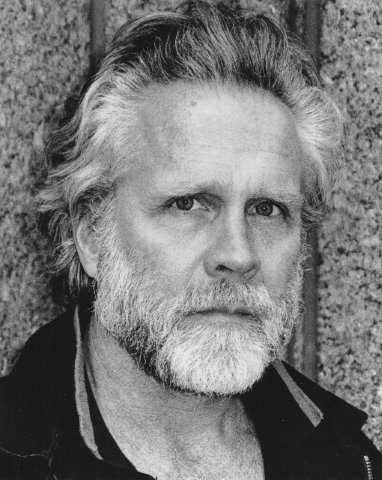
Thomas Ligon (born September 10, 1940) is an American actor of Cajun ancestry. He appeared in the films Paint Your Wagon, Jump, and Bang the Drum Slowly (in which he also sang the title song) as well as the television series The Young and the Restless, and Oz.
Key Information


Life and career
[edit]Mentored by folksinger and actor Gordon Heath in Paris, beginning in the mid 1950s, Ligon then attended St. Albans School (Washington, D.C.), where he suffered a broken leg while playing football, and, sans sports, his interests turned solidly toward theater. At Yale, where he was a member of Skull and Bones and graduated as an English major (1962), he was discovered by Tennessee Williams, who saw his performance as Kilroy in Williams' play, Camino Real at the Yale Dramatic Association. Ligon became one of the most sought after young actors in New York in the 1960s.
Ligon has appeared on many prominent regional stages in the U.S., notably the Arena Stage where he played the title role in Billy Budd and in Hard Travelin' by Millard Lampell in 1964, and Actors Theatre of Louisville, where he played Hank Czerniak, the polka king, in Evelyn and the Polka King.
Tom Ligon and Katharine Dunfee Clarke (K.C. Ligon - 1948-2009) were married on New Year's Eve in 1976.
Tom Ligon created the role of Orson in the prize-winning Off-Broadway musical Your Own Thing (1968), and starred on Broadway opposite Geraldine Page in Angela, by Sumner Arthur Long, and with Sandy Duncan in John Patrick's Love is a Time of Day. This work on stage led to appearing in two films, Paint Your Wagon and Bang the Drum Slowly. Concerning Ligon's third film, Jump (1971): Quentin Tarantino called it "this amazing film that no one’s ever seen – I’ve only seen it once and I’d love to see it again – this really good Seventies backtrack exploitation movie... It’s hilarious and very satirical. I remember really liking that."
Ligon played the Tiger in Rajiv Joseph's Bengal Tiger at the Baghdad Zoo in its original iteration, directed by Giovanna Sardelli at the Lark Play Development Center in New York City. Other noteworthy appearances on the New York stage include Geniuses, BAFO (Best and Final Offer), Den of Thieves, The Golf Ball, Tartuffe: Born Again, A Backer's Audition, Another Paradise, and Have I Got A Girl for You.
In 2000, Ligon appeared in a critically acclaimed New York production of Our Town, directed by Jack Cummings III, where he played George Gibbs. Also, for Transport Group, he subsequently played in Requiem For William, All the Way Home, and The Audience, all directed by Jack Cummings III.
In August 2013, when Ligon was age 72, The New York Times[1] reported that he sent an intruder tumbling to the pavement below with a fist to the forehead and a ninja shout after the man had entered his Greenwich Village apartment through a window. Responding to later news that it was a "career burglar" he had chased away, and who was now in jail, Ligon told The Times: "Well, I guess he's not having much of a 'career' right now. It's like acting – you’ve got your ups and downs."
Ligon served many years as SAG-AFTRA's Chair, National Seniors Committee. He has also served as a member of the Board of Directors, New York Screen Actors Guild (2005–07).
Filmography
[edit]Film
[edit]- Nothing But a Man (1964) - Teenager #1
- Paint Your Wagon (1969) - Horton Fenty
- Jump (1971) - Chester Jump
- The Last American Hero (1973) - Lamar
- Bang the Drum Slowly (1973) - Piney Woods
- Joyride (1977) - Sanders
- Young Doctors in Love (1982) - Soap Cameos
- Cutting Class (1989) - Mr. Ingalls
- I Believe in America (2007) - Oliver
- Serial (2007) - Chief Joseph Spataford
- Lost Revolution (2007) - Oliver
- Front Cover (2015) - Gus LaMar
Television
[edit]- Hawk (1966)
- The 39th Witness (TV film) (1968)
- The Jackie Gleason Show "Operation Protest" (1970)
- A World Apart (original cast, 1969-1971)
- Medical Center (1971)
- The Execution of Private Slovik (TV film) (1974)
- F. Scott Fitzgerald in Hollywood (TV film (1975)
- The Black Box Murders (TV film) (1975)
- Judge Horton and the Scottsboro Boys (TV film) (1976)
- The Adams Chronicles (1976)
- Baretta (1977)
- Rosetti and Ryan (1977)
- Charlie's Angels (1977)
- Police Woman (1977)
- Starsky and Hutch (1977)
- The Young and the Restless (1978-1982)
- Baa Baa Black Sheep (1978)
- Loving (original cast, 1983-1984)
- The Demon Murder Case (TV film) (1983)
- Santa Barbara (1987)
- Dallas (1987)
- The American Experience – "Simple Justice" (TV Film) (1993)
- All My Children (1994)
- Another World (1990, 1995)
- Oz (2001–2003)
- Law & Order: Special Victims Unit (2001)
- Law & Order (1995–2003)
- Law & Order: Criminal Intent (2007)
- The Heart, She Holler (original cast, 2011–2013)
References
[edit]- ^ Michael Wilson (August 16, 2013), "He Used to Be on Police Dramas, Then He Met a Bad Guy in Real Life", New York Times, retrieved July 31, 2016
External links
[edit]- Tom Ligon at IMDb
- Tom Ligon at the Internet Broadway Database
- Tom Ligon at the Internet Off-Broadway Database (archived)

Tom Ligon
View on GrokipediaEarly life
Family background and childhood
Thomas Bryant Ligon was born on September 10, 1940, in New Orleans, Louisiana, and is of Cajun ancestry.[1][5] During his childhood and teenage years, Ligon excelled as a star athlete in high school, initially aspiring to a professional career in sports, particularly football. However, a severe leg injury curtailed these ambitions and shifted his focus toward other pursuits.[6][7]Education and early influences
After the injury, Ligon enrolled at Yale University, where he pursued a degree in English and graduated as an English major.[8] This academic environment provided a foundation that blended literary analysis with performance skills, influencing his approach to character work in later roles. A pivotal early influence came through Ligon's involvement in campus theater. While performing as Kilroy in Tennessee Williams' play Camino Real with the Yale Dramatic Association, he caught the attention of the Pulitzer Prize-winning playwright himself, who was impressed by the young actor's portrayal and encouraged his professional pursuits.[7][8] This discovery in the early 1960s served as a launching point for Ligon's acting career, highlighting Williams' impact as a mentor figure during his formative years.Career
Stage work
Tom Ligon began his professional acting career in the early 1960s in New York City, focusing primarily on stage performances that established his reputation in theater before transitioning to film and television. His early breakthrough came with the creation of the role of Orson in the Off-Broadway musical Your Own Thing (1968), a rock adaptation of Shakespeare's Twelfth Night that won an Obie Award for distinguished play and became a cult favorite for its innovative score and contemporary take on Elizabethan comedy.[9][10] Ligon's Broadway debut occurred in 1963 with the short-lived comedy Have I Got a Girl for You!, where he portrayed Steve Kozlek in a production that ran for only one performance but marked his entry into major theater. He followed this with leading roles in two 1969 productions: Jeff Dolan in Angela, opposite Tony Award winner Geraldine Page, and Skipper Allen in the romantic comedy Love Is a Time of Day, starring alongside Sandy Duncan; both shows were original works that closed after brief runs but highlighted his versatility in comedic roles. Later, in 1996, he served as understudy for Orgon and the Visitor in the Broadway revival of Molière's Tartuffe, directed by Nicholas Pennell.[11][12][13][14] Throughout his career, Ligon maintained an active presence in Off-Broadway and regional theater, often taking on character roles in ensemble pieces. Notable appearances include the ensemble in the 2006 revival of Tad Mosel's All the Way Home at the Connelly Theatre, adapted from James Agee's Pulitzer Prize-winning novel, and a cast member in David Lindsay-Abaire's Wonder of the World (2010) at the Shell Theater. In 2018, he starred as Ebenezer Scrooge in the one-night-only chamber production A Chamber Christmas Carol at St. Mark's Church, showcasing his dramatic range in a minimalist adaptation. Other significant New York stage credits encompass George Gibbs in Thornton Wilder's Our Town (Transport Group production), the Tiger in Rajiv Joseph's Bengal Tiger at the Baghdad Zoo, and roles in plays such as Geniuses, Den of Thieves, and BAFO (Best and Final Offer), reflecting his ongoing commitment to contemporary American drama. Regionally, he performed at Paper Mill Playhouse in Milburn, New Jersey, including a role in the 1985 revival of Rodgers and Hammerstein's Carousel and as a performer in Cole Porter's You Never Know (1996).[15][16][17][4][1]Film roles
Tom Ligon's film career began with a small role as a teenager in the 1964 independent drama Nothing But a Man, directed by Michael Roemer, where he portrayed one of the young characters navigating racial tensions in the American South.[18] This early appearance marked his entry into cinema alongside established actors like Ivan Dixon and Abbey Lincoln, though his part was minor and uncredited in some listings. His breakthrough came in 1969 with a supporting role as Horton Fenty, a prospector in the California Gold Rush, in the musical Western Paint Your Wagon, directed by Joshua Logan and starring Clint Eastwood and Lee Marvin. Ligon's performance as the enthusiastic but hapless miner contributed to the film's ensemble dynamic, showcasing his ability to blend into large-scale productions with a folksy charm. The film, a lavish Paramount Pictures release, highlighted his versatility in musical sequences, though it received mixed reviews for its length and pacing. In 1971, Ligon took on a lead role as Chester Jump in the low-budget action film Jump, directed by Joseph Manduke, playing a man entangled in a web of crime and pursuit. This part allowed him to demonstrate dramatic range in a more intimate narrative, though the film remains obscure today. Ligon's most critically acclaimed film work occurred in 1973, with supporting roles in two baseball-themed dramas. In The Last American Hero, directed by Lamont Johnson and based on Tom Wolfe's essay about NASCAR driver Junior Johnson, he played Lamar, a friend and rival to Jeff Bridges' protagonist, adding tension to the story of ambition and family legacy.[19] Later that year, in John Hancock's Bang the Drum Slowly, an adaptation of Mark Harris' novel, Ligon portrayed Piney Woods, a fellow player on the fictional New York Mammoths team led by Robert De Niro and Michael Moriarty. His character, a quirky outfielder facing personal hardships, provided comic relief amid the film's poignant exploration of mortality and friendship; notably, Ligon also performed the title song, infusing it with a heartfelt folk style. These roles solidified his reputation as a reliable character actor in thoughtful, character-driven stories. Throughout the 1970s and 1980s, Ligon continued with supporting parts, including Sanders, a mechanic in the 1977 road thriller Joyride, directed by Joseph Ruben, where he supported leads Desi Arnaz Jr. and Robert Carradine in a tale of accidental crime and pursuit.[20] In 1982, he made a cameo as one of the soap opera actors in the satirical comedy Young Doctors in Love, directed by Garry Marshall, poking fun at medical dramas with a ensemble cast including Michael McKean.[21] His later film appearances included the role of Mr. Ingalls, a school administrator, in the 1989 slasher film Cutting Class, directed by Rospo Pallenberg, featuring a young Brad Pitt in an early role amid a high school murder mystery.[22] In 2007, Ligon played Oliver in the independent drama I Believe in America, directed by Michael J. Narvaez, a story of immigrant struggles and family bonds. His most recent feature film credit came in 2015 as Gus LaMar, a fashion magazine editor, in Front Cover, directed by Alan Brown, a romantic comedy-drama exploring cultural identity and queer romance starring Jake Choi.[23] Across these roles, Ligon often embodied authoritative or eccentric supporting figures, leveraging his stage-honed presence in diverse genres from Westerns to indies.Television appearances
Tom Ligon's television career spanned over five decades, beginning with guest roles in the mid-1960s and evolving into recurring parts in daytime soap operas, prime-time dramas, and made-for-TV films. His early appearances included a role in the short-lived crime series Hawk in 1966, where he portrayed a supporting character in the episode "H Is for Hawk," marking one of his initial forays into episodic television.[24] In 1968, he starred in the TV movie The 39th Witness, a legal drama based on a true story, playing a key supporting role that showcased his ability to handle intense dramatic material. These early credits established Ligon as a versatile character actor capable of transitioning between genres. During the 1970s, Ligon gained prominence in daytime television through recurring and series regular roles in soap operas, which became a cornerstone of his career. He originated the role of T. D. Drinkard on A World Apart from 1969 to 1971, a serial focused on social issues, contributing to its exploration of working-class family dynamics.[24] He followed this with the character of Lucas Lorenzo Prentiss on The Young and the Restless from 1978 to 1982, appearing in multiple episodes as a complex family figure in the long-running CBS soap.[25] His work in these series highlighted his skill in portraying emotional depth within serialized storytelling. In the 1980s and beyond, Ligon diversified into prime-time guest appearances and additional TV movies, often playing authoritative or antagonistic figures. Notable TV films include The Execution of Private Slovik (1974) as Childs; Judge Horton and the Scottsboro Boys (1976) as Lester Carter, addressing racial injustice; and The Demon Murder Case (1983) as Phillip Russo in a supernatural thriller.[26] On series, he recurred as Coach Billy Bristow on Loving from 1983 to 1984 and as Addison on Santa Barbara in 1987.[24] Later credits featured multiple episodes of Law & Order (1990–2003), including roles as Scott Hampton in "Switch" (1995), Gillespie in "True North" (1998), and Phil Brucker in 2003; Alvin Yood on Oz (1997–2003), a sheriff convicted of assault; and a Bluebell Agency executive on Law & Order: Special Victims Unit in 1999; as well as Bailey Thompson on Another World in 1995.[27] These roles underscored his enduring presence in procedural and prison dramas, with his final credited TV appearance in the short film Cast Party (2015) as God.[28]Union and advocacy roles
Ligon served as a member of the Screen Actors Guild (SAG) New York Local Board during the late 2000s.[29] He ran as a candidate for one of the national board seats representing the New York division in the 2005 SAG elections, amid ongoing factional tensions between Hollywood and New York branches.[30] As a board member, Ligon also sat on SAG's National Legislative Committee, where he focused on policy issues affecting performers.[31] In this role, he advocated for enhanced domestic production incentives as a strategy to retain jobs in the U.S., arguing that such measures were preferable to competing with low-cost foreign locations like Canada, which were drawing away film and television work from American actors.[31] Following the 2012 merger of SAG and the American Federation of Television and Radio Artists (AFTRA) to form SAG-AFTRA, Ligon continued to engage in guild politics, described as remaining active despite his prior board service having concluded.[29] His involvement reflected a commitment to strengthening performer protections, including support for unified contracts and health benefits that combined earnings from both pre-merger unions.[32]Personal life
Marriage and family
Tom Ligon was married to actress, dialect coach, and Shakespeare scholar K.C. Ligon (born Katharine Dunfee Clarke) from December 31, 1976, until her death on March 23, 2009, at age 60 following a long illness.[24][33] The couple's New Year's Eve wedding was officiated by actress Leigh Taylor-Young at her Beverly Hills home, with guests including actors Elizabeth Taylor, Richard Burton, and Peter Lawford.[8] As fellow performers, Ligon and his wife frequently collaborated on stage and screen projects while dividing their time between residences in California and New York.[34]Later years and notable incidents
In his later years, following the death of his wife, K.C. Ligon, on March 23, 2009, Tom Ligon lived alone in a Greenwich Village apartment on Waverly Place in New York City.[35][33] K.C. Ligon, born Katharine Dunfee Clarke, was an actress and dialect coach whom he had married on December 31, 1976; she was 60 at the time of her passing after a prolonged illness that included weeks at St. Vincent's Hospital Manhattan.[34][36] Ligon, who was 75 in 2016, described this period as one of adjustment, marked by reduced acting work and changes in his daily habits, including more eating and drinking that affected his health.[35] A notable incident occurred on August 1, 2013, when Ligon, then 72 and napping in his apartment during a hot afternoon, awoke to find an intruder who had entered through an open window.[34] Drawing on his experience portraying characters in police dramas, Ligon confronted the man with fury rather than fear, startling him into fleeing and leaving behind a shoe as evidence.[34] Police recovered the shoe, and DNA analysis later linked it to a suspect arrested on May 19, 2016, following a series of burglaries in the area.[35] By June 2016, Ligon reflected on the event with optimism, viewing the resolution as a positive closure rather than lingering trauma; he recalled a female officer placing her hat over the shoe to protect it from rain, an anecdote that brought him amusement.[35] The incident underscored his resilience in solitude, though he maintained close friendships from his early career, including with actor Sam Waterston, with whom he had shared an apartment in the 1960s.[34]Filmography
Film
Tom Ligon began his film career in the 1960s with supporting roles in independent dramas and progressed to character parts in mainstream features during the 1970s and 1980s, often portraying everyday men or authority figures. His later work included smaller roles in independent films exploring social themes. Below is a chronological list of his feature film credits.- Nothing But a Man (1964) – Teenager[37][38]
- Paint Your Wagon (1969) – Horton Fenty
- Jump (also known as Fury on Wheels) (1971) – Chester Jump[39]
- The Last American Hero (1973) – Lamar[40]
- Bang the Drum Slowly (1973) – Piney Woods (sang 'The Streets of Laredo' in the film)[41]
- Joyride (1977) – Sanders[42][43]
- Young Doctors in Love (1982) – Soap Cameos[44]
- Cutting Class (1989) – Mr. Ingalls[45]
- I Believe in America (2007) – Oliver[46]
- Serial (2007) – Chief Joseph Spataford[47]
- Lost Revolution (2011) – Oliver[48]
- Front Cover (2015) – Gus LaMar[49]