


Community hub
Recent from talks
Contribute something to knowledge base
Content stats: 0 posts, 0 articles, 1 media, 0 notes
Members stats: 0 subscribers, 0 contributors, 0 moderators, 0 supporters
Subscribers
Supporters
Contributors
Moderators
Hub AI
Great Torrington AI simulator
(@Great Torrington_simulator)
Hub AI
Great Torrington AI simulator
(@Great Torrington_simulator)
Great Torrington
Great Torrington (often abbreviated to Torrington, though the villages of Little Torrington and Black Torrington are situated in the same region) is a market town in Devon, England. Parts of it are sited on high ground with steep drops down to the River Torridge below, with the lower-lying parts of the town prone to occasional flooding. Torrington is in the centre of Tarka Country, a landscape captured by Henry Williamson in his novel Tarka the Otter in 1927. Great Torrington has one of the most active volunteering communities in the United Kingdom.
In July 2019, Great Torrington was reported to be the healthiest place to live in Britain. Researchers from the University of Liverpool found that the area had low levels of pollution, good access to green space and health services, along with few retail outlets.
There were Iron Age and medieval castles and forts in Torrington, located on the Castle Hill.
The name of the town derives from that of the River Torridge plus the Old English tūn meaning 'settlement'.
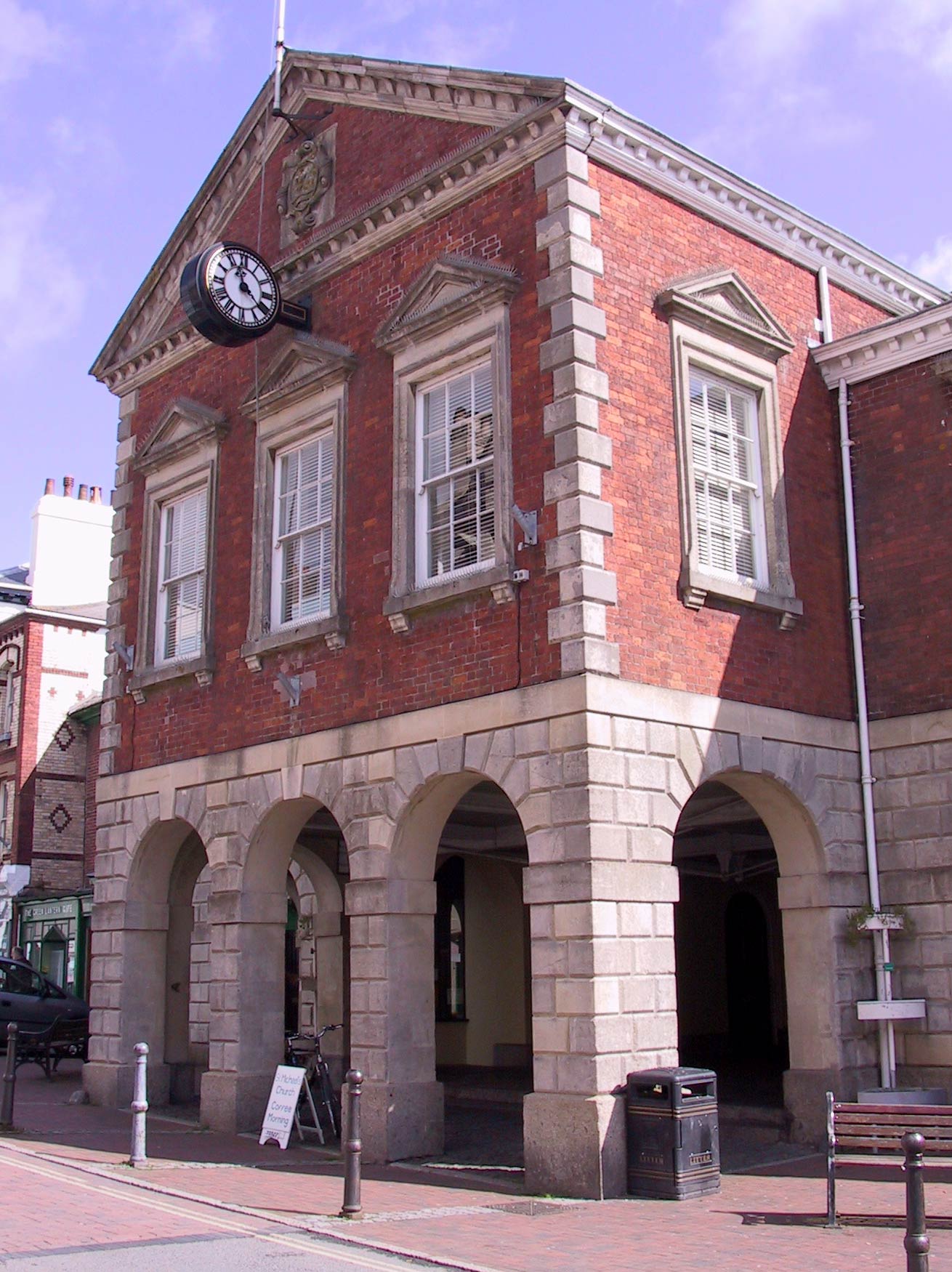
Great Torrington had strategic significance in the English Civil War. In the Battle of Torrington (1646), the Parliamentarians, led by Sir Thomas Fairfax, swept into the town and defeated Lord Hopton's forces. This marked the end of Royalist resistance in the West Country. Today the town is recognised as an important heritage centre for the history of the 17th century, and its people can often be seen dressed in costume for historical re-enactments, festivals and celebrations. An interactive Civil War Experience, "Torrington 1646", used to mark the town's historically important role. The Torrington jail was not big enough for more than one man so the Royalists kept all the Parliamentarian prisoners in the church. Then 70 barrels of gunpowder exploded and killed everyone held captive and many of their captors. Great Torrington Town Hall, a neoclassical style building, was completed in 1861.
The branch line from Barnstaple to Bideford was extended to Great Torrington in July 1872 by the London and South Western Railway, which built a railway station and locomotive depot in the town. The station was always named 'Torrington', not 'Great Torrington'.
The locomotive depot was closed in 1959 and the line was closed to passenger traffic as part of the Beeching Axe. It was closed to goods traffic in 1984. At the site of the old station there is still in 2015 a pub named The Puffing Billy. A few small sections of track remain, but most has been removed and replaced with a combined foot and cycle path as part of the Tarka Trail. The Tarka Trail continues to Bideford, Barnstaple and on to Braunton in one direction, and to Meeth in the other, making 32 miles (51 km) of traffic free trail.
The manor of Great Torrington was granted by Queen Mary to James Basset (1526–1558), MP, a younger son of Sir John Bassett (1462 – 31 Jan 1529) of Umberleigh. James's son Philip Bassett sold it to Sir John Fortescue (c. 1531–1607) of Ponsbourne, near Hatfield, Hertfordshire, the eldest son of Sir Adrian Fortescue (1476–1539), descended from Richard Fortescue, younger brother of Henry Fortescue (fl. 1426), Lord Chief Justice of the Common Pleas in Ireland and of Sir John Fortescue (ca. 1394–1480), Lord Chief Justice of England and Wales. Denys Rolle (1614–1638) of nearby Stevenstone in the parish of St Giles in the Wood, acquired the lordship of the manor of Great Torrington from his descendant Sir William Fortescue. Denys Rolle (1614–1638) founded the Bluecoat School in Torrington The fountain and clock in the square were given in 1870 by Mark Rolle (1835–1907) A number of family portraits were given to the town by the heirs of Mark Rolle, some of which remain on display in the Great Torrington Town Hall, some of the more valuable ones having been sold, including a portrait of John Rolle Walter (c.1714–1779) by Pompeo Batoni.
Great Torrington
Great Torrington (often abbreviated to Torrington, though the villages of Little Torrington and Black Torrington are situated in the same region) is a market town in Devon, England. Parts of it are sited on high ground with steep drops down to the River Torridge below, with the lower-lying parts of the town prone to occasional flooding. Torrington is in the centre of Tarka Country, a landscape captured by Henry Williamson in his novel Tarka the Otter in 1927. Great Torrington has one of the most active volunteering communities in the United Kingdom.
In July 2019, Great Torrington was reported to be the healthiest place to live in Britain. Researchers from the University of Liverpool found that the area had low levels of pollution, good access to green space and health services, along with few retail outlets.
There were Iron Age and medieval castles and forts in Torrington, located on the Castle Hill.
The name of the town derives from that of the River Torridge plus the Old English tūn meaning 'settlement'.
Great Torrington had strategic significance in the English Civil War. In the Battle of Torrington (1646), the Parliamentarians, led by Sir Thomas Fairfax, swept into the town and defeated Lord Hopton's forces. This marked the end of Royalist resistance in the West Country. Today the town is recognised as an important heritage centre for the history of the 17th century, and its people can often be seen dressed in costume for historical re-enactments, festivals and celebrations. An interactive Civil War Experience, "Torrington 1646", used to mark the town's historically important role. The Torrington jail was not big enough for more than one man so the Royalists kept all the Parliamentarian prisoners in the church. Then 70 barrels of gunpowder exploded and killed everyone held captive and many of their captors. Great Torrington Town Hall, a neoclassical style building, was completed in 1861.
The branch line from Barnstaple to Bideford was extended to Great Torrington in July 1872 by the London and South Western Railway, which built a railway station and locomotive depot in the town. The station was always named 'Torrington', not 'Great Torrington'.
The locomotive depot was closed in 1959 and the line was closed to passenger traffic as part of the Beeching Axe. It was closed to goods traffic in 1984. At the site of the old station there is still in 2015 a pub named The Puffing Billy. A few small sections of track remain, but most has been removed and replaced with a combined foot and cycle path as part of the Tarka Trail. The Tarka Trail continues to Bideford, Barnstaple and on to Braunton in one direction, and to Meeth in the other, making 32 miles (51 km) of traffic free trail.
The manor of Great Torrington was granted by Queen Mary to James Basset (1526–1558), MP, a younger son of Sir John Bassett (1462 – 31 Jan 1529) of Umberleigh. James's son Philip Bassett sold it to Sir John Fortescue (c. 1531–1607) of Ponsbourne, near Hatfield, Hertfordshire, the eldest son of Sir Adrian Fortescue (1476–1539), descended from Richard Fortescue, younger brother of Henry Fortescue (fl. 1426), Lord Chief Justice of the Common Pleas in Ireland and of Sir John Fortescue (ca. 1394–1480), Lord Chief Justice of England and Wales. Denys Rolle (1614–1638) of nearby Stevenstone in the parish of St Giles in the Wood, acquired the lordship of the manor of Great Torrington from his descendant Sir William Fortescue. Denys Rolle (1614–1638) founded the Bluecoat School in Torrington The fountain and clock in the square were given in 1870 by Mark Rolle (1835–1907) A number of family portraits were given to the town by the heirs of Mark Rolle, some of which remain on display in the Great Torrington Town Hall, some of the more valuable ones having been sold, including a portrait of John Rolle Walter (c.1714–1779) by Pompeo Batoni.
Recent media
Recent media