
Recent from talks
Toxic shock syndrome
Knowledge base stats:
Talk channels stats:
Members stats:
Toxic shock syndrome
Toxic shock syndrome (TSS) is a condition caused by bacterial toxins. Symptoms may include fever, rash, skin peeling, and low blood pressure. There may also be symptoms related to the specific underlying infection such as mastitis, osteomyelitis, necrotising fasciitis, or pneumonia.
TSS is typically caused by bacteria of the Streptococcus pyogenes or Staphylococcus aureus type, though others may also be involved. Streptococcal toxic shock syndrome is sometimes referred to as toxic-shock-like syndrome (TSLS). The underlying mechanism involves the production of superantigens during an invasive streptococcus infection or a localized staphylococcus infection. Risk factors for the staphylococcal type include the use of very absorbent tampons, skin lesions in young children characterized by fever, low blood pressure, rash, vomiting and/or diarrhea, and multiorgan failure. Diagnosis is typically based on symptoms.
Treatment includes intravenous fluids, antibiotics, incision and drainage of any abscesses, and possibly intravenous immunoglobulin. The need for rapid removal of infected tissue via surgery in those with a streptococcal cause, while commonly recommended, is poorly supported by the evidence. Some recommend delaying surgical debridement. The overall risk of death is about 50% in streptococcal disease, and 5% in staphylococcal disease. Death may occur within 2 days.
In the United States, the incidence of menstrual staphylococcal TSS declined sharply in the 1990s, while both menstrual and nonmenstrual cases have stabilized at about 0.3 to 0.5 cases per 100,000 population. Streptococcal TSS (STSS) saw a significant rise in the mid-1980s and has since remained stable at 2 to 4 cases per 100,000 population. In the developing world, the number of cases is usually on the higher extreme. TSS was first described in 1927. It came to be associated with very absorbent tampons that were removed from sale soon after.
Symptoms of toxic shock syndrome (TSS) vary depending on the underlying cause. TSS resulting from infection with the bacterium Staphylococcus aureus typically manifests in otherwise healthy individuals via signs and symptoms including high fever, accompanied by low blood pressure, malaise and confusion, which can rapidly progress to stupor, coma, and multiple organ failure. The characteristic rash, often seen early in the course of illness, resembles a sunburn (conversely, streptococcal TSS will rarely involve a sunburn-like rash), and can involve any region of the body including the lips, mouth, eyes, palms and soles of the feet. In patients who survive, the rash desquamates (peels off) after 10–21 days. The initial presentation of symptoms can be hard to differentiate from septic shock and other conditions such as Rocky Mountain spotted fever, rubeola, leptospirosis, drug toxicities, and viral exanthems.
STSS caused by the bacterium Streptococcus pyogenes, or TSLS, typically presents in people with pre-existing skin infections with the bacteria. These individuals often experience severe pain at the site of the skin infection, followed by rapid progression of symptoms as described above for TSS.
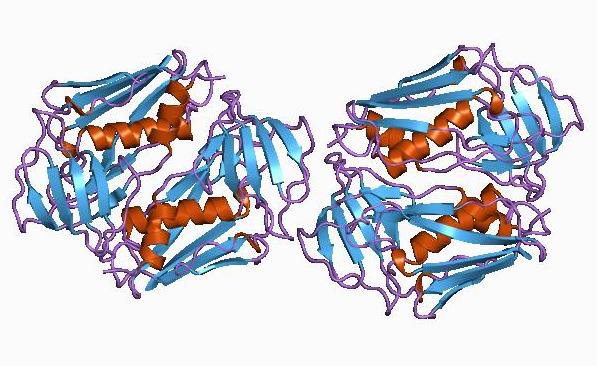
In both TSS (caused by S. aureus) and TSLS (caused by S. pyogenes), disease progression stems from a superantigen toxin. The toxin in S. aureus infections is TSS Toxin-1, or TSST-1. The TSST-1 is secreted as a single polypeptide chain. The gene encoding toxic shock syndrome toxin is carried by a mobile genetic element of S. aureus in the SaPI family of pathogenicity islands. The toxin causes the non-specific binding of MHC II, on professional antigen presenting cells, with T-cell receptors, on T cells.
In typical T-cell recognition, an antigen is taken up by an antigen-presenting cell, processed, expressed on the cell surface in complex with class II major histocompatibility complex (MHC) in a groove formed by the alpha and beta chains of class II MHC, and recognized by an antigen-specific T-cell receptor. This results in polyclonal T-cell activation. Superantigens do not require processing by antigen-presenting cells but instead, interact directly with the invariant region of the class II MHC molecule. In patients with TSS, up to 20% of the body's T-cells can be activated at one time. This polyclonal T-cell population causes a cytokine storm, followed by a multisystem disease.
Hub AI
Toxic shock syndrome AI simulator
(@Toxic shock syndrome_simulator)
Toxic shock syndrome
Toxic shock syndrome (TSS) is a condition caused by bacterial toxins. Symptoms may include fever, rash, skin peeling, and low blood pressure. There may also be symptoms related to the specific underlying infection such as mastitis, osteomyelitis, necrotising fasciitis, or pneumonia.
TSS is typically caused by bacteria of the Streptococcus pyogenes or Staphylococcus aureus type, though others may also be involved. Streptococcal toxic shock syndrome is sometimes referred to as toxic-shock-like syndrome (TSLS). The underlying mechanism involves the production of superantigens during an invasive streptococcus infection or a localized staphylococcus infection. Risk factors for the staphylococcal type include the use of very absorbent tampons, skin lesions in young children characterized by fever, low blood pressure, rash, vomiting and/or diarrhea, and multiorgan failure. Diagnosis is typically based on symptoms.
Treatment includes intravenous fluids, antibiotics, incision and drainage of any abscesses, and possibly intravenous immunoglobulin. The need for rapid removal of infected tissue via surgery in those with a streptococcal cause, while commonly recommended, is poorly supported by the evidence. Some recommend delaying surgical debridement. The overall risk of death is about 50% in streptococcal disease, and 5% in staphylococcal disease. Death may occur within 2 days.
In the United States, the incidence of menstrual staphylococcal TSS declined sharply in the 1990s, while both menstrual and nonmenstrual cases have stabilized at about 0.3 to 0.5 cases per 100,000 population. Streptococcal TSS (STSS) saw a significant rise in the mid-1980s and has since remained stable at 2 to 4 cases per 100,000 population. In the developing world, the number of cases is usually on the higher extreme. TSS was first described in 1927. It came to be associated with very absorbent tampons that were removed from sale soon after.
Symptoms of toxic shock syndrome (TSS) vary depending on the underlying cause. TSS resulting from infection with the bacterium Staphylococcus aureus typically manifests in otherwise healthy individuals via signs and symptoms including high fever, accompanied by low blood pressure, malaise and confusion, which can rapidly progress to stupor, coma, and multiple organ failure. The characteristic rash, often seen early in the course of illness, resembles a sunburn (conversely, streptococcal TSS will rarely involve a sunburn-like rash), and can involve any region of the body including the lips, mouth, eyes, palms and soles of the feet. In patients who survive, the rash desquamates (peels off) after 10–21 days. The initial presentation of symptoms can be hard to differentiate from septic shock and other conditions such as Rocky Mountain spotted fever, rubeola, leptospirosis, drug toxicities, and viral exanthems.
STSS caused by the bacterium Streptococcus pyogenes, or TSLS, typically presents in people with pre-existing skin infections with the bacteria. These individuals often experience severe pain at the site of the skin infection, followed by rapid progression of symptoms as described above for TSS.
In both TSS (caused by S. aureus) and TSLS (caused by S. pyogenes), disease progression stems from a superantigen toxin. The toxin in S. aureus infections is TSS Toxin-1, or TSST-1. The TSST-1 is secreted as a single polypeptide chain. The gene encoding toxic shock syndrome toxin is carried by a mobile genetic element of S. aureus in the SaPI family of pathogenicity islands. The toxin causes the non-specific binding of MHC II, on professional antigen presenting cells, with T-cell receptors, on T cells.
In typical T-cell recognition, an antigen is taken up by an antigen-presenting cell, processed, expressed on the cell surface in complex with class II major histocompatibility complex (MHC) in a groove formed by the alpha and beta chains of class II MHC, and recognized by an antigen-specific T-cell receptor. This results in polyclonal T-cell activation. Superantigens do not require processing by antigen-presenting cells but instead, interact directly with the invariant region of the class II MHC molecule. In patients with TSS, up to 20% of the body's T-cells can be activated at one time. This polyclonal T-cell population causes a cytokine storm, followed by a multisystem disease.
Recent media