
Recent from talks
Traditional balsamic vinegar
Knowledge base stats:
Talk channels stats:
Members stats:
Traditional balsamic vinegar
Traditional balsamic vinegar (Italian: aceto balsamico tradizionale) is a type of balsamic vinegar produced exclusively in the Italian comuni of Reggio Emilia and Modena, in Emilia-Romagna. Unlike inexpensive Balsamic Vinegar of Modena (BVM), Traditional Balsamic Vinegar (TBV) is produced from cooked grape must, aged at least 12 years, and protected under the European protected designation of origin (PDO) system, fetching higher prices (BVM has lesser protection under the European protected geographical indication (PGI) system). Although the names are similar, TBV and the inexpensive imitation BVM are very different.
A comprehensive study of the original production procedures, the ageing conditions, and the sensory profile is not available. This and the few and often-confusing documents make the reconstruction of the true history of TBV a challenge. The art of cooking the must of grapes dates back to the ancient Romans: it was used both as a medicine and in the kitchen as a sweetener and condiment. The first generally accepted document referring to a precious vinegar produced in the area of Modena and Reggio Emilia is the poem written in the 12th century by the monk Donizo of Canossa, although the word balsamic is never mentioned. The first testimonies clearly speaking about "balsamic vinegar", as well as of recipes and making procedure, appear from the 19th century even if little is known about the original recipes and related production practices. The adjective balsamic has been used to designate any type of generically aromatic vinegar and products not just obtained from the fermentation of grape must alone. As far as the aging method is concerned, it is very similar to the Solera system used in Spain after the Napoleonic Wars which spread abroad after the second half of the 19th century.
The oldest and most detailed description of the method and techniques for the production of balsamic vinegar is reported in a letter written in 1862 by Francesco Aggazzotti to his friend Pio Fabriani, in which he describes the secrets of his family's acetaia (the vinegar-cellar where balsamic vinegar is made).
TBV is produced in two different geographical areas of the Emilia Romagna Region so that two different designations were granted by the European Council, i.e. Traditional Balsamic Vinegar of Modena (TBVM) and Traditional Balsamic Vinegar of Reggio Emilia (TBVRE). The two special vinegars are very similar products as the overall making procedure is the same; but, from a legal point of view, they are obtained according to specific and official production regulations defining (1) the basis of the vineyards ampelographic; (2) geographical area of production; (3) characteristics of starting materials; (4) making procedure; (5) the chemical, physical and sensorial requirements for sale; (6) bottling, labelling and presentation. The sensory profile of TBV is evaluated by hedonic judgment expressed through a numeric score. The sensory score achieved is used to rank TBV in different commercial classes. The specific regulations allow adding "Extra Vecchio" to the official designation when the product is aged for 25 years at least. However, under existing regulations, neither the definition of "aging" nor the methods for its objective evaluation are specified; it is evaluated only through panel-tasting tests, whose effectiveness for this purpose is clearly inadequate. TBV results as a blend of vinegars of different composition and age due to the traditional making procedure. Actually, an easy-to-use mathematical method for evaluating the actual residence time of TBV within each cask of the barrel set has been recently published. This method is an adequate tool helping aging certification. An easy-to-use spreadsheet of the theoretical model is available for download. At present, however, independent agencies that officially state TBV authenticity of both the TBVM and TBVRE have not adopted it or any analogous procedure as an evaluation system.
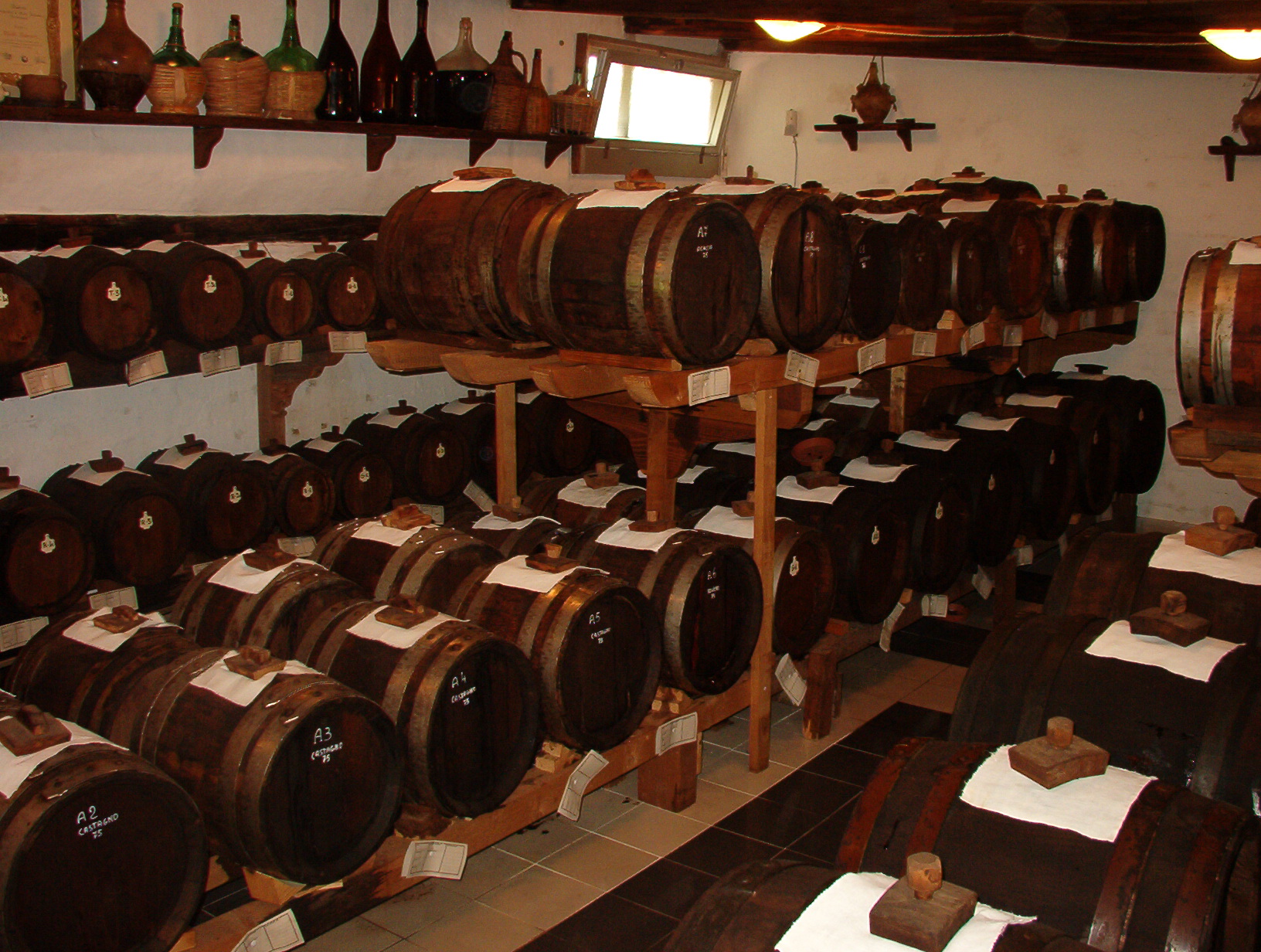
Making process of the TBV starts from freshly squeezed grape juice and finishes with sensory evaluation of the aged vinegar. From a technological perspective, several basic steps are required, including cooking of the grape must, alcoholic fermentation by yeasts, acetic oxidation by acetic acid bacteria, and slow aging within a barrel set.
Cooking of the grape juice is carried out in open vessels directly heated by fire for 12–24 hours reducing the grape juice by about 50%. The production regulations require starting from a grape must with 15 °Bx at least to reach at the end of cooking 30 °Bx for TBVRE; for TBVM, the lower limit is not specified. It is possible to find cooked musts with sugar concentration beyond 50 °Bx. The operation allows profound chemical and physical modifications affecting the end quality of TBV. Cooking stops all enzymatic browning reactions that rapidly occur inside fresh grape musts by polyphenol oxidase and progressively promotes grape must discoloration due to the heat-induced deactivation of proteins including browning enzymes. In addition, cooking promotes nonenzymatic browning chemical reactions involving sugar conversion, formation of high molecular weight melanoidins and furanic compounds such as 5-(hydroxymethyl)furfural (HMF). Water vaporization induces the concentration of sugars, organic acids, and polyphenols, resulting in the increase of density, viscosity, and refractive index (Brix degree), and, conversely, the lowering of water activity and pH value.
The fermentation of sugar into alcohol (specifically, ethanol) and the later oxidation of ethanol into acetic acid occur as a two-step biological transformation of the cooked must. Both biological transformations occur inside a dedicated vessel, called the badessa. The fermentation of sugar into alcohol is carried out by yeasts belonging to a plethora of species and genera, and occurs in anaerobic conditions. In the past, the idea of a commensalistic interaction between yeasts and acetic acid bacteria existed, but recently the scalar fermentation has been suggested. The fermentation process is widely accepted to affect the end quality of TBV due to the several yeasts' metabolisms involved.
In TBV, the oxidation of ethanol to acetic acid in fermented cooked must is carried out by indigenous acetic acid bacteria naturally occurring in the environment. These bacteria produce a wide range of compounds other than acetic acid, such as sugars, acids, and volatile compounds. The chemical composition of TBV is highly variable, depending on the alcohol, sugar, and acid content of the fermented grape must, the cooking modality, and the oxidation temperature.
Hub AI
Traditional balsamic vinegar AI simulator
(@Traditional balsamic vinegar_simulator)
Traditional balsamic vinegar
Traditional balsamic vinegar (Italian: aceto balsamico tradizionale) is a type of balsamic vinegar produced exclusively in the Italian comuni of Reggio Emilia and Modena, in Emilia-Romagna. Unlike inexpensive Balsamic Vinegar of Modena (BVM), Traditional Balsamic Vinegar (TBV) is produced from cooked grape must, aged at least 12 years, and protected under the European protected designation of origin (PDO) system, fetching higher prices (BVM has lesser protection under the European protected geographical indication (PGI) system). Although the names are similar, TBV and the inexpensive imitation BVM are very different.
A comprehensive study of the original production procedures, the ageing conditions, and the sensory profile is not available. This and the few and often-confusing documents make the reconstruction of the true history of TBV a challenge. The art of cooking the must of grapes dates back to the ancient Romans: it was used both as a medicine and in the kitchen as a sweetener and condiment. The first generally accepted document referring to a precious vinegar produced in the area of Modena and Reggio Emilia is the poem written in the 12th century by the monk Donizo of Canossa, although the word balsamic is never mentioned. The first testimonies clearly speaking about "balsamic vinegar", as well as of recipes and making procedure, appear from the 19th century even if little is known about the original recipes and related production practices. The adjective balsamic has been used to designate any type of generically aromatic vinegar and products not just obtained from the fermentation of grape must alone. As far as the aging method is concerned, it is very similar to the Solera system used in Spain after the Napoleonic Wars which spread abroad after the second half of the 19th century.
The oldest and most detailed description of the method and techniques for the production of balsamic vinegar is reported in a letter written in 1862 by Francesco Aggazzotti to his friend Pio Fabriani, in which he describes the secrets of his family's acetaia (the vinegar-cellar where balsamic vinegar is made).
TBV is produced in two different geographical areas of the Emilia Romagna Region so that two different designations were granted by the European Council, i.e. Traditional Balsamic Vinegar of Modena (TBVM) and Traditional Balsamic Vinegar of Reggio Emilia (TBVRE). The two special vinegars are very similar products as the overall making procedure is the same; but, from a legal point of view, they are obtained according to specific and official production regulations defining (1) the basis of the vineyards ampelographic; (2) geographical area of production; (3) characteristics of starting materials; (4) making procedure; (5) the chemical, physical and sensorial requirements for sale; (6) bottling, labelling and presentation. The sensory profile of TBV is evaluated by hedonic judgment expressed through a numeric score. The sensory score achieved is used to rank TBV in different commercial classes. The specific regulations allow adding "Extra Vecchio" to the official designation when the product is aged for 25 years at least. However, under existing regulations, neither the definition of "aging" nor the methods for its objective evaluation are specified; it is evaluated only through panel-tasting tests, whose effectiveness for this purpose is clearly inadequate. TBV results as a blend of vinegars of different composition and age due to the traditional making procedure. Actually, an easy-to-use mathematical method for evaluating the actual residence time of TBV within each cask of the barrel set has been recently published. This method is an adequate tool helping aging certification. An easy-to-use spreadsheet of the theoretical model is available for download. At present, however, independent agencies that officially state TBV authenticity of both the TBVM and TBVRE have not adopted it or any analogous procedure as an evaluation system.
Making process of the TBV starts from freshly squeezed grape juice and finishes with sensory evaluation of the aged vinegar. From a technological perspective, several basic steps are required, including cooking of the grape must, alcoholic fermentation by yeasts, acetic oxidation by acetic acid bacteria, and slow aging within a barrel set.
Cooking of the grape juice is carried out in open vessels directly heated by fire for 12–24 hours reducing the grape juice by about 50%. The production regulations require starting from a grape must with 15 °Bx at least to reach at the end of cooking 30 °Bx for TBVRE; for TBVM, the lower limit is not specified. It is possible to find cooked musts with sugar concentration beyond 50 °Bx. The operation allows profound chemical and physical modifications affecting the end quality of TBV. Cooking stops all enzymatic browning reactions that rapidly occur inside fresh grape musts by polyphenol oxidase and progressively promotes grape must discoloration due to the heat-induced deactivation of proteins including browning enzymes. In addition, cooking promotes nonenzymatic browning chemical reactions involving sugar conversion, formation of high molecular weight melanoidins and furanic compounds such as 5-(hydroxymethyl)furfural (HMF). Water vaporization induces the concentration of sugars, organic acids, and polyphenols, resulting in the increase of density, viscosity, and refractive index (Brix degree), and, conversely, the lowering of water activity and pH value.
The fermentation of sugar into alcohol (specifically, ethanol) and the later oxidation of ethanol into acetic acid occur as a two-step biological transformation of the cooked must. Both biological transformations occur inside a dedicated vessel, called the badessa. The fermentation of sugar into alcohol is carried out by yeasts belonging to a plethora of species and genera, and occurs in anaerobic conditions. In the past, the idea of a commensalistic interaction between yeasts and acetic acid bacteria existed, but recently the scalar fermentation has been suggested. The fermentation process is widely accepted to affect the end quality of TBV due to the several yeasts' metabolisms involved.
In TBV, the oxidation of ethanol to acetic acid in fermented cooked must is carried out by indigenous acetic acid bacteria naturally occurring in the environment. These bacteria produce a wide range of compounds other than acetic acid, such as sugars, acids, and volatile compounds. The chemical composition of TBV is highly variable, depending on the alcohol, sugar, and acid content of the fermented grape must, the cooking modality, and the oxidation temperature.
Recent media