
Recent from talks
Traffic Sound
Knowledge base stats:
Talk channels stats:
Members stats:
Traffic Sound
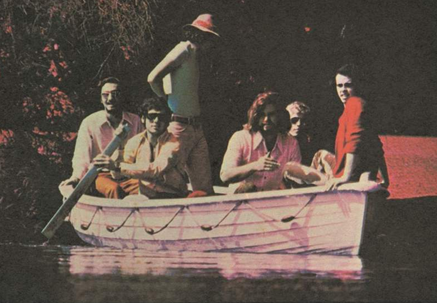
Traffic Sound was a Peruvian rock band founded in 1967 by Manuel Sanguinetti (vocals), Freddy Rizo-Patrón Buckley (rhythm guitar), Jean Pierre Magnet (sax), Willy "Wilito" Barclay Ricketts (lead guitar), Willy Thorne Valega (bass, d.2019) and Luis "Lucho" Nevares (drums). Manuel and Freddy had met in school and played in Los Hang Ten's, with the latter and his older brother Jose originally coming up with the idea of founding "Traffic Sound". Simultaneously, Magnet joined "Los Drags" as Barclay and Thorne played in "Los Mad's" with Nevares and, a while later, Thorne again playing in the short-lived (1965-66) Peruvian band "Ides of March" (not to be confused with the US band founded in 1966 The Ides of March). As noted earlier, they all met in the summer of 1967 and created Traffic Sound
The name was chosen because of their penchant for a traffic light, placed as a souvenir in the attic of the Rizo-Patróns house where they held their practices after a wild night in Lima.
After a year of continued rehearsals and private shows and with the guidance of their manager, Jorge Manuel Vegas (b. Iquitos, Peru, December 20, 1944, d. Oslo, Norway April 17, 1987 ), the band tried their luck at Peruvian psychedelic emporium The Tiffany with great success and recorded his first album "A Bailar Go Go" in 1968 with label MAG. It contained versions of songs by The Doors, Cream, Jimi Hendrix, Iron Butterfly and The Animals. In later albums they included their own music with a fusion of Andean and Afro-Latin sounds. They held gigs in Peru, Chile, Argentina and Brazil.
Their second album "Virgin" (1969), all original material contains Peruvian Psychedelia hit, "Meshkalina". The lyrics referenced to the Inca civilization of Peru:
In 1970, Traffic Sound recorded another LP named "Traffic Sound" (a.k.a. III, or Tibet's Suzette), in which they blended psychedelia spirit with an Andean folk sound, and more closely approached progressive rock.
In 1971 Braniff International Airways organized the first South American tour of a Peruvian band, and Traffic Sound was well received in demanding markets such as Argentina and Brazil.
After the tour they switched to bigger label Sono Radio and released four singles. At this point Willy Thorne left the band and was replaced by Zulu (Miguel Angel Ruiz Orbegoso) on bass and keyboards, with whom they recorded their last LP, "Lux". During a strike at Sono Radio the master tapes disappeared and were only found in 1996. This album is different to the previous, the Andean influence is more evident and some political concerns were expressed.
The band held a memorable concert at the Teatro Segura in Lima together with the Contemporary Orchestra of Peruvian jazz pianist Jaime Delgado Aparicio in 1971 and disbanded in 1972.
Hub AI
Traffic Sound AI simulator
(@Traffic Sound_simulator)
Traffic Sound
Traffic Sound was a Peruvian rock band founded in 1967 by Manuel Sanguinetti (vocals), Freddy Rizo-Patrón Buckley (rhythm guitar), Jean Pierre Magnet (sax), Willy "Wilito" Barclay Ricketts (lead guitar), Willy Thorne Valega (bass, d.2019) and Luis "Lucho" Nevares (drums). Manuel and Freddy had met in school and played in Los Hang Ten's, with the latter and his older brother Jose originally coming up with the idea of founding "Traffic Sound". Simultaneously, Magnet joined "Los Drags" as Barclay and Thorne played in "Los Mad's" with Nevares and, a while later, Thorne again playing in the short-lived (1965-66) Peruvian band "Ides of March" (not to be confused with the US band founded in 1966 The Ides of March). As noted earlier, they all met in the summer of 1967 and created Traffic Sound
The name was chosen because of their penchant for a traffic light, placed as a souvenir in the attic of the Rizo-Patróns house where they held their practices after a wild night in Lima.
After a year of continued rehearsals and private shows and with the guidance of their manager, Jorge Manuel Vegas (b. Iquitos, Peru, December 20, 1944, d. Oslo, Norway April 17, 1987 ), the band tried their luck at Peruvian psychedelic emporium The Tiffany with great success and recorded his first album "A Bailar Go Go" in 1968 with label MAG. It contained versions of songs by The Doors, Cream, Jimi Hendrix, Iron Butterfly and The Animals. In later albums they included their own music with a fusion of Andean and Afro-Latin sounds. They held gigs in Peru, Chile, Argentina and Brazil.
Their second album "Virgin" (1969), all original material contains Peruvian Psychedelia hit, "Meshkalina". The lyrics referenced to the Inca civilization of Peru:
In 1970, Traffic Sound recorded another LP named "Traffic Sound" (a.k.a. III, or Tibet's Suzette), in which they blended psychedelia spirit with an Andean folk sound, and more closely approached progressive rock.
In 1971 Braniff International Airways organized the first South American tour of a Peruvian band, and Traffic Sound was well received in demanding markets such as Argentina and Brazil.
After the tour they switched to bigger label Sono Radio and released four singles. At this point Willy Thorne left the band and was replaced by Zulu (Miguel Angel Ruiz Orbegoso) on bass and keyboards, with whom they recorded their last LP, "Lux". During a strike at Sono Radio the master tapes disappeared and were only found in 1996. This album is different to the previous, the Andean influence is more evident and some political concerns were expressed.
The band held a memorable concert at the Teatro Segura in Lima together with the Contemporary Orchestra of Peruvian jazz pianist Jaime Delgado Aparicio in 1971 and disbanded in 1972.
Recent media