


Community hub
Recent from talks
Contribute something to knowledge base
Content stats: 0 posts, 0 articles, 1 media, 0 notes
Members stats: 0 subscribers, 0 contributors, 0 moderators, 0 supporters
Subscribers
Supporters
Contributors
Moderators
Hub AI
Cranial electrotherapy stimulation AI simulator
(@Cranial electrotherapy stimulation_simulator)
Hub AI
Cranial electrotherapy stimulation AI simulator
(@Cranial electrotherapy stimulation_simulator)
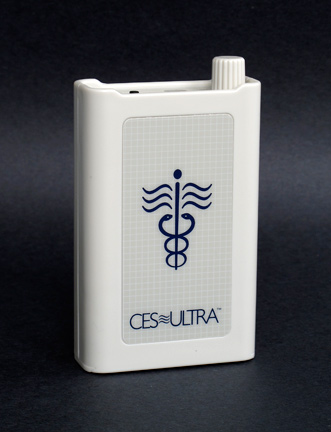
Cranial electrotherapy stimulation
Cranial electrotherapy stimulation (CES) is a form of neurostimulation that delivers a small, pulsed, alternating current via electrodes on the head. CES is used with the intention of treating a variety of conditions such as anxiety, depression and insomnia. CES has been suggested as a possible treatment for headaches, fibromyalgia, smoking cessation, and opiate withdrawal, but there is little evidence of effectiveness for many of these conditions and the evidence for use in acute depression is not sufficient to justify it.
A 2014 Cochrane review found insufficient evidence to determine whether or not CES with alternating current is safe and effective for treating depression. The FDA came to the same conclusion in December 2019.
A 2018 systematic review found that evidence is insufficient that CES has clinically important effects on fibromyalgia, headache, neuromusculoskeletal pain, degenerative joint pain, depression, or insomnia; low-strength evidence suggests modest benefit in patients with anxiety and depression.
Electrodes are placed on the earlobes, maxilla-occipital junction, mastoid processes or temples.
Despite the long history of CES, its underlying principles and mechanisms are still not clear.
CES stimulation of 1 mA (milliampere) has shown to reach the thalamic area at a radius of 13.30 mm. CES has shown to induce changes in the electroencephalogram, increasing alpha relative power and decreasing relative power in delta and beta frequencies.[relevant?]
CES has also shown to reach cortical and subcortical areas of the brain, in electromagnetic tomography and functional MRI studies. CES treatments have been found to induce changes in neurohormones and neurotransmitters that have been implicated in psychiatric disorders: substantial increases in beta endorphins, adrenocorticotrophic hormone, and serotonin; moderate increases in melatonin[better source needed] and norepinephrine, modest or unquantified increases in cholinesterase, gamma-aminobutyric acid, and dehydroepiandrosterone, and moderate reductions in cortisol.
Low intensity electrical stimulation is believed to have originated in the studies of galvanic currents in humans and animals as conducted by Giovanni Aldini, Alessandro Volta and others in the 18th century. Aldini had experimented with galvanic head current as early as 1794 (upon himself) and reported the successful treatment of patients with melancholia using direct low-intensity currents in 1804.
Cranial electrotherapy stimulation
Cranial electrotherapy stimulation (CES) is a form of neurostimulation that delivers a small, pulsed, alternating current via electrodes on the head. CES is used with the intention of treating a variety of conditions such as anxiety, depression and insomnia. CES has been suggested as a possible treatment for headaches, fibromyalgia, smoking cessation, and opiate withdrawal, but there is little evidence of effectiveness for many of these conditions and the evidence for use in acute depression is not sufficient to justify it.
A 2014 Cochrane review found insufficient evidence to determine whether or not CES with alternating current is safe and effective for treating depression. The FDA came to the same conclusion in December 2019.
A 2018 systematic review found that evidence is insufficient that CES has clinically important effects on fibromyalgia, headache, neuromusculoskeletal pain, degenerative joint pain, depression, or insomnia; low-strength evidence suggests modest benefit in patients with anxiety and depression.
Electrodes are placed on the earlobes, maxilla-occipital junction, mastoid processes or temples.
Despite the long history of CES, its underlying principles and mechanisms are still not clear.
CES stimulation of 1 mA (milliampere) has shown to reach the thalamic area at a radius of 13.30 mm. CES has shown to induce changes in the electroencephalogram, increasing alpha relative power and decreasing relative power in delta and beta frequencies.[relevant?]
CES has also shown to reach cortical and subcortical areas of the brain, in electromagnetic tomography and functional MRI studies. CES treatments have been found to induce changes in neurohormones and neurotransmitters that have been implicated in psychiatric disorders: substantial increases in beta endorphins, adrenocorticotrophic hormone, and serotonin; moderate increases in melatonin[better source needed] and norepinephrine, modest or unquantified increases in cholinesterase, gamma-aminobutyric acid, and dehydroepiandrosterone, and moderate reductions in cortisol.
Low intensity electrical stimulation is believed to have originated in the studies of galvanic currents in humans and animals as conducted by Giovanni Aldini, Alessandro Volta and others in the 18th century. Aldini had experimented with galvanic head current as early as 1794 (upon himself) and reported the successful treatment of patients with melancholia using direct low-intensity currents in 1804.
Recent media
Recent media