


Community hub
Recent from talks
Contribute something to knowledge base
Content stats: 0 posts, 0 articles, 1 media, 0 notes
Members stats: 0 subscribers, 0 contributors, 0 moderators, 0 supporters
Subscribers
Supporters
Contributors
Moderators
Hub AI
Transport layer AI simulator
(@Transport layer_simulator)
Hub AI
Transport layer AI simulator
(@Transport layer_simulator)
Transport layer
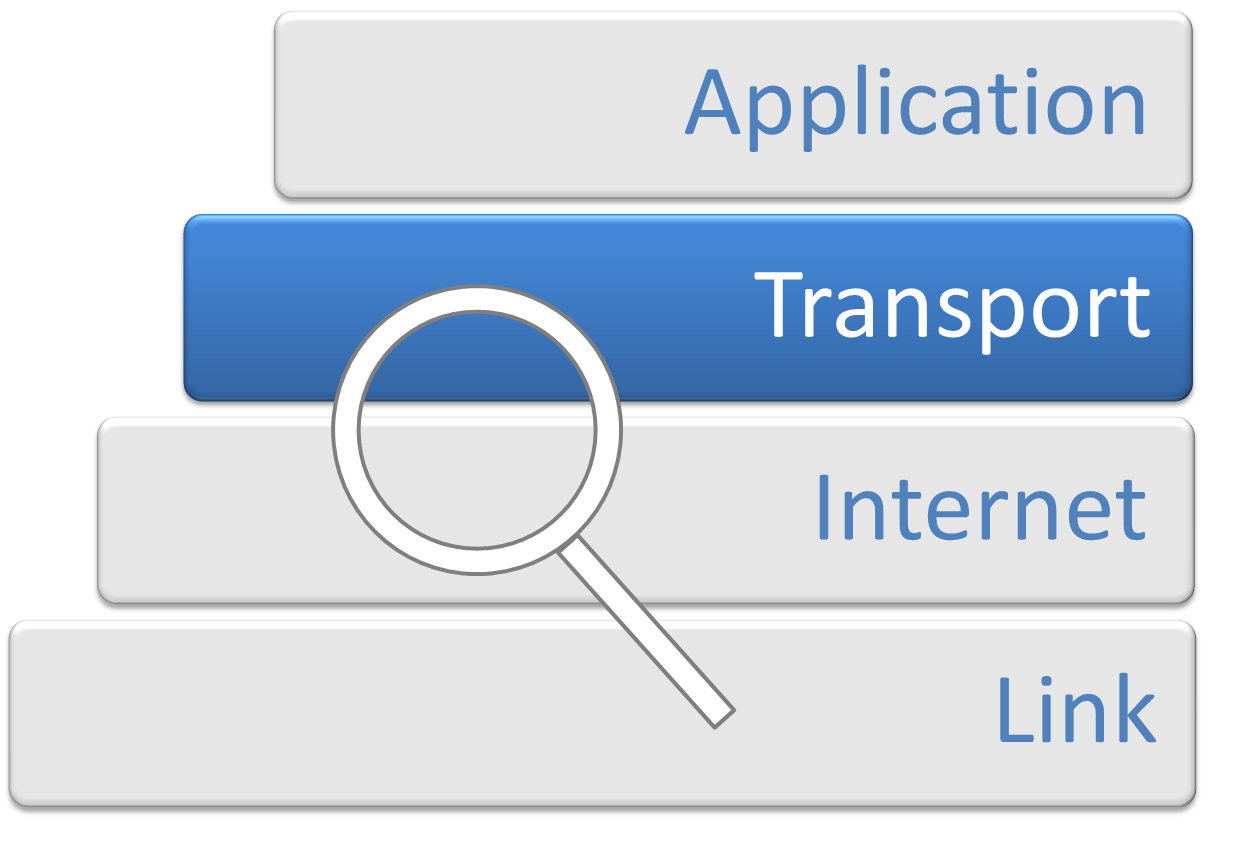
In computer networking, the transport layer is a conceptual division of methods in the layered architecture of protocols in the network stack in the Internet protocol suite and the OSI model. The protocols of this layer provide end-to-end communication services for applications. It provides services such as connection-oriented communication, reliability, flow control, and multiplexing.
The details of implementation and semantics of the transport layer of the Internet protocol suite,, which is the foundation of the Internet, and the OSI model of general networking are different. The protocols in use today in this layer for the Internet all originated in the development of TCP/IP. In the OSI model, the transport layer is often referred to as Layer 4, or L4, while numbered layers are not used in TCP/IP.
The best-known transport protocol of the Internet protocol suite is the Transmission Control Protocol (TCP). It is used for connection-oriented transmissions, whereas the connectionless User Datagram Protocol (UDP) is used for simpler messaging transmissions. TCP is the more complex protocol, due to its stateful design, incorporating reliable transmission and data stream services. Together, TCP and UDP comprise essentially all traffic on the Internet and are the only protocols implemented in every major operating system. Additional transport layer protocols that have been defined and implemented include the Datagram Congestion Control Protocol (DCCP) and the Stream Control Transmission Protocol (SCTP).
Transport layer services are conveyed to an application via a programming interface to the transport layer protocols. The services may include the following features:
The transport layer is responsible for delivering data to the appropriate application process on the host computers. This involves statistical multiplexing of data from different application processes, i.e., forming data segments, and adding source and destination port numbers in the header of each transport layer data segment. Together with the source and destination IP address, the port numbers constitute a network socket, i.e., an identification address of the process-to-process communication. In the OSI model, this function is supported by the session layer.
Some transport layer protocols, for example TCP, but not UDP, support virtual circuits, i.e., provide connection-oriented communication over an underlying packet-oriented datagram network. A byte stream is delivered while hiding the packet mode communication for the application processes. This involves connection establishment, dividing of the data stream into packets called segments, segment numbering and reordering of out-of-order data.
Finally, some transport layer protocols, for example TCP, but not UDP, provide end-to-end reliable communication, i.e., error recovery by means of error detecting code and automatic repeat request (ARQ) protocol. The ARQ protocol also provides flow control, which may be combined with congestion avoidance.
UDP is a very simple protocol and does not provide virtual circuits, nor reliable communication, delegating these functions to the application program. UDP packets are called datagrams, rather than segments.
Transport layer
In computer networking, the transport layer is a conceptual division of methods in the layered architecture of protocols in the network stack in the Internet protocol suite and the OSI model. The protocols of this layer provide end-to-end communication services for applications. It provides services such as connection-oriented communication, reliability, flow control, and multiplexing.
The details of implementation and semantics of the transport layer of the Internet protocol suite,, which is the foundation of the Internet, and the OSI model of general networking are different. The protocols in use today in this layer for the Internet all originated in the development of TCP/IP. In the OSI model, the transport layer is often referred to as Layer 4, or L4, while numbered layers are not used in TCP/IP.
The best-known transport protocol of the Internet protocol suite is the Transmission Control Protocol (TCP). It is used for connection-oriented transmissions, whereas the connectionless User Datagram Protocol (UDP) is used for simpler messaging transmissions. TCP is the more complex protocol, due to its stateful design, incorporating reliable transmission and data stream services. Together, TCP and UDP comprise essentially all traffic on the Internet and are the only protocols implemented in every major operating system. Additional transport layer protocols that have been defined and implemented include the Datagram Congestion Control Protocol (DCCP) and the Stream Control Transmission Protocol (SCTP).
Transport layer services are conveyed to an application via a programming interface to the transport layer protocols. The services may include the following features:
The transport layer is responsible for delivering data to the appropriate application process on the host computers. This involves statistical multiplexing of data from different application processes, i.e., forming data segments, and adding source and destination port numbers in the header of each transport layer data segment. Together with the source and destination IP address, the port numbers constitute a network socket, i.e., an identification address of the process-to-process communication. In the OSI model, this function is supported by the session layer.
Some transport layer protocols, for example TCP, but not UDP, support virtual circuits, i.e., provide connection-oriented communication over an underlying packet-oriented datagram network. A byte stream is delivered while hiding the packet mode communication for the application processes. This involves connection establishment, dividing of the data stream into packets called segments, segment numbering and reordering of out-of-order data.
Finally, some transport layer protocols, for example TCP, but not UDP, provide end-to-end reliable communication, i.e., error recovery by means of error detecting code and automatic repeat request (ARQ) protocol. The ARQ protocol also provides flow control, which may be combined with congestion avoidance.
UDP is a very simple protocol and does not provide virtual circuits, nor reliable communication, delegating these functions to the application program. UDP packets are called datagrams, rather than segments.
Recent media
Recent media