
Recent from talks
Triosephosphate isomerase
Knowledge base stats:
Talk channels stats:
Members stats:
Triosephosphate isomerase
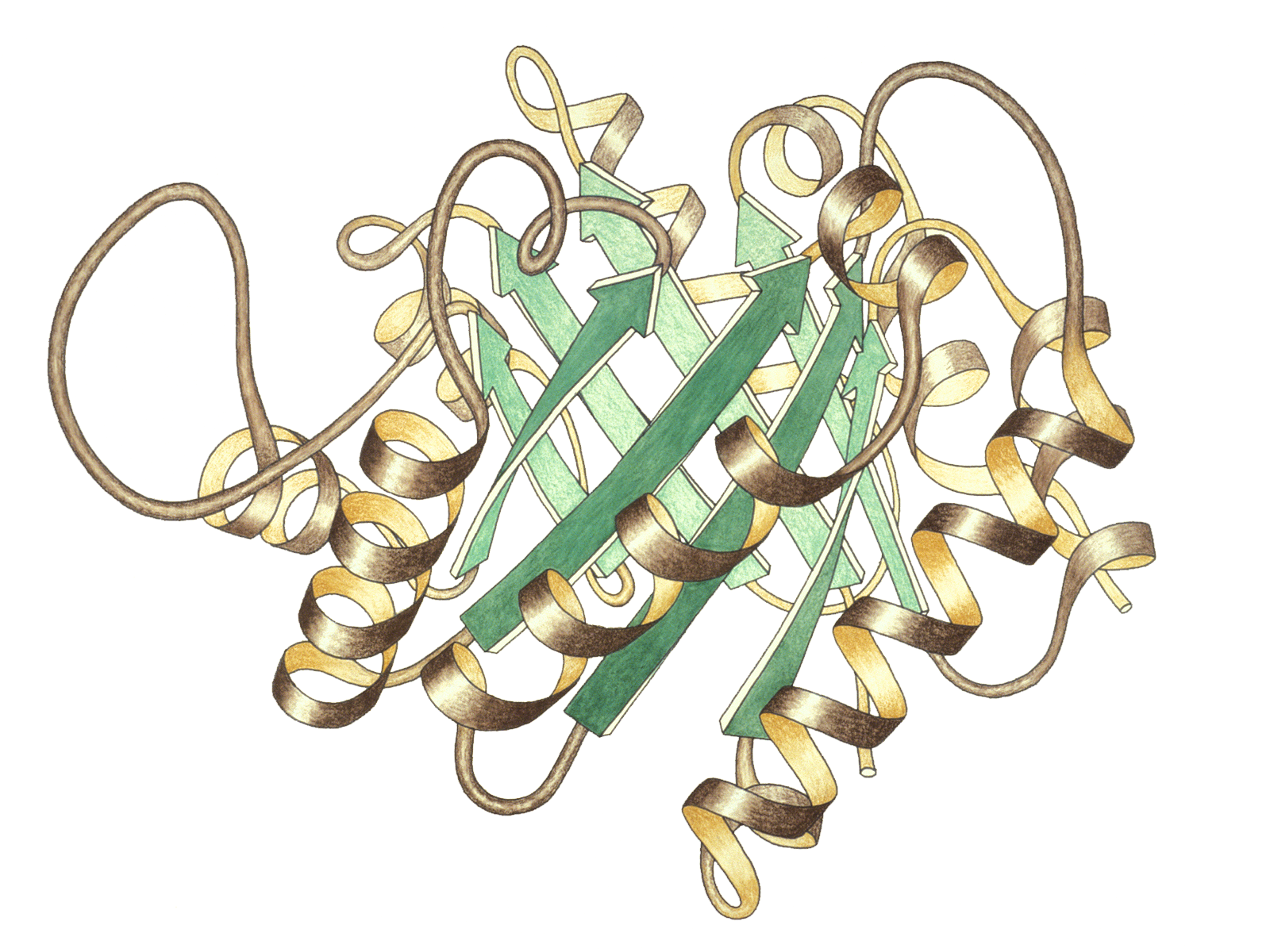
Triose-phosphate isomerase (TPI or TIM) is an enzyme (EC 5.3.1.1) that catalyzes the reversible interconversion of the triose phosphate isomers dihydroxyacetone phosphate and D-glyceraldehyde 3-phosphate.
Compound C00111 at KEGG Pathway Database.Enzyme 5.3.1.1 at KEGG Pathway Database.Compound C00118 at KEGG Pathway Database.
TPI plays an important role in glycolysis and is essential for efficient energy production. TPI has been found in nearly every organism searched for the enzyme, including animals such as mammals and insects as well as in fungi, plants, and bacteria. However, some bacteria that do not perform glycolysis, like ureaplasmas, lack TPI.
In humans, deficiencies in TPI are associated with a progressive, severe neurological disorder called triose phosphate isomerase deficiency. Triose phosphate isomerase deficiency is characterized by chronic hemolytic anemia. While there are various mutations that cause this disease, most include the replacement of glutamic acid at position 104 with an aspartic acid.
Triose phosphate isomerase is a highly efficient enzyme, performing the reaction billions of times faster than it would occur naturally in solution. The reaction is so efficient that it is said to be catalytically perfect: It is limited only by the rate the substrate can diffuse into and out of the enzyme's active site.
The mechanism involves the intermediate formation of an enediol. The relative free energy of each ground state and transition state has been determined experimentally, and is displayed in the figure.
The structure of TPI facilitates the conversion between dihydroxyacetone phosphate (DHAP) and glyceraldehyde 3-phosphate (GAP). The nucleophilic glutamate 165 residue of TPI deprotonates the substrate, and the electrophilic histidine 95 residue donates a proton to form the enediol intermediate. When deprotonated, the enediolate then collapses and, abstracting a proton from protonated glutamate 165, forms the GAP product. Catalysis of the reverse reaction proceeds analogously, forming the same enediol but with enediolate collapse from the oxygen at C2.
TPI is diffusion-limited. In terms of thermodynamics, DHAP formation is favored 20:1 over GAP production. However, in glycolysis, the use of GAP in the subsequent steps of metabolism drives the reaction toward its production. TPI is inhibited by sulfate, phosphate, and arsenate ions, which bind to the active site. Other inhibitors include 2-phosphoglycolate, a transition state analog, and D-glycerol-1-phosphate, a substrate analog.
Hub AI
Triosephosphate isomerase AI simulator
(@Triosephosphate isomerase_simulator)
Triosephosphate isomerase
Triose-phosphate isomerase (TPI or TIM) is an enzyme (EC 5.3.1.1) that catalyzes the reversible interconversion of the triose phosphate isomers dihydroxyacetone phosphate and D-glyceraldehyde 3-phosphate.
Compound C00111 at KEGG Pathway Database.Enzyme 5.3.1.1 at KEGG Pathway Database.Compound C00118 at KEGG Pathway Database.
TPI plays an important role in glycolysis and is essential for efficient energy production. TPI has been found in nearly every organism searched for the enzyme, including animals such as mammals and insects as well as in fungi, plants, and bacteria. However, some bacteria that do not perform glycolysis, like ureaplasmas, lack TPI.
In humans, deficiencies in TPI are associated with a progressive, severe neurological disorder called triose phosphate isomerase deficiency. Triose phosphate isomerase deficiency is characterized by chronic hemolytic anemia. While there are various mutations that cause this disease, most include the replacement of glutamic acid at position 104 with an aspartic acid.
Triose phosphate isomerase is a highly efficient enzyme, performing the reaction billions of times faster than it would occur naturally in solution. The reaction is so efficient that it is said to be catalytically perfect: It is limited only by the rate the substrate can diffuse into and out of the enzyme's active site.
The mechanism involves the intermediate formation of an enediol. The relative free energy of each ground state and transition state has been determined experimentally, and is displayed in the figure.
The structure of TPI facilitates the conversion between dihydroxyacetone phosphate (DHAP) and glyceraldehyde 3-phosphate (GAP). The nucleophilic glutamate 165 residue of TPI deprotonates the substrate, and the electrophilic histidine 95 residue donates a proton to form the enediol intermediate. When deprotonated, the enediolate then collapses and, abstracting a proton from protonated glutamate 165, forms the GAP product. Catalysis of the reverse reaction proceeds analogously, forming the same enediol but with enediolate collapse from the oxygen at C2.
TPI is diffusion-limited. In terms of thermodynamics, DHAP formation is favored 20:1 over GAP production. However, in glycolysis, the use of GAP in the subsequent steps of metabolism drives the reaction toward its production. TPI is inhibited by sulfate, phosphate, and arsenate ions, which bind to the active site. Other inhibitors include 2-phosphoglycolate, a transition state analog, and D-glycerol-1-phosphate, a substrate analog.
Recent media