


Community hub
Recent from talks
Contribute something to knowledge base
Content stats: 0 posts, 0 articles, 1 media, 0 notes
Members stats: 0 subscribers, 0 contributors, 0 moderators, 0 supporters
Subscribers
Supporters
Contributors
Moderators
Hub AI
Triumph slant-four engine AI simulator
(@Triumph slant-four engine_simulator)
Hub AI
Triumph slant-four engine AI simulator
(@Triumph slant-four engine_simulator)
Triumph slant-four engine
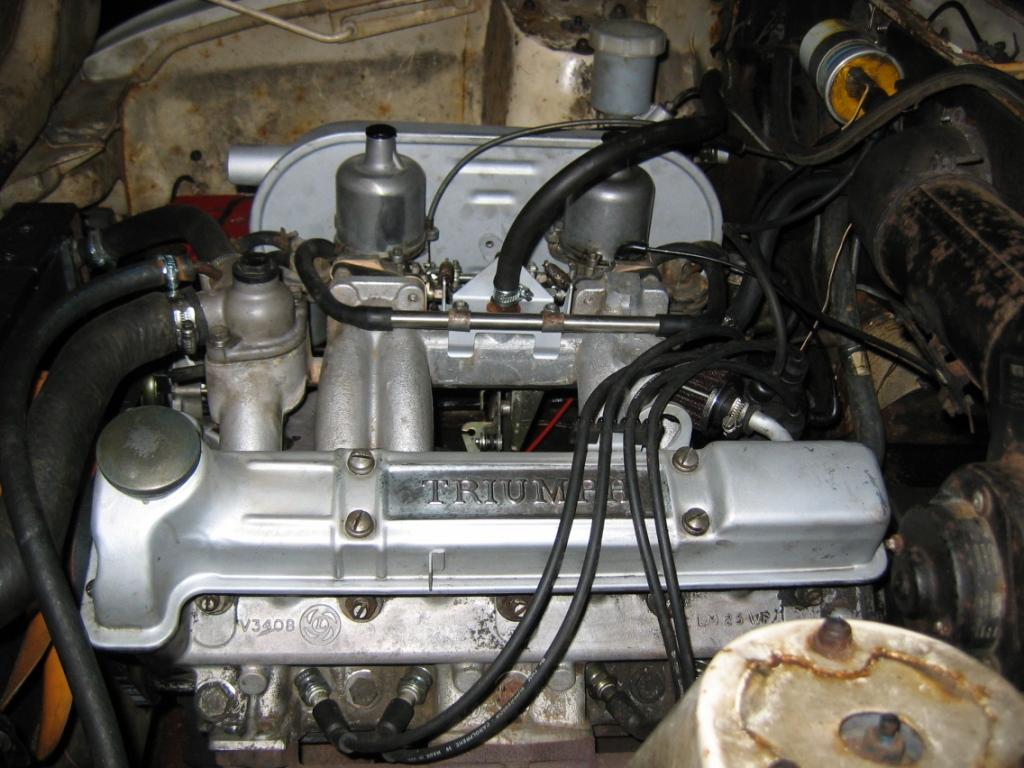
The Triumph slant-four is an inline four-cylinder petrol car engine developed by the Triumph Motor Company. It first appeared in 1968 in the Saab 99. The first Triumph model to use the engine did not appear until 1972. With an original capacity of 1.7 L, displacement grew over time to 2.0 L. Triumph production ended in 1981.
In 1963 Triumph's Chief Engine Designer Lewis Dawtrey presented the results of his analysis of future engine technology trends and Triumph's anticipated needs. After evaluating rotary, horizontally opposed, V4 and V6 configurations Dawtrey recommended an OHC engine family composed of both Inline-4 and V8 engines that could be built with the same tooling. The new range would be built in capacities of 1.5 L to 3.0 L, allowing it to replace both the four-cylinder Standard SC and derivative Triumph I6 engines whose roots reached back to the Standard Eight of 1953. The recommendation was accepted and development began in-house at Triumph by a design team led by Dawtrey and Harry Webster. The initial model was to be a 1.5 L inline four.
At about the same time Saab was working on designing and building 55 hp 1.2-litre and 68 hp 1.5-litre prototype inline four engines for their upcoming 99 model. UK engineering and consultancy company Ricardo was involved in the Saab project and, while not directly involved in development of the slant-four, did have a general engine-development contract with Triumph and was aware of their progress. When Saab determined that developing their own engine would be too expensive and too risky, Ricardo put Saab into contact with Triumph.
Triumph agreed to supply Saab with 50,000 slant-four engines per year for the new 99. Displacement had risen from 1.5 L to 1.7 L. Saab had exclusive use of the slant-four for the first several years of production. Saab retained its existing transaxle, which was configured to be driven from the front of the engine. This required that the slant-four be turned 180° so that the clutch and flywheel were in the front. A consequence of this is that the "front"-mounted water pump would be facing the firewall/bulkhead and be inaccessible, prompting it to be relocated to the top of the cylinder block.
The engine was used first by Triumph in the Dolomite 1850, which appeared in 1972. The regular Dolomite used the 1.85 L engine, while the sportier Dolomite Sprint, unveiled in June 1973, got both a new cylinder head and an increase in displacement to 2.0 L. The slant-four was also used by Panther in the Dolomite-based Rio (1975–1977). The TR7 debuted in 1975 with the 2.0 L engine and 8-valve cylinder head. A few pre-production TR7 Sprint models received the sportier Sprint engine in 1977. Triumph stopped producing the slant-four when the TR7 was discontinued in 1981.
The V8 member of the engine family first appeared in a Triumph vehicle in 1970, fully two years before the slant-four. Development of the V8 had continued throughout the mid- to late-1960s, with early engines displacing 2.5 L. When Charles Spencer (Spen) King took over as Head of Engineering from Webster, he authorized continued development of the Triumph V8, and was also instrumental in getting the car it powered, the Triumph Stag, into production. The production V8 displaced 3.0 L.
The slant-four's engine block is of cast iron (called chrome iron in some references). The cylinders are inclined at an angle of 45° from vertical. This allowed the engine to be built with the same tooling needed for a V8, and reduced the overall engine height, permitting lower bonnets. The crankshaft ran in five main bearings. The pistons are aluminium with three rings. All slant-fours are oversquare, with the larger capacity versions being even more so, as the increase in displacement came from increasing the bore diameter while holding the stroke length constant.
The cylinder head was cast from aluminium alloy. Combustion chambers were wedge-shaped. The single overhead camshaft was driven by a single-row 3⁄8 in (9.5 mm) chain. The eight valves, two per cylinder, were inline and were operated on by the camshaft through bucket tappets with shims for adjustment.
Triumph slant-four engine
The Triumph slant-four is an inline four-cylinder petrol car engine developed by the Triumph Motor Company. It first appeared in 1968 in the Saab 99. The first Triumph model to use the engine did not appear until 1972. With an original capacity of 1.7 L, displacement grew over time to 2.0 L. Triumph production ended in 1981.
In 1963 Triumph's Chief Engine Designer Lewis Dawtrey presented the results of his analysis of future engine technology trends and Triumph's anticipated needs. After evaluating rotary, horizontally opposed, V4 and V6 configurations Dawtrey recommended an OHC engine family composed of both Inline-4 and V8 engines that could be built with the same tooling. The new range would be built in capacities of 1.5 L to 3.0 L, allowing it to replace both the four-cylinder Standard SC and derivative Triumph I6 engines whose roots reached back to the Standard Eight of 1953. The recommendation was accepted and development began in-house at Triumph by a design team led by Dawtrey and Harry Webster. The initial model was to be a 1.5 L inline four.
At about the same time Saab was working on designing and building 55 hp 1.2-litre and 68 hp 1.5-litre prototype inline four engines for their upcoming 99 model. UK engineering and consultancy company Ricardo was involved in the Saab project and, while not directly involved in development of the slant-four, did have a general engine-development contract with Triumph and was aware of their progress. When Saab determined that developing their own engine would be too expensive and too risky, Ricardo put Saab into contact with Triumph.
Triumph agreed to supply Saab with 50,000 slant-four engines per year for the new 99. Displacement had risen from 1.5 L to 1.7 L. Saab had exclusive use of the slant-four for the first several years of production. Saab retained its existing transaxle, which was configured to be driven from the front of the engine. This required that the slant-four be turned 180° so that the clutch and flywheel were in the front. A consequence of this is that the "front"-mounted water pump would be facing the firewall/bulkhead and be inaccessible, prompting it to be relocated to the top of the cylinder block.
The engine was used first by Triumph in the Dolomite 1850, which appeared in 1972. The regular Dolomite used the 1.85 L engine, while the sportier Dolomite Sprint, unveiled in June 1973, got both a new cylinder head and an increase in displacement to 2.0 L. The slant-four was also used by Panther in the Dolomite-based Rio (1975–1977). The TR7 debuted in 1975 with the 2.0 L engine and 8-valve cylinder head. A few pre-production TR7 Sprint models received the sportier Sprint engine in 1977. Triumph stopped producing the slant-four when the TR7 was discontinued in 1981.
The V8 member of the engine family first appeared in a Triumph vehicle in 1970, fully two years before the slant-four. Development of the V8 had continued throughout the mid- to late-1960s, with early engines displacing 2.5 L. When Charles Spencer (Spen) King took over as Head of Engineering from Webster, he authorized continued development of the Triumph V8, and was also instrumental in getting the car it powered, the Triumph Stag, into production. The production V8 displaced 3.0 L.
The slant-four's engine block is of cast iron (called chrome iron in some references). The cylinders are inclined at an angle of 45° from vertical. This allowed the engine to be built with the same tooling needed for a V8, and reduced the overall engine height, permitting lower bonnets. The crankshaft ran in five main bearings. The pistons are aluminium with three rings. All slant-fours are oversquare, with the larger capacity versions being even more so, as the increase in displacement came from increasing the bore diameter while holding the stroke length constant.
The cylinder head was cast from aluminium alloy. Combustion chambers were wedge-shaped. The single overhead camshaft was driven by a single-row 3⁄8 in (9.5 mm) chain. The eight valves, two per cylinder, were inline and were operated on by the camshaft through bucket tappets with shims for adjustment.
Recent media
Recent media