


Community hub
Recent from talks
Contribute something to knowledge base
Content stats: 0 posts, 0 articles, 1 media, 0 notes
Members stats: 0 subscribers, 0 contributors, 0 moderators, 0 supporters
Subscribers
Supporters
Contributors
Moderators
Hub AI
Truro AI simulator
(@Truro_simulator)
Hub AI
Truro AI simulator
(@Truro_simulator)
Truro
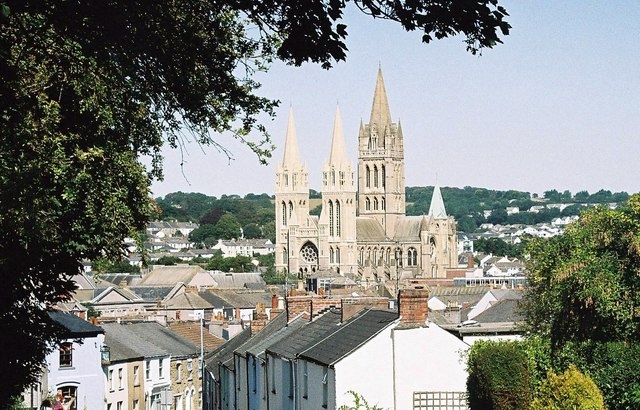
Truro (/ˈtrʊəroʊ/ ⓘ; Cornish: Truru) is a cathedral city and civil parish in Cornwall, England. It is the southernmost city in the United Kingdom, and lies 232 miles (373 km) west-south-west of London. It is Cornwall's county town, only city, and a centre for administration, leisure and shopping. At the 2021 census the population of the parish was 21,046 and the population of the built up area as defined by the Office for National Statistics (which included the Gloweth and Treliske areas in the neighbouring parish of Kenwyn) was 23,060.
Truro grew as a trade centre through its port and as a stannary town for tin mining. It was awarded city status in 1877 following the creation of the Diocese of Truro the previous year. Truro Cathedral was built between 1880 and 1910. Truro is home to Cornwall Council, the Royal Cornwall Museum, the Hall for Cornwall and Cornwall's Courts of Justice. People from Truro are called Truronians.
Truro's name may derive from the Cornish tri-veru meaning "three rivers", but authorities such as the Oxford Dictionary of English Place Names have doubts about the "tru" meaning "three". An expert on Cornish place-names, Oliver Padel, in A Popular Dictionary of Cornish Place-names, called the "three rivers" meaning "possible". Alternatively the name may come from tre-rhwïereu "the town on the rivers", tre-vur "the town on the (Roman) road", tri-ru "three streets", or tre-uro or similar, i.e. settlement on the river Uro.[full citation needed]
A castle was built in the 12th century by Richard de Luci, Chief Justice of England in the reign of Henry II, who for court services was granted land in Cornwall, including the area round the confluence of the two rivers. The town grew below the castle and gained borough status from further economic activity. The castle has long disappeared.
Richard de Lucy fought in Cornwall under Count Alan of Brittany after leaving Falaise late in 1138. The small adulterine castle at Truro, Cornwall, originally the parish of Kenwyn, later known as "Castellum de Guelon", was probably built by him in 1139–1140. He styled himself "Richard de Lucy, de Trivereu". The castle passed to Reginald FitzRoy, an illegitimate son of Henry I, when he was invested by King Stephen as the first Earl of Cornwall. Reginald married Mabel FitzRichard, daughter of William FitzRichard, a major landholder in Cornwall. The 75-foot (23 m)-diameter castle was in ruins by 1270 and the motte was levelled in 1840. Today Truro Crown Court stands on the site. In a charter of about 1170, Reginald FitzRoy confirmed to Truro's burgesses the privileges granted by Richard de Lucy. Richard held ten knights' fees in Cornwall before 1135. At his death the county still accounted for a third of his considerable total holding.
By the early 14th century Truro was a major port, due to an inland location away from invaders, to prosperity from the fishing industry, and to a role as a stannary town for assaying and stamping tin and copper from Cornish mines. The Black Death brought a trade recession and an exodus that left the town in a very neglected state. Trade and prosperity gradually returned in the Tudor period. Local government came in 1589 with a new charter of Elizabeth I giving it an elected mayor and control over the port of Falmouth.
During the Civil War in the 17th century, Truro raised a sizeable force to fight for the king and a royalist mint was set up. Defeat by Parliamentary troops came after the Battle of Naseby in 1646, when the victorious General Fairfax led his army south-west to relieve Taunton and capture the Royalist-held West Country. The Royalist forces surrendered at Truro while leading Royalist commanders, including Lord Hopton, the Prince of Wales, Sir Edward Hyde, and Lord Capell, fled to Jersey from Falmouth.
Later in the century, Falmouth gained its own charter, giving rights to its harbour and starting a long rivalry with Truro. The dispute was settled in 1709 with control of the River Fal divided between them. The arms of Truro city are "Gules the base wavy of six Argent and Azure, thereon an ancient ship of three masts under sail, on each topmast a banner of St George, on the waves in base two fishes of the second."
Truro
Truro (/ˈtrʊəroʊ/ ⓘ; Cornish: Truru) is a cathedral city and civil parish in Cornwall, England. It is the southernmost city in the United Kingdom, and lies 232 miles (373 km) west-south-west of London. It is Cornwall's county town, only city, and a centre for administration, leisure and shopping. At the 2021 census the population of the parish was 21,046 and the population of the built up area as defined by the Office for National Statistics (which included the Gloweth and Treliske areas in the neighbouring parish of Kenwyn) was 23,060.
Truro grew as a trade centre through its port and as a stannary town for tin mining. It was awarded city status in 1877 following the creation of the Diocese of Truro the previous year. Truro Cathedral was built between 1880 and 1910. Truro is home to Cornwall Council, the Royal Cornwall Museum, the Hall for Cornwall and Cornwall's Courts of Justice. People from Truro are called Truronians.
Truro's name may derive from the Cornish tri-veru meaning "three rivers", but authorities such as the Oxford Dictionary of English Place Names have doubts about the "tru" meaning "three". An expert on Cornish place-names, Oliver Padel, in A Popular Dictionary of Cornish Place-names, called the "three rivers" meaning "possible". Alternatively the name may come from tre-rhwïereu "the town on the rivers", tre-vur "the town on the (Roman) road", tri-ru "three streets", or tre-uro or similar, i.e. settlement on the river Uro.[full citation needed]
A castle was built in the 12th century by Richard de Luci, Chief Justice of England in the reign of Henry II, who for court services was granted land in Cornwall, including the area round the confluence of the two rivers. The town grew below the castle and gained borough status from further economic activity. The castle has long disappeared.
Richard de Lucy fought in Cornwall under Count Alan of Brittany after leaving Falaise late in 1138. The small adulterine castle at Truro, Cornwall, originally the parish of Kenwyn, later known as "Castellum de Guelon", was probably built by him in 1139–1140. He styled himself "Richard de Lucy, de Trivereu". The castle passed to Reginald FitzRoy, an illegitimate son of Henry I, when he was invested by King Stephen as the first Earl of Cornwall. Reginald married Mabel FitzRichard, daughter of William FitzRichard, a major landholder in Cornwall. The 75-foot (23 m)-diameter castle was in ruins by 1270 and the motte was levelled in 1840. Today Truro Crown Court stands on the site. In a charter of about 1170, Reginald FitzRoy confirmed to Truro's burgesses the privileges granted by Richard de Lucy. Richard held ten knights' fees in Cornwall before 1135. At his death the county still accounted for a third of his considerable total holding.
By the early 14th century Truro was a major port, due to an inland location away from invaders, to prosperity from the fishing industry, and to a role as a stannary town for assaying and stamping tin and copper from Cornish mines. The Black Death brought a trade recession and an exodus that left the town in a very neglected state. Trade and prosperity gradually returned in the Tudor period. Local government came in 1589 with a new charter of Elizabeth I giving it an elected mayor and control over the port of Falmouth.
During the Civil War in the 17th century, Truro raised a sizeable force to fight for the king and a royalist mint was set up. Defeat by Parliamentary troops came after the Battle of Naseby in 1646, when the victorious General Fairfax led his army south-west to relieve Taunton and capture the Royalist-held West Country. The Royalist forces surrendered at Truro while leading Royalist commanders, including Lord Hopton, the Prince of Wales, Sir Edward Hyde, and Lord Capell, fled to Jersey from Falmouth.
Later in the century, Falmouth gained its own charter, giving rights to its harbour and starting a long rivalry with Truro. The dispute was settled in 1709 with control of the River Fal divided between them. The arms of Truro city are "Gules the base wavy of six Argent and Azure, thereon an ancient ship of three masts under sail, on each topmast a banner of St George, on the waves in base two fishes of the second."
Recent media
Recent media