



Community hub
Recent from talks
Contribute something to knowledge base
Content stats: 0 posts, 0 articles, 1 media, 0 notes
Members stats: 0 subscribers, 0 contributors, 0 moderators, 0 supporters
Subscribers
Supporters
Contributors
Moderators
Hub AI
Tukudeka AI simulator
(@Tukudeka_simulator)
Hub AI
Tukudeka AI simulator
(@Tukudeka_simulator)
Tukudeka
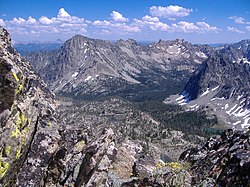
The Tukudeka or Mountain Sheepeaters are a band of Shoshone within the Eastern Shoshone and the Northern Shoshone. Before the reservation era, they traditionally lived in the central Sawtooth Range of Idaho and the mountains of what is now northwest Wyoming. Bands were very fluid and nomadic, and they often interacted with and intermarried other bands of Shoshone. Today the Tukudeka are enrolled in the federally recognized Shoshone-Bannock Tribes of the Fort Hall Reservation of Idaho and the Eastern Shoshone of the Wind River Indian Reservation in Wyoming.
"Tukudeka" is spelled several ways, including Tukadüka, Tukudika, Tukku Tikka'a, Tukkuikka, Tukkutikka, and Tukuarika,[needs IPA] and is translated as "Eaters of White Meat," "Eaters of Mountain Sheep," "Mountain Sheepeaters," or simply, "Sheepeaters." A Shoshone word for bighorn ram is duku, which also translates to "meat" according to anthropologist Demetri Shimkin. So the name may also mean "eaters of meat." They were named for the bighorn mountain sheep (Ovis canadensis), which they commonly hunted. They are also called Mountain Shoshone or Toyahini, [what language is this?] the mountaineers.
The Tukudeka speak the Shoshone language, as well as English. Shoshone is a Central Numic language in the Northern Uto-Aztecan language family.
The Tukudeka's traditional homelands were along the Salmon River in the Sawtooth Mountains, as well as southern Montana, and Yellowstone in Wyoming. Europeans first entered their territory in 1824. American and British trappers hunted beavers in the 1840s. In 1860, gold was discovered, and non-native prospectors flooded the region.
In the 1860s, Indian agents estimated the Tukudeka and Lemhi Shoshone, to be 1,200.
In 1879 five Chinese miners were killed near Loon Creek. Despite a lack of evidence, the Tukudeka were blamed for the murders, and the US Cavalry attacked the tribe in what would be called the Sheepeater War. Fifty-one Tukudeka were captured and relocated to the Fort Hall Reservation.
In 1913, Billings, Montana dentist W.F. "Doc" Allen claimed to have found the last-living Sheepeater living among the Crow Tribe, a 115-year-old woman whom he communicated with in sign language. His book The Sheepeaters was later considered by later anthropologist Ake Hultkrantz to be almost entirely fabricated, and a source of myths and folklore describing the Tukudika as impoverished pygmies without guns or horses. A similarly fraudulent book, Trapper Jim's Fables of Sheepeater Indians in Yellowstone, was the only book about Natives available in Yellowstone Park gift shops in the early 20th century, although its contents were entirely fictional. Early administrators of Yellowstone described the Sheepeaters as simple in technology and diminutive in stature and intelligence.
In contrast, when fur trapper Osborne Russell encountered a band of Tukudika in what is now Yellowstone in 1834, he found them to be well-clothed, accompanied by pack-dogs, and possessing a quantity of skins for trading: "Here we found a few Snake Indians comprising 6 men, 7 women, and 8 or 10 children who were the only inhabitants of this lonely spot. They were all neatly clothed in dressed deer and Sheep skins of the best quality and all seemed to be perfectly contented and happy. ... Their personal property consisted of one old butcher knife nearly worn to the back, two old, shattered fusees which had long since become useless for want of ammunition, a small stone pot and about thirty dogs on which they carried their skins, clothing, provisions, etc., on their hunting excursions. They were well armed with bows and arrows pointed with obsidian. The bows were beautifully wrought from sheep, buffalo and elk horns, secured with deer and elk sinews, and ornamented with porcupine quills, and generally about three feet long. We obtained a large number of deer, elk and sheep skins from them of the finest quality, and three large, neatly dressed panther skins, in return for awls and axes, kettles, tobacco, ammunition, etc. ... One of them drew a map of the country around us on a white elk skin with a piece of charcoal, after which he explained the direction of the different passes, streams, etc." The Tukudeka are considered to have developed various complex practices to survive the difficult winter conditions of northwestern Wyoming.
Tukudeka
The Tukudeka or Mountain Sheepeaters are a band of Shoshone within the Eastern Shoshone and the Northern Shoshone. Before the reservation era, they traditionally lived in the central Sawtooth Range of Idaho and the mountains of what is now northwest Wyoming. Bands were very fluid and nomadic, and they often interacted with and intermarried other bands of Shoshone. Today the Tukudeka are enrolled in the federally recognized Shoshone-Bannock Tribes of the Fort Hall Reservation of Idaho and the Eastern Shoshone of the Wind River Indian Reservation in Wyoming.
"Tukudeka" is spelled several ways, including Tukadüka, Tukudika, Tukku Tikka'a, Tukkuikka, Tukkutikka, and Tukuarika,[needs IPA] and is translated as "Eaters of White Meat," "Eaters of Mountain Sheep," "Mountain Sheepeaters," or simply, "Sheepeaters." A Shoshone word for bighorn ram is duku, which also translates to "meat" according to anthropologist Demetri Shimkin. So the name may also mean "eaters of meat." They were named for the bighorn mountain sheep (Ovis canadensis), which they commonly hunted. They are also called Mountain Shoshone or Toyahini, [what language is this?] the mountaineers.
The Tukudeka speak the Shoshone language, as well as English. Shoshone is a Central Numic language in the Northern Uto-Aztecan language family.
The Tukudeka's traditional homelands were along the Salmon River in the Sawtooth Mountains, as well as southern Montana, and Yellowstone in Wyoming. Europeans first entered their territory in 1824. American and British trappers hunted beavers in the 1840s. In 1860, gold was discovered, and non-native prospectors flooded the region.
In the 1860s, Indian agents estimated the Tukudeka and Lemhi Shoshone, to be 1,200.
In 1879 five Chinese miners were killed near Loon Creek. Despite a lack of evidence, the Tukudeka were blamed for the murders, and the US Cavalry attacked the tribe in what would be called the Sheepeater War. Fifty-one Tukudeka were captured and relocated to the Fort Hall Reservation.
In 1913, Billings, Montana dentist W.F. "Doc" Allen claimed to have found the last-living Sheepeater living among the Crow Tribe, a 115-year-old woman whom he communicated with in sign language. His book The Sheepeaters was later considered by later anthropologist Ake Hultkrantz to be almost entirely fabricated, and a source of myths and folklore describing the Tukudika as impoverished pygmies without guns or horses. A similarly fraudulent book, Trapper Jim's Fables of Sheepeater Indians in Yellowstone, was the only book about Natives available in Yellowstone Park gift shops in the early 20th century, although its contents were entirely fictional. Early administrators of Yellowstone described the Sheepeaters as simple in technology and diminutive in stature and intelligence.
In contrast, when fur trapper Osborne Russell encountered a band of Tukudika in what is now Yellowstone in 1834, he found them to be well-clothed, accompanied by pack-dogs, and possessing a quantity of skins for trading: "Here we found a few Snake Indians comprising 6 men, 7 women, and 8 or 10 children who were the only inhabitants of this lonely spot. They were all neatly clothed in dressed deer and Sheep skins of the best quality and all seemed to be perfectly contented and happy. ... Their personal property consisted of one old butcher knife nearly worn to the back, two old, shattered fusees which had long since become useless for want of ammunition, a small stone pot and about thirty dogs on which they carried their skins, clothing, provisions, etc., on their hunting excursions. They were well armed with bows and arrows pointed with obsidian. The bows were beautifully wrought from sheep, buffalo and elk horns, secured with deer and elk sinews, and ornamented with porcupine quills, and generally about three feet long. We obtained a large number of deer, elk and sheep skins from them of the finest quality, and three large, neatly dressed panther skins, in return for awls and axes, kettles, tobacco, ammunition, etc. ... One of them drew a map of the country around us on a white elk skin with a piece of charcoal, after which he explained the direction of the different passes, streams, etc." The Tukudeka are considered to have developed various complex practices to survive the difficult winter conditions of northwestern Wyoming.
Recent media
Recent media