
Recent from talks
Tusculan Papacy
Knowledge base stats:
Talk channels stats:
Members stats:
Tusculan Papacy
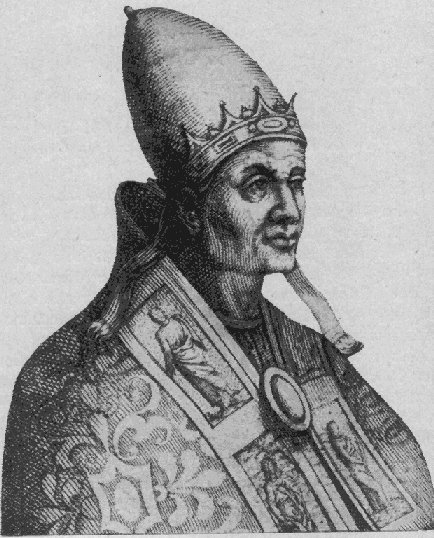
The Tusculan Papacy was a period of papal history from 1012 to 1048 where three successive relatives of the counts of Tusculum were installed as pope.
Count Theophylact I of Tusculum, his wife Theodora, and daughter Marozia held great sway over the appointment of popes from 904 to 964. The lovers of Theodora and Marozia, as well as the son and grandson of Marozia, rose to the papacy during this period. However, a Count of Tusculum had not yet attempted to appoint himself as pope until 1012. Their rivals, the Crescentii had taken over the papacy from 974 to 1012.
According to Cushing, "in many ways, increasing respect for papal authority from the mid-tenth century to mid-eleventh centuries can be best viewed through the spectrum of two Roman families: the Crescentians and the Tusculans, whose control of the papacy would have important ramifications for both the control and direction of reform." Both the Crescentii and the Counts of Tusculum were descended from Theophylact I, the former papal vestararius. The Crescentii had cooperated with German empress Theophanu and Otto III, Holy Roman Emperor, who resided in Rome from 999 to 1001.
The Tusculans did not expropriate church property to increase the already substantial holdings of their family; in fact, they appear to have expended their own resources to increase the power of the papacy. According to Luscombe and Riley-Smith, "in contrast to the Crescentians, who had largely relied on the entrenchment of their own dynasty and their supporters in the duchy of Rome as secular magnates and landowners – often at the expense of the temporal power of the Roman church – the Tusculans used their secular power and successes to shore up the standing of the papacy among the Roman nobility. The position of Patrician, so important to Crescentian rule, remained vacant."
Abbot Odilo of Cluny flourished during this period, receiving support from Benedict VII and John XIX for monastic immunity. The power of the Tusculan popes derived both from their assertions of papal supremacy and from their ability to balance power between the competing families of Rome.
The Counts of Tusculum were centered at Tuscolo, above Frascati, protected by an ancient fortress in Borghetto; their principal monasteries were Grottaferrata and Subiaco; they also controlled many churches and religious houses in and around Rome.
In 1012, Rome saw a violent political upheaval which ended Crescentii domination and elevated Theophylact, the son of Count Gregory I of Tusculum, as Pope Benedict VIII (1012–1024). Benedict VIII was a layman until his election. However, during his papacy he was a strong proponent of papal supremacy and frequently interfered in ecclesiastical matters on the Italian peninsula outside Rome. Benedict VIII's brother, Romanus, was the city prefect ("Senator of all the Romans"). His other brother, Alberic, was a Consul and Senator ("consul et dux"). Alberic was responsible for overseeing courts of justice in the Imperial Palatinate, near Santa Sabina.
Gregory I had been a figure in the court of Emperor Otto III as the "naval prefect" and Alberic had been the "master of the imperial palace". Other Roman families still held important offices: the Stefaniani family held the prefecture of Rome and the Ottaviani retained the rectorate of Sabina.
Hub AI
Tusculan Papacy AI simulator
(@Tusculan Papacy_simulator)
Tusculan Papacy
The Tusculan Papacy was a period of papal history from 1012 to 1048 where three successive relatives of the counts of Tusculum were installed as pope.
Count Theophylact I of Tusculum, his wife Theodora, and daughter Marozia held great sway over the appointment of popes from 904 to 964. The lovers of Theodora and Marozia, as well as the son and grandson of Marozia, rose to the papacy during this period. However, a Count of Tusculum had not yet attempted to appoint himself as pope until 1012. Their rivals, the Crescentii had taken over the papacy from 974 to 1012.
According to Cushing, "in many ways, increasing respect for papal authority from the mid-tenth century to mid-eleventh centuries can be best viewed through the spectrum of two Roman families: the Crescentians and the Tusculans, whose control of the papacy would have important ramifications for both the control and direction of reform." Both the Crescentii and the Counts of Tusculum were descended from Theophylact I, the former papal vestararius. The Crescentii had cooperated with German empress Theophanu and Otto III, Holy Roman Emperor, who resided in Rome from 999 to 1001.
The Tusculans did not expropriate church property to increase the already substantial holdings of their family; in fact, they appear to have expended their own resources to increase the power of the papacy. According to Luscombe and Riley-Smith, "in contrast to the Crescentians, who had largely relied on the entrenchment of their own dynasty and their supporters in the duchy of Rome as secular magnates and landowners – often at the expense of the temporal power of the Roman church – the Tusculans used their secular power and successes to shore up the standing of the papacy among the Roman nobility. The position of Patrician, so important to Crescentian rule, remained vacant."
Abbot Odilo of Cluny flourished during this period, receiving support from Benedict VII and John XIX for monastic immunity. The power of the Tusculan popes derived both from their assertions of papal supremacy and from their ability to balance power between the competing families of Rome.
The Counts of Tusculum were centered at Tuscolo, above Frascati, protected by an ancient fortress in Borghetto; their principal monasteries were Grottaferrata and Subiaco; they also controlled many churches and religious houses in and around Rome.
In 1012, Rome saw a violent political upheaval which ended Crescentii domination and elevated Theophylact, the son of Count Gregory I of Tusculum, as Pope Benedict VIII (1012–1024). Benedict VIII was a layman until his election. However, during his papacy he was a strong proponent of papal supremacy and frequently interfered in ecclesiastical matters on the Italian peninsula outside Rome. Benedict VIII's brother, Romanus, was the city prefect ("Senator of all the Romans"). His other brother, Alberic, was a Consul and Senator ("consul et dux"). Alberic was responsible for overseeing courts of justice in the Imperial Palatinate, near Santa Sabina.
Gregory I had been a figure in the court of Emperor Otto III as the "naval prefect" and Alberic had been the "master of the imperial palace". Other Roman families still held important offices: the Stefaniani family held the prefecture of Rome and the Ottaviani retained the rectorate of Sabina.
Recent media