
Recent from talks
Tuskegee Veterans Administration Medical Center
Knowledge base stats:
Talk channels stats:
Members stats:
Tuskegee Veterans Administration Medical Center
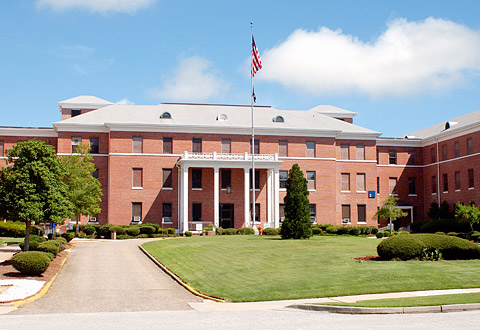
The Tuskegee Veterans Administration Medical Center began in 1923 as an old soldiers' home in Tuskegee, Alabama. It was originally called the Tuskegee Home, part of the National Home for Disabled Volunteer Soldiers system.
The home-hospital, eventually 27 buildings, was developed next to the Tuskegee Normal and Industrial Institute campus (now Tuskegee University) on 464 acres (188 ha), with 300 acres of the property donated by the institute.
Its medical purpose was to provide long-term care for the 300,000 African-American veterans in the segregated South from World War I; such care was often denied or neglected at other veterans' hospitals and old soldiers' homes. Medical care of veterans after the war was one of a number of issues complicated by race; the government was struggling to get veterans employed, to develop programs for those who were disabled, as well as to treat those needing medical treatment. Having served their country, veterans wanted the federal government to intercede as they tried to re-enter society.
In 1930 three agencies were combined as the Veterans Administration, and the hospital center was put under its authority. Since 1997 the hospital complex has been part of the Central Alabama Veterans Health Care System; it is known as the East Campus of its four sites in Alabama and Georgia.
The home-hospital was developed to provide care for African-American veterans of World War I, who complained about difficulties in getting served in other facilities, particularly in the segregated South. Civil rights groups such as the National Association for the Advancement of Colored People lobbied the federal government on its responsibilities to care for such veterans in providing health as well as employment and retraining services. Plans were made to open the hospital April first with a full white staff of white doctors and white nurses with colored nurse-maids for each white nurse, in order to save them from contact with colored patients.
The hospital's early emphasis was to be on treating tuberculosis, and mental illness related to combat and shell shock, the two diseases most often diagnosed in veterans after the war. While whites had resisted giving care to African-American veterans, particularly in the South, once Congress had authorized the veterans hospital at Tuskegee, whites in the city and the state started maneuvering to control the medical jobs at the new facility.
At the same time, African Americans wanted the hospital to be a place where they could get professional jobs. Dr. Robert Russa Moton, president of Tuskegee Institute, had to maneuver carefully to maintain local relations in the city, where whites were pushing to control jobs at the hospital. At the same time, he was under considerable pressure from the NAACP and the National Medical Association (made up of black doctors) to help guarantee professional jobs for black doctors and nurses at the center, who were restricted in their opportunities, especially in Alabama. Together with representatives of the NAACP and NMA, he appealed directly to Republican President Warren G. Harding, on the grounds that his party would lose the support of blacks, many of whom had supported the nation in the war, unless he helped them get jobs at this center. Harding directed regional and veterans' officials to ensure that black doctors and nurses were recruited for the center and eventually committed to these positions being reserved for blacks. There was so much opposition to this among whites in Tuskegee that Moton received threats on his life, and made plans to go on a lecture tour. The Harding administration, made Dr. R. R. Moton a sort of referee for 12 million Negroes as to the personnel of the hospital and the Veterans’ Bureau promised him categorically that he would be consulted before anybody was appointed superintendent of the hospital. Colonel Robert H. Stanley, a white man, was made superintendent of the hospital and arrived at Tuskegee two days before Dr. Moton was notified.
Members of a local chapter of the Ku Klux Klan marched on the hospital, but their action resulted in a broader campaign by the NAACP and NMA, attracting national attention. Tuskegee whites did not gain the support of others in the South. The VA invited their participation in selection of a railroad route to serve the hospital. By 1924, the situation had calmed and Brig. Gen. Frank T. Hines, the director of the Veterans Bureau, appointed Dr. Joseph H. Ward, an African American, to head the hospital complex. During the next decade, "half of all black veterans who received hospital care were treated at Tuskegee, and all the black doctors employed by the Veterans Bureau worked there." While arguments continued over segregated federal facilities (the NAACP refused to support proposals for an exclusive African-American VA hospital in the North), the civil rights movement of this period helped ensure that black veterans gained access to top care and services, and that African Americans gained access to professional jobs in the health system. Dr. Moton wrote to President Harding and told him that if negro physicians and nurses were debarred from service in the hospital without at least being given a chance to qualify under the civil service rules it would bring justifiable criticism upon him and upon the Harding Administration.
Hub AI
Tuskegee Veterans Administration Medical Center AI simulator
(@Tuskegee Veterans Administration Medical Center_simulator)
Tuskegee Veterans Administration Medical Center
The Tuskegee Veterans Administration Medical Center began in 1923 as an old soldiers' home in Tuskegee, Alabama. It was originally called the Tuskegee Home, part of the National Home for Disabled Volunteer Soldiers system.
The home-hospital, eventually 27 buildings, was developed next to the Tuskegee Normal and Industrial Institute campus (now Tuskegee University) on 464 acres (188 ha), with 300 acres of the property donated by the institute.
Its medical purpose was to provide long-term care for the 300,000 African-American veterans in the segregated South from World War I; such care was often denied or neglected at other veterans' hospitals and old soldiers' homes. Medical care of veterans after the war was one of a number of issues complicated by race; the government was struggling to get veterans employed, to develop programs for those who were disabled, as well as to treat those needing medical treatment. Having served their country, veterans wanted the federal government to intercede as they tried to re-enter society.
In 1930 three agencies were combined as the Veterans Administration, and the hospital center was put under its authority. Since 1997 the hospital complex has been part of the Central Alabama Veterans Health Care System; it is known as the East Campus of its four sites in Alabama and Georgia.
The home-hospital was developed to provide care for African-American veterans of World War I, who complained about difficulties in getting served in other facilities, particularly in the segregated South. Civil rights groups such as the National Association for the Advancement of Colored People lobbied the federal government on its responsibilities to care for such veterans in providing health as well as employment and retraining services. Plans were made to open the hospital April first with a full white staff of white doctors and white nurses with colored nurse-maids for each white nurse, in order to save them from contact with colored patients.
The hospital's early emphasis was to be on treating tuberculosis, and mental illness related to combat and shell shock, the two diseases most often diagnosed in veterans after the war. While whites had resisted giving care to African-American veterans, particularly in the South, once Congress had authorized the veterans hospital at Tuskegee, whites in the city and the state started maneuvering to control the medical jobs at the new facility.
At the same time, African Americans wanted the hospital to be a place where they could get professional jobs. Dr. Robert Russa Moton, president of Tuskegee Institute, had to maneuver carefully to maintain local relations in the city, where whites were pushing to control jobs at the hospital. At the same time, he was under considerable pressure from the NAACP and the National Medical Association (made up of black doctors) to help guarantee professional jobs for black doctors and nurses at the center, who were restricted in their opportunities, especially in Alabama. Together with representatives of the NAACP and NMA, he appealed directly to Republican President Warren G. Harding, on the grounds that his party would lose the support of blacks, many of whom had supported the nation in the war, unless he helped them get jobs at this center. Harding directed regional and veterans' officials to ensure that black doctors and nurses were recruited for the center and eventually committed to these positions being reserved for blacks. There was so much opposition to this among whites in Tuskegee that Moton received threats on his life, and made plans to go on a lecture tour. The Harding administration, made Dr. R. R. Moton a sort of referee for 12 million Negroes as to the personnel of the hospital and the Veterans’ Bureau promised him categorically that he would be consulted before anybody was appointed superintendent of the hospital. Colonel Robert H. Stanley, a white man, was made superintendent of the hospital and arrived at Tuskegee two days before Dr. Moton was notified.
Members of a local chapter of the Ku Klux Klan marched on the hospital, but their action resulted in a broader campaign by the NAACP and NMA, attracting national attention. Tuskegee whites did not gain the support of others in the South. The VA invited their participation in selection of a railroad route to serve the hospital. By 1924, the situation had calmed and Brig. Gen. Frank T. Hines, the director of the Veterans Bureau, appointed Dr. Joseph H. Ward, an African American, to head the hospital complex. During the next decade, "half of all black veterans who received hospital care were treated at Tuskegee, and all the black doctors employed by the Veterans Bureau worked there." While arguments continued over segregated federal facilities (the NAACP refused to support proposals for an exclusive African-American VA hospital in the North), the civil rights movement of this period helped ensure that black veterans gained access to top care and services, and that African Americans gained access to professional jobs in the health system. Dr. Moton wrote to President Harding and told him that if negro physicians and nurses were debarred from service in the hospital without at least being given a chance to qualify under the civil service rules it would bring justifiable criticism upon him and upon the Harding Administration.
Recent media