Hubbry Logo
search
logo
Tusse
Tusse
current hub
57514

Tusse

logo
Community Hub0 Subscribers
Read side by side
from Wikipedia

Key Information

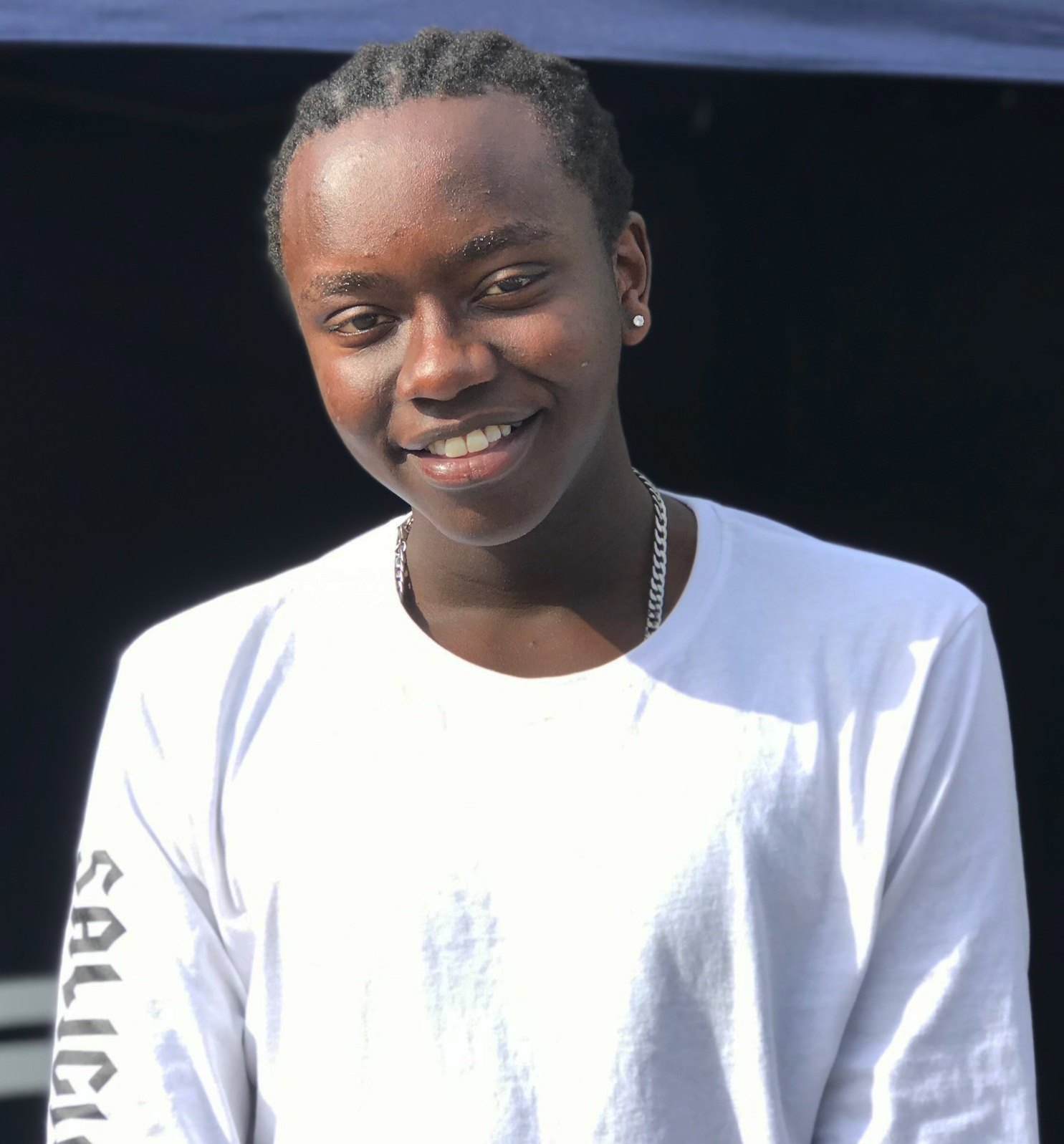
Toussaint Michael Chiza (born 1 January 2002), better known as Tusse, is a Congolese-Swedish singer who represented Sweden in the Eurovision Song Contest 2021.[1]

Life and career

[edit]

Chiza was born in the Democratic Republic of the Congo.[2] When he was five years old, he had to flee his country. He lived in Uganda in a refugee camp with his aunt for three years and then came to Sweden. There, he lived in the village of Kullsbjörken, near Leksand, where he has resided since 2015.[3][4] He participated as a singer in the Swedish talent show Talang 2018 (as Tousin Chiza) which was also broadcast on TV4; he made it to the semi-finals before being eliminated.[5]

He received praise for his semi-final performance from judge Bianca Ingrosso.[6] Tusse was a finalist in Swedish Idol 2019,[7] broadcast on TV4, alongside Freddie Liljegren, and was ultimately declared the winner in the final.[8][9]

After winning Swedish Idol, he released three singles, two of them songs he performed on Idol: a cover of Whitney Houston's "How Will I Know" on 22 November 2019 as a Top 12 contestant.[7] And as the winner, he released his version of the season's winning song, "Rain", on 3 December 2019.[10] As a result of his victory, he got to release his debut single as a CD single as well as on the iTunes Store. His third single is called "Innan du går"[11]

Tusse participated in Melodifestivalen 2021 with the song "Voices".[12] He qualified directly to the final, scheduled for 13 March 2021, and ultimately won with 175 points.[13][14] As a result, he represented Sweden in the Eurovision Song Contest 2021 in Rotterdam, the Netherlands.[15][16]

After his first Eurovision rehearsal, Tusse was the victim of racist comments on social media.[17]

In the semi-final, Tusse managed to qualify for the final on 22 May.[18] In the final, he reached 14th place with his song.[19] After Eurovision, he did an interview with the magazine Vanity Teen in which he talked about his personal life, his experience in Eurovision and his future career.[20]

In June 2023, it was revealed that a film about Tusse's life was to be produced in 2024.[21]

In January 2026 he came out as queer.[22]

Discography

[edit]

Singles

[edit]
Title Year Peak chart positions Certification Album
SWE
[23]
IRE
[24]
LAT
[25]
NLD
[26]
NOR
[27]
UK
Down.

[28]
"How Will I Know" 2019 Non-album singles
"Rain" 63
"Innan du går" 2020
"Jag tror på sommaren"
"Crash"
"Voices" 2021 1 99 2 56 11 31
  • GLF: 2× Platinum[29]
"Grow"[30]
"This Is Our Christmas Song" [A]
"Happiness Before Love" 2022
"Dream of Gold"
"I Wanna Be Someone Who's Loved"
"Home" 2023
"I Won't Spend Christmas On My Own"[32]
"—" denotes a recording that did not chart or was not released.

Notes

[edit]

References

[edit]
[edit]
Revisions and contributorsEdit on WikipediaRead on Wikipedia
from Grokipedia
Toussaint Michael Chiza (born 1 January 2002), known professionally as Tusse, is a Congolese-Swedish singer.[1] Born in Kinshasa in the Democratic Republic of the Congo, he fled conflict in his home country as a young child, arriving in Sweden at age eight as an unaccompanied refugee with his aunt after being separated from his parents during an escape attempt.[2][3] Tusse first gained public attention in Sweden through his participation in the 2018 edition of Sweden's Got Talent, where he showcased his vocal abilities as a teenager.[4] He achieved national prominence in 2021 by winning Melodifestivalen, Sweden's pre-selection competition for the Eurovision Song Contest, with his pop song "Voices", a track emphasizing themes of unity and personal strength inspired by his experiences.[5][6] This victory qualified him to represent Sweden at the Eurovision Song Contest 2021 in Rotterdam, where "Voices" earned 109 points and finished in 14th place overall.[7][1] Beyond music, Tusse has engaged in advocacy, serving as a Goodwill Ambassador for UNHCR Sweden to highlight refugee issues and support communities in need, drawing from his own background.[8] His career reflects a trajectory from displacement to artistic success, marked by energetic performances and a focus on uplifting messages.[9]

Early Life and Background

Childhood in the Democratic Republic of the Congo

Tousin Michael Chiza was born on January 1, 2002, in Kinshasa, the capital city of the Democratic Republic of the Congo (DRC).[10] [11] His early years coincided with a period of post-conflict recovery following the Second Congo War (1998–2003), which had devastated the country, but Kinshasa remained marked by pervasive economic instability, governance challenges, and urban poverty affecting millions.[12] [13] The DRC during this era exhibited extreme poverty levels, with around 72% of the population living below the poverty line, disproportionately impacting children through high rates of malnutrition, disease, and limited access to basic services.[12] [13] In Kinshasa, economic precarity was evident in phenomena such as the presence of up to 35,000 homeless or displaced street children, many at risk of exploitation amid inadequate infrastructure and social safety nets.[14] These conditions reflected broader systemic issues, including resource mismanagement and residual effects of conflict, which empirically drove widespread family hardships without direct evidence tying specific incidents to Chiza's household.[12] Chiza showed an early interest in music, singing in church choirs throughout his childhood in the DRC, where he aspired to perform solos for congregations.[3] Such community and religious settings were common venues for musical expression among urban Congolese youth, often exposing them to local traditions like soukous, a guitar-driven dance genre rooted in Congolese rumba that dominated popular culture in Kinshasa.[15] However, verifiable personal details on his family life or precise daily experiences remain limited, with no sourced accounts of specific events beyond these general contextual factors prior to his departure from the country around age eight.[16]

Flight to Sweden and Initial Settlement

In 2009, at approximately age seven, Tousin Chiza—later known as Tusse—fled the Democratic Republic of the Congo amid ongoing civil conflict and instability, having already spent time separated from his parents in a Ugandan refugee camp with his aunt. Arriving in Sweden as an unaccompanied minor via standard refugee channels, he was granted asylum shortly thereafter, resulting in permanent separation from his biological family due to the circumstances of flight and limited subsequent contact.[17][9] Under Sweden's policies for unaccompanied refugee children, Chiza was placed in the care of a foster family, receiving his full legal name Toussaint Michael Chiza and initial support through state-funded housing and guardianship systems. This resettlement occurred against the backdrop of Sweden's expansive asylum framework, which by the late 2000s facilitated high inflows of non-Western refugees but imposed substantial fiscal burdens, with integration costs—including welfare, education, and healthcare—estimated at 1-1.35% of GDP in periods of peak arrivals, as documented in economic analyses of net public expenditure.[18][19] Early adaptation entailed overcoming acute language barriers, as Chiza spoke no Swedish upon arrival, alongside cultural dislocation from subsistence camp life to a high-trust, secular welfare society with regimented schooling and social norms. He enrolled in local primary education, where structured classes aided language acquisition and basic socialization, though broader data on unaccompanied minors highlight persistent challenges like elevated dependency on public services and slower assimilation metrics compared to accompanied refugees. This phase represented a causal shift from acute survival threats to institutionalized opportunity, enabled by Sweden's resource-intensive reception model despite its empirically documented long-term economic strains.[20]

Music Career

Rise Through Swedish Idol (2018)

Tusse auditioned for the fifteenth season of Swedish Idol in 2019 at age 17, following his semi-final run on the talent show Talang the prior year.[21] His audition featured a performance that showcased strong vocal control and emotional delivery, earning advancement past the initial selection process judged primarily on singing technique and stage presence.[22] Throughout the competition's weekly qualifiers and live shows, he rendered covers of contemporary pop and R&B tracks, including renditions emphasizing high notes and dynamic range, which drew praise from judges for precision and power rather than extraneous factors.[9] Advancing to the finals amid eliminations based on viewer votes and panel critiques, Tusse competed against finalists like Freddie Wadling in the December 2019 finale. He clinched the victory with majority public support, marking him as the season's top performer and securing national television exposure to over a million viewers per episode.[23] This win, the youngest for a male contestant in Idol history at that point, highlighted empirical metrics of viewer engagement and judge scores favoring vocal execution over narrative elements.[2] The triumph yielded a standard Idol winner's recording contract with a partnered label, enabling his debut single release and integration into Sweden's commercial music pipeline, where talent show alumni often transition via established industry channels. This foundational step provided initial resources for professional production, distinct from subsequent ventures, amid a competitive ecosystem where Idol victors typically achieve immediate chart entry and promotional tours.[19]

Melodifestivalen Victory and Eurovision Participation (2021)

Tusse competed in the Melodifestivalen 2021 final on March 13, 2021, with the song "Voices," an uplifting pop track infused with gospel elements, composed by Joy Deb, Linnea Deb, Jimmy "Joker" Thörnfeldt, and Anderz Wrethov.[24][5] The song's themes of empowerment and collective voices resonated strongly, earning Tusse 79 points from the international jury panel and 96 points from the Swedish public televote, totaling 175 points for the victory—outpacing runner-up Eric Saade's 118 points.[21][25] This win, driven by 2,964,269 public votes representing 18% of the total televote share, secured Tusse as Sweden's representative for the Eurovision Song Contest.[7] At the Eurovision Song Contest 2021 in Rotterdam, Netherlands, Tusse performed "Voices" in the first semi-final on May 18, advancing to the grand final on May 22 with a strong qualification performance.[5] The staging featured dynamic lighting, synchronized backing vocalists evoking a choir effect to amplify the song's anthemic chorus, and Tusse's high-energy delivery emphasizing themes of perseverance and unity amid rain-like visual motifs tied to the lyrics.[7] In the grand final, Sweden placed 14th with 109 points: 46 from national juries and 63 from the global televote, reflecting solid public support but moderate jury reception compared to top entries like Italy's Måneskin.[26] Official European Broadcasting Union results confirmed this outcome, positioning "Voices" below the podium but ahead of several competitors in televoting aggregates.[26]

Post-Eurovision Releases and Professional Trajectory

Following his Eurovision performance, Tusse released the single "Grow" on October 15, 2021, produced under Universal Music AB.[27] The track, available on digital platforms, marked his first original release after "Voices" but did not replicate its commercial peak, with no reported entry into Sweden's Sverigetopplistan top positions akin to "Voices'" number-one debut.[28] In 2022, he issued "Dream of Gold," co-composed with Peter Kvint and released around late September, which entered Spotify playlists in Sweden by October but similarly lacked significant chart traction.[29] Additional singles followed, including a cover of "I Wanna Be Someone Who's Loved" tied to the Netflix series Young Royals in 2022, and originals like "Home" and "I Won't Spend Christmas On My Own" in 2023, distributed via streaming services without associated full-length albums.[30] By 2025, Tusse had not released a debut studio album, reflecting a pattern observed among many mid-tier Eurovision participants where initial visibility yields sporadic singles rather than sustained major-label output.[7] His professional activities shifted toward live performances, including smaller gigs and event appearances documented in Swedish cultural reports, alongside advertising and media tie-ins.[31] In recent years, he contributed to songwriting, co-authoring "Teardrops" for Angelino's entry in Melodifestivalen 2025 alongside producers Jimmy Thörnfeldt, Joy Deb, and Linnea Deb.[32] A biographical film adaptation of his life story, announced in mid-2023, is slated for a 2025 premiere, potentially extending his public profile beyond music.[33] This trajectory aligns with broader trends for Eurovision entrants finishing outside the top five, where post-contest momentum often dissipates without follow-up hits, leading to diversified pursuits like composition and personal storytelling rather than blockbuster recordings.[7] No major international tours or arena-level engagements were scheduled through 2025, underscoring a pivot to niche Swedish media and independent endeavors.[34]

Artistic Style and Influences

Musical Genre and Vocal Approach

Tusse's music is rooted in the pop genre, frequently incorporating contemporary production techniques such as electronic beats and layered vocal harmonies that align with the polished, export-oriented style prevalent in Scandinavian pop music.[35] His breakthrough single "Voices," released in March 2021, exemplifies this through its electro-pop structure, featuring synth-driven instrumentation and anthemic builds designed for arena-scale delivery.[36] This approach emphasizes accessibility and emotional uplift, prioritizing rhythmic drive over complex harmonic progressions. Vocally, Tusse employs a bright, resonant timbre with an emphasis on emotive phrasing and sustained high notes, enabling powerful, crowd-engaging choruses in live settings. His performances during Swedish Idol in 2018 and the Melodifestivalen final on March 13, 2021, demonstrated consistent projection and control under pressure, contributing to his victories in both competitions.[37] While effective for uplifting pop anthems, this style shows constraints in genre versatility, as noted in analyses describing his output as formulaic within mainstream pop confines rather than branching into diverse stylistic explorations.[38]

Cultural and Personal Inspirations

Tusse's musical foundations trace back to his early exposure to Congolese cultural traditions, where music and dance formed central elements of social gatherings and celebrations. In interviews, he has attributed his innate affinity for rhythm and performance to this heritage, noting that "music was always there" during family events in the Democratic Republic of the Congo before his emigration at age eight.[39] [10] Upon resettling in Sweden, Tusse encountered Western pop and contemporary sounds through media, school, and local performances, which broadened his stylistic palette. He has cited Swedish Eurovision artists such as Loreen and Charlotte Perrelli as key figures who encouraged innovative expression and captivated him during childhood viewings of the contest. Additionally, American vocalist Whitney Houston served as a vocal influence, with Tusse highlighting her emotive delivery as a model for his own powerful range.[40] [10] [41] His personal trajectory as a refugee has imbued his work with motifs of perseverance and self-determination, emphasizing individual triumph over adversity rather than collective narratives. Tusse has described drawing from his experiences of displacement to craft lyrics about transitioning from hardship to empowerment, underscoring personal resolve as the driving force in his artistic output. This fusion of Congolese vitality and Swedish pop accessibility reflects a deliberate synthesis shaped by his life's causal progression, prioritizing upliftment through melody and message.[42]

Discography

Singles

Tusse's debut single, "My Soul Is Calling You", was released in June 2018 and dedicated to his late mother who passed away in November 2016.[43] Following his appearance on Swedish Idol in 2018, he issued singles including the cover "How Will I Know" (Whitney Houston) and "Rain" in 2019.[44] "Voices", released on 13 March 2021 after winning Melodifestivalen, topped the Sverigetopplistan singles chart for one week and spent 26 weeks in the top 100.[28][45] Subsequent releases include "I Wanna Be Someone Who's Loved" in 2022, featured on the Netflix series Young Royals soundtrack, and "I Won't Spend Christmas On My Own" on 24 November 2024.[46][47] No other singles have entered the Sverigetopplistan top 100 as lead artist.

Public Reception and Impact

Achievements and Milestones

Tusse emerged as a prominent talent after winning the 2019 season of Idol, Sweden's version of the talent competition, where he outperformed finalist Freddie Liljegren in the final broadcast on TV4.[9] This victory, achieved at age 17, led to the release of his debut single "Rain," which marked his entry into professional music production.[21] In March 2021, Tusse secured the Melodifestivalen championship with "Voices," qualifying directly to the final and accumulating 175 points—79 from the international jury and 96 from Swedish televoters, including maximum 12 points from all eight demographic voting groups.[5] This win, the highest-scoring in the contest's televote segment, positioned him as Sweden's representative for the Eurovision Song Contest. At the Eurovision Song Contest 2021 in Rotterdam, Tusse advanced from the first semi-final on May 18 and finished 14th in the grand final on May 22, earning 109 points (63 from televoting and 46 from juries).[7] The track "Voices" subsequently topped the Swedish Singles Chart and garnered over 47 million streams on Spotify as of late 2023.[46]

Criticisms and Career Challenges

Tusse's staging for "Voices" at the Eurovision Song Contest 2021 drew criticism for prioritizing visual spectacle over substantive innovation, with reviewers noting its resemblance to prior Melodifestivalen performances and a perceived low-budget aesthetic compared to more elaborate entries.[48] [49] The song itself faced characterizations as generic pop with a shallow inspirational message, contributing to its mid-tier reception amid a competitive field of 26 finalists.[50] Sweden placed 14th in the grand final with 109 points, including 46 from juries and 63 from televotes, underscoring a disconnect between domestic hype and broader European voter preferences for more distinctive entries.[7] During rehearsals, Tusse encountered racist online abuse targeting his Congolese heritage, prompting responses from Swedish broadcaster SVT and the European Broadcasting Union to condemn the harassment.[51] While his Melodifestivalen victory relied heavily on televotes—securing 175 points to claim first place empirically through public support rather than identity considerations—post-event analyses highlighted occasional debates over non-native artists' representation in national selections, though these did not alter the vote-based outcome.[52] Following the Eurovision peak, where "Voices" reached number one on Swedish singles charts, Tusse's subsequent releases have shown limited commercial traction in a saturated pop landscape demanding stylistic evolution beyond talent-show anthems.[28] Tracks like "Happiness Before Love" (2022) and contributions to media soundtracks, such as "I Wanna Be Someone Who's Loved" for Netflix's Young Royals, failed to replicate prior chart dominance or generate sustained international breakthroughs, attributable to market oversaturation and the typical post-hype fade of Idol and Eurovision alumni without rapid genre diversification.[53] As a Swedish-based artist with immigrant roots in an export-oriented industry favoring native-language fluency and established acts, sustaining momentum has proven challenging, with no major label albums or top-10 hits reported beyond 2021.[46]

References

User Avatar
No comments yet.