Hubbry Logo
DanceDanceMain
Open search
Dance
Community hub
Dance
logo
8 pages, 0 posts
0 subscribers
Be the first to start a discussion here.
Contribute something
Dance
Dance
from Wikipedia

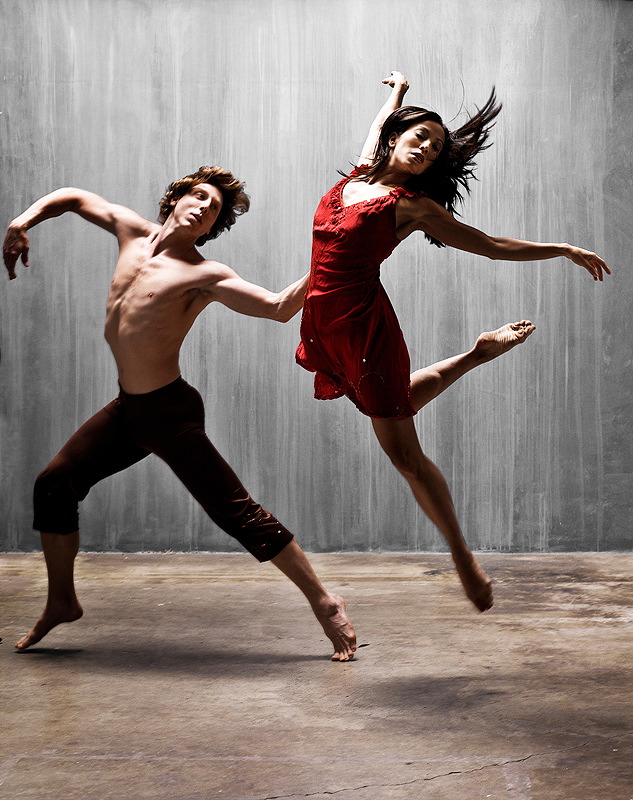
A man and woman, mid-leap
Two modern dancers

Dance is an art form, consisting of sequences of body movements with aesthetic and often symbolic value, either improvised or purposefully selected. Dance can be categorized and described by its choreography, by its repertoire of movements or by its historical period or place of origin. Dance is typically performed with musical accompaniment, and sometimes with the dancer simultaneously using a musical instrument themselves.

Two common types of group dance are theatrical and participatory dance. Both types of dance may have special functions, whether social, ceremonial, competitive, erotic, martial, sacred or liturgical. Dance is not solely restricted to performance, as dance is used as a form of exercise and occasionally training for other sports and activities. Dance performances and dancing competitions are found across the world exhibiting various different styles and standards.

Dance may also be participated in alone as a form of exercise or self expression. Dancing is common human behaviour, and does not necessarily require specific choreography.

Theatrical and participatory dance

[edit]
Members of an American jazz dance company perform a formal group routine in a concert dance setting.

Theatrical dance, also called performance or concert dance, is intended primarily as a spectacle, usually a performance upon a stage by virtuoso dancers. It often tells a story, potentially using mime, costume and scenery, or it may interpret the musical accompaniment, which is often specially composed and performed in a theatre setting but it is not a requirement. Examples are Western ballet and modern dance, Classical Indian dance such as Bharatanatyam, and Chinese and Japanese song and dance dramas, such as the dragon dance. Most classical forms are centred upon dance alone, but performance dance may also appear in opera and other forms of musical theatre.

Participatory dance, whether it be a folk dance, a social dance, a group dance such as a line, circle, chain or square dance, or a partner dance, such as in Western ballroom dancing, is undertaken primarily for a common purpose, such as social interaction or exercise, or building flexibility of participants rather than to serve any benefit to onlookers. Such dance seldom has any narrative. A group dance and a corps de ballet, a social partner dance and a pas de deux, differ profoundly. Even a solo dance or interpretive dance may be undertaken solely for the satisfaction of the dancer. Participatory dancers often all employ the same movements and steps but, for example, in the rave culture of electronic dance music, vast crowds may engage in free dance, uncoordinated with those around them. On the other hand, some cultures lay down strict rules as to the particular dances people may or must participate.[1]

History

[edit]
Mesolithic dancers at Bhimbetka

Archaeological evidence for early dance includes 10,000-years-old paintings in Madhya Pradesh, India at the Rock Shelters of Bhimbetka,[2] and Egyptian tomb paintings depicting dancing figures, dated c. 3300 BC. It has been proposed that before the invention of written languages, dance was an important part of the oral and performance methods of passing stories down from one generation to the next.[3] The use of dance in ecstatic trance states and healing rituals (as observed today in many contemporary indigenous cultures) is thought to have been another early factor in the social development of dance.[4]

Dancers and musicians on a Sasanian bowl, Iran

References to dance can be found in very early recorded history; Greek dance (choros) is referred to by Plato, Aristotle, Plutarch and Lucian.[5] The Bible and Talmud refer to many events related to dance, and contain over 30 different dance terms.[6] In Chinese pottery as early as the Neolithic period, groups of people are depicted dancing in a line holding hands,[7] and the earliest Chinese word for "dance" is found written in the oracle bones.[8] Dance is described in the Lüshi Chunqiu.[9][10] Primitive dance in ancient China was associated with sorcery and shamanic rituals.[11]

Greek bronze statuette of a veiled and masked dancer, 3rd–2nd century BC, Alexandria, Egypt

During the first millennium BCE in India, many texts were composed which attempted to codify aspects of daily life. Bharata Muni's Natya Shastra (literally "the text of dramaturgy") is one early text. It mainly deals with drama, in which dance plays an important part in Indian culture. A strong continuous tradition of dance has since continued in India, through to modern times, where it continues to play a role in culture, ritual, and the Bollywood entertainment industry. Many other contemporary dance forms can likewise be traced back to historical, traditional, ceremonial, and ethnic dance.[12]

Music

[edit]
Two women dance at a pop music concert in Sofia, Bulgaria.

Dance is generally, but not exclusively, performed with the accompaniment of music and may or may not be performed in time to such music. Some dance (such as tap dance or gumboot dance) may provide its own audible accompaniment in place of (or in addition to) music. Many early forms of music and dance were created for each other and are frequently performed together. Notable examples of traditional dance-music couplings include the jig, waltz, tango, disco, and salsa. Some musical genres have a parallel dance form such as baroque music and baroque dance; other varieties of dance and music may share nomenclature but developed separately, such as classical music and classical ballet. The choreography and music are meant to complement each other, to express a story told by the choreographer and dancers.[13]

Rhythm

[edit]

Rhythm and dance are deeply linked in history and practice. The American dancer Ted Shawn wrote; "The conception of rhythm which underlies all studies of the dance is something about which we could talk forever, and still not finish."[14] A musical rhythm requires two main elements; a regularly-repeating pulse (also called the "beat" or "tactus") that establishes the tempo, and a pattern of accents and rests that establishes the character of the metre or basic rhythmic pattern. The basic pulse is roughly equal in duration to a simple step or gesture.

A basic tango rhythm

Dances generally have a characteristic tempo and rhythmic pattern. The tango, for example, is usually danced in 2
4
time at approximately 66 beats per minute. The basic slow step, called a "slow", lasts for one beat, so that a full "right–left" step is equal to one 2
4
measure. The basic forward and backward walk of the dance is so counted – "slow-slow" – while many additional figures are counted "slow – quick-quick".[15]

Repetitive body movements often depend on alternating "strong" and "weak" muscular movements.[16] Given this alternation of left-right, of forward-backward and rise-fall, along with the bilateral symmetry of the human body, many dances and much music are in duple and quadruple meter. Since some such movements require more time in one phase than the other – such as the longer time required to lift a hammer than to strike – some dance rhythms fall into triple metre.[17] Occasionally, as in the folk dances of the Balkans, dance traditions depend heavily on more complex rhythms. Complex dances composed of a fixed sequence of steps require phrases and melodies of a certain fixed length to accompany that sequence.

Lululaund – The Dancing Girl (painting and silk cloth. A.L. Baldry 1901, before p. 107), The inscription reads; "Dancing is a form of rhythm/ Rhythm is a form of music/ Music is a form of thought/ And thought is a form of divinity."

Musical accompaniment arose in the earliest dance, so that ancient Egyptians attributed the origin of the dance to the divine Athotus, who was said to have observed that music accompanying religious rituals caused participants to move rhythmically and to have brought these movements into proportional measure. The idea that dance arises from musical rhythm, was found in renaissance Europe, in the works of the dancer Guglielmo Ebreo da Pesaro. Pesaro speaks of dance as a physical movement that arises from and expresses inward, spiritual motion agreeing with the "measures and perfect concords of harmony" that fall upon the human ear,[16] while earlier, Mechthild of Magdeburg, seizing upon dance as a symbol of the holy life foreshadowed in Jesus' saying "I have piped and ye have not danced",[18] writes;

I can not dance unless thou leadest. If thou wouldst have me spring aloft, sing thou and I will spring, into love and from love to knowledge and from knowledge to ecstasy above all human sense[19]

Thoinot Arbeau's celebrated 16th-century dance-treatise Orchésographie, indeed, begins with definitions of over eighty distinct drum-rhythms.[20]

Helen Moller
The Waltz by Camille Claudel, 1905 cast

Dance has been represented through the ages as having emerged as a response to music yet, as Lincoln Kirstein implied, it is at least as likely that primitive music arose from dance. Shawn concurs, stating that dance "was the first art of the human race, and the matrix out of which all other arts grew" and that even the "metre in our poetry today is a result of the accents necessitated by body movement, as the dancing and reciting was performed simultaneously"[14] – an assertion somewhat supported by the common use of the term "foot" to describe the fundamental rhythmic units of poetry.

Scholes, a musician, offers support for this view, stating that the steady measures of music, of two, three or four beats to the bar, its equal and balanced phrases, regular cadences, contrasts and repetitions, may all be attributed to the "incalculable" influence of dance upon music.[21]

Hence, Shawn asserts, "it is quite possible to develop the dance without music and... music is perfectly capable of standing on its own feet without any assistance from the dance", nevertheless the "two arts will always be related and the relationship can be profitable both to the dance and to music",[22] the precedence of one art over the other being a moot point. The common ballad measures of hymns and folk-songs takes their name from dance, as does the carol, originally a circle dance. Many purely musical pieces have been named "waltz" or "minuet", for example, while many concert dances have been produced that are based upon abstract musical pieces, such as 2 and 3 Part Inventions, Adams Violin Concerto and Andantino. Similarly, poems are often structured and named after dances or musical works, while dance and music have both drawn their conception of "measure" or "metre" from poetry.

Shawn quotes with approval the statement of Dalcroze that, while the art of musical rhythm consists in differentiating and combining time durations, pauses and accents "according to physiological law", that of "plastic rhythm" (i.e. dance) "is to designate movement in space, to interpret long time-values by slow movements and short ones by quick movements, regulate pauses by their divers successions and express sound accentuations in their multiple nuances by additions of bodily weight, by means of muscular innervations".

Shawn points out that the system of musical time is a "man-made, artificial thing.... a manufactured tool, whereas rhythm is something that has always existed and depends on man not at all", being "the continuous flowing time which our human minds cut up into convenient units", suggesting that music might be revivified by a return to the values and the time-perception of dancing.[23]

The early-20th-century American dancer Helen Moller stated that "it is rhythm and form more than harmony and color which, from the beginning, has bound music, poetry and dancing together in a union that is indissoluble."[24][nb 1]

Approaches

[edit]
Tang dynasty female dancers

Theatrical

[edit]

Concert dance, like opera, generally depends for its large-scale form upon a narrative dramatic structure. The movements and gestures of the choreography are primarily intended to mime the personality and aims of the characters and their part in the plot.[29] Such theatrical requirements tend towards longer, freer movements than those usual in non-narrative dance styles. On the other hand, the ballet blanc, developed in the 19th century, allows interludes of rhythmic dance that developed into entirely "plotless" ballets in the 20th century[30] and that allowed fast, rhythmic dance-steps such as those of the petit allegro. A well-known example is The Cygnets' Dance in act two of Swan Lake.

The ballet developed out of courtly dramatic productions of 16th- and 17th-century France and Italy and for some time dancers performed dances developed from those familiar from the musical suite,[31] all of which were defined by definite rhythms closely identified with each dance. These appeared as character dances in the era of romantic nationalism.

Ballet reached widespread vogue in the romantic era, accompanied by a larger orchestra and grander musical conceptions that did not lend themselves easily to rhythmic clarity and by dance that emphasised dramatic mime. A broader concept of rhythm was needed, that which Rudolf Laban terms the "rhythm and shape" of movement that communicates character, emotion and intention,[32] while only certain scenes required the exact synchronisation of step and music essential to other dance styles, so that, to Laban, modern Europeans seemed totally unable to grasp the meaning of "primitive rhythmic movements",[33] a situation that began to change in the 20th century with such productions as Igor Stravinsky's The Rite of Spring with its new rhythmic language evoking primal feelings of a primitive past.[34]

Indian classical dance styles, like ballet, are often in dramatic form, so that there is a similar complementarity between narrative expression and "pure" dance. In this case, the two are separately defined, though not always separately performed. The rhythmic elements, which are abstract and technical, are known as nritta. Both this and expressive dance (nritya), though, are closely tied to the rhythmic system (tala). Teachers have adapted the spoken rhythmic mnemonic system called bol to the needs of dancers.

Japanese classical dance-theatre styles such as Kabuki and Noh, like Indian dance-drama, distinguish between narrative and abstract dance productions. The three main categories of kabuki are jidaimono (historical), sewamono (domestic) and shosagoto (dance pieces).[35] Somewhat similarly, Noh distinguishes between Geki Noh, based around the advancement of plot and the narration of action, and Furyū Noh, dance pieces involving acrobatics, stage properties, multiple characters and elaborate stage action.[36]

Participatory and social

[edit]
A contra dance, a form of participatory social folk dance with mixed European roots

Social dances, those intended for participation rather than for an audience, may include various forms of mime and narrative, but are typically set much more closely to the rhythmic pattern of music, so that terms like waltz and polka refer as much to musical pieces as to the dance itself. The rhythm of the dancers' feet may even form an essential part of the music, as in tap dance. African dance, for example, is rooted in fixed basic steps, but may also allow a high degree of rhythmic interpretation: the feet or the trunk mark the basic pulse while cross-rhythms are picked up by shoulders, knees, or head, with the best dancers simultaneously giving plastic expression to all the elements of the polyrhythmic pattern.[37]

Cultural traditions

[edit]

Africa

[edit]
"Kuduro" (Angolan dance)
Ugandan youth dance at a cultural celebration of peace

Dance in Africa is deeply integrated into society and major events in a community are frequently reflected in dances: dances are performed for births and funerals, weddings and wars.[38]: 13  Traditional dances impart cultural morals, including religious traditions and sexual standards; give vent to repressed emotions, such as grief; motivate community members to cooperate, whether fighting wars or grinding grain; enact spiritual rituals; and contribute to social cohesiveness.[39]

Thousands of dances are performed around the continent. These may be divided into traditional, neotraditional, and classical styles: folkloric dances of a particular society, dances created more recently in imitation of traditional styles, and dances transmitted more formally in schools or private lessons.[38]: 18  African dance has been altered by many forces, such as European missionaries and colonialist governments, who often suppressed local dance traditions as licentious or distracting.[39] Dance in contemporary African cultures still serves its traditional functions in new contexts; dance may celebrate the inauguration of a hospital, build community for rural migrants in unfamiliar cities, and be incorporated into Christian church ceremonies.[39][40]

Asia

[edit]
An Indian classical dancer
In the Mintha Theater (Mandalay) a master teacher of the Inwa School of Performing Arts demonstrates traditional hand movements.

All Indian classical dances are to varying degrees rooted in the Natyashastra and therefore share common features: for example, the mudras (hand positions), some body positions, leg movement and the inclusion of dramatic or expressive acting or abhinaya. Indian classical music provides accompaniment and dancers of nearly all the styles wear bells around their ankles to counterpoint and complement the percussion.

There are now many regional varieties of Indian classical dance. Dances like "Odra Magadhi", which after decades-long debate, has been traced to present day Mithila, Odisha region's dance form of Odissi (Orissi), indicate influence of dances in cultural interactions between different regions.[41]

The Punjab area overlapping India and Pakistan is the place of origin of Bhangra. It is widely known both as a style of music and a dance. It is mostly related to ancient harvest celebrations, love, patriotism or social issues. Its music is coordinated by a musical instrument called the 'Dhol'. Bhangra is not just music but a dance, a celebration of the harvest where people beat the dhol (drum), sing Boliyaan (lyrics) and dance. It developed further with the Vaisakhi festival of the Sikhs.

The dances of Sri Lanka include the devil dances (yakun natima), a carefully crafted ritual reaching far back into Sri Lanka's pre-Buddhist past that combines ancient "Ayurvedic" concepts of disease causation with psychological manipulation and combines many aspects including Sinhalese cosmology. Their influence can be seen on the classical dances of Sri Lanka.[42]

An Indonesian Balinese dancer

Indonesian dances reflect the richness and diversity of Indonesian ethnic groups and cultures. There are more than 1,300 ethnic groups in Indonesia, it can be seen from the cultural roots of the Austronesian and Melanesian peoples, and various cultural influences from Asia and the west. Dances in Indonesia originate from ritual movements and religious ceremonies, this kind of dance usually begins with rituals, such as war dances, shaman dances to cure or ward off disease, dances to call rain and other types of dances. With the acceptance of dharma religion in the 1st century in Indonesia, Hinduism and Buddhist rituals were celebrated in various artistic performances. Hindu epics such as the Ramayana, Mahabharata and also the Panji became the inspiration to be shown in a dance-drama called "Sendratari" resembling "ballet" in the western tradition. An elaborate and highly stylized dance method was invented and has survived to this day, especially on the islands of Java and Bali. The Javanese Wayang wong dance takes footage from the Ramayana or Mahabharata episodes, but this dance is very different from the Indian version, indonesian dances do not pay as much attention to the "mudras" as Indian dances: even more to show local forms. The sacred Javanese ritual dance Bedhaya is believed to date back to the Majapahit period in the 14th century or even earlier, this dance originated from ritual dances performed by virgin girls to worship Hindu Gods such as Shiva, Brahma, and Vishnu. In Bali, dance has become an integral part of the sacred Hindu Dharma rituals. Some experts believe that Balinese dance comes from an older dance tradition from Java. Reliefs from temples in East Java from the 14th century feature crowns and headdresses similar to the headdresses used in Balinese dance today. Islam began to spread to the Indonesian archipelago when indigenous dances and dharma dances were still popular. Artists and dancers still use styles from the previous era, replacing stories with more Islamic interpretations and clothing that is more closed according to Islamic teachings.[43]

The dances of the Middle East are usually the traditional forms of circle dancing which are modernized to an extent. They would include dabke, tamzara, Assyrian folk dance, Kurdish dance, Armenian dance and Turkish dance, among others.[44][45] All these forms of dances would usually involve participants engaging each other by holding hands or arms (depending on the style of the dance). They would make rhythmic moves with their legs and shoulders as they curve around the dance floor. The head of the dance would generally hold a cane or handkerchief.[44][46]

Europe and North America

[edit]
Dance at Bougival by Pierre-Auguste Renoir (1883)

Folk dances vary across Europe and may date back hundreds or thousands of years, but many have features in common such as group participation led by a caller, hand-holding or arm-linking between participants, and fixed musical forms known as caroles.[47] Some, such as the maypole dance are common to many nations, while others such as the céilidh and the polka are deeply-rooted in a single culture. Some European folk dances such as the square dance were brought to the New World and subsequently became part of American culture.

Varvara Nikitina as the Sugar Plum Fairy and Pavel Gerdt as the Cavalier, in a later performance in the original run of The Nutcracker, 1892
Sioux Buffalo Dance, 1894

Ballet developed first in Italy and then in France from lavish court spectacles that combined rhythm, drama, poetry, song, costumes and dance. Members of the court nobility took part as performers. During the reign of Louis XIV, himself a dancer, dance became more codified. Professional dancers began to take the place of court amateurs, and ballet masters were licensed by the French government. The first ballet dance academy was the Académie Royale de Danse (Royal Dance Academy), opened in Paris in 1661. Shortly thereafter, the first institutionalized ballet troupe, associated with the academy, was formed; this troupe began as an all-male ensemble but by 1681 opened to include women as well.[3]

20th century concert dance brought an explosion of innovation in dance style characterized by an exploration of freer technique. Early pioneers of what became known as modern dance include Loie Fuller, Isadora Duncan, Mary Wigman and Ruth St. Denis. The relationship of music to dance serves as the basis for Eurhythmics, devised by Emile Jaques-Dalcroze, which was influential to the development of Modern dance and modern ballet through artists such as Marie Rambert. Eurythmy, developed by Rudolf Steiner and Marie Steiner-von Sivers, combines formal elements reminiscent of traditional dance with the new freer style, and introduced a complex new vocabulary to dance. In the 1920s, important founders of the new style such as Martha Graham and Doris Humphrey began their work. Since this time, a wide variety of dance styles have been developed; see Modern dance.

African American dance developed in everyday spaces, rather than in dance studios, schools or companies. Tap dance, disco, jazz dance, swing dance, hip hop dance, the lindy hop with its relationship to rock and roll music and rock and roll dance have had a global influence. Dance styles fusing classical ballet technique with African-American dance have also appeared in the 21st century, including Hiplet.[48]

Latin America

[edit]
Street samba dancers perform in carnival parades and contests.

Dance is central to Latin American social life and culture. Brazilian Samba, Argentinian tango, and Cuban salsa are internationally popular partner dances, and other national dances—merengue, cueca, plena, jarabe, joropo, marinera, cumbia, bachata and others—are important components of their respective countries' cultures.[49] Traditional Carnival festivals incorporate these and other dances in enormous celebrations.[50]

Dance has played an important role in forging a collective identity among the many cultural and ethnic groups of Latin America.[51] Dance served to unite the many African, European, and indigenous peoples of the region.[49] Certain dance genres, such as capoeira, and body movements, especially the characteristic quebradas or pelvis swings, have been variously banned and celebrated throughout Latin American history.[51]

Dance styles

[edit]

Dance is often categorized into styles, with different connotations of traditionalism and contemporaneity. Often, genres of dance blend together, influencing each other.

Dances viewed as traditional include ballet, which originated during the Italian Renaissance and is known for its graceful, precise movements, pointe work, and storytelling through choreography. Formal social gatherings such as weddings may feature ballroom dance, a style that includes forms such as the waltz, tango, foxtrot, and cha-cha, all typically performed with a partner. There is also folk dance, such as Irish step dancing, Indian Bharatanatyam, Spanish flamenco, and African tribal dances.

Often, a dance style will be endemic to a particular culture or subculture. This includes Jazz dance, evolving from African-American folk dance, as well as Bollywood dance which mixes classical Indian dance, folk dance, and modern styles. Dance styles typically spread beyond their point of origin, as occurred with belly dancing.

A significant number of dance styles originated in the 1970s, such as aerial dance, hip-hop dance, modern dance and street dance.

Education

[edit]
A dancer practices in a dance studio, the primary setting for training in classical dance and many other styles.

Dance studies are offered through the arts and humanities programs of many higher education institutions. Some universities offer Bachelor of Arts and higher academic degrees in Dance. A dance study curriculum may encompass a diverse range of courses and topics, including dance practice and performance, choreography, ethnochoreology, kinesiology, dance notation, and dance therapy. Most recently, dance and movement therapy has been integrated in some schools into math lessons for students with learning disabilities, emotional or behavioral disabilities, as well as for those with attention deficit hyperactivity disorder (ADHD).[52]

Dance is taught to all ages ranging from two years old to the adult level outside of a professional dance setting. Typically this dance education is seen in dance studio businesses across the world.[53] Some K-12 public schools have provided the opportunity for students to take beginner level dance classes, as well as participate in dance teams that perform at school events.[54]

Occupations

[edit]

Dancers

[edit]

Professional dancers are usually employed on contract or for particular performances or productions. The professional life of a dancer is generally one of constantly changing work situations, strong competitive pressure and low pay. Consequently, professional dancers often must supplement their incomes to achieve financial stability. In the U.S. many professional dancers belong to unions (such as the American Guild of Musical Artists, Screen Actors Guild and Actors' Equity Association) that establish working conditions and minimum salaries for their members. Professional dancers must possess large amounts of athleticism. To lead a successful career, it is advantageous to be versatile in many styles of dance, have a strong technical background and to use other forms of physical training to remain fit and healthy.[55]

Teachers

[edit]

Dance teachers typically focus on teaching dance performance, or coaching competitive dancers, or both. They typically have performance experience in the types of dance they teach or coach. For example, dancesport teachers and coaches are often tournament dancers or former dancesport performers. Dance teachers may be self-employed, or employed by dance schools or general education institutions with dance programs. Some work for university programs or other schools that are associated with professional classical dance (e.g., ballet) or modern dance companies. Others are employed by smaller, privately owned dance schools that offer dance training and performance coaching for various types of dance.[56]

Choreographers

[edit]

Choreographers are the ones that design the dancing movements within a dance, they are often university trained and are typically employed for particular projects or, more rarely may work on contract as the resident choreographer for a specific dance company.[57][58]

Competitions

[edit]
An amateur dancesport competition, featuring the Viennese Waltz

A dance competition is an organized event in which contestants perform dances before a judge or judges for awards, and in some cases, monetary prizes. There are several major types of dance competitions, distinguished primarily by the style or styles of dances performed. Dance competitions are an excellent setting to build connections with industry leading faculty members, adjudicators, choreographers and other dancers from competing studios. A typical dance competition for younger pre-professional dancers can last anywhere between two and four days, depending whether it is a regional or national competition.

The purpose of dance competitions is to provide a fun and educative place for dancers and give them the opportunity to perform their choreographed routines from their current dance season onstage. Oftentimes, competitions will take place in a professional setting or may vary to non-performance spaces, such as a high school theatre. The results of the dancers are then dictated by a credible panel of judges and are evaluated on their performance than given a score. As far as competitive categories go, most competitions base their categories according to the dance style, age, experience level and the number of dancers competing in the routine.[59] Major types of dance competitions include:

Dance diplomacy

[edit]

During the 1950s and 1960s, cultural exchange of dance was a common feature of international diplomacy, especially amongst East and South Asian nations. The People's Republic of China, for example, developed a formula for dance diplomacy that sought to learn from and express respect for the aesthetic traditions of recently independent states that were former European colonies, such as Indonesia, India, and Burma, as a show of anti-colonial solidarity.[60]

Health

[edit]

Footwear

[edit]

In most forms of dance, the foot is the source of movement, and in some cases requires specific shoes to aid in the health, safety ability of the dancer, depending on the type of dance, the intensity of the movements, and the surface that will be danced on.

Dance footwear can be potentially both supportive and or restrictive to the movement of the dancer.[61] The effectiveness of the shoe is related to its ability to help the foot do something it is not intended to do, or to make easier a difficult movement. Such effects relate to health and safety because of the function of the equipment, as unnatural to the body's usual mobility.

Ballet

[edit]
Pointe shoe
Worn out pointe shoe

Ballet is notable for the risks of injury due to the biomechanics of the ankle and the toes, as the main support for the rest of the movements. With the pointe shoe, the design specifically brings all of the toes together to allow the toes to be stood on for longer periods.[62]

There are accessories associated with pointe shoes that help to mitigate injury and soothe pain while dancing, including things such as toe pads, toe tape, and cushions.[63]

Body image

[edit]

Dancers are publicly thought to be very preoccupied with their body image to fit a certain mold in the industry. Research indicates that dancers do have greater difficulty controlling their eating habits as a large number strive for the art form's ideal body mass. Some dancers often resort to abusive tactics to maintain a certain image. Common scenarios include dancers abusing laxatives for weight control and ending up falling into unhealthy eating disorders. Studies show that a large number of dancers use at least one method of weight control, including over-exercising and food restriction. The pressure for dancers to maintain a below-average weight affects their eating and weight-controlling behaviours and their lifestyle.[64] Due to its artistic nature, dancers tend to have many hostile self-critical tendencies. Commonly seen in performers, a variety of individuals may likely be resistant to concepts of self-compassion.[65]

Eating disorders

[edit]

In North America, eating disorders present a significant public health challenge, with an estimated 10% of young girls affected. Those engaged in aesthetic-focused sports like dance face even greater risks due to intense pressures for a slender physique.[66] Eating disorders in dancers are generally very common. Through data analysis and studies published, sufficient data regarding the percentage and accuracy of dancers who realistically fall into unhealthy disordered eating habits or the development of an eating disorder were extracted. Dancers, in general, have a higher risk of developing eating disorders than the general public, primarily falling into anorexia nervosa and EDNOS. Research has yet to distinguish a direct correlation between dancers having a higher risk of developing bulimia nervosa. Studies concluded that dancers overall have a three times higher risk of developing eating disorders, more specifically anorexia nervosa and EDNOS.[67]

Health benefits

[edit]

Despite the concerns listed above, dancing has many health benefits. For example, experts have noted that dancing improves cardiovascular health, reduces stress, boosts flexibility and agility, strengthens muscles and bones, and enhances balance and coordination. Some mental and cognitive benefits include improvement of memory and cognition, challenging the brain, and reducing the risk of dementia.[68] Dancing also helps to build self-esteem and can help to encourage social connections with peers.[69]

Dance on social media

[edit]

Dance has become a popular form of content across many social media platforms, including TikTok. During 2020, TikTok dances offered the opportunity for isolated individuals to interact and connect with one another through a virtual format.[70] Since its debut in 2017, the app has also attracted a small but growing audience of professional dancers in their early 20s to 30s. While the majority of this demographic is more accustomed to performing onstage, this app introduced a new means to generate professional exposure.[71]

[edit]

See also

[edit]

Notes

[edit]

References

[edit]

Further reading

[edit]
[edit]
Revisions and contributorsEdit on WikipediaRead on Wikipedia
from Grokipedia
Dance is the rhythmic and patterned movement of the in time and space, often synchronized to music or other auditory cues, encompassing a spectrum of intentional actions from spontaneous expression to choreographed performance. Archaeological evidence, including rock art depictions such as those at Bhimbetka in , indicates that dance-like activities date back at least 10,000 years, predating written records and suggesting its emergence in prehistoric human societies during the Mesolithic period. From an evolutionary standpoint, dance likely developed from non-communicative movements into a mechanism for social signaling, group coordination, and mate attraction, as supported by cross-cultural patterns and neurobiological responses to . While long presumed universal across human cultures for ritual, social, and aesthetic purposes, recent ethnographic studies have challenged absolute universality, identifying isolated groups with minimal formalized dance practices, though rhythmic movement remains widespread. Dance manifests in diverse forms, including folk traditions for community bonding, theatrical genres like and for narrative and abstract expression, and competitive styles emphasizing athleticism and precision. Its practice correlates with physical health benefits, such as improved and , alongside cognitive enhancements in and spatial awareness, as evidenced by empirical studies on participants across age groups.

Definition and Classification

Core Elements and Distinctions

Dance is characterized by deliberate, patterned sequences of movements, typically organized ically and with aesthetic or expressive intent, setting it apart from utilitarian locomotion (such as walking or labor) or incidental gestures that lack structured purpose or symbolic value. This distinction hinges on conscious volition: dance involves goal-directed actions that communicate ideas, emotions, or cultural meanings, whereas non-dance movements prioritize efficiency or reflex without such communicative layering. For instance, military marching may exhibit rhythm and coordination but serves disciplinary function over personal or artistic expression, lacking the creative or depth inherent to dance. Central to dance's structure are its foundational elements—body, action, , time, and energy—which form the basis for analyzing and creating movement patterns, as outlined in established dance . The body serves as the primary medium, encompassing the anatomical parts (limbs, , head) and their interrelations, such as isolated versus holistic engagement, which determine how movement propagates through the form. Action involves the qualitative verbs of motion—, leaping, twisting, or falling—that build choreographic phrases, transforming static posture into dynamic sequences. pertains to the environmental dimensions navigated by the dancer, including pathways (direct or indirect), levels (high, medium, low), and extensions (personal or shared areas), which define spatial and relational dynamics. Time governs the temporal flow, incorporating , duration, accent, and phrasing to synchronize movements with internal pulses or external rhythms, often derived from or percussion. , or effort, addresses the dynamic qualities—sustained, sudden, light, strong, bound, or free—that infuse actions with intensity or fluidity, influencing emotional conveyance. These elements interweave to produce dance's holistic effect, as formalized in Rudolf Laban's movement analysis framework, which further refines them into body (parts and connectivity), effort (weight, , time qualities), (adaptive or directional forms), and (kinespheric harmony), providing a systematic lens for dissecting movement's qualitative aspects without privileging subjective over observable . Empirical observation of diverse traditions, from indigenous ritual dances to contemporary , confirms that variations in these elements yield genre-specific distinctions, such as ballet's emphasis on precise spatial extension and sustained energy versus African diasporic forms' polyrhythmic time layering.

Evolutionary and Biological Foundations

Origins in Human Behavior

Dance emerges as a spontaneous in human infants, often preceding advanced motor skills and independent walking. Observational studies indicate that 90% of infants produce recognizable dance-like movements, such as rhythmic swaying or bouncing to auditory stimuli, by an average age of 12.8 months, with onset influenced by exposure to but not solely dependent on gross motor milestones like standing. This early manifestation suggests an innate behavioral predisposition, as infants as young as 7 months exhibit synchronized responses to musical beats, including tempo and rhythm, even without formal training. Neural imaging reveals involvement of brain regions like the and in processing rhythmic entrainment, supporting a biological foundation for these movements independent of cultural instruction. From an evolutionary perspective, dance likely derives from ancestral locomotor patterns that transitioned into communicative signals, enhancing social coordination and . Ethnographic and cross-cultural data show dance serving functions in mate attraction by displaying , coordination, and cues—such as synchronized movements that signal genetic quality—while also fostering group cohesion through shared rhythmicity. A parsimonious posits that dance evolved via basic sensorimotor timing mechanisms, scaffolded by social interaction, rather than complex cognitive intent; this "timing and interaction" model aligns with observations in non-human primates of proto-rhythmic behaviors, but uniquely amplifies in humans through vocal-auditory coupling. Empirical support includes synchronized group dancing promoting "muscular bonding," which reduces inter-individual emotional barriers and bolsters cooperative defenses or hunts, as inferred from comparative and . While universal across documented societies, the expression of dance varies, challenging claims of strict innateness akin to reflexes like grasping; a 2025 cross-cultural analysis found infant-directed dance absent in some small-scale groups, implying partial cultural atop biological substrates. Nonetheless, the of rhythmic movement to in pre-verbal s underscores its roots in adaptive behavioral modules for social signaling, distinct from mere play or locomotion, with peer-reviewed longitudinal data confirming developmental trajectories tied to auditory-motor integration rather than alone. This foundation distinguishes dance as a derived trait, potentially co-evolving with for intra-group , though direct evidence remains elusive.

Adaptive Functions

Dance likely evolved adaptive functions centered on signaling individual quality and enhancing group cohesion in ancestral environments. Ethnographic and psychological evidence indicates that dance communicates socially relevant information, such as physical coordination and vigor, which correlate with and genetic fitness. In mate selection, dance serves as a costly signal, where vigorous, synchronized movements demonstrate motor skills and endurance that are energetically expensive to perform, thereby honestly advertising reproductive potential. Studies have found that perceived dancing ability influences assessments, with better dancers rated higher in attractiveness, particularly by women evaluating men, linking dance quality to traits like body —a marker of developmental stability. Beyond , synchronized group dancing promotes social bonding through mechanisms like endorphin release and increased , facilitating in collective activities such as or conflict. Experimental shows that interpersonal synchrony during dance elevates endorphin levels, correlating with self-reported closeness and objective pain thresholds, suggesting an adaptive in building trust and strength among group members. This synchronization scaffolds on conserved neural timing systems, enabling both cooperative and competitive interactions without requiring advanced cognitive , as proposed in parsimonious evolutionary models. In small-scale societies, communal dance during rituals or warfare likely reinforced quality, diverting effort from individual signals to group-level benefits like coordinated action. Archaeological insights, including depictions of rhythmic movement, align with these functions, implying dance's role in early human predating modern forms. While direct evidence is absent, cross-cultural universality and physiological responses substantiate dance's selection pressures for and , distinct from mere play or entrainment precursors.

Historical Development

Ancient and Prehistoric Dance

Archaeological evidence for prehistoric dance primarily derives from rock art and figurines depicting human figures in dynamic poses suggestive of rhythmic movement. In the Rock Shelters of Bhimbetka, India, paintings dated to approximately 9,000 years ago illustrate groups of humans in postures interpreted as dancing, likely part of communal rituals. Similar depictions appear in Upper Palaeolithic European sites, where indications of dancing activities emerge from the era of modern humans around 40,000 years ago, often linked to ceremonial or initiation practices. These visual sources, including Levantine rock art in Spain, allow analysis of prehistoric dance as a social and ritual phenomenon, though exact movements remain speculative due to the absence of written records. In , particularly southeastern regions, evidence expands with more frequent representations of dance at settlement sites, suggesting organized group performances tied to or communal bonding. Prehistoric dances likely served adaptive functions, such as coordinating group activities or inducing states through repetitive motion, as inferred from ethnographic parallels with societies. Artifacts like elk teeth pendants from sites indicate early rhythmic accompaniments, possibly worn during communal gatherings resembling dance events. Transitioning to ancient civilizations, dance features prominently in Egyptian iconography from (c. 2686–2181 BCE), with paintings showing performers in funerary contexts executing structured movements to honor the deceased or appease deities. These depictions, first appearing around 3000 BCE, portray solo and group dances by trained female performers known as hnr, often involving acrobatic elements and accompanied by music. Formal dances were integral to religious festivals, performed by priests to invoke gods like , emphasizing dance's role in ritual efficacy rather than mere entertainment. In , dance evidence spans from Minoan frescoes (c. 2000 BCE) showing ritual processions to Classical vase paintings illustrating choral dances in religious and civic ceremonies. By the Archaic period (c. 800–480 BCE), dances like the pyrrhic were militaristic and therapeutic, performed to honor gods such as Apollo, with literary sources confirming their integration into paeans and festivals. Archaeological finds, including terracotta figures, underscore dance's centrality in Greek life, from funerary rites to symposia, reflecting a cultural view of movement as harmonizing body and .

Medieval to Renaissance Periods

During the Medieval period in , spanning roughly the 5th to 15th centuries, dance served as a communal activity across social strata, often intertwined with religious, seasonal, and social rituals. The carole emerged as the predominant form, documented from the onward, involving participants forming a chain or circle while holding hands, executing sideways steps synchronized with song. This dance, performed indoors and outdoors by kings, nobles, shepherds, and servants alike, emphasized unity through repetitive motions and vocal accompaniment, potentially tracing roots to pre-Christian pagan ceremonies. authorities frequently condemned secular dances like the carole as lascivious or pagan, associating them with sin and moral peril, though sacred processional dances persisted in liturgical contexts to illustrate scripture or foster devotion. Evidence from manuscripts, frescoes, and literary references proliferates from the , depicting chain dances in and processional forms across regions, underscoring dance's role in festivals despite intermittent prohibitions. Anomalous events, such as the dancing plagues of 1374 in and subsequent outbreaks through the , involved involuntary mass manifesting as uncontrollable dancing, interpreted contemporaneously as divine punishment or , though modern analysis favors psychogenic origins amid social stressors like and disease. These episodes highlight dance's dual perception as both recreational outlet and potential vector for disorder, with sparse choreographic details preserved primarily through rather than manuals. Transitioning into the (circa 14th to 17th centuries), dance formalized in Italian and Burgundian courts around 1445–1535, shifting toward structured, aristocratic expressions influenced by humanist revival of classical ideals and cross-regional exchanges via trade. Earliest treatises, such as those by Domenico da (c. 1410s–1470s), outlined basse danse—a slow, gliding processional with measured steps emphasizing poise and proportion—performed in lines or couples to demonstrate courtly grace. This evolved into paired forms like the (from 16th-century Italian/French origins), a stately procession in couples with elongated steps, often followed by the , an athletic counterpart requiring jumps, capers, and feats of to showcase virility and endurance. Manuals by masters like Thoinot Arbeau (1589) detail these as integral to noble education, with Queen Elizabeth I of (r. 1558–1603) reportedly practicing the galliard daily into her 50s for physical regimen. By the late , printed sources such as Pierre Attaingnant's collections (1529 onward) disseminated basse dances, pavanes, and galliards across , blending Italian innovations with French and English variants for ballets de cour precursors. These dances prioritized geometric precision and social hierarchy, with music in duple or triple meter underscoring rhythmic discipline, reflecting broader emphases on between body, mind, and cosmos rather than medieval communal improvisation.

Modern and Contemporary Eras

Modern dance emerged in the United States and during the late 19th and early 20th centuries as a rebellion against the rigid structures and corseted formality of . Pioneers sought to emphasize natural, expressive movement drawn from everyday human gestures and ancient inspirations, such as Greek ideals of freedom and flow. (1877–1927), often credited as a foundational figure, performed in loose tunics, rejecting pointe shoes and tutus to prioritize organic motion influenced by wave-like patterns and . Her approach liberated dancers from ballet's constraints, inspiring a shift toward personal interpretation over technical uniformity. In the 1920s and 1930s, American innovators expanded this foundation through structured techniques. and established in 1915, blending Eastern and Western elements to promote , which trained figures like . Graham (1894–1991) developed her technique around 1926, centering on breath-initiated contractions and releases from the pelvis to evoke emotional depth and muscular tension, creating over 181 works that integrated and . and Charles Weidman contributed fall-and-recovery principles, emphasizing gravity and momentum, while these East Coast developments contrasted with European led by . Post-World War II innovations marked the transition to , characterized by abstraction, chance operations, and interdisciplinary experimentation. (1919–2009), collaborating with from the 1940s, decoupled movement from narrative or music synchronization, employing dice rolls and computer software for to yield unpredictable structures, as seen in his 180 dances produced over seven decades. This postmodern shift in the 1960s, including Judson Dance Theater's everyday movements and by in 1972, further blurred lines between dance and , prioritizing process over product. Contemporary practice since the 1980s has globalized, fusing modern techniques with cultural forms like African or Asian traditions, while emphasizing release-based methods for fluidity and injury prevention, evidenced by widespread adoption in institutions training thousands annually.

Fundamental Components

Rhythm and Timing

Rhythm in dance constitutes recurring patterns of measured energy in movement, tied to kinesthetic and the temporal of actions, distinguishing it from mere motion through its organized pulsation. This patterning arises from the interplay of internal bodily s—such as heartbeat or breath—and external cues like musical beats, enabling dancers to generate accents and durations that convey and expression. Empirical analysis reveals that rhythmic enhances motor precision, as dancers align limb trajectories with periodic stimuli, mirroring principles observed in auditory where visual cues in dance elicit comparable sensorimotor entrainment. Timing refers to the exact of these rhythmic elements, involving the alignment of body movements with temporal frameworks such as and meter, which underpins both individual execution and ensemble coordination. In performance, precise timing demands beat perception, a neural that facilitates anticipatory motor responses, allowing dancers to achieve sub-second accuracy in steps and gestures despite variability in . demonstrates that syncopated s increase movement complexity and error rates in trained dancers, underscoring how auditory rhythm influences spatiotemporal accuracy, with regular beats promoting stability while irregular ones heighten expressive demands. Disruptions in timing, such as asynchrony, impair perceived and functional , as evidenced by studies linking rhythmic to enhanced neural coupling in performers. Biologically, and timing in leverage shared mechanisms for auditory-visual integration, where musicians and dancers exhibit superior entrainment to multimodal s compared to non-experts, reflecting training-induced adaptations in sensorimotor networks. This extends to social contexts, fostering inter-brain coherence during group activities, which supports timing essential for forms like folk or synchronized . Pedagogically, cultivating involves drills emphasizing pulse internalization, progressing from simple meters to polyrhythms, thereby building resilience against timing deviations observed in empirical movement analyses. Such practices confirm 's causal role in elevating from unstructured activity to a disciplined form grounded in temporal realism.

Music and Accompaniment

![Dancers and musicians on a Sasanian bowl][float-right] Music serves as the primary temporal framework for dance, supplying rhythm, tempo, and phrasing that dictate movement patterns and synchronization among performers. Rhythm in dance accompaniment consists of organized patterns of sounds and silences, typically aligned with the underlying beat to facilitate precise footwork and gestures. Tempo, measured in beats per minute (BPM), determines the speed of execution; for instance, slower tempos around 60-80 BPM suit lyrical ballets, while faster ones exceeding 120 BPM drive energetic social dances like salsa. Meter structures these elements into recurring groups, such as the 3/4 time signature common in waltzes, which influences the swaying, triple-step motions characteristic of that form. Accompaniment can be provided live or recorded, with live musicians adapting dynamically to dancers' needs, such as accelerating during warm-ups or varying dynamics to match emotional intensity. In training, predominates due to its versatility in replicating orchestral textures and improvising variations on standard exercises, a practice rooted in 19th-century European conservatories. Percussion instruments, including and claps, underpin many traditional and folk dances by emphasizing polyrhythms; African-derived forms often layer multiple meters for complex, interlocking patterns that propel group coordination. Orchestras furnish full-spectrum support in theatrical productions, integrating , , and to evoke narrative depth, as seen in Tchaikovsky's score for , premiered in 1892, which employs leitmotifs tied to specific choreographic sequences. Historically, music and dance intertwined in ritual contexts predating written records, with archaeological evidence from Sasanian artifacts circa 5th-7th centuries CE depicting musicians accompanying performers, suggesting accompaniment's in communal expression across ancient civilizations. By the , specialized dance forms like the and featured or consort accompaniments tailored to measured steps, marking the emergence of composed scores synchronized to . In contemporary settings, electronic instruments and synthesizers enable precise control and sampled rhythms, expanding accompaniment beyond acoustic limits while preserving the causal link between auditory cues and kinesthetic response. This evolution underscores music's causal primacy in shaping dance's form, where deviations in accompaniment—such as —disrupt , as empirical studies on performer feedback loops confirm.

Cultural and Regional Traditions

African Traditions

African dance traditions form an integral component of social, spiritual, and communal life across the continent's over 2,000 ethnic groups, with practices transmitted orally through generations and serving purposes from rites of passage to ancestor veneration. These dances blend sacred and secular elements without rigid distinctions, often inducing trance states through repetitive drumming to connect participants with deities, ancestors, and natural forces. Key characteristics include polyrhythmic structures in accompanying percussion, full-body engagement with bent knees maintaining an earthward orientation, angular isolations of limbs, and dynamic footwork such as stamping, hopping, and scuffing to evoke vitality and sensuality. Movements frequently employ , and isolations, and trembling motions, reflecting embodied expressions of experiences and communal harmony. In West African traditions, the Agbekor dance of the Ewe and Fon peoples, originating as a , features performers wielding rattles and enacting battle simulations to commemorate victories or psych up for conflict, typically lasting up to an hour with intricate group formations. The among the Akan of utilizes precise hand gestures and foot patterns to communicate emotions, grief, or praise during funerals, festivals, and chiefly events. Yoruba-derived dances invoke specific deities through stylized poses and offerings, while Vodun ceremonies in regions like and incorporate possession dances to channel spirits. East African examples include the jumping dance of the Maasai in and , where young warriors execute high vertical leaps in place during the Eunoto to display physical prowess and transition to adulthood, accompanied by deep vocal chants. In Central and , Bantu groups perform ceremonial dances with stamping rhythms for healing or harvest, such as ngoma rituals that address illness through synchronized drumming and movement to restore spiritual balance, as observed in ethnographic studies of therapeutic practices. Southern Nguni traditions like the Ndlamu encode migratory histories and resistance narratives through vigorous, narrative-driven steps. These traditions emphasize participation over spectatorship, with and call-response patterns fostering group cohesion, though colonial disruptions and have influenced continuity in rural versus urban contexts. Empirical accounts highlight dance's role in encoding oral histories and , underscoring its adaptive resilience amid historical pressures.

Asian Traditions

Asian dance traditions span diverse regions, from the Indian subcontinent to East and Southeast Asia, often intertwining religious devotion, theatrical storytelling, and communal rituals with techniques emphasizing precise gestures, rhythmic footwork, and symbolic costumes. These forms evolved independently yet show cross-cultural exchanges, particularly Indian influences via Hinduism and Buddhism spreading to Southeast Asia, while East Asian styles reflect Confucian harmony and Shinto aesthetics. Empirical evidence from archaeological artifacts, such as bronze figurines and temple carvings, confirms dances' antiquity, with codified systems emerging in texts and court records by the first millennium AD. In South Asia, Indian classical dances form a cornerstone, recognized in eight styles by the Sangeet Natak Akademi since 1952, rooted in the Natyashastra, a treatise attributed to Bharata Muni around 200 BCE–200 CE that systematizes drama, music, and dance through rasa (emotional essence) and abhinaya (expressive modes). Bharatanatyam, originating in Tamil Nadu temples as sadir performed by devadasis (temple servants), dates to at least the 2nd century BCE via Chola bronze icons depicting dynamic poses, emphasizing geometric patterns, mudras (hand gestures), and nritta (pure dance) sequences tied to Carnatic music rhythms. Kathak, from northern India, evolved from 4th-century CE kathakas (storytellers) in Vaishnava temples, incorporating Persian influences under Mughal patronage by the 16th century, featuring rapid tukras (footwork cycles) and gat bhav (narrative mime) synced to tabla beats, as documented in Sangit Darpan (13th century). East Asian traditions prioritize stylized minimalism and ensemble coordination. Chinese dances trace to Neolithic oracle bones (circa 1600 BCE) referencing ritual performances, maturing in (206 BCE–220 CE) court spectacles blending acrobatics and shamanic elements, with folk forms like yangge (northern harvest dances) using handkerchief props and circular formations persisting today. Iconic ceremonial dances include the , documented in (618–907 CE) texts for imperial processions symbolizing power, and lion dance variants for exorcisms, employing martial arts-derived tumbling and synchronized puppetry by teams of 10–20 performers. In , drama, formalized by in the 14th century from sarugaku (monkey-derived entertainments) and dengaku (rice-field rites), integrates slow, angular shimai (dance excerpts) with masked actors on hashigakari (bridge walkways) to evoke yugen (subtle profundity), influencing aesthetics. , debuting in 1603 by Izumo no Okuni's all-female troupe, shifted to male-only performers by 1629 bans on women, evolving bombastic mie (dramatic poses) and hayagawari (quick changes) in theaters, as chronicled in Kabuki Zensho compilations. Southeast Asian dances synthesize indigenous animism with Indian imports post-1st century CE, evident in bas-reliefs (12th century) depicting apsaras (nymphs). Khmer classical dance, revived post-Khmer Rouge via royal patronage since 1990s, emulates these carvings through fluid arm extensions and 1,500 mudras narrating episodes, performed by women in gold headdresses for Apsara Arts Association ensembles. Thai lakhon and ram Thai, codified in (14th–18th centuries), mirror Indian kathakali in exaggerated eye lines and triple-speed movements, used in royal ceremonies invoking . Balinese keraton, a court dance for pre-adolescent girls since 19th-century Klungkung palace records, fuses rhythms with trance-inducing trances in barong (good vs. evil) rituals, adapting Hindu epics to local ancestor worship. These traditions, preserved through guru-shishya (master-disciple) lineages amid colonial disruptions, underscore dance's causal role in cultural continuity and identity assertion, with modern revivals countering 20th-century suppressions under nationalist or communist regimes.

European and North American Traditions

European dance traditions include formalized courtly forms that gave rise to and dancing, as well as diverse regional folk practices rooted in rural and communal life. emerged in the courts of the 15th century, initially as aristocratic entertainment featuring noble performers in lavish spectacles during weddings and state events. These early ballets emphasized geometric patterns and , blending dance with music, poetry, and drama. The form spread to France in the through , who brought Italian influences to the French court, culminating in the first fully staged ballet, Ballet Comique de la Reine, presented in 1581. Professionalization advanced under , who founded the Académie Royale de Danse in 1661, establishing codified techniques like the five positions that remain foundational. Ballroom dancing developed from 17th- and 18th-century European court practices, where structured partner dances such as the —originating in 17th-century —reflected social hierarchies through precise footwork and etiquette. The , derived from rural folk dances in 16th-century and , revolutionized social dancing by introducing closed partner holds and rotational movement, gaining court acceptance despite initial controversy over its intimacy by the late . Folk traditions, often performed in circles or lines, preserved agrarian rituals and celebrations; for instance, English Morris dancing, involving rhythmic stepping and bell-wearing, appears in records from the late , linked to seasonal festivals and mock combats. These dances emphasized community bonding and regional identity, with variations like Germany's incorporating percussive slapping on thighs and shoes during courtship displays. In , European dance forms were adapted by , evolving into participatory social styles amid colonial and frontier contexts. Square dancing synthesized 17th-century European influences, including England's and France's —a square formation danced in sets—transmitted via immigrants and formalized in American rural gatherings by the 19th century. This resulted in calls directing groups of eight dancers through figures like do-si-dos and promenades, often accompanied by music, reflecting practical adaptations for halls lacking European ballrooms. Contra dancing, similarly derived from late 17th-century English country dances with Scottish reel and French contredanse elements, features long lines of couples progressing via swings and balances, popularized in by the 19th century through printed manuals and traveling teachers. variants, including waltzes and foxtrots, spread through urban academies in the 19th and early 20th centuries, influenced by European instructors but modified with American rhythms from and eras. These traditions underscore causal transmission from European sources, shaped by geographic isolation and multicultural interactions without dominant non-European impositions in core forms.

Latin American and Other Traditions

Latin American dance traditions arose from the fusion of Indigenous American, European settler, and African enslaved populations' practices following Spanish and colonization and the transatlantic slave beginning in the . These syncretic forms often served social, courtship, or celebratory functions, with many gaining prominence in the 19th and 20th centuries amid and migration. Tango emerged in the late 19th century among disenfranchised immigrants and workers in the outskirts of , , synthesizing African-derived rhythms, local milonga, and European immigrant dances like the habanera. By the 1880s, it was documented as a dance linked to black slaves in , evolving into a close-embrace partner style emphasizing dramatic pauses and leg intertwining. Samba developed from African rhythms brought by enslaved Africans to , with early forms like samba de roda practiced in during the 19th century and later urbanized in Rio de Janeiro's by the 1920s. The Bahian samba de roda, a with communal singing and percussion, was inscribed on UNESCO's list in 2005 as a precursor to modern samba carioca. Cumbia originated on Colombia's Caribbean coast in the late 19th century as a folk courtship dance, integrating Indigenous gaita flutes, African percussion, and Spanish string influences, characterized by circling steps and skirt flourishes symbolizing courtship. Salsa dance stems from Afro-Caribbean rhythms in Cuba and Puerto Rico, evolving from son cubano and mambo in the early 20th century, with the style coalescing in New York City's Latin communities by the 1960s through fusion of these traditions. It features syncopated footwork, hip isolations, and partner turns set to clave rhythm. Among other traditions, dances include Hawaiian hula, a pre-colonial form using undulating movements and hand gestures to recount and mythology alongside chants, suppressed after arrival in 1820 but revived in the . Māori haka from New Zealand serves ritual purposes such as welcoming or challenging, involving stomping, chanting, and facial expressions to convey group strength and ancestry.

Styles and Forms

Theatrical and Performance Styles

emerged as the preeminent form of theatrical dance in the West, originating in the courts during the 15th and 16th centuries as an elaborate entertainment for during events like weddings. It involved amateur performances by , emphasizing geometric patterns, masks, and integration with music and drama, before evolving into a professionalized art under French patronage in the 17th century, particularly through King Louis XIV's establishment of the Académie Royale de Danse in 1661, which codified techniques like turnout and five positions of the feet. By the , ballet shifted toward romantic ideals with en pointe dancing, popularized by Marie Taglioni's 1832 debut in , enabling ethereal illusions through reinforced shoes and emphasizing female in narratives of supernatural romance. maintains strict vocabulary of steps (e.g., pirouettes, arabesques), verticality, and symmetry, often structured in acts with and grand codas, as seen in Tchaikovsky's premiered in 1892. Modern dance arose in the early 20th century as a deliberate break from ballet's rigidity, prioritizing natural movement, emotional expression, and floor work over classical constraints like corsets and . , active from the 1890s to 1920s, rejected formal training for barefoot improvisation inspired by ideals and natural rhythms, performing to symphonic music in flowing tunics. Pioneers like (1894–1991) developed contraction-release techniques in the 1920s–1930s, drawing from breath and psychological depth to convey inner turmoil, as in her 1936 work Deep Song, establishing companies that emphasized American themes of individualism and contraction spirals. Other figures, including and Charles Weidman, focused on fall-and-recovery dynamics to explore gravity and human fallibility, forming the basis for mid-century modern repertory. Contemporary dance, evolving from since the , fuses , , and global influences into fluid, improvisational forms that emphasize personal interpretation, grounding, and breath-driven phrasing over codified steps. Key characteristics include asymmetry, (e.g., weight-sharing between dancers), and integration of , allowing for site-specific or abstract explorations of identity and physics, as in Merce Cunningham's chance-based from 1953 onward. Performers often work or in minimal footwear to facilitate floor contact and dynamic ranges from contraction to release, with adapting to individual embodiment rather than universal ideals. Other performance styles include , rooted in African American vernacular forms and adapted for Broadway since Agnes de Mille's narrative integration in Oklahoma! (1943), featuring syncopated isolations and showmanship. , originating in 19th-century shows blending Irish step and African rhythms, became theatrical via performers like Bill "Bojangles" Robinson in the , using metal-tapped shoes for percussive rhythms synchronized with big band jazz.

Participatory and Social Styles

Participatory and social dance styles prioritize communal interaction, , and interpersonal connection over choreographed or . These forms typically involve amateurs dancing in informal venues like ballrooms, clubs, weddings, or festivals, where the emphasis lies on synchronized movement with partners or groups to , fostering social bonds rather than eliciting from spectators. Unlike theatrical dances, which are rehearsed for audiences, social dances adapt to the participants' skill levels and the immediate environment, often incorporating and line-of-dance progression to accommodate crowds. Ballroom dancing exemplifies European-derived social styles, tracing origins to 17th- and 18th-century court gatherings where couples performed in closed holds to orchestral music. The , introduced in the early in and popularized across by 1815, revolutionized social dancing with its continuous turns and embrace, displacing earlier quadrilles and cotillions that required group formations. By the mid-, the waltz's triple meter and gliding steps had become staples at public assemblies, with manuals documenting over 100 variations by 1850. and emerged in the early from American influences, adapting trotting steps into smooth, progressive patterns suitable for large floors. Latin American social dances, such as salsa and cha-cha, emphasize rhythmic hip action and partner connection, originating from Afro- roots blended with European partner forms. Salsa, codified in the 1970s in New York City's Puerto Rican and communities, features six- or eight-count basics with turns and shines (solo flourishes), danced to clave rhythms at speeds of 180-220 beats per minute. Cha-cha, developed in the 1950s from mambo, incorporates a triple step for its "cha-cha-cha" , enabling playful footwork in close or open positions. These styles support heterosexual and same-sex pairings, with social venues hosting over 1,000 salsa events annually in major cities as of 2024. Swing family dances, including East Coast Swing and , arose in the 1920s-1930s scene, characterized by elastic partnering, aerials, and eight-count patterns to tempos of 120-180 beats per minute. , named after Charles Lindbergh's 1927 flight, involves six- and eight-count sequences with Charleston kicks, preserving African-derived polyrhythms in social jitterbugs attended by thousands during the . , formalized in the 1960s on California's floors, extends these with slot-based improvisation to slower . Folk and regional social dances serve ceremonial and communal roles worldwide, often in group circles or lines without fixed partners. Irish céilí dances, for instance, feature and patterns for 4-8 dancers, performed at gatherings since the to preserve Gaelic traditions. In African contexts, social dances like those of the Yoruba involve stamping and call-response formations for weddings and rites, emphasizing energy over individual display. These forms enhance social cohesion, with studies noting improved group and conflict resolution through synchronized participation. As of 2025, fusion trends blend these with urban styles, yet core social dances like and salsa remain dominant in global studios, with over 50 million participants estimated annually.

Practice and Professionalism

Education and Training

Dance training typically commences in childhood, with aspiring professionals in often beginning structured classes between ages 5 and 8 to develop foundational technique, flexibility, and strength, though some achieve elite levels starting as late as 11 or 13. For optimal progression toward professional careers, intensive is recommended to start by age 8 or 9, combining daily classes with supplementary conditioning to build the requisite and . Modern and programs may accommodate later starts, with university-level entry possible in the late teens or early 20s, emphasizing , , and stylistic versatility over rigid classical hierarchies. Vocational conservatories and academies provide pre-professional programs that are audition-based and full-time, often requiring 10 or more hours of weekly training tailored to advanced students, incorporating , modern, , and conditioning to prepare for company auditions. Curricula in these settings follow established syllabi, such as the for , which progresses through graded levels focusing on barre work, center technique, allegro, and adagio, supplemented by modern and contemporary elements for broader employability. Institutions like School offer eight levels of instruction emphasizing ballet pedagogy alongside other forms, culminating in performance opportunities and strategies. Higher education programs, such as those at universities, integrate with academic degrees like BFA in , covering technique in , modern, hip-hop, and Afro-Caribbean styles, alongside , , and for teaching roles in schools or studios. Pre-professional tracks prioritize deep muscle activation for stability before superficial strength building, with sessions structured around warm-ups, technique drills, and cool-downs to mitigate overuse injuries inherent to repetitive . While conservatories impose age caps for trainees (often 22-23), contemporary and commercial programs, like those at Broadway Dance Center, accept advanced dancers into semester-long intensives focused on industry networking and stylistic adaptability. Pointe work, a hallmark of advanced ballet training, demands years of preparatory strengthening to protect joints and ligaments, with custom-fitted shoes enabling en pointe execution only after mastering basic turnout and alignment. Professional pathways emphasize cross-training in multiple genres to extend career longevity, as pure ballet demands peak physicality by the mid-20s, whereas versatile training sustains performers into their 30s or beyond.

Occupations in Dance

Professional dancers perform choreographed movements on stage, in broadcasts, or for video recordings, often expressing stories or ideas through genres such as , modern, tap, or . In the United States, approximately 16,500 individuals were employed as dancers or choreographers in 2023, with dancers comprising the majority; employment in this combined occupation is projected to grow 5 percent from 2024 to 2034, faster than the average for all occupations, resulting in about 2,500 annual openings primarily due to replacements. The median hourly wage for dancers was $23.97 in May 2024, reflecting part-time work for 71 percent of practitioners and careers typically peaking before age 35 due to physical demands. These careers entail significant challenges, including high injury risks—with approximately 80% of dancers experiencing at least one performance-affecting injury annually—intense competition for limited positions, financial instability often necessitating side jobs, and physically demanding daily routines comprising extensive training and rehearsal hours. Choreographers create original dance routines, direct rehearsals, and stage presentations, frequently drawing from experience as former dancers to innovate within specific styles. They advise performers on technique and movement to achieve artistic effects, with U.S. median hourly pay at $26.73 in May 2024 and similar growth projections as for dancers. Globally, among 378 dance companies surveyed in 2024, 111 employed 158 resident choreographers, indicating concentrated roles in established ensembles, particularly over contemporary forms. Dance teachers instruct students in techniques, choreography, and performance skills across studios, schools, or community programs, emphasizing safety, creativity, and proper form without always requiring formal certification beyond demonstrated expertise. In K-12 education, roles demand a bachelor's degree, state certification, and pedagogical training, while studio instructors often rely on prior performance backgrounds. Median annual salaries for dance instructors reach around $52,631, with employment prospects favorable due to demand in recreational and educational settings, though many supplement income through multiple part-time positions. These occupations overlap, as dancers frequently transition to teaching or choreography amid intense competition and physical limitations.

Competitions and Events

Dance competitions assess participants on technical proficiency, artistic expression, and adherence to stylistic conventions across genres such as , , and contemporary. Competitive formats originated in the early , particularly in dancing, where the first unofficial occurred in in 1909. Formal international governance emerged with the International Council of Ballroom Dancing in 1950, standardizing rules for professional and amateur events. The (WDSF), the primary governing body for competitive and , organizes annual world championships in standard, Latin, and other categories, with events drawing athletes from over 100 member nations. Its inaugural recognized world championship took place in 1936 in , , featuring couples from 15 countries. WDSF competitions emphasize athleticism and precision, achieving recognition in 1997, though dance remains a rather than full Olympic inclusion except for breaking. Breaking, a competitive form of hip-hop dance, debuted as an Olympic event at the 2024 Games, with separate men's and women's battles awarding gold medals based on judged rounds of and creativity. In ballet, the serves as a premier international competition for pre-professional dancers aged 15 to 18, selecting candidates through video submissions and culminating in live performances evaluated by jurors from major companies. The event, held annually in , awards scholarships and contracts; in 2025, 85 of 86 selected participants competed, with 20 advancing to finals. Similarly, the (YAGP) stands as the world's largest student ballet scholarship competition, hosting auditions in 25 U.S. locations before a New York finale, where winners secure placements in top academies. Youth and studio-based competitions, such as those under Star Dance Alliance, proliferate in , judging routines in , tap, lyrical, and hip-hop across age divisions, often prioritizing and execution scores. These events, numbering in the hundreds annually, foster talent pipelines to professional circuits but face critiques for commercialization over artistic depth. Folk and cultural competitions, like Irish step dance feiseanna or Estonian folk ensembles at national gatherings, preserve traditions through judged performances emphasizing authenticity and vigor. Beyond competitions, dance events include festivals like the American Dance Festival, established in 1934, which presents innovative works and commissions new choreography from global artists over six weeks in . Such gatherings blend performance, workshops, and adjudication, supporting emerging creators while attracting audiences exceeding 100,000 visitors yearly. International platforms like the , a week-long ballroom extravaganza since the early 20th century, host over 600 events and remain a cornerstone for professional rankings.

Societal and Cultural Roles

Ritual, Mating, and Social Functions

Dance has served ritual functions across human societies, often facilitating , rites of passage, and communal with forces. Anthropological analyses indicate that dance encodes strategic intentions in movements distinct from everyday actions, enabling participants to affirm subcultural identities and invoke during ceremonies. In Maya Classic period rituals (ca. 200–900 CE), dancers embodied to mediate between human and divine realms, a practice rooted in cosmological beliefs. Cross-cultural evidence from ethnographic studies shows collective rituals, including dance, functioning as costly signaling systems that promote mutualistic under socio-ecological pressures, enhancing group cohesion through synchronized exertion. In mating contexts, acts as a signaling physical fitness, coordination, and genetic quality to potential partners, consistent with evolutionary principles of . Experimental research demonstrates that observers rate dancers with higher body symmetry and rhythmic accuracy as more attractive, correlating with perceived health and reproductive viability. Ethnographic observations across cultures reveal influencing mate preferences by facilitating social bonds and direct assessment of motor skills, akin to avian displays where synchronized movements maintain pair bonds. Socially, dance fosters interpersonal bonds through behavioral synchrony, triggering neurohormonal mechanisms like endorphin and oxytocin release that elevate pain thresholds and prosocial tendencies. Empirical studies using exertion tasks find that synchronized group dancing increases self-reported closeness and compared to asynchronous movement, supporting a social bonding hypothesis where matched rhythms simulate unified agency. Controlled experiments confirm that joint dancing enhances feelings of interconnectedness and group formidability, with virtual avatar simulations showing maximal signals from fully synchronized actions. These effects persist cross-culturally, as seen in indigenous practices where dance reinforces identity and emotional well-being amid communal events.

Diplomacy and International Relations

Dance has served as a tool of , enabling nations to project through artistic exchanges that cultivate mutual understanding and influence foreign perceptions without coercion. During the , both the and the utilized dance performances to advance ideological goals, with the U.S. State Department sponsoring tours by American companies to counter Soviet cultural outreach. The 1958 Lacy-Zarubin Agreement between the U.S. and USSR formalized such exchanges, permitting troupes to tour each other's territories as a means to humanize adversaries and demonstrate cultural superiority. A prominent U.S. example involved the Martha Graham Dance Company, which from the late 1950s onward performed in Eastern Europe and Asia, emphasizing themes of American individualism and democratic values to align with State Department objectives. Graham's 1962 tour of the Soviet Union, featuring works like Appalachian Spring, drew large audiences and received praise for embodying "the universalism of human rights under American democracy," thereby softening anti-U.S. sentiments amid geopolitical tensions. Similarly, the American Ballet Theatre's 1960 debut in Moscow under this framework showcased classical ballet as a shared heritage, fostering goodwill despite underlying rivalries in artistic technique and ideology. The reciprocated with tours to the West starting in the 1950s, positioning classical dance as emblematic of socialist achievement and technical prowess to export cultural prestige. These exchanges, totaling dozens of performances by , influenced by highlighting aesthetic commonalities over political divides, though outcomes varied due to interpretations on both sides. In parallel, China's employed folk and classical dance in 1950s South-South diplomacy, sending troupes to and to build alliances against Western influence, with over 20 such missions by 1960 promoting anti-colonial solidarity through stylized depictions of . Beyond the , dance continues in relational diplomacy; for instance, has integrated traditional dances like into state visits and international events since the 2000s to enhance , leveraging cultural familiarity to strengthen economic ties in and beyond. Empirical assessments of these efforts, such as audience surveys from U.S.-Soviet tours showing increased favorability ratings by 10-20% post-performance, underscore dance's causal role in bridging divides, though sustained impact depends on reciprocal access and minimal . Academic analyses caution that while dance avoids hard power's risks, its effectiveness hinges on authentic representation rather than overt , as forced ideological framing can provoke backlash.

Economic Contributions

The dance industry encompasses professional performances, education, studios, and related events, contributing to economic activity through direct revenue, employment, and multiplier effects on and local spending. In the United States, the dance studios sector alone reached a market size of $5.0 billion in 2025, driven by class fees, recitals, and apparel sales. Globally, the broader dance market was valued at approximately $1.5 billion in 2024, with projections for growth to $2.757 billion by 2033 at a of around 7%, reflecting expansion in , events, and digital platforms. Professional dance companies generate primarily from ticket sales, touring, and , with U.S. dance companies reporting aggregate revenues of $1.1 billion in 2024, following 22.3% annual growth over the prior three years. Among and classically based organizations, the 150 largest U.S. companies expended $719 million in 2022, supporting operations amid post-pandemic recovery, though education programs saw a 23% decline from 2019 levels by 2023 due to reduced enrollment. Dance events also leverage audience spending, with arts attendees averaging $31.47 per person beyond tickets in 2017, amplifying local economies through and retail. Employment in dance sustains thousands of jobs, though often part-time or contract-based with modest wages. The U.S. employed about 11,500 dancers in , projected to grow 6.1% by 2032, while dancers and choreographers totaled 16,565 workers in 2023, predominantly women (73.6%). Median hourly earnings for dancers stood at $23.97 in May 2024, with the lowest decile below $13.96, reflecting career brevity and physical demands that limit full-time roles. Dance contributes to tourism via festivals, cultural showcases, and heritage performances, drawing visitors who boost regional economies. For instance, specific venues like Dance Place in Washington, D.C., generate $2.4 million annually in impact, supporting 31 jobs through events that attract nonlocal spending. In cultural contexts, traditional forms such as Bharatnatyam in India enhance tourism by increasing expenditures on accommodations and transport, creating ancillary income despite limited quantified global aggregates.

Health and Physiological Effects

Physical and Mental Benefits

Dance interventions enhance by improving aerobic capacity and endothelial function, as evidenced by meta-analyses showing reductions in resting and among participants. Systematic reviews confirm improvements in muscular strength, endurance, and flexibility, with dance programs increasing lower-body power and joint in diverse populations including older adults. These effects contribute to better balance and postural control, reducing fall risk through enhanced and . Dance also supports by promoting fat loss and lean mass gains, particularly in rhythmic styles like , which elevate metabolic rate during sessions. On the front, dance reduces symptoms of depression and anxiety via endorphin release and , with meta-analyses reporting moderate effect sizes in older adults after structured programs of at least six weeks. Cognitive benefits include gains in executive function, , and , as dance integrates with spatial and rhythmic processing, outperforming some non-rhythmic exercises in preliminary comparisons. For elderly participants, regular dance maintains global cognition and delays decline, with interventions showing small but significant improvements over controls. Social aspects of group dance further boost and interpersonal skills, fostering emotional beyond isolated . These outcomes hold across healthy and clinical groups, though benefits vary by dance intensity and duration, with high-adherence protocols yielding stronger results.

Risks, Injuries, and Pathologies

Dancers experience elevated rates of musculoskeletal injuries due to repetitive high-impact movements and extreme joint positions, with professional dancers reporting an average of 5.6 health problems per season, 73.1% of which are injuries. Overuse injuries predominate, comprising 60-79% of cases across studies, stemming from cumulative microtrauma rather than single events, and accounting for the majority of time lost from training. Incidence rates reach 4.4 injuries per 1,000 hours of exposure in , with lower extremity sites most affected. Common injury locations include the ankle and foot (up to 30% of cases), lower back (17%), and knee (15%), often manifesting as sprains, strains, or chronic inflammation. In ballet, foot and ankle issues are exacerbated by pointe work, which forces the metatarsophalangeal joints into plantarflexion, increasing peak pressures and risks of stress fractures, bunions, and cutaneous pathologies like blisters or calluses. Worn pointe shoes further compromise stability, leading to greater sway and kinematic deviations that heighten lower limb injury susceptibility. Stress fractures occur in about 11% of ballet dancers, primarily in the foot and tibia, due to repetitive loading without adequate recovery. Beyond acute trauma, dancers face interconnected physiological pathologies, including the female athlete triad of low energy availability, menstrual dysfunction, and reduced , often linked to restrictive eating practices. Eating disorders affect 12% of dancers overall and 16.4% of ballet dancers, with prevalence at 2-4% and bulimia higher, driven by aesthetic pressures for thinness. These contribute to risk and delayed healing of overuse injuries. Psychological factors amplify physical risks, as perfectionism and body dissatisfaction correlate with ignoring early injury signals, prolonging recovery and increasing chronicity. Symptoms of depression, anxiety, or disorders appear in 20-60% of professional dancers, with one in five exhibiting moderate or severe manifestations, often cyclical with and performance stress. , prevalent in 20-50% of dancers, involves multifactorial causes like hyperlordosis from turnout and weak core stabilization, leading to disc degeneration over time.

Controversies and Criticisms

Abuse and Exploitation in Training

Abuse in dance training encompasses psychological, physical, and emotional maltreatment, often embedded in the high-stakes environments of ballet schools and competitive studios, where instructors prioritize technical perfection and aesthetic ideals over student welfare. on former ballet students reveals recurrent themes of psychological maltreatment, such as relentless criticism of body size and shape, which fosters body dysmorphia and eating disorders; neglect through over-prioritization of training at the expense of education and rest; and via forced repetition of movements despite pain or injury. These practices stem from a hierarchical where compliance is conditioned from childhood, amplifying vulnerability to grooming and exploitation by figures. Empirical accounts from dancers trained in professional academies document body-shaming tactics, including public weigh-ins, derogatory comments on physique, and pressure to maintain sub-optimal body weights, leading to documented cases of anorexia, depression, and long-term mental health disorders. A 2023 UK report highlighted former students from top ballet institutions experiencing such abuse, with some developing severe eating disorders requiring hospitalization; instructors justified these methods as necessary for elite performance, though evidence links them to heightened injury risk and dropout rates exceeding 90% before professional careers. Physical exploitation manifests in grueling schedules—up to 40 hours weekly for preteens in competitive dance—causing overuse injuries in 70% of participants, compounded by inadequate recovery protocols and instructor demands for endurance beyond physiological limits. Peer-reviewed calls for reform note that while quantitative prevalence data remains limited due to underreporting and institutional secrecy, anecdotal evidence from legal convictions and media investigations consistently implicates elite training models in perpetuating these harms. Exploitation extends to economic and labor dimensions, particularly in competitive youth dance, where families incur costs averaging $2,000–$15,000 annually per child for classes, costumes, and travel, often without guaranteed returns, resembling child labor extraction under the guise of opportunity. Studies on competitive dancers identify social identity pressures that normalize , including emotional from coaches with histories of their own maltreatment, resulting in cycles of perfectionism, substance use in 30% of cases, and sexual exploitation risks heightened by attire and isolation from peers. In ballet-specific contexts, pre-professional students face deferred and autonomy loss, with regimes that prioritize profit over individual development, as evidenced by high attrition and lawsuits against institutions for . Reforms advocated in recent emphasize mandatory protocols, independent oversight, and shifting from authoritarian pedagogies to evidence-based methods that mitigate these risks without compromising artistic rigor.

Sexualization and Gender Dynamics

In 19th-century European , particularly at the , young female dancers known as petits rats faced systemic sexual exploitation, where engaging in with wealthy patrons was often a prerequisite for career advancement and financial survival due to low salaries and familial poverty. This dynamic persisted because ballet's hierarchical structure and the commodification of female bodies for aligned with broader societal norms of the era, as evidenced by historical accounts and artistic depictions like those of , which blurred lines between performers and sex workers. Partner dances such as , and salsa traditionally embody gendered roles, with the male partner leading movements—controlling direction, speed, and lifts—while the female follows, a structure rooted in heterosexual displays and reinforced through colonial influences that emphasized male dominance over the female body. Empirical observations in and similar styles reveal metaphorical language framing these roles in terms of power imbalances, where leaders (typically men) dictate the "conversation" of movement, though modern adaptations increasingly allow role-switching to challenge rigid binaries. Biologically, such dynamics mirror behaviors observed in evolutionary studies, where physical signals compatibility, yet cultural critiques highlight how they can perpetuate by prioritizing aesthetic display over mutual agency. Contemporary competitive dance, especially in genres like and lyrical for prepubescent girls, often features hypersexualized , costumes, and makeup—such as midriff-baring outfits and suggestive hip isolations—that correlate with increased risks of , body dissatisfaction, and eating disorders, as documented in qualitative and quantitative studies of dancers' . In contrast, adult-oriented forms like pole dancing show mixed outcomes: while some participants report enhanced body confidence and sexual through empowered embodiment, others experience heightened self-surveillance akin to theory's predictions, with effects varying by exposure to evaluative gazes in performance settings. Classical ballet continues to exhibit higher than contemporary styles due to tighter costumes and mirrors amplifying body scrutiny, leading to elevated body shame independent of weight. These patterns underscore dance's dual capacity for erotic expression and psychological risk, particularly when overrides artistic or physiological intent.

Cultural Appropriation and Representation

Debates over cultural appropriation in dance often center on the adoption of stylistic elements, movements, or attire from marginalized cultures by performers from dominant groups, particularly when perceived as lacking or context, as seen in 19th-century European ballets that exoticized Eastern and African motifs for without authentic . Such practices have been criticized for perpetuating stereotypes, yet historical analysis reveals dance forms frequently emerge from mutual exchanges rather than unilateral theft; for instance, American fused Irish step traditions with West African rhythms brought via enslaved people, creating a hybrid art that enriched global performance without fixed ownership claims. Critics of the appropriation framework argue it imposes artificial boundaries on artistic , potentially stifling innovation and ignoring evidence that cultural borrowing has driven dance's vitality across eras, such as flamenco's integration of Romani, Moorish, and Spanish influences or hip-hop's worldwide adaptation that transcends origin-community gatekeeping. In cases involving Indigenous dances, appropriation allegations arise when non-Indigenous performers replicate ceremonies without spiritual or communal understanding, as in ethnographic studies of Native American powwows adapted for commercial theater, though proponents of exchange emphasize and teaching as preservation tools rather than exploitation. Scholarly examinations, often from academic contexts prone to emphasizing power imbalances, distinguish harmful appropriation—marked by profit-driven distortion—from appreciative learning, where immersion and mitigate concerns, as in communities rejecting blanket bans on non-Middle Eastern practitioners. Representation in dance has historically favored Eurocentric forms and performers, with ballet companies like the showing under 5% non-white dancers as of 2018 data, reflecting systemic barriers rather than merit, though this overlooks voluntary self-selection and rigorous technical demands. Efforts to increase diversity, such as targeted outreach in U.S. institutions post-2020, have boosted minority enrollment in programs like Alvin Ailey's, yet critiques persist of where inclusion prioritizes optics over skill alignment, potentially diluting standards. Indigenous and Global artists report microaggressions in Western training, contributing to attrition rates exceeding 30% in some cohorts, underscoring causal links between institutional biases and unequal outcomes. Balanced representation requires empirical focus on talent pipelines over ideological quotas, as evidenced by successful multicultural ensembles like those at , where contextual exchange fosters innovation without erasing origins.

Contemporary Developments

Technological Integration

Motion capture technology has revolutionized dance by enabling precise recording and analysis of human movement. Optical and inertial systems capture dancers' trajectories, converting them into digital data for visualization, repetition, and modification in software like Life Forms, allowing choreographers to import movements directly without manual keyframing. Wearable motion capture suits, often combined with sensors, facilitate real-time tracking during performances, enhancing and enabling virtual partners, as demonstrated in projects where inertial tech recorded routines for projected avatars. Virtual reality (VR) and augmented reality (AR) extend dance into immersive environments, transforming both training and audience experiences. VR headsets like overlay three-dimensional annotations on live performances, aiding analysis of motifs and providing feedback on technique. AR integrates real-time in stage shows, deepening immersion by blending physical dancers with digital elements, while VR simulations allow neurodivergent audiences virtual access to ballets via "virtual stages." In education, these technologies simulate from unique angles, reducing risk through virtual rehearsal. Artificial intelligence (AI) generates novel dance sequences by analyzing datasets of existing movements, matching them to music rhythms and styles. Stanford's EDGE model, developed in 2023, choreographs animations to arbitrary audio inputs, deconstructing ballets into motifs for recombination. AI-driven tools also power immersive education, where algorithms process motion data to suggest variations, though human oversight remains essential to preserve artistic intent. Wearable sensors, including accelerometers and haptic devices, monitor physiological loads and provide real-time feedback in training and performance. Gloves with three-axis accelerometers, as used in University at Buffalo's danceSense project in 2024, translate hand gestures into interactive visuals, fostering audience-dancer dialogue. Devices like trackers identify specific steps in dances such as bachata, aiding beginners in . Despite benefits, adoption varies due to concerns over data accuracy and distraction, with surveys indicating limited use among professional dancers as of 2023. Social media platforms have significantly amplified dance's presence in by enabling rapid dissemination of short-form videos, fostering viral challenges that integrate with . , in particular, has driven this phenomenon since its global rise around 2018, where users replicate and remix dances tied to songs, often garnering billions of collective views; for instance, the "Renegade" dance created by Jalaiah in 2019 achieved widespread adoption through user-generated content synced to K CAMP's track "Lottery." Similarly, the "" dance from the 2022 series, set to Donna Summer's "Goo Goo Muck," proliferated in 2023, illustrating how dance trends can extend media franchises into . These trends often originate from hip-hop, street, or contemporary styles, reflecting dance's historical ties to genres while adapting to algorithmic preferences for simplicity and repeatability. Platforms like and complement TikTok by hosting longer tutorials and breakdowns, allowing influencers to monetize expertise; for example, dancers post full choreographies on for in-depth learning, while Reels facilitate polished, aesthetic shares that build personal brands. This cross-platform ecosystem has democratized access, enabling non-professional dancers to gain followings and influence commercial opportunities, such as collaborations with recording artists. In , social media-driven dance has intertwined with music promotion, where viral routines boost song streams; TikTok's format has notably elevated tracks from emerging artists by embedding dance as a core engagement mechanic. However, this integration prioritizes brevity and virality over technical depth, sometimes simplifying complex forms like hip-hop into accessible memes, as seen in the evolution from full routines to snippet-based challenges. Critics note that while exposure has surged—evidenced by dance content's dominance in TikTok's For You Page algorithms—the pressure to conform to trending aesthetics can overshadow innovation in traditional dance disciplines. Overall, these dynamics have positioned dance as a ubiquitous element of digital , bridging amateur participation with professional visibility.

References

Add your contribution
Related Hubs
Contribute something
User Avatar
No comments yet.