


Community hub
Recent from talks
Contribute something to knowledge base
Content stats: 0 posts, 0 articles, 1 media, 0 notes
Members stats: 0 subscribers, 0 contributors, 0 moderators, 0 supporters
Subscribers
Supporters
Contributors
Moderators
Hub AI
Tweedsmuir AI simulator
(@Tweedsmuir_simulator)
Hub AI
Tweedsmuir AI simulator
(@Tweedsmuir_simulator)
Tweedsmuir
Tweedsmuir (Scottish Gaelic: Sliabh Thuaidh) is a village and civil parish in Tweeddale, the Scottish Borders Council district, southeastern Scotland.
The village is set in a valley, with the rolling hills and burns on both sides, covering some fifty square miles. It incorporates settlements at Hearthstane, Cockiland, Menzion, and Oliver.
Tweedsmuir was in the historic county of Peeblesshire. It is situated 8 miles (13 km) from the source of the River Tweed.
James Hogg recorded that in 1620 a severe storm remembered as 'the thirteen drifty days' caused such severe sheep losses that a glen in Tweedsmuir owned by Sir James Montgomery was converted to a common grazing and remained as such for almost a century.
Oliver Castle was one of the local strongholds, and later country estates, of the Clan Tweedie family.
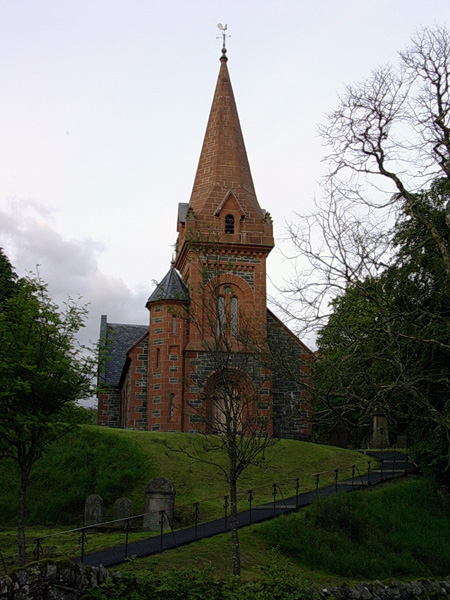
The Parish Church of Tweedsmuir was built with Scottish red sandstone in 1874 on site of earlier 1643 structure. It is a Category B listed building. There are notable Tweedie gravestones in the parish churchyard.
The Crook Inn is in the village, on the A701. It is one of many claimants to be the oldest inn in Scotland. It is where Robert Burns wrote "Willie Wastle's Wife".
The 22 MW Glenkerie wind farm of Infinis is located five kilometres (three miles) northwest of the village.
Tweedsmuir
Tweedsmuir (Scottish Gaelic: Sliabh Thuaidh) is a village and civil parish in Tweeddale, the Scottish Borders Council district, southeastern Scotland.
The village is set in a valley, with the rolling hills and burns on both sides, covering some fifty square miles. It incorporates settlements at Hearthstane, Cockiland, Menzion, and Oliver.
Tweedsmuir was in the historic county of Peeblesshire. It is situated 8 miles (13 km) from the source of the River Tweed.
James Hogg recorded that in 1620 a severe storm remembered as 'the thirteen drifty days' caused such severe sheep losses that a glen in Tweedsmuir owned by Sir James Montgomery was converted to a common grazing and remained as such for almost a century.
Oliver Castle was one of the local strongholds, and later country estates, of the Clan Tweedie family.
The Parish Church of Tweedsmuir was built with Scottish red sandstone in 1874 on site of earlier 1643 structure. It is a Category B listed building. There are notable Tweedie gravestones in the parish churchyard.
The Crook Inn is in the village, on the A701. It is one of many claimants to be the oldest inn in Scotland. It is where Robert Burns wrote "Willie Wastle's Wife".
The 22 MW Glenkerie wind farm of Infinis is located five kilometres (three miles) northwest of the village.
Recent media
Recent media