
Recent from talks
Ugo Fantozzi
Knowledge base stats:
Talk channels stats:
Members stats:
Ugo Fantozzi
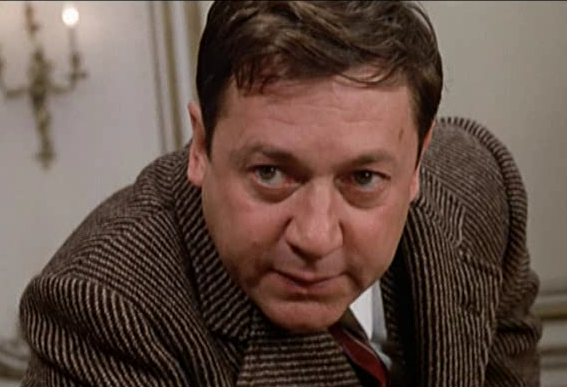
Ugo Fantozzi (pronounced [ˈuːɡo fanˈtɔttsi]) is a fictional character, appearing in Italian literature and film, created by Paolo Villaggio. The character, initially part of Villaggio's television monologues, later became the protagonist of a series of short stories published at first in newspapers, later in collections, which in turn inspired a successful film series starring Villaggio himself as the main character.
Of the many films telling of Fantozzi's misadventures, the most notable and famous were Fantozzi (1975) and Il secondo tragico Fantozzi (1976), both directed by Luciano Salce, but many others were produced. The other films were Fantozzi contro tutti (1980) directed by Neri Parenti, Fantozzi subisce ancora (1983) by Neri Parenti, Superfantozzi (1986) by Neri Parenti, Fantozzi va in pensione (1988) by Neri Parenti, Fantozzi alla riscossa (1990) by Neri Parenti, Fantozzi in paradiso (1993) by Neri Parenti, Fantozzi – Il ritorno (1996) by Neri Parenti and Fantozzi 2000 – La clonazione (1999) by Domenico Saverni.
Although Villaggio's movies tend to bridge comedy with a more elevated social satire, this character had a great impact on Italian society, to such a degree that the adjective fantozziano entered the lexicon. Ugo Fantozzi represents the archetype of the average Italian of the 1970s, middle-class with a simple lifestyle with the anxieties common to an entire class of workers, being re-evaluated by critics. For the 40 years since the character's debut in the cinema, in 2015, the first two films were restored and re-proposed in theaters.
The character, born as a representation of the inept and unfortunate man victim of bullying, has entered the social imaginary for his grotesque aptitude for psychological subjection to power and as an example of an average man oppressed by society and constantly looking for redemption, "the prototype of the wretch, or the quintessence of nullity", as Paolo Villaggio himself defined it.
Fantozzi was the surname of a colleague of Villaggio's at a company where the actor had worked as an employee, Italimpianti, and which got involved in the initiatives of Villaggio himself, which he incorrectly called "Selvaggio". Another character created by Villaggio is travel organizer Giandomenico Fracchia, and accountant Filini for the stories and films of Fantozzi.
In the stories of Villaggio, among the colleagues of the character, there are in fact two characters, Filini and Fracchia, who in the films were later replaced, due to an intuition of the director Luciano Salce, with only Filini, who would have the role of the best friend of the protagonist and of the organizer who thinks he understands everything.
From his work experiences, Villaggio drew inspiration to write some stories published in L'Europeo magazine and which was collected in the book Fantozzi (1971). The book became a bestseller, selling more than a million copies, being translated into many languages, and won the Gogol prize in the "best humorous work" section. Given the great success of the book, a film adaptation was created in which the role of the protagonist will be played by Villaggio himself.
The character makes his debut in Paolo Villaggio's monologues, in which he is quoted in the third person. Villaggio made his debut on television in 1968 on the program Quelli della Domenica, in the role of the character, the protagonist of sketches in which he tells humorous stories with a particular and characteristic lexicon of the character based on hyperbole.
Hub AI
Ugo Fantozzi AI simulator
(@Ugo Fantozzi_simulator)
Ugo Fantozzi
Ugo Fantozzi (pronounced [ˈuːɡo fanˈtɔttsi]) is a fictional character, appearing in Italian literature and film, created by Paolo Villaggio. The character, initially part of Villaggio's television monologues, later became the protagonist of a series of short stories published at first in newspapers, later in collections, which in turn inspired a successful film series starring Villaggio himself as the main character.
Of the many films telling of Fantozzi's misadventures, the most notable and famous were Fantozzi (1975) and Il secondo tragico Fantozzi (1976), both directed by Luciano Salce, but many others were produced. The other films were Fantozzi contro tutti (1980) directed by Neri Parenti, Fantozzi subisce ancora (1983) by Neri Parenti, Superfantozzi (1986) by Neri Parenti, Fantozzi va in pensione (1988) by Neri Parenti, Fantozzi alla riscossa (1990) by Neri Parenti, Fantozzi in paradiso (1993) by Neri Parenti, Fantozzi – Il ritorno (1996) by Neri Parenti and Fantozzi 2000 – La clonazione (1999) by Domenico Saverni.
Although Villaggio's movies tend to bridge comedy with a more elevated social satire, this character had a great impact on Italian society, to such a degree that the adjective fantozziano entered the lexicon. Ugo Fantozzi represents the archetype of the average Italian of the 1970s, middle-class with a simple lifestyle with the anxieties common to an entire class of workers, being re-evaluated by critics. For the 40 years since the character's debut in the cinema, in 2015, the first two films were restored and re-proposed in theaters.
The character, born as a representation of the inept and unfortunate man victim of bullying, has entered the social imaginary for his grotesque aptitude for psychological subjection to power and as an example of an average man oppressed by society and constantly looking for redemption, "the prototype of the wretch, or the quintessence of nullity", as Paolo Villaggio himself defined it.
Fantozzi was the surname of a colleague of Villaggio's at a company where the actor had worked as an employee, Italimpianti, and which got involved in the initiatives of Villaggio himself, which he incorrectly called "Selvaggio". Another character created by Villaggio is travel organizer Giandomenico Fracchia, and accountant Filini for the stories and films of Fantozzi.
In the stories of Villaggio, among the colleagues of the character, there are in fact two characters, Filini and Fracchia, who in the films were later replaced, due to an intuition of the director Luciano Salce, with only Filini, who would have the role of the best friend of the protagonist and of the organizer who thinks he understands everything.
From his work experiences, Villaggio drew inspiration to write some stories published in L'Europeo magazine and which was collected in the book Fantozzi (1971). The book became a bestseller, selling more than a million copies, being translated into many languages, and won the Gogol prize in the "best humorous work" section. Given the great success of the book, a film adaptation was created in which the role of the protagonist will be played by Villaggio himself.
The character makes his debut in Paolo Villaggio's monologues, in which he is quoted in the third person. Villaggio made his debut on television in 1968 on the program Quelli della Domenica, in the role of the character, the protagonist of sketches in which he tells humorous stories with a particular and characteristic lexicon of the character based on hyperbole.
Recent media